How to Do Bridging-Based NFT Auctions
 by
by 
How to Do Bridging-Based NFT Auctions: A Step-by-Step Guide
The world of Non-Fungible Tokens has rapidly evolved, moving from niche digital collectibles to a significant force in the digital economy. While early NFTs were largely confined to their native blockchains, the increasing demand for interoperability has given rise to a groundbreaking concept: bridging-based NFT auctions. This innovative approach allows creators and collectors to transcend the limitations of single-chain ecosystems, opening up new avenues for liquidity, audience reach, and cross-chain engagement. This article will serve as a comprehensive guide, illuminating the mechanics, benefits, challenges, and best practices of conducting successful bridging-based NFT auctions.
What Are Bridging-Based NFT Auctions?
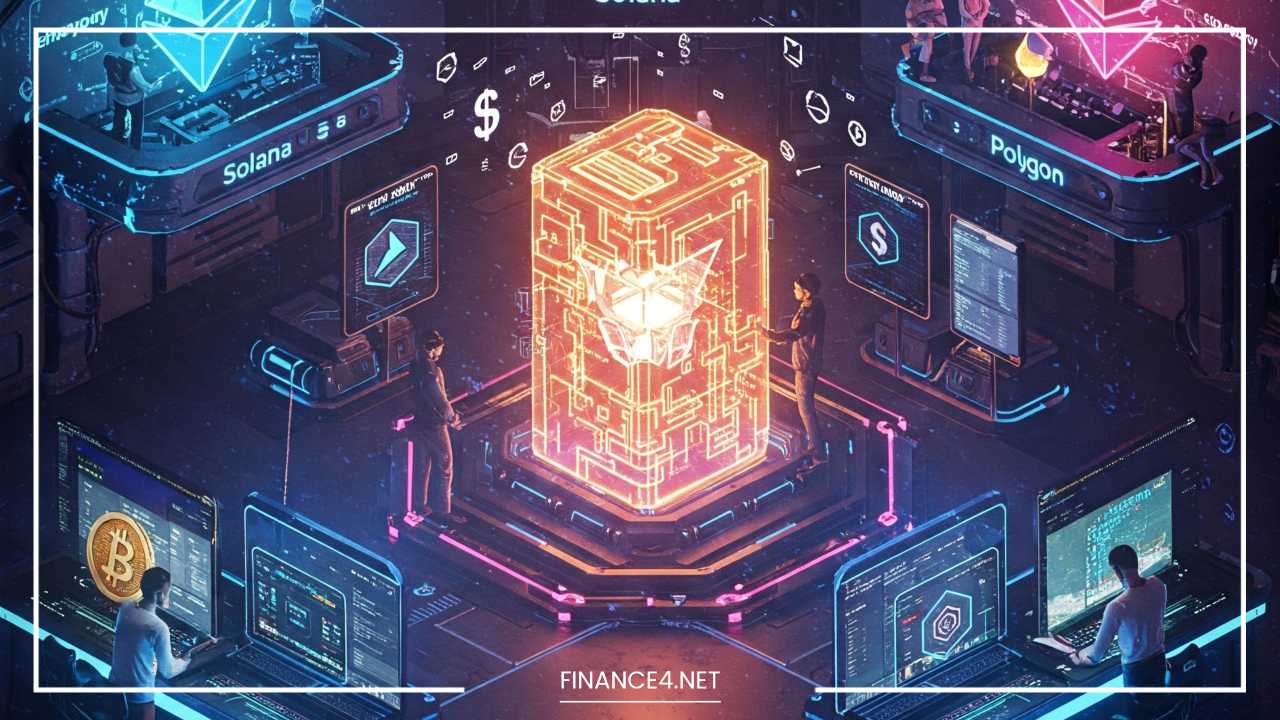
At its core, a “bridge” in blockchain technology is a mechanism that facilitates the transfer of assets or data between disparate blockchain networks. Imagine a physical bridge connecting two islands; a blockchain bridge serves a similar purpose, allowing digital assets to traverse the otherwise isolated landscapes of different blockchains. In the context of NFTs, bridging is becoming increasingly crucial as the ecosystem expands beyond dominant chains like Ethereum to include high-performance alternatives such as Polygon, Solana, Avalanche, and Binance Smart Chain.
Bridging-based NFT auctions are auctions where an NFT, originally minted on one blockchain, can be made available for bidding and sale on another blockchain. For instance, an NFT initially created on Ethereum could be auctioned to bidders operating on the Polygon network, or even Solana. This capability unlocks several significant advantages. The primary benefits include increased liquidity, as the NFT can tap into a wider pool of potential buyers across multiple networks. This also leads to a wider audience for creators and collectors, as they are no longer restricted to the users of a single blockchain. Ultimately, bridging fosters cross-chain interoperability, an essential step towards a truly connected decentralized web. While still an evolving area, some innovative projects are already incorporating bridging for specific NFT launches or to broaden their marketplace reach.
How Does Bridging Work for NFTs?
Blockchain bridges enable the movement of NFTs by employing various mechanisms to ensure the asset’s integrity and scarcity across networks. When an NFT is “bridged,” it doesn’t physically move from one blockchain to another in the same way a file is transferred. Instead, a representation of the NFT is created on the destination chain, while the original asset is typically “locked” or “burned” on the source chain to prevent double-spending or duplication.
Two common bridge mechanisms are the lock-and-mint method and the burn-and-mint method. In the lock-and-mint approach, the original NFT is locked in a smart contract on the source blockchain. Subsequently, a new, equivalent NFT (often a “wrapped” version) is minted on the destination blockchain and transferred to the user. When the user wishes to move the NFT back to the original chain, the wrapped NFT on the destination chain is burned, and the original NFT is unlocked from the smart contract on the source chain. The burn-and-mint method operates similarly, but instead of locking the original NFT, it is permanently burned on the source chain, and a new one is minted on the destination chain. To reverse the process, the NFT on the destination chain is burned, and a new one is minted on the original chain.
It is critical to acknowledge the security concerns surrounding bridging NFTs. Bridges, by their nature, involve complex smart contracts that manage significant value, making them attractive targets for malicious actors. Vulnerabilities in these smart contracts can lead to exploits and loss of assets. Robust security audits and decentralized governance models are crucial for mitigating these risks.
Several popular blockchain bridges are utilized for NFT transfers. These include Wormhole, known for its extensive cross-chain support including Solana, Ethereum, and Binance Smart Chain; AnySwap (now Multichain), which facilitates asset transfers across numerous networks; and PolyBridge, a key bridge for connecting Ethereum to Polygon.
After an NFT has been successfully bridged, it can then be minted or listed on marketplaces native to the destination chain. This process often involves interacting with the smart contracts of the chosen marketplace to officially register the bridged NFT and make it available for sale or auction, effectively allowing it to exist and be traded on multiple chains.
Setting Up Bridging-Based NFT Auctions
Setting up a bridging-based NFT auction requires careful planning and execution, involving choices of platforms, blockchains, and technical integration. The first step involves choosing the right platform. While general NFT marketplaces like OpenSea, Rarible, and Mintable are excellent for single-chain auctions, the landscape for integrated bridging-based auctions is still developing. Some platforms might offer native support for cross-chain listings, or you might need to use a standalone bridge in conjunction with your chosen marketplace. Researching platforms that explicitly advertise cross-chain capabilities or have a strong presence on multiple networks is essential.
Next, you need to select the blockchains for your auction. This decision should be guided by your target audience, the nature of your NFT, and transaction cost considerations. For instance, if you’re aiming for a broad audience and lower transaction fees, bridging to Polygon or Solana might be advantageous. If your NFT is high-value and your audience is primarily on Ethereum, then perhaps focusing on an Ethereum-based auction with a bridging option for those on Layer solutions could be optimal. Understanding the user bases and gas fees of different networks is crucial for an informed decision.
Creating an NFT with cross-chain compatibility is another vital step. While most NFTs are initially minted on a specific chain (e.g., ERC-721 on Ethereum), the smart contract design can sometimes be made with future bridging in mind, though direct “cross-chain native” minting is still a developing concept. Generally, cross-chain compatibility is achieved through the bridging process itself, where the original NFT is wrapped or burned and a new, compatible version is minted on the destination chain. Ensure your NFT’s metadata and provenance are maintained accurately throughout the bridging process.
Integrating the bridge with your NFT auction involves a sequence of steps. First, you will need to select a reliable blockchain bridge that supports the source and destination chains of your choice. Then, you’ll typically connect your digital wallet to the bridge and initiate the transfer of your NFT. This involves approving the transaction on the source chain to lock or burn your NFT. Once the bridging process is complete, the wrapped or newly minted NFT will appear in your wallet on the destination chain. From there, you can connect your wallet to the chosen auction platform on the destination chain and list the NFT.
Setting up the actual auction process on the chosen platform mirrors a standard NFT auction but with the added benefit of cross-chain reach. You’ll define pricing models (e.g., English auction, Dutch auction), set the bidding time, establish a reserve price (if applicable), and determine any royalty percentages for secondary sales. Clearly communicate to potential bidders that the NFT is available cross-chain and specify the accepted cryptocurrencies on each respective network.
Technical Considerations and Challenges
While bridging-based NFT auctions offer exciting possibilities, they also introduce several technical considerations and challenges that demand careful attention. One of the most significant factors is transaction fees, commonly known as “gas fees.” These fees differ substantially between blockchains. Ethereum, while robust and secure, is notorious for its high and often volatile gas fees, which can impact both the creator listing the NFT and the bidders participating in the auction. Bridging to a Layer solution like Polygon or a different blockchain altogether, such as Solana, can significantly reduce these costs, making auctions more accessible and appealing to a wider range of participants. However, bridging itself incurs transaction fees on both the source and destination chains, so these must be factored into the overall cost analysis.
Speed and latency are also crucial performance metrics. While some blockchains boast near-instant transaction finality, others, especially during periods of high network congestion, can experience considerable delays. The bridging process itself adds another layer of time. A user might experience waiting times for their NFT to be successfully transferred across the bridge before it becomes available for bidding or for them to receive it after a successful bid. These delays can impact the user experience and the overall efficiency of an auction, particularly for time-sensitive events.
Blockchain compatibility issues can arise due to the varying technical specifications and smart contract standards of different networks. While bridges aim to abstract away these complexities, underlying incompatibilities can occasionally lead to unexpected behavior or require specific workarounds. Thorough testing of the bridging and auction process is highly recommended.
Security risks are paramount in cross-chain NFT transfers. The smart contracts governing blockchain bridges are complex and handle substantial value, making them prime targets for exploits. Vulnerabilities can lead to issues such as double-spending (where an NFT is effectively duplicated across chains), or the loss of assets if the bridge’s smart contract is compromised during the transfer process. Historical incidents of bridge hacks underscore the importance of using well-audited, reputable bridges and understanding the risks involved.
Finally, smart contract issues extending beyond the bridge itself can also pose challenges. An NFT’s smart contract might have specific functionalities or dependencies that behave differently or are not fully supported on a new blockchain, even after a successful bridge. This could impact royalty distribution, future utility, or overall functionality of the NFT on the destination chain. Developers and artists should ensure that the bridged version of their NFT maintains its intended properties and functionality across the chosen networks.
Benefits of Bridging-Based NFT Auctions
The advantages of embracing bridging-based NFT auctions are multifaceted, offering significant improvements over single-chain approaches.
A key benefit is reaching a broader audience. By enabling NFTs to be auctioned across different blockchain ecosystems, creators can tap into a much larger market of potential buyers. An artist whose work might primarily appeal to the Ethereum community can now also present it to collectors on Solana, Polygon, or other chains, dramatically expanding their exposure and increasing the likelihood of a successful sale. This eliminates the “walled garden” effect often seen with blockchain networks.
Bridging also leads to reduced barriers to entry for bidders. High transaction costs on networks like Ethereum can deter many potential buyers, especially for lower-priced NFTs. By bridging NFTs to cheaper chains like Polygon or Solana, the gas fees associated with bidding and acquiring the NFT are significantly reduced. This makes NFT ownership more accessible to a wider demographic of collectors, including those with smaller budgets or who are new to the NFT space.
The ultimate goal for many creators is maximized profit, and bridging can contribute directly to this. With increased liquidity and a wider bidding pool, competition for an NFT can intensify, potentially leading to higher final sale prices. By making an NFT available to more interested parties, the chances of achieving a better price for the digital asset are substantially improved.
Beyond financial benefits, bridging-based NFT auctions can foster cross-chain community engagement. By encouraging participation from users across various blockchain communities, these auctions can facilitate valuable interactions and collaborations. This not only benefits individual artists and collectors but also contributes to the overall growth and interconnectedness of the broader Web ecosystem, breaking down silos and promoting a more unified digital landscape.
Real-World Examples & Case Studies
While specific high-profile NFT auctions explicitly marketed as “bridging-based” might not always be publicly highlighted in detail, the underlying technology of bridging is increasingly utilized by marketplaces and projects to achieve cross-chain functionality for NFTs.
One prominent example of how bridging technology is implicitly used can be seen in certain NFT collections that are launched on multiple chains or become available on different marketplaces via wrapping or bridging. For instance, projects that originate on Ethereum might later offer wrapped versions of their NFTs on Polygon or Binance Smart Chain to enable cheaper transactions and broader accessibility. While not always framed as an “auction” per se, the ability to transfer these NFTs across chains directly enables their listing and sale on secondary marketplaces on those respective chains, effectively creating a cross-chain market for the collection.
Consider the case of a popular NFT collection initially launched on Ethereum. To expand its reach and allow for lower transaction fees, the project might enable official bridging to a sidechain like Polygon. This allows holders to “bridge” their NFTs to Polygon, where they can then be listed and auctioned on Polygon-native marketplaces. While the original auction might have happened on Ethereum, the ongoing secondary market, including potential auction listings, benefits from the bridging capability. This strategy has been adopted by various projects aiming to reduce gas costs for their communities.
Another real-world scenario involves platforms that have integrated cross-chain capabilities into their marketplace infrastructure. While a marketplace might primarily operate on one chain, some have developed mechanisms, often powered by underlying bridge technologies, to allow users to list NFTs from other chains. This could involve a user bridging their NFT to the marketplace’s native chain for listing, or the marketplace itself abstracting the bridging process for a seamless user experience. For instance, a platform might allow a user to deposit an NFT from Solana and then list it for auction to a community that primarily transacts on Ethereum, with the platform handling the necessary bridging and wrapping in the background. While specific examples of these fully integrated, high-profile multi-chain auctions are still emerging, the foundational technology is enabling a more flexible and interconnected NFT market.
How to Promote Your Bridging-Based NFT Auction
Effective promotion is paramount for the success of any NFT auction, and bridging-based auctions require a nuanced approach to reach their expanded audience.
Targeting the right audience is the first step. For bridging-based auctions, this means promoting not only to the typical Ethereum-based NFT enthusiasts but also to communities on the destination blockchains. Understand the unique demographics and interests of users on Polygon, Solana, or other chains you are targeting. Tailor your messaging to resonate with each specific community, highlighting the benefits of cross-chain access, such as lower fees or new utility.
Cross-chain marketing is crucial. Don’t just promote on Ethereum-centric platforms; actively engage with communities, forums, and social media groups specific to your target non-Ethereum blockchains. Participate in their Discord servers, engage on relevant subreddits, and utilize Telegram groups dedicated to those ecosystems. This direct engagement fosters better exposure and builds trust within diverse blockchain communities.
Leveraging social media and influencers remains a powerful tool for NFT promotion. Utilize platforms like Twitter, Discord, and Instagram to announce your auction, showcase the NFT, and explain the bridging mechanism clearly. Create compelling visual content and short videos demonstrating the ease of participating in a cross-chain auction. Collaborating with NFT influencers who have a cross-chain following can significantly amplify your reach. Look for influencers who understand and actively participate in multiple blockchain ecosystems.
Collaborations and partnerships extend beyond individual influencers. Consider partnering with other artists, NFT projects, or even decentralized applications (dApps) on the target blockchains. Joint promotions, shared marketing campaigns, or even exclusive drops can generate substantial buzz and attract a broader audience. These partnerships can help you tap into established communities and leverage their networks for greater visibility. Clearly articulate the value proposition of your bridging-based auction, emphasizing the expanded accessibility and opportunities it presents.
Best Practices for Successful Bridging-Based NFT Auctions
To ensure a successful bridging-based NFT auction, adherence to certain best practices is essential, focusing on user experience, transparency, security, and strategic timing.
First and foremost, strive to ensure a seamless user experience. Navigating the world of blockchain and bridging can be complex for newcomers. Provide clear, concise instructions on how to participate in your cross-chain auction, including detailed guides on how to use the chosen bridge and how to bid on the destination platform. Minimize friction points and provide readily available support to address any user queries or technical difficulties. A smooth experience encourages participation and builds confidence.
Transparency in bidding processes is critical to avoid disputes and maintain trust. Clearly outline the auction rules, bidding increments, and any extension periods. Provide real-time updates on bids and the remaining auction time. If the auction involves different currencies across chains, ensure conversion rates are clear and fair. Open communication builds a trustworthy environment for bidders.
Promoting security best practices among users is vital, especially given the inherent risks associated with cross-chain transfers. Educate participants on how to secure their NFTs and digital wallets. Advise them on recognizing phishing attempts, using hardware wallets for significant assets, and verifying smart contract addresses before approving transactions. Emphasize the importance of only using official and audited bridge services. A well-informed user base is a secure user base.
Finally, optimize auction timing to capture the most attention from global users. Consider time zones of your target audience across different blockchain communities. Avoid launching auctions during peak network congestion times on high-fee chains, as this can deter bidders. Research common activity peaks for NFT trading and engagement on your chosen blockchains and schedule your auction accordingly. Strategic timing can significantly impact visibility and bidding activity, leading to a more successful outcome.
Final Thoughts
Bridging-based NFT auctions represent a significant leap forward in the evolution of digital collectibles, offering a pathway to a more interconnected and accessible NFT ecosystem. By understanding the mechanics of blockchain bridges, carefully selecting platforms and networks, and implementing robust security measures, creators and collectors can unlock unprecedented opportunities.
The journey through this article has highlighted the core principles of bridging, from the foundational definitions and mechanisms of cross-chain transfers to the practical steps of setting up an auction and addressing technical hurdles. We’ve explored the compelling benefits, including expanded audience reach, reduced barriers to entry, and maximized profit potential, alongside the crucial element of fostering cross-chain community engagement. Real-world examples demonstrate the practical application of this technology, paving the way for future innovations.
Looking ahead, the future of bridging in NFTs is undeniably promising. As blockchain technology matures, we can anticipate more sophisticated, secure, and user-friendly bridging solutions. The concept of truly interoperable NFTs, seamlessly moving and interacting across diverse metaverses and applications, is becoming an increasingly tangible reality. This evolution will further dissolve the boundaries between blockchain networks, fostering a truly global and liquid market for digital assets.
We encourage readers to experiment with bridging-based NFT auctions, explore new blockchain networks, and innovate within this dynamic space. The ability to transcend single-chain limitations is not just a technical advancement; it’s an opportunity to redefine how digital ownership, art, and community intersect in the decentralized world. Embrace the multi-chain future of NFTs.