How to Build Cross-Chain NFT Forging Mechanics
 by
by 
How to Build Cross-Chain NFT Forging Mechanics | Step-by-Step Guide
The world of Web3 is rapidly evolving, moving beyond siloed blockchain ecosystems towards a more interconnected and interoperable future. Central to this evolution are Non-Fungible Tokens (NFTs), which have emerged as foundational digital assets in gaming, art, collectibles, and beyond. As the utility and complexity of NFTs grow, so does the demand for sophisticated mechanics that transcend the boundaries of a single blockchain. One such powerful mechanic is “NFT forging,” and when combined with cross-chain capabilities, it unlocks unprecedented possibilities for digital asset creation and evolution.
Introduction to Cross-Chain NFT Forging
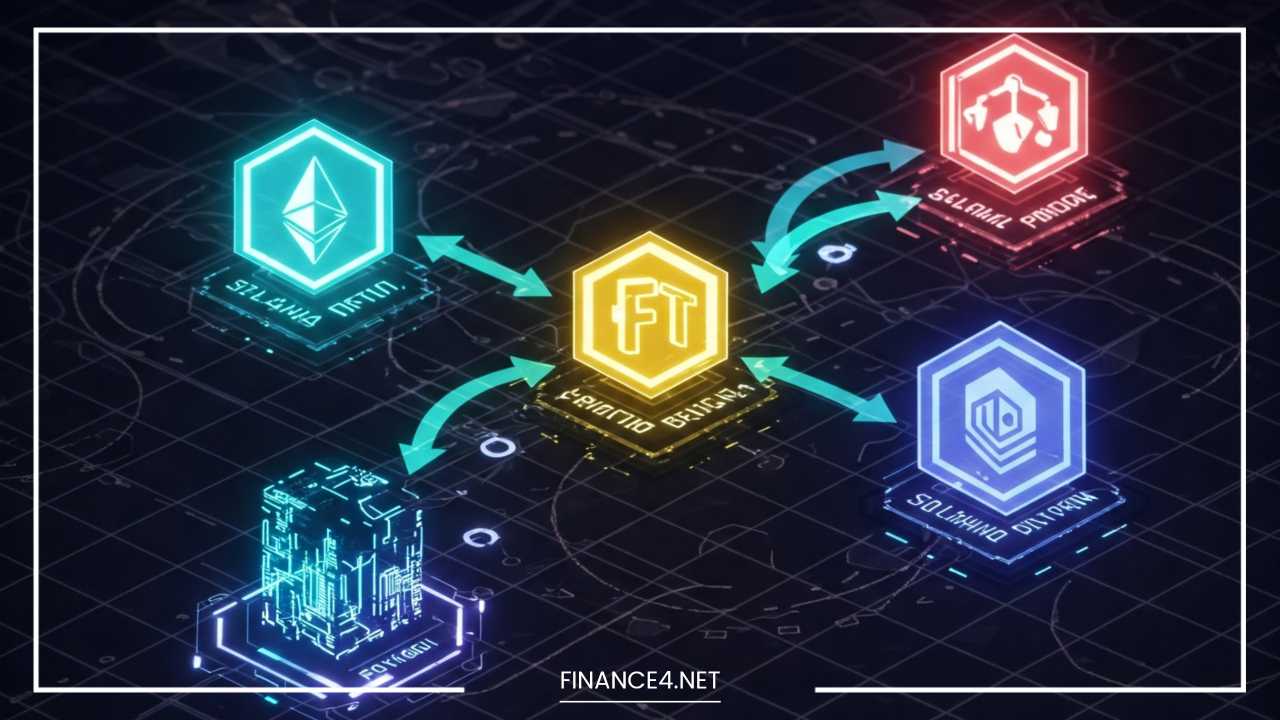
Cross-chain NFTs are digital assets that can exist, be transferred, or interact across multiple distinct blockchain networks. Traditionally, an NFT minted on Ethereum remains solely on Ethereum, limiting its utility to that specific ecosystem. Cross-chain functionality breaks down these barriers, allowing NFTs to flow seamlessly between different chains like Ethereum, Solana, Avalanche, and Polygon, to name a few.
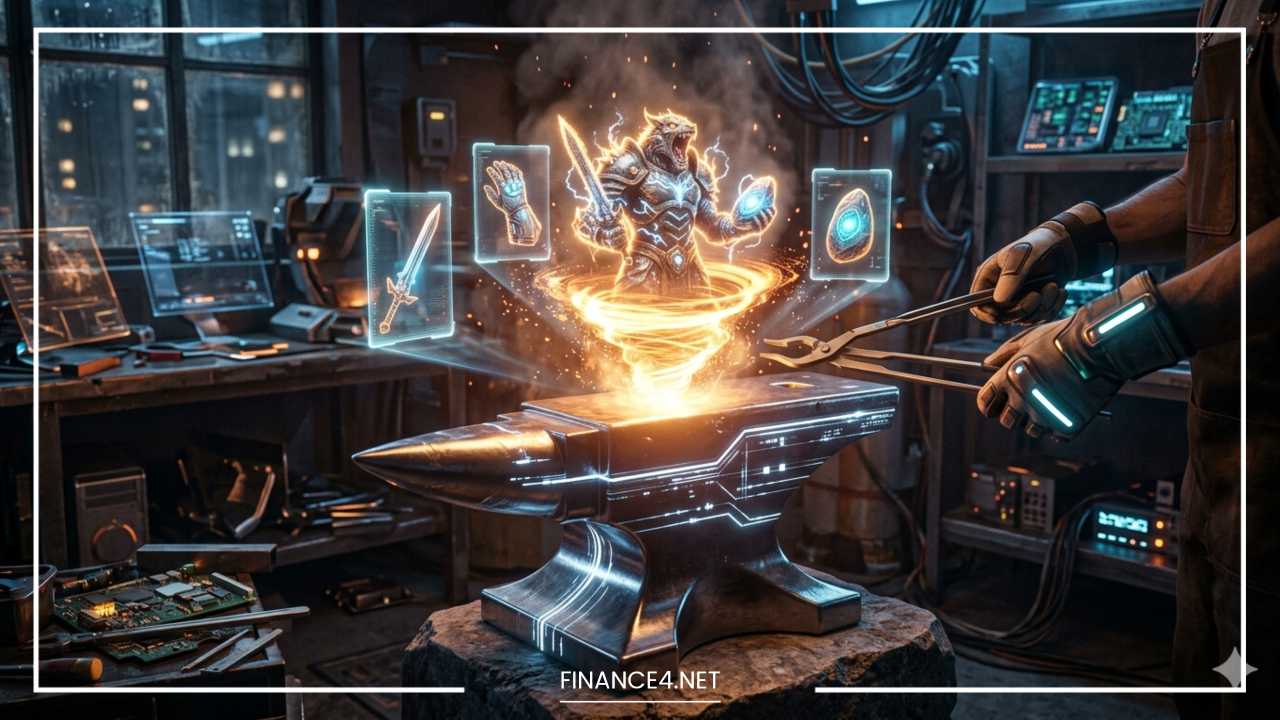
NFT forging, in its essence, refers to the process of creating a new or upgraded NFT from one or more existing NFTs or other digital assets. This can take various forms: it might involve combining two unique character NFTs to breed a new offspring, using a “material” NFT to upgrade the stats or appearance of a weapon NFT, or burning a collection of lower-tier NFTs to mint a single, rarer one. This mechanic adds depth and engagement to NFT ecosystems, fostering dynamic interactions and giving users more agency over their digital possessions.
The importance of interoperability in Web3 cannot be overstated. Without it, the digital landscape remains fragmented, hindering mainstream adoption and limiting the true potential of decentralized applications. Imagine a gaming experience where a player’s legendary sword, minted on Ethereum, can be brought into a game running on Avalanche, upgraded with rare materials found on Polygon, and then traded on a marketplace built on Solana. This level of fluidity is what cross-chain technology promises. Forging mechanics, when enabled across chains, amplify this promise by allowing complex, multi-stage asset evolution that isn’t confined to a single network’s limitations, driving deeper engagement in blockchain games, collectible platforms, and various other emerging use cases.
The Basics of Cross-Chain Technology
At its core, cross-chain technology enables different blockchain networks to communicate and transfer assets or data between each other. Blockchains, by design, are isolated ledgers, each with its own consensus mechanism, smart contract language, and native token. For instance, Ethereum relies on Solidity and a Proof-of-Stake (PoS) consensus, while Solana utilizes Rust and a unique Proof-of-History (PoH) coupled with PoS. Avalanche, on the other hand, employs a distinctive Snowman consensus protocol. These fundamental differences make direct interaction between them impossible without specialized infrastructure.
This is where cross-chain bridges, relayers, and interoperability protocols come into play. A cross-chain bridge is a set of smart contracts and off-chain components that facilitate the transfer of assets or data between two distinct blockchains. When an asset is moved across a bridge, it is typically “locked” on the source chain and a “wrapped” or synthetic version is minted on the destination chain. Relayers are off-chain entities that monitor events on one blockchain and transmit validated information or proofs to another blockchain, acting as crucial intermediaries in the communication process.
Key interoperability protocols like LayerZero, Wormhole, and Axelar offer generalized message passing or bridging services. LayerZero, for example, focuses on a lightweight messaging protocol that relies on Endpoints, Oracle, and Relayer to enable secure, trustless communication. Wormhole provides a generic message passing protocol that allows arbitrary data to be sent between chains. Axelar offers a network that connects different blockchains, allowing them to communicate with each other through a decentralized network of validators. These protocols abstract away much of the complexity of cross-chain communication, providing developers with SDKs and APIs to build dApps that span multiple networks.
Despite their immense potential, cross-chain technologies face significant challenges. Latency can be an issue, as transactions need to be confirmed on both the source and destination chains, sometimes involving multiple message relays. Cost is another factor, with gas fees incurred on each chain involved in the cross-chain operation. Perhaps the most critical challenge is security; the complexity of cross-chain interactions creates new attack vectors, making bridges and cross-chain protocols prime targets for malicious actors, as evidenced by numerous high-profile exploits in the past. Furthermore, achieving consensus across disparate chains, each with its own finality rules, adds a layer of complexity to ensuring the integrity of cross-chain operations.
Understanding NFT Standards Across Chains
The foundation of NFT interoperability lies in understanding the varying token standards across different blockchain networks. On Ethereum, the dominant standards are ERC-721 and ERC-1155. ERC-721 defines a unique, non-fungible token, making it ideal for individual collectibles and unique digital assets like a single piece of art or a unique character in a game. ERC-1155, on the other hand, is a multi-token standard that allows for both fungible and non-fungible tokens, often used for representing different types of items within a game, where multiple copies of an item might exist alongside unique ones. These standards dictate how an NFT is created, transferred, and managed within the Ethereum ecosystem.
However, moving beyond Ethereum, other blockchains employ their own distinct standards. Solana, for instance, uses the SPL (Solana Program Library) Token Standard, which includes specific implementations for NFTs, often referred to as Metaplex NFTs. These SPL tokens leverage Solana’s high throughput and low transaction fees. Avalanche uses standards largely compatible with Ethereum’s EVM (Ethereum Virtual Machine) and thus often supports ERC-721 and ERC-1155 directly on its C-chain. Similarly, Polygon, being an EVM-compatible sidechain, also utilizes ERC-721 and ERC-1155. While the underlying principles of uniqueness and ownership remain, the technical implementation details, such as how metadata is structured and stored, can vary.
Metadata storage is a critical aspect of NFTs. While the token ID and ownership are typically stored on-chain, the rich descriptive information – such as the NFT’s name, description, image URL, and attributes – is often stored off-chain. Common solutions for off-chain storage include IPFS (InterPlanetary File System) and Arweave. IPFS offers decentralized, content-addressable storage, ensuring that the metadata remains accessible as long as it’s pinned by at least one node. Arweave provides a more permanent, “permaweb” storage solution, where data is replicated across a distributed network with a single upfront fee. Storing metadata off-chain is primarily done to reduce gas costs and overcome the storage limitations of blockchains. However, ensuring the integrity and immutability of this off-chain data is paramount for maintaining the NFT’s value and authenticity.
Token provenance and authenticity across chains become more complex with cross-chain NFTs. When an NFT moves between chains, it’s typically “wrapped” or “bridged,” meaning the original NFT is locked on the source chain, and a new, equivalent NFT is minted on the destination chain. This “wrapped” or synthetic representation represents a claim on the original asset. Maintaining a clear and verifiable history of the NFT’s movement and transformation across different chains is crucial for proving its authenticity and original provenance. This often involves robust event tracking on bridges and careful management of mapping between original and wrapped tokens. Without proper mechanisms, there’s a risk of creating counterfeit versions or losing the original context of the NFT.
NFT Forging Mechanics Explained
In the context of Non-Fungible Tokens, “forging” is a broad term encompassing any process where a new or enhanced NFT is created, typically by consuming or modifying one or more existing NFTs or other digital assets. It’s a dynamic mechanism that adds a layer of depth and interactivity to NFT ecosystems, moving beyond simple ownership and trading to active participation in asset creation and evolution.
The exact definition of “forging” can vary greatly depending on the specific application, but it generally involves a deterministic or probabilistic outcome based on defined inputs. Common examples include:
- Merging Two NFTs: This is a classic forging scenario. Imagine two “Component NFTs” (e.g., two halves of a key, two different creature NFTs) that, when combined, are burned to produce a single, more powerful or unique “Forged NFT” (e.g., a complete key that unlocks a new area, a new “hybrid” creature with combined traits). This is often seen in collectible card games or creature-breeding simulations.
- Upgrading with Materials: Here, a primary NFT (e.g., a weapon, a character) is combined with one or more “Material NFTs” (e.g., rare ores, magical dust, experience potions) or fungible tokens. The primary NFT’s attributes (stats, rarity, visual appearance) are then enhanced, and the material NFTs are typically consumed (burned). This mechanic is prevalent in blockchain-based role-playing games (RPGs) where players can level up their items or characters.
- Combining Items for a New One: This could involve taking multiple common NFTs and burning them to mint a single, rarer NFT. For instance, burning five “Common Loot Boxes” might yield one “Epic Loot Box,” or collecting a full set of “Basic Armor Pieces” allows you to forge a “Legendary Armor Set.
- Breeding: Particularly popular in creature-collecting games, breeding involves combining two “Parent NFTs” (e.g., two digital pets) to produce a new “Offspring NFT.” The offspring often inherits traits from its parents, potentially with some element of randomness, creating a constantly evolving population of unique creatures.
- Burning for Scarcity/Redemption: While not strictly “forging” in the sense of creating something new, burning NFTs to reduce supply or redeem them for a physical item or a different, unique NFT also falls under the umbrella of transformative mechanics that affect the NFT supply and value.
The on-chain logic for forging is primarily handled by smart contracts. These contracts define the rules of the forging process:
- Input Requirements: The contract specifies which NFTs or tokens are required for the forging operation, including their types, quantities, and perhaps specific attributes.
- User Inputs: Users initiate the forging process by interacting with the smart contract, typically approving the transfer of their input NFTs to the contract address.
- Validation Logic: The smart contract validates that the user possesses the required inputs and that they meet all predefined conditions for forging.
- Burning/Transfer: Upon successful validation, the input NFTs are either burned (permanently removed from circulation) or transferred to a designated escrow address within the contract.
- New NFT Minting/Modification: A new NFT is then minted, or an existing NFT’s metadata/attributes are updated based on the forging outcome. The smart contract logic determines the attributes of the forged NFT.
- Randomness (if applicable): For forging mechanics that involve probabilistic outcomes (e.g., critical success chance, random trait generation in breeding), a secure and verifiable source of randomness is crucial. This is often achieved through decentralized oracle networks like Chainlink VRF (Verifiable Random Function) to ensure fairness and prevent manipulation.
The complexity of these smart contracts can range from simple fixed recipes to intricate algorithms that factor in attributes, rarity scores, and historical data, making NFT forging a powerful tool for creating dynamic and engaging Web3 experiences.
Building the Cross-Chain Infrastructure
Building cross-chain NFT forging mechanics requires a carefully designed infrastructure that enables seamless interaction between disparate blockchain networks. This involves strategic choices regarding primary and secondary chains, smart contract deployment, inter-chain communication, and robust event tracking.
1. Choosing Your Primary and Secondary Chains:
The first critical step is to select the blockchains that will participate in your forging ecosystem.
- Primary Chain: This is often the chain where your core NFT collection resides or where the majority of your user base is. Ethereum is a common choice for its security and decentralization, but its high gas fees and lower throughput might make it less suitable for frequent, intricate forging operations.
- Secondary Chain(s): These are chosen to complement the primary chain, typically offering lower transaction costs, faster finality, or specific features. For instance, Avalanche or Polygon are excellent choices for their EVM compatibility, high transaction speeds, and lower fees, making them ideal for the actual forging process. Solana, with its distinct architecture, could be chosen for its unique performance characteristics, though integrating it would require a different set of tools and considerations compared to EVM chains. The choice depends on your project’s specific needs, user experience goals, and technical capabilities.
2. Smart Contract Deployment Across Chains:
Once chains are selected, you’ll need to deploy a set of interconnected smart contracts:
- NFT Contracts: Deploy your ERC-721 or ERC-1155 (or equivalent) NFT contracts on both the primary and secondary chains. These contracts will manage the lifecycle of your NFTs. On the primary chain, you might have the initial minting contract. On the secondary chain, you’ll need contracts that can mint “wrapped” versions of primary chain NFTs or manage newly forged NFTs.
- Forging Logic Contract: This is the core smart contract that contains the rules for your NFT forging mechanics. For efficiency and cost-effectiveness, this contract is often deployed on the secondary chain where the actual forging operations will take place. This contract will handle input validation, burning of source NFTs (or locking them), and the minting/modification of the forged NFT.
- Bridge/Messaging Contracts (if applicable): While you’ll likely rely on existing interoperability protocols, understanding their underlying contracts is important. These are the smart contracts that facilitate the locking/unlocking of assets and the relaying of messages between chains.
3. Communication Between Contracts Using Bridges:
The linchpin of cross-chain forging is reliable communication between your smart contracts deployed on different chains. This is where interoperability protocols shine:
- LayerZero: LayerZero provides a powerful “omnichain” messaging protocol. You would integrate LayerZero Endpoints into your smart contracts on both chains. When a user wants to initiate a forging process on, say, Avalanche, with an NFT from Ethereum, the Ethereum NFT would first be locked via a LayerZero-enabled bridge contract. A message would then be sent via LayerZero to the Avalanche forging contract, confirming the lock and providing the necessary details.
- Wormhole: Similar to LayerZero, Wormhole’s generic message passing allows for arbitrary data to be sent between connected chains. You’d use Wormhole’s SDK to send VAA (Verified Action Approvals) from the source chain’s contract to the destination chain’s contract, signaling the intent to forge and passing relevant NFT data.
- Axelar: Axelar provides a decentralized network and SDKs that enable secure cross-chain communication. You would use Axelar’s General Message Passing (GMP) to send messages and even call functions on contracts across different chains directly from your forging contract.
The process typically involves:
- Initiation: A user initiates the forging process on the primary chain (e.g., by sending an NFT to a bridge contract, or calling a function on a primary chain contract that then signals the bridge).
- Locking/Burning: The NFT on the primary chain is locked in a bridge contract or burned.
- Message Relaying: The bridge/interoperability protocol detects this event and relays a message to the forging contract on the secondary chain.
- Minting/Forging: The forging contract on the secondary chain receives the message, verifies it, and then executes the forging logic (e.g., mints a new NFT, or updates the attributes of an existing wrapped NFT).
4. Event Tracking and Relaying State Changes:
For a seamless user experience and to ensure data consistency, robust event tracking is essential.
- Listen for Events: Your off-chain services or front-end need to listen for specific events emitted by your smart contracts and the chosen bridge protocol on both chains.
- Database Synchronization: Maintain a centralized or distributed database that tracks the state of NFTs across chains, including their current location, their locked status, and any changes resulting from forging.
- User Interface Updates: Reflect the updated state of the NFTs in your application’s user interface promptly, indicating success, pending operations, or any errors.
- Relayers: In many cross-chain architectures, dedicated relayers (which can be part of the bridge protocol or custom-built) monitor events on the source chain and submit transactions to the destination chain, ensuring that state changes are propagated.
Example Tools:
- LayerZero SDK: Provides the necessary interfaces to build omnichain dApps.
- Hyperlane: Another interoperability layer focusing on secure, modular cross-chain communication.
- Axelar SDK: Enables developers to build cross-chain dApps with secure message passing.
Security Considerations and Cross-Chain Exploits:
The complexity of cross-chain infrastructure introduces significant security risks.
- Bridge Vulnerabilities: Bridges are a common target for hackers. Exploits often involve manipulating data relayed between chains, replaying transactions, or finding flaws in the smart contracts managing locked assets.
- Relayer Centralization: If relayers are centralized, they can become single points of failure or manipulation. Decentralized relayer networks are crucial.
- Consensus Discrepancies: Differences in finality mechanisms between chains can be exploited.
- Smart Contract Audits: Rigorous security audits of all smart contracts involved in the forging and bridging process are non-negotiable.
- Monitoring and Alerting: Implement comprehensive monitoring systems to detect anomalous activity or potential attacks.
- Circuit Breakers: Consider implementing mechanisms to pause cross-chain transfers in case of detected vulnerabilities or attacks.
Building a secure and efficient cross-chain NFT forging infrastructure requires deep technical expertise, a thorough understanding of the chosen protocols, and a constant vigilance against evolving security threats.
Handling NFT Metadata and Provenance
Managing NFT metadata and provenance is arguably one of the most intricate aspects of building cross-chain NFT forging mechanics. The core challenge lies in maintaining consistency, ensuring authenticity, and reflecting dynamic changes across multiple, often disparate, blockchain environments.
Keeping Metadata Synced Across Chains:
When an NFT undergoes a cross-chain transfer or forging process, its metadata – which defines its visual representation, attributes, name, and description – must accurately reflect its updated state.
- On-Chain Metadata: For NFTs where metadata is stored directly on the blockchain (less common for rich media but possible for simple attributes), syncing is complex and expensive. Each change would necessitate an on-chain transaction.
- Off-Chain Metadata (IPFS, Arweave): The vast majority of NFTs use off-chain solutions like IPFS or Arweave, with the token URI (a pointer to the metadata) stored on-chain. This is more flexible.
- Dynamic Metadata: For forging, you often need dynamic metadata. When a new NFT is forged or an existing one is upgraded, its attributes or visual representation change. This means the IPFS hash or Arweave ID pointing to the metadata must be updated. This requires a mechanism to update the
tokenURIwithin your NFT smart contract. - Centralized API/Service: A common approach is to use a centralized API or service that generates and updates the JSON metadata files on IPFS/Arweave. When a forging event occurs on-chain, an event listener triggers this service to:
- Fetch the old metadata.
- Apply the forging logic to update attributes (e.g., increase strength, add a new visual trait).
- Generate a new JSON file with the updated metadata.
- Upload this new JSON to IPFS/Arweave, obtaining a new content hash.
- Call a function on the NFT smart contract (typically
setTokenURIor a similar method, which should be restricted to authorized addresses) to update thetokenURIfor the specific NFT ID.
- Dynamic Metadata: For forging, you often need dynamic metadata. When a new NFT is forged or an existing one is upgraded, its attributes or visual representation change. This means the IPFS hash or Arweave ID pointing to the metadata must be updated. This requires a mechanism to update the
- Interoperability Protocol’s Role: When an NFT moves between chains via a bridge, the metadata often remains on its original IPFS/Arweave location. The wrapped NFT on the destination chain will reference the same
tokenURI. However, if the forging occurs after the cross-chain transfer, the mechanism described above still applies, ensuring the updatedtokenURIis reflected on the chain where the forging took place.
How to Reflect Changes Post-Forging:
- Visual Changes: If forging results in a visual transformation (e.g., a sword glows brighter, a character evolves), the image URL within the metadata must be updated to point to the new visual asset. This requires pre-rendered assets or a system for dynamic image generation.
- Attribute Changes: Numerical stats (e.g., attack power, defense), categorical traits (e.g., fire resistance, rare skin), or even textual descriptions must be updated in the metadata JSON.
- Token ID and Name: In some forging scenarios, a completely new NFT might be minted with a new token ID and name, implying a fresh set of metadata. In others, an existing NFT’s metadata is merely updated.
Ensuring Authenticity and Preventing Duplication:
This is paramount for maintaining the value and integrity of forged NFTs.
- Unique Identifiers: Every NFT, whether original or forged, must have a globally unique identifier. When an NFT is bridged, the wrapped version must clearly reference the original, typically through the
tokenIDof the source NFT and the source chain’s identifier. - Provenance Tracking: Implement a robust system to track the entire history of an NFT, including its original minting, every cross-chain transfer, and every forging event. This can be achieved by:
- On-chain Event Logs: Smart contracts should emit detailed events for every significant action (mint, transfer, lock, unlock, forge).
- Off-chain Indexing: Data indexing services (e.g., The Graph, custom indexers) can process these events and build a queryable database of NFT provenance.
- Metadata References: The metadata itself can include fields that reference the original NFTs from which it was forged, creating a verifiable lineage.
- Preventing Duplication (Double Spending): The bridging mechanism is crucial here. When an NFT is transferred across chains, the original must be securely locked or burned on the source chain before the wrapped version is minted on the destination chain. For forging, the input NFTs must be provably burned or locked within the forging contract before the new NFT is minted. This ensures that only one canonical version of the NFT (or its derived form) exists at any given time.
Role of Oracles in Verifying Cross-Chain Data:
Decentralized oracle networks, such as Chainlink, play an increasingly important role in cross-chain operations, especially for verifying data and ensuring deterministic outcomes.
- Proof of Burn/Lock: Oracles can be used to provide cryptographic proofs to the forging contract on the destination chain that the input NFTs have indeed been burned or locked on the source chain. This adds a layer of trustless verification.
- Cross-Chain Data Feeds: In more complex scenarios, oracles might be used to fetch external data required for forging (e.g., real-world event data, random numbers for probabilistic forging) and deliver it securely to the smart contracts across chains.
- Ensuring Data Integrity: Oracles can help confirm that the
tokenURIbeing updated for a forged NFT genuinely points to the correct, updated metadata, mitigating risks of malicious metadata manipulation.
By meticulously managing metadata and provenance with secure mechanisms and leveraging oracle networks, developers can ensure the authenticity, integrity, and consistent representation of NFTs as they traverse and transform across different blockchain ecosystems.
Example Use Case / Mini Architecture Diagram
Let’s walk through a concrete example: a game where players can combine two “Creature NFTs” on Ethereum to forge a new, more powerful “Hybrid Creature NFT” on Avalanche. This scenario illustrates the practical application of cross-chain NFT forging mechanics.
The Scenario:
Imagine a popular blockchain game with its primary NFT collection (e.g., unique “Creature NFTs”) living on Ethereum, benefiting from Ethereum’s robust security and established marketplace liquidity. However, the game wants to introduce a “breeding/forging” mechanic that players can engage with frequently, without incurring prohibitively high Ethereum gas fees. Avalanche, with its lower transaction costs and faster finality, becomes the ideal secondary chain for this intensive forging process.
User Flow:
- Player Decision: A player owns two Creature NFTs (Creature A, Creature B) on Ethereum. They decide to “breed” them to create a new Hybrid Creature.
- Initiate Forging (Ethereum Side): The player goes to the game’s dApp UI. The UI prompts them to select Creature A and Creature B from their Ethereum wallet. Upon confirmation, the dApp initiates a transaction on Ethereum that calls a function on the Ethereum Forging Gateway Contract. This contract serves as the entry point for cross-chain forging.
- Locking NFTs and Sending Message (Ethereum to Avalanche): The Ethereum Forging Gateway Contract:
- Verifies ownership of Creature A and Creature B.
- Burns (or locks in escrow) Creature A and Creature B on Ethereum, ensuring they can no longer be used on Ethereum.
- Calls the underlying Cross-Chain Messaging Protocol’s (e.g., LayerZero) Endpoint on Ethereum. It sends a message to the corresponding LayerZero Endpoint on Avalanche. This message includes crucial data: the unique IDs of the burned NFTs, the player’s wallet address (who initiated the forging), and any specific parameters for the breeding outcome (e.g., desired traits, if any).
- Message Received and Forging Logic (Avalanche Side):
- The LayerZero Relayer and Oracle verify the message originating from Ethereum.
- The message arrives at the Avalanche Forging Logic Contract (which is LayerZero-enabled).
- This contract receives the data (burned NFT IDs, player address).
- It executes the forging logic: based on the traits of Creature A and Creature B (which might be looked up from a metadata oracle or passed in the message), it determines the attributes of the new Hybrid Creature NFT. This might involve some randomness (e.g., using Chainlink VRF on Avalanche to generate a random number for trait inheritance).
- The Avalanche Forging Logic Contract then mints a brand new Hybrid Creature NFT on Avalanche, with the determined attributes, and assigns ownership to the player’s wallet address.
- It emits an event indicating the successful forging and the details of the new NFT.
- Metadata Update: An off-chain service (listening to Avalanche events) detects the new Hybrid Creature NFT mint. It generates the appropriate metadata JSON for the new creature (pointing to a new image, detailing traits) and uploads it to IPFS/Arweave. It then calls a privileged function on the Avalanche NFT contract to set the
tokenURIfor the new Hybrid Creature NFT. - Player Experience: The game’s dApp, listening to events on Avalanche, detects the newly minted Hybrid Creature NFT in the player’s wallet. The player can now interact with their new creature on Avalanche – use it in games, trade it on Avalanche-based marketplaces, or even bridge it back to Ethereum if desired (though this might incur higher fees again).
Mini Architecture Diagram (Descriptive):
[Ethereum Blockchain]
       ^
       | User Wallet (Creature A, Creature B NFTs)
       |
       V
[Game dApp UI] ----------- Initiates Tx on Ethereum --------> [Ethereum Forging Gateway Contract]
       |                                                            |
       |                                                            | Burns/Locks Creature A & B
       |                                                            |
       |                                                            V
       |                                          [LayerZero Endpoint (Ethereum)]
       |                                                            |
       |                                                            | (Cross-Chain Message: Burnt NFT IDs, Player Address)
       |                                                            |
       |                                                            V
[Off-Chain Data Listeners / Indexers] <----- Monitors Events ------ [LayerZero Relayer / Oracle Network]
       |                                                            |
       |                                                            | Verifies and Relays Message
       |                                                            |
       V                                                            V
[Avalanche Blockchain] <-------------------------------------- [LayerZero Endpoint (Avalanche)]
       ^                                                            |
       |                                                            V
       |                                          [Avalanche Forging Logic Contract]
       |                                                            |
       |                                                            | Executes Forging Logic
       |                                                            | Mints new Hybrid Creature NFT
       |                                                            V
       |                                          [Hybrid Creature NFT Contract (Avalanche)]
       |                                                            ^
       |                                                            | Updates tokenURI (Metadata link)
       |                                                            |
       -------------------------------------------------------- [Off-Chain Metadata Service (IPFS/Arweave)]
This diagram illustrates the flow: a user action on Ethereum triggers a burn and a cross-chain message. This message is relayed to Avalanche, where a dedicated forging contract executes the logic and mints the new NFT, with off-chain services ensuring metadata consistency. This architecture allows for cost-effective and faster forging operations while leveraging the security and reach of the primary chain for initial asset ownership.
Challenges and Limitations
While cross-chain NFT forging presents a tantalizing vision for the future of Web3, its implementation is fraught with significant challenges and limitations that developers must meticulously address.
1. Bridge Risks and Hacks:
This is, without a doubt, the most critical and well-documented challenge. Cross-chain bridges, by their nature, involve locking assets on one chain and minting wrapped equivalents on another. This creates large honeypots of locked value, making them prime targets for malicious actors.
- Vulnerabilities in Smart Contracts: Flaws in the bridge’s smart contracts can be exploited to drain funds or mint unauthorized wrapped tokens.
- Centralization Risks: Some bridges rely on a centralized set of validators or multisig signers, introducing single points of failure and trust assumptions. If these entities are compromised, the bridge can be exploited.
- Relayer/Oracle Attacks: If the off-chain components (relayers, oracles) responsible for verifying and transmitting cross-chain messages are compromised, they can relay false information, leading to fraudulent minting or unlocking of assets.
- Front-Running/MEV: Sophisticated attackers can try to front-run cross-chain transactions, potentially interfering with the intended flow of assets or data.The history of Web3 is unfortunately littered with multi-million dollar bridge hacks (e.g., Ronin, Wormhole, Nomad), underscoring the immense security challenges in this domain. Building trustless, resilient, and fully decentralized bridges remains a complex engineering feat.
2. Fragmented NFT Standards:
While ERC-721 and ERC-1155 are prevalent on EVM-compatible chains, other chains like Solana (SPL) or Cosmos (ICS-721 via IBC) have their own unique standards and implementation nuances.
- Interoperability Challenges: Bridging NFTs between fundamentally different standards (e.g., an ERC-721 on Ethereum to an SPL token on Solana) requires careful consideration of how metadata, attributes, and ownership are mapped and maintained consistently. This often involves creating custom wrappers or adapting metadata structures.
- Feature Parity: Not all NFT features are universally supported across chains. Dynamic NFTs, soulbound tokens, or specific royalty enforcement mechanisms might behave differently or not be supported at all on certain secondary chains, limiting design choices for forging mechanics.
- Developer Overhead: Developers need to understand and potentially work with multiple SDKs, contract languages (Solidity, Rust), and deployment tools, increasing development complexity and time.
3. Gas Fees and Transaction Latency:
While cross-chain forging aims to reduce costs associated with frequent interactions, the entire cross-chain process itself incurs fees and introduces latency.
- Cumulative Gas Costs: A cross-chain forging operation often involves transactions on both the source and destination chains, as well as fees for the bridge/interoperability protocol. While the secondary chain might have low fees, the cumulative cost can still be significant for users, especially if they need to bridge the forged NFT back to the primary chain.
- Transaction Finality: Different blockchains have varying transaction finality times. A transaction on Ethereum might take minutes to achieve sufficient confirmations, while Solana might be near-instant. The cross-chain operation is only complete once finality is reached on all involved chains, which can lead to frustrating waiting times for users.
- Network Congestion: High network activity on any of the involved chains can lead to increased gas fees and delays, impacting the user experience for forging.
4. UX Challenges for Users Unfamiliar with Multiple Chains:
The conceptual leap from interacting with a single blockchain to navigating multiple chains, managing assets across them, and understanding bridging mechanics is significant for the average user.
- Wallet Management: Users often need to manage multiple wallet addresses (or at least different network configurations within a single wallet) and switch between networks, which can be confusing.
- Bridge Interfaces: Current bridge interfaces can be intimidating, requiring users to understand concepts like “locking,” “wrapping,” “source chain,” and “destination chain.”
- Security Literacy: Users need to be highly vigilant about phishing scams targeting bridges and understand the risks associated with various bridge types. A single mistake can lead to irrecoverable loss of assets.
- Debugging/Support: When things go wrong (e.g., a transaction gets stuck), diagnosing the issue across multiple chains and protocols can be incredibly difficult for users and even for support teams.
- Educational Barrier: Significant effort is required to educate users on the intricacies of cross-chain interactions and the benefits of NFT forging, which can deter adoption.
Addressing these challenges requires not only robust technical solutions but also significant focus on user education, intuitive interface design, and continuous security vigilance to make cross-chain NFT forging a truly mainstream and secure experience.
Future of Cross-Chain NFT Interactions
The landscape of cross-chain NFT interactions is dynamic and rapidly evolving, driven by an urgent need for greater interoperability and a more seamless Web3 experience. The innovations currently underway promise to alleviate many of the challenges faced today, paving the way for truly composable and immersive digital economies.
Evolving Standards (e.g., CCIP by Chainlink):
Current cross-chain communication often relies on bespoke bridging solutions or generic message passing protocols that still require careful integration. Future developments are moving towards more standardized and secure approaches. Chainlink’s Cross-Chain Interoperability Protocol (CCIP) is a prime example. CCIP aims to provide a unified, secure, and permissionless framework for cross-chain message and token transfers. By leveraging Chainlink’s decentralized oracle network, CCIP intends to offer robust security guarantees and reliable data delivery, abstracting away much of the underlying complexity and risk of current bridge designs. The adoption of such universal standards will simplify development, enhance security, and increase user confidence in cross-chain transactions, including complex NFT forging operations. This could mean a future where an NFT forging contract on one chain can directly and securely call a function on an NFT contract on another chain, leading to a much more integrated experience.
L2 and Appchain Support:
The rise of Layer 2 (L2) scaling solutions (e.g., Arbitrum, Optimism, zkSync) and application-specific blockchains (appchains like those built with Cosmos SDK or Avalanche Subnets) is fundamentally changing the cross-chain narrative.
- L2s as Intermediaries: L2s provide high throughput and low gas fees, making them ideal environments for frequent NFT interactions, including forging. Cross-chain operations might increasingly involve bridging from a Layer 1 to an L2, performing actions there, and then potentially bridging to another L1 or L2.
- Inter-L2 Communication: The focus is also shifting to efficient communication between different L2s. Projects like Connext and Across are building infrastructure for fast, low-cost asset transfers between L2s, which will extend to NFTs.
- Appchains for Specific Use Cases: Appchains allow projects to tailor blockchain environments to their specific needs, optimizing for NFT game mechanics or metaverse interactions without sharing blockspace with other applications. This dedicated environment can lead to superior performance for complex forging. Cross-chain protocols will be essential for these appchains to interact with the broader Web3 ecosystem, allowing NFTs minted or forged on an appchain to be used or traded elsewhere.
Cross-Chain Composability in Metaverses and Games:
The ultimate vision for cross-chain NFT interactions lies in achieving true composability.
- Seamless Asset Transfer: Imagine a scenario where a player’s digital avatar, their weapons, and their land parcels, all represented as NFTs, can move freely between different metaverse platforms, regardless of the underlying blockchain they were originally minted on. Cross-chain forging contributes to this by allowing assets to evolve and adapt within these diverse environments.
- Dynamic and Interactive Experiences: Forging mechanics will allow players to combine assets from different game ecosystems or metaverses to create new, unique items or characters. For instance, a weapon NFT from one game might be forged with an enchantment NFT from another game, creating a new, enhanced weapon usable across both.
- Inter-Game Economies: This fosters truly inter-game economies where value isn’t siloed. A rare material NFT found in one game could be transported and used to forge a legendary item in another, creating deeper economic ties and shared liquidity across the Web3 gaming landscape.
- Enhanced User Experience: As cross-chain infrastructure matures, the goal is to make these interactions as seamless and intuitive as possible for the end-user, ideally abstracting away the underlying blockchain complexities. Users should be able to forge NFTs without needing to manually bridge assets or switch networks multiple times.
The future of cross-chain NFT interactions is one of increasing fluidity, security, and user-friendliness. As interoperability protocols become more robust and standardized, and as L2s and appchains gain wider adoption, the potential for innovative and truly interconnected NFT experiences, especially with powerful mechanics like forging, will be virtually limitless.
Final Thoughts
The journey into building cross-chain NFT forging mechanics is both challenging and profoundly rewarding. We’ve explored how these advanced systems move beyond the limitations of single blockchain ecosystems, unlocking a new dimension of utility and interactivity for Non-Fungible Tokens. From defining the core concepts of cross-chain NFTs and forging to dissecting the underlying technologies like bridges and interoperability protocols, it’s clear that the path to a truly interconnected Web3 is paved with intricate technical considerations.
Understanding the nuances of NFT standards across chains, meticulously designing on-chain forging logic, and carefully constructing robust cross-chain infrastructure are all critical steps. The example use case of forging creature NFTs across Ethereum and Avalanche vividly illustrates the practical application, highlighting the complex dance between smart contracts, messaging protocols, and off-chain services required to make such a vision a reality.
However, we also acknowledged the significant hurdles: the inherent security risks of bridges, the fragmentation of NFT standards, the lingering issues of gas fees and latency, and the steep learning curve for users. These are not trivial problems, and their resolution is central to the widespread adoption of cross-chain technologies.
Despite these challenges, the future of cross-chain NFT interactions is undeniably bright. The continuous evolution of interoperability standards like Chainlink’s CCIP, the growth of Layer 2 solutions, and the emergence of appchains are all pushing the boundaries of what’s possible. These advancements promise to usher in an era of unprecedented composability, where NFTs can truly live, evolve, and be utilized across a vast network of interconnected metaverses and gaming experiences.
For developers and innovators, the field of cross-chain NFT forging presents a fertile ground for experimentation and groundbreaking work. By leveraging open protocols, prioritizing security, and designing for intuitive user experiences, we can collectively build the next generation of dynamic, interconnected, and truly interoperable Web3 applications. The potential for innovation in digital asset creation and interaction is limitless, and cross-chain NFT forging is undoubtedly a cornerstone of this exciting future.