Which Blockchains Support NFTs?
 by
by 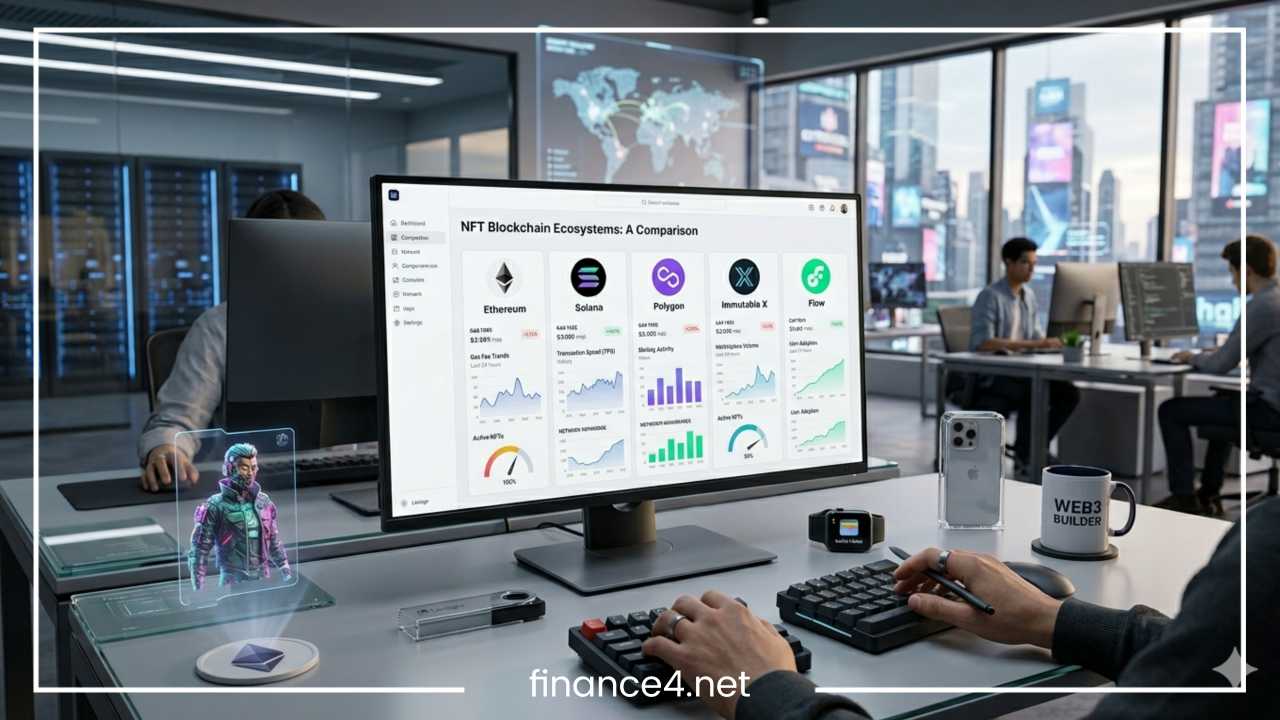
Which Blockchains Support NFTs? Top Networks Compared
The digital asset landscape has undergone a massive transformation. What began as a niche movement centered around pixelated profile pictures has matured into a sophisticated multi-billion-dollar economy encompassing digital art, virtual real estate, gaming items, and tokenized real-world assets. At the core of this revolution are Non-Fungible Tokens, or NFTs. However, as the utility of these assets expands, creators, developers, and investors face a critical technical dilemma: choosing the right underlying infrastructure.
Selecting the appropriate blockchain network is not merely a technical detail; it is a foundational business decision that directly dictates the success of a digital collectible project. The underlying blockchain determines the transaction speed, gas fees, security level, and accessible liquidity. It also governs which NFT marketplaces can host the collection and how easily mainstream audiences can engage with it.
A central question drives this discussion: Why aren’t all NFTs created on the same blockchain? The answer lies in the fundamental tradeoffs of distributed ledger technology, often described as the blockchain trilemma. Networks must balance decentralization, security, and scalability. A chain optimized for rock-solid security and massive liquidity might suffer from low throughput and exorbitant fees during peak congestion. Conversely, a network built for lightning-fast, zero-cost transactions might sacrifice a degree of decentralization.
Understanding these differences is essential for anyone looking to navigate the modern Web3 space. This article provides a comprehensive guide to the top NFT networks, comparing their structural advantages, token standards, and optimal use cases to help you make informed decisions.
What Makes a Blockchain NFT-Compatible?
Not every distributed ledger can support non-fungible assets. For a blockchain to host an NFT ecosystem, it must possess specific architectural capabilities that allow for the creation, verification, and seamless transfer of unique digital items.
Smart Contracts
The bedrock of any NFT network is smart contract functionality. Smart contracts are self-executing pieces of code deployed directly onto the blockchain that automatically enforce agreements and rules without intermediaries. In the context of NFTs, smart contracts act as the digital factories that mint new tokens, define their unique attributes, manage ownership transitions, and enforce secondary creator royalties. Without programmatic logic, a blockchain can only process standard peer-to-peer currency transactions.
NFT Token Standards
To ensure that various applications like wallets, marketplaces, and games can read and display digital collectibles uniformly, networks rely on established token standards. These standards are blueprints that developers follow when writing smart contracts.
On Ethereum-compatible networks, the two most significant frameworks are:
-
ERC-721: This standard requires every single token within a smart contract to be completely unique, carrying its own distinct identifier and metadata. It is the go-to standard for one-of-one digital art piece releases and standalone collectibles.
-
ERC-1155: Often referred to as the multi-token standard, this framework allows a single smart contract to manage a mix of fungible, semi-fungible, and non-fungible assets simultaneously. For example, a Web3 game can use ERC-1155 to manage unique weapons alongside fungible in-game gold coins, significantly reducing deployment complexity and transaction costs.
Other non-Ethereum networks utilize native equivalents to achieve similar uniformity across their independent ecosystems.
Ownership Verification and Metadata Storage
Blockchains provide an immutable ledger that tracks token history, proving exactly who owns a specific asset at any given moment. However, because saving large files directly on a blockchain is prohibitively expensive, the actual visual or interactive component of an NFT (the image, audio track, or 3D file) is typically stored off-chain.
The smart contract contains a cryptographic pointer to this metadata. Secure, decentralized file storage solutions like the InterPlanetary File System (IPFS) or Arweave are commonly used to ensure that the metadata cannot be altered or deleted by a centralized party, maintaining the long-term integrity of the digital asset.
Marketplace Integration
A thriving ecosystem requires friction-free environments where buyers and sellers can meet. NFT-compatible chains must have robust integration points that allow decentralized applications to safely read token data, execute escrow agreements, and settle sales across public NFT marketplaces.
Critical Evaluation Factors
When comparing different networks, five core operational metrics determine their overall viability for users and creators:
-
Transaction Costs: The network fees, commonly called gas fees, required to mint, buy, or transfer an asset.
-
Scalability and Throughput: How many transactions per second the network can handle, directly influencing confirmation speeds.
-
Security and Decentralization: The robustness of the validator network against attacks and censorship.
-
Ecosystem Size and Liquidity: The volume of active capital, collectors, and established marketplaces natively operating on the chain.
-
Creator Tools: The availability of development frameworks, software development kits, and no-code minting platforms.
Top Blockchains That Support NFTs
The blockchain landscape features several prominent networks competing for dominance, each carving out a distinct niche based on its architectural strengths.
Ethereum
Ethereum is the undisputed pioneer and reigning powerhouse of the digital collectible industry. It was on this decentralized network that the very concept of programmatic unique tokens was born, establishing the infrastructure that sparked the global Web3 cultural phenomenon.
As the largest asset ecosystem, Ethereum commands the highest concentration of historical significance, developer talent, and financial capital. The network relies primarily on the ERC-721 and ERC-1155 token standards, which serve as the foundational architecture for nearly all modern asset protocols.
The vast majority of high-profile trading volume flows through premier platforms natively anchored to Ethereum, including OpenSea, Blur, and Rarible. This network is the definitive home for legendary, culturally dominant profile picture collections like the Bored Ape Yacht Club, CryptoPunks, and Azuki, alongside high-value fine art platforms like Art Blocks.
Pros:
-
Unparalleled Liquidity: Ethereum hosts the highest concentration of affluent collectors and institutional capital, making it easier to sell high-value assets quickly.
-
Maximum Security: Backed by an expansive, globally distributed validator network, it offers premier decentralization and immutability.
-
Interoperability: Ethereum assets are universally recognized and natively supported by almost every Web3 hardware wallet, institutional custodian, and software application.
Cons:
-
Prohibitive Gas Fees: During periods of high network activity or popular minting events, transaction costs can skyrocket to tens or hundreds of dollars, pricing out retail participants.
-
Network Congestion: Base-layer throughput is limited, often resulting in slower confirmation times when the network faces heavy usage.
Polygon
Polygon is a highly successful Layer-2 scaling solution designed specifically to alleviate the congestion and cost barriers inherent to the Ethereum mainnet. Operating as a Proof-of-Stake sidechain that settles transactions back to Ethereum, Polygon offers full Ethereum Virtual Machine compatibility. This allows developers to port their existing smart contracts over with zero structural code modifications.
Polygon has established itself as the premier bridge for traditional corporations, global consumer brands, and mainstream retail audiences looking to dip their toes into Web3. Major enterprises like Starbucks, Nike, and Reddit have selected Polygon to power their digital loyalty programs and mass-scale collectible rollouts due to its predictable, ultra-low cost structure.
Pros:
-
Minimal Transaction Costs: Minting and transferring assets typically costs fractions of a cent, enabling high-volume microtransactions.
-
Rapid Finality: Block production times are incredibly swift, delivering near-instant confirmations for interactive applications.
-
Mainstream Corporate Alignment: The network possesses an aggressive business development arm that consistently secures partnerships with legacy Web2 corporations.
Cons:
-
Lower Premium Premium Volume: While transaction counts are massive, the average purchase price per asset is substantially lower than Ethereum’s luxury art market.
-
Layer-2 Security Dependencies: While highly secure, sidechain and rollup architectures introduce additional smart contract risks compared to settling directly on a native Layer-1 ledger.
Solana
Solana is an independent, high-performance Layer-1 blockchain constructed from the ground up to maximize transaction velocity and throughput without relying on complex Layer-2 scaling frameworks. Utilizing an innovative Proof-of-History consensus mechanism alongside Proof-of-Stake, Solana processes tens of thousands of transactions per second at a global scale.
Solana has built a fiercely loyal, highly active community that rivals Ethereum in daily user engagement. Its native digital asset architecture treats tokens as first-class citizens directly embedded into the runtime engine, rather than requiring complex custom smart contracts for basic deployment.
The Solana ecosystem thrives across specialized marketplaces like Magic Eden and Tensor, hosting culturally significant collections such as Mad Lads, Solana Monkey Business, and Claynosaurz.
Pros:
-
Exceptional Throughput: The network delivers sub-second confirmation times, creating a highly responsive user experience akin to traditional internet applications.
-
Negligible Fees: Standard minting and trading actions cost a minute fraction of a dollar, eliminating financial friction for frequent traders.
-
Advanced Programmability: Innovations like executable NFTs (xNFTs), which function as tokenized applications within a wallet, allow for unique utility.
Cons:
-
Historical Network Stability Issues: The chain has suffered from intermittent bouts of performance degradation and total block production pauses during extreme traffic spikes in its formative years.
-
Hardware Centralization: Running a validator node requires specialized, high-performance computing hardware, resulting in a more concentrated node operator base than Ethereum.
BNB Chain
Developed originally under the guidance of the global crypto exchange Binance, BNB Chain is an EVM-compatible network designed to provide a highly efficient environment for mass-market Web3 applications. It utilizes a Proof-of-Staked-Authority consensus model, where a selected group of validated nodes manage block production to ensure consistent performance.
BNB Chain integrates seamlessly with a massive retail user base, utilizing native BEP-721 and BEP-1155 token frameworks. The ecosystem is heavily integrated with the central Binance NFT marketplace alongside prominent decentralized venues like PancakeSwap, making it a hub for retail-focused gaming assets, tokenized fan tokens, and affordable digital collectibles.
Pros:
-
Massive Built-In User Base: Direct structural connections to the world’s largest cryptocurrency exchange provide an unparalleled funnel for onboarding new retail users.
-
Low Operational Fees: Transaction processing stays highly affordable, preventing network spikes from ruining the user experience.
-
Strong Developer Tooling: Full EVM compatibility allows creators to repurpose established Ethereum developer toolsets effortlessly.
Cons:
-
Centralization Concerns: The limited number of network validators leaves the infrastructure more centralized and vulnerable to single points of failure or regulatory pressures than fully decentralized peer chains.
-
Perception Hurdles: The network is often viewed by elite fine art collectors as a utility-focused retail chain rather than a home for premium digital masterpieces.
Avalanche
Avalanche is a highly scalable multi-chain network utilizing a novel consensus mechanism that delivers near-instant transaction finality. The architecture is split into three separate native Blockchains, with the C-Chain handling smart contracts and hosting its thriving, EVM-compatible digital asset ecosystem.
Avalanche has successfully carved out a powerful niche within the Web3 gaming, meta-universe, and enterprise institutional asset management spaces. A defining architectural feature of Avalanche is its Subnet functionality, which allows independent developers and gaming studios to spin up custom, dedicated app-specific blockchains that inherit the security of the primary Avalanche validator set while avoiding gas fee interference from outside applications.
Pros:
-
Blazing Fast Finality: Transactions settle in under a second, offering a smooth user experience for real-time applications.
-
Subnet Customizability: Web3 developers can build tailored, isolated blockchain environments specifically designed for individual gaming sub-economies.
-
Strong Security Protocols: The consensus engine supports high validator counts, ensuring strong decentralization and network resilience.
Cons:
-
Fragmented Liquidity: Capital can sometimes become split across various customized Subnets, making broad discovery difficult for independent creators.
-
Smaller General Marketplace Base: While expanding rapidly, the pure non-gaming digital art market volume lags behind primary competitors.
Flow
Flow is a decentralized, developer-friendly Layer-1 blockchain constructed specifically to support high-scale consumer applications, interactive games, and massive digital entertainment ecosystems. Created by Dapper Labs—the engineering team behind CryptoKitties—Flow was built after its creators experienced firsthand the severe limitations of early Ethereum network congestion.
Flow features a unique pipeline architecture that separates the tasks of collection, consensus, execution, and verification across distinct node types, maximizing performance without resorting to sharding. It is the underlying infrastructure powering massive, mainstream consumer successes like NBA Top Shot, NFL All Day, and Disney Pinnacle. Flow utilizes its own human-readable programming language, Cadence, designed to secure smart contracts against common exploits.
Pros:
-
Mainstream Onboarding Mastery: Flow simplifies the crypto user experience by enabling frictionless credit card purchasing, hidden gas fees, and seamless custodial account creation.
-
Prestigious Global Partnerships: The network hosts exclusive licensed intellectual properties from the world’s largest sports leagues and media conglomerates.
-
Upgradable Smart Contracts: Unlike traditional immutable networks, Flow allows smart contracts to be continuously polished and upgraded in a secure beta phase before becoming permanent.
Cons:
-
Ecosystem Isolation: Flow does not natively align with standard EVM tools, requiring developers to learn Cadence and build within a more specialized environment.
-
Centralization in Onboarding: The heavy reliance on custodial ecosystem portals reduces the emphasis on true self-custody principles for casual users.
Tezos
Tezos is an energy-efficient, self-amending Layer-1 blockchain built with an emphasis on institutional grade security, formal verification, and long-term upgradeability without requiring disruptive hard forks. Operating on a Liquid Proof-of-Stake model, Tezos has positioned itself as the definitive eco-friendly home for independent digital artists and experimental creative communities worldwide.
The network gained a stellar reputation among digital creators during early climate debates due to its negligible carbon footprint. Platforms like fxhash and Objkt have turned Tezos into a premier hub for generative art, algorithmic coding masterpieces, and independent global art scenes, providing a supportive culture that focuses heavily on artistic expression over financial speculation.
Pros:
-
Eco-Friendly Footprint: The network consumes minimal energy, making it highly attractive to environmentally conscious artists and cultural institutions.
-
Culturally Rich Community: Tezos boasts a tight-knit ecosystem of authentic fine artists, museums, and serious digital art collectors.
-
Formal Code Verification: The platform supports advanced mathematical proofing to confirm smart contract security before deployment, minimizing hack risks.
Cons:
-
Subdued Speculative Capital: The chain experiences lower speculative trading volume and overall financial liquidity compared to hyper-financialized competitor platforms.
-
Slower Mainstream Penetration: General market awareness outside of fine art circles is smaller, limiting reach for mass consumer drops.
Immutable X
Immutable X is a highly specialized, industry-leading Layer-2 scaling network engineered explicitly for Web3 gaming, massive asset minting, and instant enterprise transactions on Ethereum. Utilizing StarkWare’s powerful Zero-Knowledge Rollup (zk-Rollup) technology, Immutable X bundles thousands of off-chain transactions into a single cryptographic proof verified on the Ethereum mainnet.
The platform’s standout feature is its ability to offer absolute zero gas fees for minting, transferring, and trading unique digital items, all while fully inheriting the native base-layer security of Ethereum. Immutable X acts as the underlying engine powering premier Web3 gaming titles such as Gods Unchained, Illuvium, and Ubisoft’s Might & Magic Fates, utilizing its unique Immutable Passport to offer seamless email-based onboarding for gamers.
Pros:
-
True Zero Gas Architecture: Users can trade and transfer mass-scale assets endlessly without paying any network fees.
-
Ethereum Base Security: Because proofs settle directly onto Ethereum, assets remain safe from independent Layer-2 validator failures.
-
Global Shared Orderbook: Orders posted on one marketplace are instantly broadcasted across every connected application in the entire ecosystem, maximizing asset exposure.
Cons:
-
Hyper-Specialized Focus: The network is explicitly tailored for high-volume items like gaming cards and skin cosmetics, making it poorly suited for standalone fine art releases.
-
Bridge Complexity: Moving assets directly off the Layer-2 platform back onto Ethereum mainnet requires waiting through a defined withdrawal period.
NFT Blockchain Comparison Table
The following structured matrix compares the core characteristics of each primary network to help you weigh their technical tradeoffs:
| Blockchain | Fees | Speed | Security | NFT Popularity | Best For |
| Ethereum | High | Medium | Very High | Very High | High-Value Premium Fine Art & Historical Blue Chips |
| Polygon | Low | High | High | High | Corporate Brand Loyalty Programs & Affordable Minting |
| Solana | Very Low | Very High | High | High | High-Frequency Trading, Interactive Utilities & Web3 Gaming |
| BNB Chain | Low | High | Medium | Medium | General Retail Applications & Exchange Integrated Assets |
| Avalanche | Low | High | High | Medium | Enterprise Custom Infrastructures & Isolated Gaming Subnets |
| Flow | Low | High | High | Medium | Mainstream IP Collectibles & Frictionless Credit Card User Onboarding |
| Tezos | Very Low | High | High | Niche | Eco-Friendly Generative Art & Independent Creative Communities |
| Immutable X | Very Low | High | High | Growing | Mass-Volume Web3 In-Game Item Trading with Zero Gas Costs |
Which Blockchain Is Best for Different NFT Use Cases?
Because every blockchain features distinct technical trade-offs, there is no single network that fits every scenario. The ideal selection depends entirely on your target audience, financial budget, and functional goals.
Best for Artists
For fine artists releasing high-value, exclusive collections or standalone one-of-one creations, Ethereum remains the gold standard. The concentration of wealth and institutional collectors willing to purchase premium items justifies paying the higher gas costs required to secure the art on an immutable layer.
Alternatively, digital artists focusing on complex generative code or independent alternative styles find a deeply supportive, highly active, and collaborative cultural ecosystem on Tezos, which provides low costs without sacrificing artistic integrity.
Best for NFT Gaming
Web3 video games require massive volume, microtransactions, and instant confirmation speeds to ensure player actions feel seamless. Solana excels here by processing massive in-game item transactions instantly at near-zero cost.
For developers who want to stay close to Ethereum’s security model, Immutable X offers an unparalleled environment with its zero-gas rollup technology and built-in global gaming orderbook. Avalanche is also a top contender for complex gaming studios that want to run their game’s economy on an isolated, dedicated Subnet to avoid outside network traffic spikes.
Best for Brands
Major international consumer corporations launching loyalty campaigns or digital apparel collections require maximum stability, institutional compliance, and predictable cost structures. Polygon has captured this market segment through its strong enterprise business relations, low minting fees, and total EVM compatibility, making it easy for legacy corporations to transition onto decentralized rails.
Best for High-Value Collections
When launching a premium, limited-edition profile picture collection or a luxury digital asset brand with aspirations of building a long-term media franchise, Ethereum is practically mandatory. The presence of existing blue-chip liquidity and deep institutional support creates an environment where premium collections can maintain their floor values and prestige.
Best for Beginners
For casual users who have never interacted with crypto wallets, seed phrases, or gas fees, Flow provides the smoothest onboarding pipeline. Its architecture allows developers to build user interfaces where consumers can purchase officially licensed collectibles using standard fiat credit cards, keeping the blockchain layer completely invisible. Similarly, Polygon offers an accessible entry point due to its cheap transaction fees and deep integration across mainstream consumer platforms.
Best for Cheap NFT Minting
If a creator intends to mint thousands of individual items or run experimental projects without spending significant upfront capital, Solana, Polygon, and Tezos offer the most practical options. These networks allow for massive collections to be generated and deployed for mere pocket change, eliminating the financial barriers to entry that plague the Ethereum mainnet.
Emerging NFT Blockchains to Watch
While the established giants continue to fight for dominant market share, a new generation of innovative blockchain networks is rapidly gaining traction in the digital collectible arena.
Move-Based Networks: Aptos and Sui
Aptos and Sui are high-throughput Layer-1 networks built utilizing Move, a secure, resource-oriented programming language originally developed by engineers at Meta. These chains treat assets as distinct objects directly built into the storage architecture rather than modifying secondary smart contract balances. This approach drastically minimizes the risk of smart contract exploits while enabling unparalleled transaction concurrency. Both platforms are seeing rapid growth in Web3 gaming adoptions and high-performance dynamic collections.
Established Layer-1 Innovators: Cardano
Cardano takes a methodical, peer-reviewed approach to development, utilizing an Extended Unspent Transaction Output (eUTXO) model that handles token creation natively without needing smart contracts. This eliminates the asset risk of code vulnerabilities, helping Cardano build a passionate, self-sustained community of dedicated collectors who appreciate structural security and predictable transaction behavior.
Layer-2 Innovation Leaders: Arbitrum and Base
The Layer-2 landscape is experiencing massive structural changes. Arbitrum has successfully leveraged its deep Decentralized Finance (DeFi) liquidity to attract sophisticated Web3 gaming hubs and interactive community projects.
Meanwhile, Base—an optimistic rollup developed by Coinbase using the open-source OP Stack—has witnessed an explosion in active retail deployment. By leveraging Coinbase’s massive ecosystem, direct fiat on-ramps, and user-friendly consumer applications, Base is quickly becoming a primary hub for casual creator mints, social applications, and accessible digital asset trading.
Future of NFTs Across Multiple Blockchains
The digital collectible industry is rapidly moving away from its early isolationist roots toward a interconnected, cross-chain future. In the early days of Web3, choosing a blockchain meant locking your collection into a single ecosystem, completely cut off from users on rival chains. Today, that friction is being actively erased.
+-----------------------------------------------------------+
|                    CROSS-CHAIN ECOSYSTEM                  |
+-----------------------------------------------------------+
|                                                           |
|    [ Ethereum Mainnet ]          [ Layer-2 Rollups ]      |
|    (High-Value Settlement) <--->  (Base, Arbitrum, IMX)   |
|               ^                           ^               |
|               |                           |               |
|               v                           v               |
|    ===================================================    |
|    [ Interoperability Bridges / Messaging Protocols ]     |
|    ===================================================    |
|               ^                           ^               |
|               |                           |               |
|               v                           v               |
|    [ High-Speed Layer-1s ]       [ Specialized Chains ]   |
|    (Solana, Aptos, Sui)    <---> (Flow, Tezos, Subnets)   |
|                                                           |
+-----------------------------------------------------------+
Cross-Chain NFTs and Interoperability
Advanced cross-chain messaging protocols and secure bridge technologies allow for true asset interoperability. In this new paradigm, an item can be natively minted on a low-cost network like Polygon or Solana, used inside a high-speed game environment, and subsequently bridged over to the Ethereum mainnet to be sold as a premium asset amidst deep financial liquidity. This allows users to enjoy the low fees of scalability layers while retaining access to the premium settlement layers of major chains.
Layer-2 and Layer-3 Expansion
The long-term scaling strategy for Web3 continues to center around modular architectures. The industry is seeing the proliferation of highly customized Layer-3 hyper-chains and application-specific rollups. These highly specialized environments sit directly on top of established Layer-2 networks, providing isolated, zero-cost sandboxes for single gaming franchises or enterprise platforms while maintaining structural connections to the secure Ethereum base layer.
Real-World Asset Tokenization
The frontier of unique digital tokens is moving rapidly toward the tokenization of Real-World Assets (RWAs). Financial institutions and enterprise projects are utilizing highly secure, programmable blockchains to represent fractional ownership of physical real estate, private private equity shares, high-end luxury goods, and corporate debt instruments. This use case demands maximum institutional compliance and network security, driving significant enterprise development on highly robust networks like Avalanche, Ethereum, and specialized corporate private ledgers.
Final Thoughts
As the digital asset space continues to expand, it is clear that no single blockchain is best for every NFT use case. The industry has evolved into a highly specialized ecosystem of interconnected networks, each tailored to solve specific operational problems.
-
Ethereum remains the undisputed king for premium, high-value fine art and historically significant blue-chip collections where absolute decentralization and maximum liquidity are vital.
-
Solana and Polygon offer the ideal environments for high-velocity trading, interactive digital utilities, and cost-effective mass minting.
-
Immutable X and Avalanche stand out as the definitive choices for Web3 gaming studios that require zero gas costs or customizable, application-specific subnets.
-
Flow serves as the premier gateway for onboarding mainstream global audiences through licensed entertainment intellectual properties and simple credit card payments.
For creators and developers, the path forward requires analyzing your project’s specific needs against the structural tradeoffs of these networks. By matching your collection’s functional goals with the blockchain that naturally aligns with those requirements, you can build a stable foundation for long-term success in the Web3 digital asset landscape.
Frequently Asked Questions
Which blockchains support NFTs for digital art and gaming?
The most established blockchains supporting NFTs across the digital art and gaming sectors include Ethereum, Solana, Polygon, Immutable X, Avalanche, Flow, Tezos, and BNB Chain. Newer Layer-1 platforms like Aptos and Sui also provide built-in framework support for non-fungible tokens. For premium digital art, creators heavily favor Ethereum and Tezos, while Solana and Immutable X are preferred for high-frequency Web3 gaming economies due to their superior transaction throughput.
What is the cheapest blockchain to mint NFT assets without high gas fees?
Solana and Polygon are widely recognized as the cheapest mainstream blockchains to mint NFT assets. Minting an NFT on Solana costs a minute fraction of a cent due to its Proof-of-History efficiency, while Polygon offers near-zero costs as an Ethereum Layer-2 network. For gaming-specific items, Immutable X provides a true zero-gas minting environment by utilizing advanced cryptographic rollups to bundle transactions off-chain before settling them securely on Ethereum.
Which is the best blockchain for NFTs to launch a high-value collection?
Ethereum remains the best blockchain for launching premium, high-value NFT collections. While its transaction fees are higher than competitor networks, Ethereum commands over ninety percent of premium market liquidity and hosts the largest concentration of affluent collectors. Blue-chip projects choose Ethereum because its decentralized architecture provides superior long-term security, cultural prestige, and immediate compatibility with institutional custodians and leading marketplaces.
How do Ethereum ERC-721 and ERC-1155 NFT smart contracts differ?
The primary difference lies in structural asset handling. The ERC-721 token standard treats every single asset inside a smart contract as completely unique and non-divisible, making it ideal for standard digital art pieces and standalone collectibles. Conversely, the ERC-1155 multi-token standard allows a single smart contract to manage a combined mixture of fungible, semi-fungible, and non-fungible tokens simultaneously. This flexibility helps Web3 game developers deploy hundreds of unique in-game items while drastically reducing execution gas costs.
Can you transfer an NFT from one blockchain to another network?
An NFT cannot be directly sent to a different blockchain network because each ledger utilizes distinct, incompatible code bases. However, you can move an NFT across networks using specialized cross-chain bridges or interoperability protocols. The bridging process safely locks the original token inside a smart contract on the source chain while minting an identical, verified copy on the destination chain, allowing users to move digital collectibles between layers.
Why do some NFT networks suffer from high network congestion?
Network congestion occurs when transaction volume outpaces the maximum throughput a blockchain layer can handle per block. Monolithic networks like Ethereum limit base-layer processing capacity to maintain absolute decentralization and security. When thousands of users try to mint an NFT project simultaneously, they must compete by offering higher transaction fees to validators, resulting in slow confirmation times and skyrocketing gas spikes.