NFT-Based IP Licensing Across Multiple Chains
 by
by 
NFT-Based IP Licensing Across Multiple Chains | Multi-Chain IP Rights Management
The advent of Non-Fungible Tokens (NFTs) has dramatically reshaped our understanding of digital ownership, moving far beyond their initial perceived role as mere digital collectibles. What began as a niche for unique digital art and collectibles has rapidly expanded into diverse sectors, demonstrating NFTs’ powerful capabilities to represent a wide array of assets. Concurrently, intellectual property (IP) licensing remains a cornerstone of the digital economy, facilitating the creation, distribution, and monetization of innovations and creative works. Traditional IP licensing, however, is often fraught with complexities – manual processes, geographical limitations, and intricate legal frameworks that can hinder agility and transparency.
Enter the transformative potential of cross-chain (multi-chain) interoperability. While NFTs offer a robust mechanism for proving ownership and encoding rights on a single blockchain, the true promise of a decentralized digital future lies in the seamless movement and interaction of these assets across various blockchain networks. This article delves into how NFTs, combined with the burgeoning multi-chain infrastructure, can revolutionize IP licensing, offering unprecedented levels of transparency, automation, and global reach. We will explore the technical underpinnings, practical applications, and the significant legal and ethical challenges that must be navigated as we move towards a more interconnected and decentralized IP landscape.
Understanding NFTs in the Context of IP
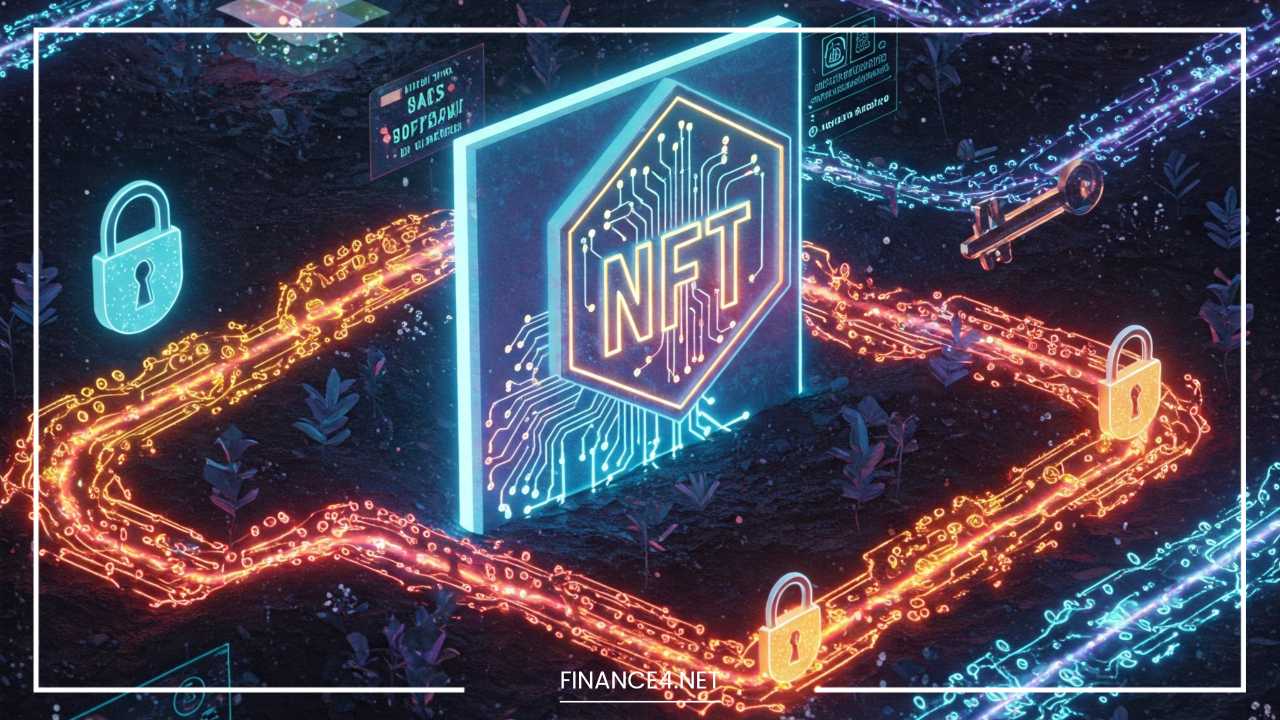
At its core, an NFT is a unique digital identifier recorded on a blockchain, proving ownership of a specific digital or physical asset. Unlike cryptocurrencies, which are “fungible” (each unit is interchangeable with another), NFTs are “non-fungible,” meaning each token is distinct and irreplaceable. This inherent uniqueness makes NFTs exceptionally well-suited for representing intellectual property, which by its nature, is singular and often carries specific rights.
The crucial distinction, however, lies between owning an NFT and owning the underlying IP rights. When you purchase an NFT, you typically acquire ownership of that specific token, which represents a digital file or asset. This does not automatically transfer the copyright or other IP rights to the underlying content. For example, buying an NFT of a song does not automatically give you the right to reproduce, distribute, or perform that song commercially. These rights typically remain with the original creator unless explicitly transferred through a separate legal agreement or embedded within the NFT’s smart contract. Without clear contractual terms, the NFT holder generally has only the right to display the NFT for personal use.
Despite this distinction, NFTs are increasingly being used to facilitate IP transactions. In music, artists are tokenizing songs or albums, allowing collectors to own a piece of their work, sometimes coupled with specific usage rights or royalty streams. In the art world, NFTs provide verifiable provenance and authenticity for digital art. Trademarks can be represented as NFTs, potentially simplifying brand licensing by allowing verifiable, tokenized usage rights. Even patents, traditionally complex and centralized, are being explored for NFT representation, enabling fractional ownership or streamlined licensing. The potential for NFTs to provide immutable proof of existence, provenance, and even a framework for rights management for various IP types is immense.
Traditional IP Licensing vs. NFT-Based Licensing
Traditional IP licensing is a well-established, but often cumbersome, process. It typically involves intricate legal agreements drafted by lawyers, outlining the scope of usage, geographical limitations, duration, royalty structures, and dispute resolution mechanisms. Tracking usage and royalty payments often requires manual reconciliation and auditing, which can be time-consuming and prone to errors. Furthermore, jurisdictional issues can significantly complicate cross-border licensing, requiring adherence to diverse national laws and enforcement mechanisms. The entire system relies heavily on trust between parties and the efficacy of centralized legal systems.
NFT-based licensing, by contrast, introduces a paradigm shift through the power of programmable contracts and blockchain transparency. Smart contracts, self-executing code stored on a blockchain, can directly encode licensing terms. This means that usage rights (e.g., right to display, reproduce for non-commercial purposes, or even commercial rights with specific limitations), royalty payments (e.g., a percentage of secondary sales), and the duration of the license can be automatically enforced without intermediaries. Every transaction and condition fulfillment is immutably recorded on the blockchain, providing an unparalleled level of transparency and an auditable trail. Automation reduces administrative overhead, accelerates transactions, and minimizes the potential for human error or disputes over payment.
The benefits are clear: increased efficiency, reduced costs, enhanced transparency, and a global, borderless framework for licensing. However, limitations exist. The rigidity of smart contracts can make it challenging to capture the nuances and unforeseen circumstances often addressed in traditional legal agreements. Legal enforceability of purely on-chain agreements is still evolving, with many jurisdictions yet to explicitly recognize them. The complexity of translating sophisticated legal concepts into executable code also presents a hurdle, requiring close collaboration between legal experts and blockchain developers. Despite these challenges, the ability to embed and automate licensing logic directly into the asset’s token offers a compelling alternative to conventional methods.
Multi-Chain Infrastructure and Interoperability
The blockchain landscape is not monolithic; it’s a diverse ecosystem comprising numerous distinct networks, each with its own strengths, weaknesses, and communities. Major players include Ethereum, known for its robust decentralized application ecosystem; Solana, praised for its high throughput and low transaction fees; Polygon, an Ethereum scaling solution; and Avalanche, offering fast finality and custom subnets. Operating across these multiple chains means that an IP asset, represented as an NFT, can potentially exist, be traded, or have its licensing terms enforced on any of these networks.
The importance of interoperability for NFT-based IP licensing cannot be overstated. Without it, the vision of a truly global and liquid IP market remains fragmented. “Vendor lock-in,” where an NFT and its associated IP rights are confined to a single blockchain, severely limits its reach, utility, and potential for monetization. If an artist mints an NFT on Ethereum, but a potential licensee operates exclusively on Solana, the lack of interoperability creates an artificial barrier.
Various protocols and technologies are emerging to bridge these isolated blockchain environments. LayerZero and Wormhole are prominent examples of cross-chain messaging protocols, enabling arbitrary data, including NFT ownership and licensing information, to be passed securely between different blockchains. Polkadot and Cosmos IBC (Inter-Blockchain Communication Protocol) offer frameworks for building interconnected networks, where specialized blockchains (parachains in Polkadot, zones in Cosmos) can communicate and share assets natively. These solutions work by various mechanisms, such as locking an NFT on one chain and minting a “wrapped” version on another, or by facilitating direct message passing between smart contracts on different networks. As these interoperability layers mature, they will be critical enablers for the widespread adoption of multi-chain NFT-based IP licensing, allowing IP owners to reach broader audiences and licensees to access a wider pool of digital assets.
Smart Contracts and Licensing Logic
Smart contracts are the backbone of NFT-based IP licensing, transforming static legal documents into dynamic, executable code. These self-executing agreements, residing on the blockchain, can precisely encode a wide array of licensing terms. This includes:
- Usage Rights: Defining what the licensee is permitted to do with the IP (e.g., display in a metaverse, use in derivative works, incorporate into a product, for commercial or non-commercial purposes). These rights can be granular, specifying timeframes, geographical regions, or even the number of uses.
- Royalties: Automatically distributing a predetermined percentage of future sales (e.g., secondary market sales of the NFT or products incorporating the IP) back to the original IP owner. This introduces a persistent revenue stream for creators, often lacking in traditional one-off sales.
- Duration: Specifying the license term, after which the rights automatically revert to the licensor or require renewal.
- Conditions for Activation/Revocation: Setting conditions for the license to become active (e.g., payment received) or to be revoked (e.g., breach of terms detected via an oracle).
To facilitate this, various templates and standards for NFT licensing are being developed. Core NFT standards like ERC-721 (for unique assets) and ERC-1155 (for multi-token types, including both fungible and non-fungible) provide the fundamental framework. However, these basic standards lack inherent licensing capabilities. Therefore, extensions and specialized frameworks are emerging. Examples include proposed “licenses for NFTs” from organizations like a16z’s “Can’t Be Evil” licenses, which offer clear, legally robust frameworks for granting specific rights alongside NFT ownership. Similarly, projects are exploring ways to embed or link to legally binding off-chain agreements with on-chain verification, aiming to create a hybrid model.
Despite the promise, several challenges remain. The primary concern is legal enforceability: while smart contracts can execute code flawlessly, their legal standing in various jurisdictions is still being defined. Can a smart contract truly constitute a legally binding agreement in the same way a traditional contract does? Flexibility is another challenge; real-world licensing agreements often require subjective interpretation, negotiation, and the ability to adapt to unforeseen circumstances, which is difficult to hardcode into immutable smart contracts. The complexity of real-world licenses, with their myriad clauses, contingencies, and dispute resolution mechanisms, presents a significant hurdle for complete on-chain automation. Hybrid models, combining on-chain execution with off-chain legal backing, are likely to be the interim solution as the legal landscape catches up with technological innovation.
Case Studies & Use Cases
While multi-chain NFT-based IP licensing is still an evolving field, several projects and emerging use cases highlight its transformative potential:
- Story Protocol: A prominent project aiming to create an on-chain IP layer for the internet. Story Protocol allows creators to register their IP, define licensing terms via smart contracts, and enable others to build upon or license that IP, with royalties automatically flowing back to the original creators, all across multiple chains. This aims to foster an open, composable IP ecosystem.
- Mintbase: While primarily an NFT minting platform, Mintbase emphasizes creator control over digital assets. It allows creators to specify royalties on secondary sales and, combined with external legal frameworks, could serve as a foundational layer for issuing NFTs with embedded licensing terms that could then potentially be bridged to other chains.
- Myco: A decentralized music streaming platform built on NEAR Protocol, Myco allows artists to tokenize their music. This opens avenues for granular licensing of musical works, potentially allowing different components of a song (e.g., beat, lyrics) to be licensed independently via NFTs, with mechanisms for cross-chain royalty distribution.
- Royal.io: Focuses on music royalties, enabling fans to buy fractional ownership of songs via NFTs and earn royalties when those songs are streamed. While not explicitly multi-chain in its licensing, the model demonstrates how NFTs can tokenize complex revenue streams, a principle extensible to cross-chain IP.
- IPwe: This company is exploring the tokenization of patents as NFTs. While their primary focus is on simplifying patent transactions and management, the underlying concept of representing a complex IP asset (a patent) as an NFT inherently opens the door to programmable licensing across chains for innovation.
Examples from Creative Industries:
- Music: Imagine an NFT representing a specific sound sample. A game developer could purchase a license NFT for this sample on Polygon, automatically paying a royalty to the original artist on Ethereum every time their game is downloaded.
- Gaming: In a truly interoperable metaverse, an NFT representing a unique in-game character skin could carry a license allowing its use in multiple virtual worlds across different blockchain platforms, with the original artist earning a royalty each time the skin is “ported” or used in a new environment.
- Fashion: A digital fashion house could issue an NFT for a unique design. Another brand could purchase a limited commercial license via an NFT to incorporate that design into a physical product line, with smart contracts automatically triggering payments based on sales data, potentially across different payment chains.
While fully realized cross-chain IP licensing in practice is still nascent, the foundational technologies are being built. Many current “cross-chain” applications focus on moving the NFT itself, rather than deeply embedding and enforcing licensing logic across chains. However, the theoretical framework is robust, and the ongoing development of universal messaging protocols and interoperability standards suggests that sophisticated cross-chain licensing models are on the horizon.
Legal, Ethical, and Regulatory Considerations
The intersection of NFTs, IP, and blockchain technology introduces a complex web of legal, ethical, and regulatory challenges that demand careful navigation.
Legal Recognition of NFT-Based Licenses: One of the most significant hurdles is the varying legal recognition of NFT-based licenses across different jurisdictions. While some legal systems are beginning to acknowledge NFTs as a form of property, their status as legally binding contracts for IP licensing is far from settled. Courts are still grappling with how traditional contract law, copyright law, and property law apply to decentralized, immutable smart contracts. Clarity is needed on issues such as:
- Whether on-chain agreements constitute a valid contract.
- How to handle breaches of smart contract terms that might not align with traditional legal remedies.
- The enforceability of “code is law” in a real-world legal context.
Jurisdictional Challenges with Cross-Border and Cross-Chain Agreements: IP rights are inherently territorial. Copyrights, patents, and trademarks are typically granted and enforced under national laws. In a decentralized, multi-chain environment, where IP assets can theoretically exist and be transacted anywhere, determining which jurisdiction’s laws apply becomes incredibly complex. If an NFT-based license is breached, which court has jurisdiction? How can a judgment be enforced across borders and against anonymous or pseudonymous blockchain participants? Multi-chain interoperability exacerbates these issues, as a single IP asset might traverse multiple legal and technical landscapes.
Copyright and IP Enforcement in a Decentralized World: The decentralized nature of blockchain presents both opportunities and challenges for IP enforcement. On one hand, the immutable record of creation and ownership provided by NFTs can aid in proving provenance. On the other hand, tracing and stopping unauthorized minting or use of copyrighted material can be difficult, especially if the perpetrators are anonymous and operating across multiple chains. Current mechanisms like Digital Millennium Copyright Act (DMCA) takedown notices rely on centralized intermediaries, which are less effective in a decentralized ecosystem. New enforcement paradigms are needed, potentially involving on-chain dispute resolution mechanisms or decentralized autonomous organizations (DAOs) dedicated to IP protection.
Ethical Concerns: Beyond legalities, ethical considerations abound:
- IP infringement via unauthorized minting: The ease of minting NFTs has led to instances where individuals mint NFTs of copyrighted works without permission, leading to disputes and devaluing the original creator’s work.
- Cultural appropriation: NFTs, especially in art and culture, can sometimes be accused of cultural appropriation when elements from marginalized communities are tokenized and commercialized without proper recognition or benefit to the original creators or communities.
- Accessibility and digital divide: The technical complexity and financial barriers to entry in the NFT space can exclude many, raising questions about equitable access to this new form of IP monetization.
Addressing these challenges will require ongoing dialogue and collaboration among legal professionals, blockchain developers, IP owners, and policymakers to establish clear legal frameworks, robust enforcement mechanisms, and ethical guidelines for the responsible development and use of NFT-based IP licensing.
The Future of NFT-Based IP Licensing
The landscape of NFT-based IP licensing is dynamic, with several trends poised to shape its future:
- AI-Generated Content (AIGC): The rapid rise of AI in content creation (text, images, music) introduces new complexities. Who owns the IP of AI-generated content? Can AI models themselves be licensed via NFTs? How will royalties be distributed when AI contributes to creative works? NFTs could play a crucial role in tracking and monetizing AI-assisted creative endeavors and their derivatives.
- DAO-Based IP Ownership: Decentralized Autonomous Organizations (DAOs) are emerging as new models for collective ownership and governance. DAOs could collectively own IP, managing licensing decisions and revenue distribution among their members via transparent on-chain mechanisms. This democratizes IP ownership and could foster community-driven content creation and monetization.
- On-Chain Royalties and Micropayments: The ability to programmatically enforce royalties on secondary sales is a significant innovation of NFTs. This concept will likely extend to micropayments for granular IP usage (e.g., per-use licenses for digital assets in games or metaverses), all automatically executed on-chain and across multiple networks.
- Evolution of Interoperability Standards: As the need for seamless cross-chain functionality grows, we can expect the maturation of interoperability protocols (like LayerZero, Wormhole, Cosmos IBC) and and the emergence of more standardized cross-chain NFT bridging and communication methods. This will reduce friction and enhance the liquidity and utility of NFT-based IP assets across the broader blockchain ecosystem.
- Potential Role of NFTs in Global IP Markets: NFTs have the potential to democratize access to IP markets, allowing creators from anywhere in the world to license their work globally without the need for traditional, often prohibitive, intermediaries. This could lead to a more vibrant, diverse, and accessible global IP economy.
Outlook: How Far Are We From Mainstream Adoption?
While the technological foundations are rapidly advancing, mainstream adoption of multi-chain NFT-based IP licensing is still some distance away. Key barriers include:
- Legal Clarity: The lack of harmonized international legal frameworks for NFT-based IP remains a major impediment.
- User Experience: Current blockchain interfaces and cross-chain operations can be complex for the average user. Simpler, more intuitive platforms are necessary.
- Scalability and Cost: While some chains offer low fees, the overall cost and scalability concerns of blockchain transactions can still be prohibitive for high-volume, granular licensing.
- Security: Cross-chain bridges and protocols introduce new security vulnerabilities that need to be robustly addressed.
Despite these challenges, the trajectory is clear. As legal systems adapt, technology becomes more user-friendly, and interoperability solutions mature, NFT-based IP licensing across multiple chains is poised to become a significant force, reshaping how intellectual property is created, owned, licensed, and monetized in the digital age. We are witnessing the foundational era of a decentralized IP economy.
Final Thoughts
The journey towards NFT-based IP licensing across multiple chains is a testament to the transformative power of blockchain technology. We have explored how NFTs, evolving beyond mere collectibles, are uniquely positioned to represent intellectual property, offering unprecedented transparency, automation, and global reach compared to traditional licensing models. The burgeoning multi-chain infrastructure and interoperability protocols are the critical enablers for this vision, breaking down silos and unlocking liquidity across diverse blockchain networks. Smart contracts, encoding intricate licensing logic, stand at the heart of this innovation, promising a future of programmable and self-executing IP agreements.
While promising, significant challenges persist, particularly in achieving global legal recognition, navigating complex jurisdictional issues, and ensuring robust IP enforcement in a decentralized world. Ethical considerations around unauthorized use and equitable access also demand continuous attention. However, with the emergence of projects dedicated to on-chain IP layers, the increasing sophistication of interoperability standards, and the growing interest in DAO-based IP ownership and on-chain royalties, the future of this space appears vibrant and transformative.
This nascent field requires continued innovation and robust collaboration. It is a clarion call to legal scholars, technologists, and creative industries to work hand-in-hand. Legal frameworks must adapt to the realities of decentralized ownership and programmable rights. Developers must build more intuitive and secure cross-chain tools. Creators and businesses must explore and experiment with these new paradigms. We encourage readers to delve deeper into the protocols mentioned, investigate pilot projects, and engage in the ongoing dialogue shaping this groundbreaking frontier. The seamless, secure, and transparent licensing of IP across a truly interconnected digital landscape is not merely a theoretical concept, but an achievable reality, with NFTs as its digital architects.