How to Build Cross-Chain Launchpads with Bridging
 by
by 
How to Build Cross-Chain Launchpads with Bridging | Step-by-Step Guide
The decentralized finance (DeFi) landscape is evolving rapidly, pushing the boundaries of what’s possible within individual blockchain ecosystems. As innovation accelerates, the need for interconnectedness becomes paramount. Cross-chain launchpads represent a pivotal advancement in this journey, enabling nascent projects to tap into broader audiences, deeper liquidity, and diverse user bases across multiple blockchains. At the heart of this interconnectedness lies “bridging” – the fundamental technology that allows assets and information to flow seamlessly between disparate chains.
This comprehensive guide is designed for a diverse audience: blockchain developers looking to expand their skill sets, Web3 startups aiming to maximize their project’s reach, and tech enthusiasts eager to understand the intricate mechanisms powering the next generation of decentralized applications. We will delve into the “what,” “why,” and “how” of building cross-chain launchpads, emphasizing the critical role of bridging in fostering a truly interoperable Web3 ecosystem. By understanding these concepts, you’ll be equipped to navigate the complexities and harness the immense potential of multi-chain deployments.
What Are Cross-Chain Launchpads?
Traditionally, blockchain launchpads have served as crucial platforms for new projects to conduct Initial DEX Offerings (IDOs), raise capital, and distribute their native tokens to early supporters. These platforms provide a structured environment for token sales, often incorporating mechanisms like whitelisting, staking requirements, and tiered access to ensure fair distribution and build a dedicated community. Popular examples include platforms like Polkastarter, known for its curated project selection and fixed-swap model, TrustPad, offering multi-chain IDOs, and DAO Maker, which pioneered venture yield and strong community engagement.
While highly effective, single-chain launchpads face inherent limitations, primarily confined by the reach and liquidity of their native blockchain. In today’s multi-chain world, confining a project to one chain means missing out on potential investors, liquidity, and a broader user base residing on other popular networks like Ethereum, Binance Smart Chain, Polygon, Avalanche, Solana, and more.
This is precisely where cross-chain launchpads step in. By integrating bridging solutions, these platforms enable projects to launch their tokens simultaneously or sequentially across various blockchains. The benefits are manifold:
- Expanded Reach: Access investors and communities from multiple blockchain ecosystems.
- Enhanced Liquidity: Aggregate liquidity from diverse sources, leading to more robust token markets.
- Increased User Base: Cater to users’ preferences for different chains, reducing friction and onboarding more participants.
- Reduced Gas Fees: Offer participation options on chains with lower transaction costs, making IDOs more accessible.
- Resilience: Diversify risk by not being solely reliant on a single blockchain’s performance or security.
Cross-chain launchpads are not just about token distribution; they are about building a truly decentralized, accessible, and inclusive funding mechanism for the next wave of Web3 innovation.
Understanding Bridging in Blockchain
At its core, a blockchain bridge is a connection that allows cryptocurrencies, tokens, NFTs, and other data to be transferred from one blockchain to another. Imagine two separate islands (blockchains); a bridge allows people (assets/data) to travel between them. Without bridges, these islands remain isolated, limiting the flow of value and information across the broader blockchain archipelago.
The necessity for bridges arises from the inherent design of blockchains. Each blockchain operates as an independent ledger with its own set of rules, consensus mechanisms, and data structures. For instance, an ERC-20 token on Ethereum cannot natively exist or be directly transacted on the Solana blockchain. Bridges solve this interoperability challenge by facilitating the “wrapping” or “locking” of assets on one chain and minting an equivalent representation on the destination chain.
There are several types of bridges, each with its own security assumptions and operational models:
- Custodial Bridges: These bridges rely on a centralized entity or a multisig wallet to hold the assets locked on the source chain. When a user wants to bridge assets, they send them to this custodian, who then mints an equivalent amount on the target chain. While simple, they introduce a single point of failure and require trust in the custodian. Multichain (formerly Anyswap) was a prominent example, though it faced significant challenges.
- Non-Custodial Bridges: These bridges use smart contracts and cryptographic proofs to manage asset locking and unlocking, eliminating the need for a trusted third party. They are generally considered more secure as they minimize counterparty risk. Examples include many modern cross-chain solutions.
- Native Bridges: Built and maintained by the blockchain project itself, often integrated directly into the protocol. An example is the Polygon PoS Bridge, which connects Polygon with Ethereum.
- Wrapped Asset Bridges: These create a “wrapped” version of an asset on a different chain. For example, Wrapped Bitcoin (WBTC) on Ethereum represents Bitcoin locked on the Bitcoin blockchain.
Key players in the bridging space include:
- LayerZero: A generalized messaging protocol that allows dApps to build native cross-chain applications without an intermediary chain. It focuses on secure and efficient communication.
- Wormhole: A generic message passing protocol that enables communication between various blockchains, including EVM chains, Solana, Terra, and more. It uses a network of guardians to validate messages.
- Axelar: Provides a secure, cross-chain communication layer that connects multiple independent blockchains, allowing dApps to build once and run everywhere. Its General Message Passing (GMP) allows smart contracts on one chain to call smart contracts on another.
- Multichain: Historically a major cross-chain router, it facilitated token swaps across many networks. While facing recent challenges, its model highlighted the demand for such services.
Understanding these distinctions is crucial for selecting the right bridging solution for a cross-chain launchpad, as security and trust assumptions directly impact the safety of user funds.
Architecture of a Cross-Chain Launchpad
Building a robust cross-chain launchpad requires a well-thought-out architectural design that seamlessly integrates various components. The goal is to provide a smooth and secure experience for users participating in IDOs across different blockchain networks.
The core components of a cross-chain launchpad architecture include:
- Smart Contracts:
- Launchpad Contracts (Per Chain): These are the primary contracts deployed on each supported blockchain. They define the rules for token sales (e.g., fixed price, auction, whitelist mechanisms), manage participant whitelisting, handle token distribution, and manage contributions.
- Token Pool Contracts: These contracts hold the tokens allocated for the IDO. They interact with the launchpad contracts to release tokens to participants.
- Cross-Chain Messaging Contracts (Endpoints): These are specialized contracts that interact with the chosen bridging protocol (e.g., LayerZero Endpoints, Axelar Gateway contracts). They facilitate the sending and receiving of messages (e.g., proof of contribution, claim instructions) between chains.
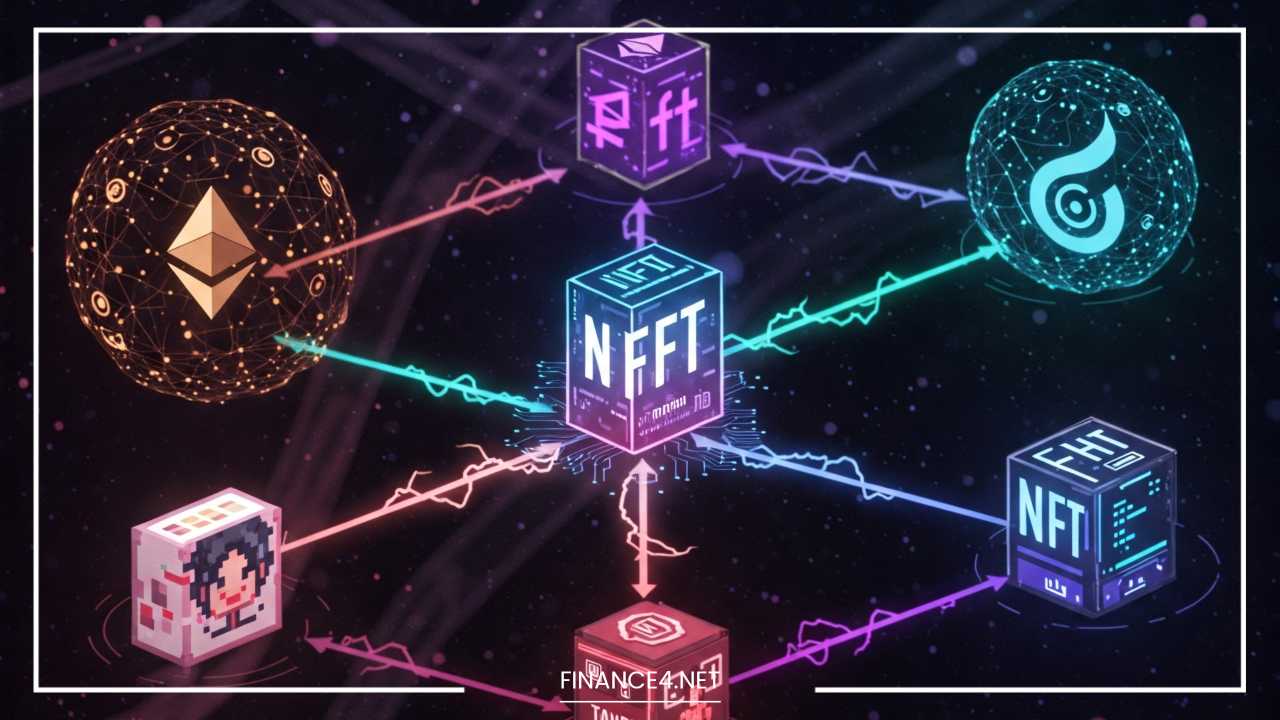
- Cross-Chain Messaging Layer: This is the backbone of the interoperability. It’s the protocol (like LayerZero, Axelar GMP, or Wormhole) that enables secure and reliable communication between the smart contracts deployed on different blockchains. It ensures that an action initiated on one chain (e.g., a user contributing funds on Polygon) can trigger a corresponding action on another chain (e.g., the user claiming tokens on Ethereum).
- Frontend Integration: This is the user-facing interface, typically a web application. It must be highly interactive and capable of:
- Connecting to various wallets (MetaMask, WalletConnect for EVM, Keplr for Cosmos, Phantom for Solana, etc.).
- Displaying real-time information about ongoing and upcoming IDOs across all supported chains.
- Facilitating user interactions such as KYC/AML verification, whitelisting applications, fund contributions, and token claims.
- Abstracting the complexity of cross-chain operations, showing users their bridged balances and transaction statuses.
- Token Distribution Mechanism: This ensures that once a user participates in an IDO on one chain and the sale concludes, they can seamlessly claim their allocated tokens, potentially on a different chain where the project’s main token might reside. This often involves the cross-chain messaging layer relaying a “claim” instruction or a “proof of participation” to the destination chain.
The typical user flow for a cross-chain IDO on such a launchpad would involve:
- KYC/AML Verification: Users first complete necessary identity verification, usually off-chain but linked to their wallet address.
- Pool Joining/Whitelisting: Users apply to join specific IDO pools, potentially by staking native tokens of the launchpad or meeting other criteria. This might occur on a ‘main’ chain or a lower-fee chain.
- Asset Bridging (if necessary): If a user wants to contribute funds from Chain A to an IDO pool on Chain B, they might first need to bridge their contribution assets (e.g., USDC from Ethereum to Polygon). The launchpad might integrate this bridging step directly or guide the user.
- Contribution: The user contributes their specified assets to the launchpad’s smart contract on the designated participation chain.
- Cross-Chain Messaging: The launchpad’s smart contract on the participation chain sends a message via the bridging protocol to the token distribution contract on the project’s native chain, informing it of the successful contribution and the user’s allocation.
- Token Claim: Once the IDO concludes, the user can claim their allocated tokens. This claim might happen on the same chain they contributed from, or on a different chain (e.g., the project’s native chain), facilitated by the cross-chain message.
This architecture emphasizes security, reliability, and user-friendliness to abstract away the underlying cross-chain complexities.
Key Technologies and Protocols
Building a cross-chain launchpad involves integrating a variety of specialized technologies and understanding their interplay. The choice of these components significantly impacts the launchpad’s capabilities, security, and scalability.
- EVM Chains vs. Non-EVM Chains:
- EVM (Ethereum Virtual Machine) Chains: These are blockchains compatible with Ethereum’s smart contract execution environment. They share a common address format (0x…), tooling (Solidity, Hardhat, Truffle), and RPC methods. Examples include Ethereum, Binance Smart Chain (BSC), Polygon, Avalanche C-chain, Fantom, Arbitrum, Optimism, Base, and many others. Development on EVM chains is highly standardized and benefits from a vast developer ecosystem.
- Non-EVM Chains: These blockchains have different architectures, virtual machines, and programming languages. Examples include Solana (Rust, Sealevel VM), Cosmos SDK chains (Go, various VMs), Polkadot (Rust, Substrate), Near (Rust, WASM), and Cardano (Haskell). Integrating with non-EVM chains often requires specialized SDKs and a deeper understanding of their unique protocols. A robust cross-chain launchpad aims to support a mix of both to maximize reach.
- Messaging Layers: These protocols are the bedrock of cross-chain communication, enabling smart contracts on different chains to interact securely.
- LayerZero: A lightweight, generalized messaging protocol. It enables dApps to communicate across chains via “Ultra Light Nodes” (ULNs). Instead of maintaining a full state of all chains, ULNs only require specific block headers on demand, validated by oracles and relayers. This makes it efficient and highly composable for building native cross-chain applications. For launchpads, LayerZero can be used to send messages like “user X contributed Y tokens on Chain A, allocate Z tokens on Chain B.”
- Axelar General Message Passing (GMP): Axelar provides a secure, programmable way for dApps to send messages and assets between any two connected chains. GMP allows a smart contract call on one chain to trigger a smart contract call on another chain, optionally including token transfers. This is ideal for launchpads where user actions (e.g., participating in a pool) on a low-fee chain need to trigger token allocations or claims on the project’s native chain.
- Wormhole: A generic message passing protocol that enables communication between various blockchains. It utilizes a network of “Guardians” to observe and validate cross-chain messages, providing a robust and widely adopted solution for asset and data transfer.
- Token Standards:
- ERC-20 (Ethereum): The ubiquitous standard for fungible tokens on EVM chains. Most project tokens will adhere to this.
- CW20 (Cosmos): The standard for fungible tokens within the Cosmos ecosystem.
- SPL Tokens (Solana): Solana’s equivalent of ERC-20, defining fungible tokens on the Solana blockchain. A cross-chain launchpad must be able to recognize, handle, and potentially facilitate the bridging of these different token standards.
- Oracles and Indexing:
- Oracles (e.g., Chainlink CCIP): Oracles provide external data to smart contracts. For cross-chain launchpads, they can be crucial for verifying off-chain events (like KYC completion) or providing price feeds for dynamic IDO models. Chainlink’s Cross-Chain Interoperability Protocol (CCIP) is a secure, general-purpose messaging protocol that leverages Chainlink’s decentralized oracle network to facilitate cross-chain communication and asset transfers, offering robust security guarantees.
- Indexing (e.g., The Graph): Indexing protocols allow developers to efficiently query blockchain data. For a launchpad, The Graph can be used to create subgraphs that index events from launchpad smart contracts across multiple chains. This enables the frontend to quickly retrieve and display information such as active pools, user contributions, whitelisted addresses, and token claim statuses without directly querying each blockchain, which can be slow and resource-intensive.
The careful selection and integration of these technologies form the bedrock of a secure, efficient, and user-friendly cross-chain launchpad.
Step-by-Step: Building Your Own
Building a cross-chain launchpad is an intricate process that demands careful planning, robust smart contract development, seamless frontend integration, and rigorous testing. Here’s a step-by-step guide to bring your vision to life:
a. Planning
The foundational stage involves defining the scope and core functionalities of your launchpad.
- Choose Supported Chains: This is a critical decision. Start by identifying the blockchain networks you want to target based on user base, gas fees, developer tools, and the chains where projects you wish to launch are likely to originate or desire to expand. A common approach is to begin with a few major EVM-compatible chains (e.g., Ethereum, Polygon, BSC, Avalanche) due to their interoperability and shared tooling, then expand to non-EVM chains (e.g., Solana, Cosmos) as complexity allows.
- Decide Launchpad Model:
- Fixed Swap: Tokens are sold at a fixed price until all allocated tokens are sold. Simple and predictable.
- Auction (e.g., Dutch Auction): Price starts high and drops over time until all tokens are sold or a minimum price is reached. This model can create more dynamic price discovery.
- Whitelist-based: Only pre-approved addresses can participate. Often combined with other models for fair access.
- Staking-based: Users must stake the launchpad’s native token to gain access or higher allocation tiers.
- Hybrid Models: Combine elements from the above, perhaps with cross-chain staking for access on one chain and participation on another.
- Define Token Distribution Strategy: Will the project’s token be native to one chain and bridged to others for claiming, or will it be deployed simultaneously across multiple chains? How will users claim their tokens after participating from a different chain? This informs your bridging strategy.
b. Smart Contract Development
This is the core logic of your launchpad. You’ll primarily use Solidity for EVM chains.
- Multi-chain Token Pool Contract Logic:
- Develop a
Launchpad.solcontract (or similar) for each supported chain. This contract will manage the IDO itself:- Functions for
initializePool,depositTokensForSale,contribute(withrequirestatements for whitelist, min/max contributions, sale period). - State variables to track
totalContributions,userContributions,tokensSold,startTime,endTime,tokenPrice,whitelistmapping. claimTokensfunction that calculates and transfers allocated tokens based on participation.
- Functions for
- Crucially, these contracts need to be aware of cross-chain events. For example, a user contributing on Polygon should reflect their allocation status on Ethereum.
- Develop a
- Cross-Chain Messaging Integration:
- Using LayerZero: Your launchpad contracts will need to interact with LayerZero’s
Endpointcontract.- Implement
Oft(Omnichain Fungible Token) orOApp(Omnichain Application) patterns. For a launchpad, anOAppis more suitable as it allows arbitrary message passing. - Your
Launchpad.solon one chain sends a message (e.g.,_lzSend(...)) containing participant data (wallet address, contribution amount, chain ID) to theLaunchpad.solon the destination chain. - The receiving
Launchpad.solimplements_lzReceive(...)to process this message, updating its internal state regarding user allocations or enabling token claims.
- Implement
- Using Axelar GMP: Your contracts would interact with Axelar’s
Gatewaycontract.- To send a message, call
gateway.callContractWithToken(...)(if transferring tokens with message) orgateway.callContract(...). - The receiving contract implements Axelar’s
IAxelarExecutableinterface and itsexecutefunction to process the incoming cross-chain call and data.
- To send a message, call
- The choice depends on the specific requirements, but both provide robust solutions for secure cross-chain state synchronization.
- Using LayerZero: Your launchpad contracts will need to interact with LayerZero’s
c. Frontend & Wallet Integration
The user interface is where the magic happens for users.
- Frameworks: Use modern frontend frameworks like React, Vue, or Next.js.
- Wallet Integration Libraries:
- EVM Chains: Integrate
wagmi,ethers.js, orweb3.jsfor interacting with wallets like MetaMask, WalletConnect (for mobile wallets and others), Coinbase Wallet. - Non-EVM Chains: Use specific SDKs, e.g.,
@solana/web3.jsfor Phantom Wallet,@keplr-wallet/webfor Keplr in Cosmos.
- EVM Chains: Integrate
- Displaying Cross-Chain Data:
- Fetch pool information and user contributions from relevant chain RPCs or, more efficiently, from a The Graph subgraph.
- Develop a clean UI that clearly indicates which chains are supported for each IDO, where contributions can be made, and where tokens can be claimed.
- Show users their balances of potential contribution tokens across different chains.
- Implement logic to guide users to switch networks in their wallet when performing chain-specific actions.
d. Bridge Integration
While your smart contracts use messaging layers like LayerZero or Axelar, your frontend might also need to guide users through explicit bridging if their assets are not on the correct chain for contribution.
- SDK/API Usage:
- For dedicated asset bridges (e.g., official chain bridges like Polygon Bridge, or third-party like Synapse, Across), you might integrate their SDKs or deep-link to their UIs to facilitate asset transfers.
- When using LayerZero or Axelar for messaging, the SDKs are more for interacting with the smart contract endpoints rather than a separate “bridge UI” for assets. The asset transfer is often encapsulated within the message passing if tokens are moved as part of GMP.
- Relaying User Actions and Finalizing Claims:
- When a user successfully contributes on Chain A, the frontend will monitor the transaction.
- Once confirmed, the smart contract on Chain A triggers the cross-chain message via LayerZero/Axelar.
- The frontend can then show the user the status of their cross-chain transaction, perhaps linking to a block explorer that supports cross-chain tracing (like LayerZero Scan).
- When the message is received and processed on the target chain (Chain B), the frontend should enable the “Claim Tokens” button for the user. This claim action interacts with the
claimTokensfunction on the Chain B launchpad contract.
e. Testing and Deployment
Thorough testing is non-negotiable for cross-chain applications due to their complexity.
- Testnets:
- Deploy your smart contracts to various testnets corresponding to your chosen mainnets (e.g., Goerli for Ethereum, Mumbai for Polygon, Fuji for Avalanche, Moonbase Alpha for Moonbeam).
- Acquire testnet tokens for each chain.
- Crucially, set up a local development environment that simulates cross-chain messaging. Tools like Hardhat or Foundry can be extended to simulate LayerZero or Axelar calls locally, allowing for faster iteration.
- Simulation of Cross-Chain Swaps & Bridge Latency:
- Simulate the full user journey: KYC, whitelisting on one chain, contributing funds on another, and claiming tokens on a third.
- Pay close attention to latency. Cross-chain messages are not instantaneous; they depend on block finality across chains and relayer network speeds. Design your UI to communicate these delays to users effectively.
- Test edge cases: failed transactions, insufficient gas, network congestion, concurrent user actions.
- Deployment:
- After exhaustive testing on testnets, deploy your audited smart contracts to the mainnets.
- Ensure your frontend is configured to connect to the correct mainnet RPCs and contract addresses.
- Set up robust monitoring and alerting for your contracts and cross-chain message relays.
This meticulous, step-by-step approach ensures a stable, secure, and user-friendly cross-chain launchpad that can effectively serve the Web3 community.
Security and Best Practices
The inherent complexity of cross-chain operations significantly amplifies security risks. A single vulnerability in a bridge or a multi-chain contract can lead to catastrophic losses, as evidenced by numerous high-profile bridge hacks in recent years. Therefore, robust security measures and adherence to best practices are paramount when building a cross-chain launchpad.
- Cross-Chain Risks (Bridge Hacks, Reentrancy, Logic Errors):
- Bridge Hacks: Bridges are prime targets because they often hold vast amounts of locked assets. Attacks can exploit vulnerabilities in smart contracts, consensus mechanisms of the bridge (e.g., compromising validators/oracles), or relayers. Ensure the chosen bridging protocol has a strong track record, extensive audits, and robust security models (e.g., decentralized relayers, multiple independent verifiers).
- Reentrancy Attacks: A classic smart contract vulnerability where an external call can re-enter the calling contract before the initial execution is complete, leading to funds draining. This is especially dangerous in token transfer functions. Use the Checks-Effects-Interactions pattern and OpenZeppelin’s
ReentrancyGuardwhere appropriate. - Logic Errors: Bugs in the contract’s business logic, particularly when handling cross-chain state updates, can lead to incorrect allocations, unauthorized claims, or frozen funds. For example, if a message isn’t properly authenticated as originating from the correct source chain or contract.
- Mitigation Strategies:
- Rate-limiting: Implement mechanisms to cap the amount of tokens that can be transferred or claimed within a specific period. This limits potential damage in case of an exploit.
- Oracle Delays and Circuit Breakers: For protocols relying on oracles for price feeds or external data, introduce delays to prevent flash loan attacks or rapid manipulations. Implement circuit breakers that can pause critical contract functionalities (e.g., token claims) in case of suspicious activity, allowing time for investigation and intervention.
- Replay Protection: Ensure that cross-chain messages or transactions cannot be replayed on the destination chain to trigger multiple unintended actions. Messaging protocols typically handle this via nonces or unique transaction identifiers, but verify that your contract logic correctly uses these.
- Pausable Contracts: Implement an
OwnablePausablepattern from OpenZeppelin to allow the authorized team to pause the launchpad’s core functionalities in emergencies. This is a crucial safety mechanism but introduces a degree of centralization.
- Auditing Multi-Chain Contracts:
- Multiple Independent Audits: Do not rely on a single audit. Engage multiple reputable blockchain security firms to conduct comprehensive audits of all your smart contracts, especially the cross-chain logic and interactions with bridging protocols.
- Bug Bounty Programs: After initial audits, consider launching a public bug bounty program. Incentivize white-hat hackers to find and report vulnerabilities before malicious actors do.
- Formal Verification: For critical components, consider formal verification methods to mathematically prove the correctness of your smart contract logic against specified properties.
- Continuous Monitoring: Deploy real-time monitoring tools (e.g., BlockSec, Forta) to detect unusual on-chain activity, large outflows, or rapid changes in contract state that could indicate an attack in progress.
By meticulously implementing these security measures and adopting a security-first mindset throughout the development lifecycle, you can significantly reduce the attack surface and build a trustworthy cross-chain launchpad.
Future Trends in Cross-Chain Launchpads
The blockchain landscape is continuously evolving, and cross-chain launchpads will undoubtedly adapt and innovate alongside new technological advancements. Several key trends are poised to shape the future of these platforms:
- Modular Chains, Rollups, and Appchains: The shift towards modular blockchain architectures (separating execution, data availability, consensus, and settlement) will profoundly impact cross-chain interactions. Rollups (Optimistic and ZK-rollups) are becoming the primary scaling solutions for Ethereum, offering high throughput and low fees. Future launchpads will not only bridge between L1s but also facilitate seamless launches on and across different rollups and specialized “appchains” (application-specific blockchains). This will enable projects to launch on highly optimized environments tailored to their needs while still tapping into broad liquidity.
- AI-Generated Launchpads and Smart Contracts: While nascent, the use of AI in smart contract development and deployment is gaining traction. AI could assist in generating secure and optimized contract code for various chain configurations, automating parts of the auditing process, or even dynamically adjusting launchpad parameters based on market conditions. AI-driven analytics could also help identify optimal chains for a project’s launch.
- ZK-Proofs for KYC and Privacy: Zero-Knowledge Proofs (ZKPs) are revolutionizing privacy and scalability in blockchain. For launchpads, ZKPs could enable users to prove their eligibility for KYC/AML requirements (e.g., proving they are over 18 or reside in a non-sanctioned country) without revealing their personal data to the launchpad or any third party. This would significantly enhance user privacy while maintaining regulatory compliance. ZK-proofs could also be used to verify cross-chain state securely and efficiently, reducing the data burden on bridging protocols.
- Decentralized Bridges and Multi-Layer Launches: The future points towards even more decentralized and robust bridging solutions, moving away from multi-sig models towards fully trustless, cryptographic bridges. Furthermore, launchpads will increasingly support “multi-layer launches” where a project’s token exists natively on several chains, perhaps with different functionalities or liquidity pools on each. This requires sophisticated cross-chain governance and synchronization mechanisms, potentially leading to truly “omnichain” token launches where users can participate and claim tokens on their preferred chain with minimal friction.
These trends highlight a future where cross-chain launchpads are more efficient, private, secure, and integrated into a sprawling, interconnected Web3 ecosystem, empowering projects to reach global audiences like never before.
Final Thoughts
Building a cross-chain launchpad with bridging is an endeavor that combines cutting-edge blockchain technology with complex architectural design. We’ve explored how these platforms extend the reach and liquidity of token launches beyond the confines of single blockchains, offering unparalleled benefits to Web3 projects and their communities. From understanding the nuances of various bridging mechanisms to meticulously crafting smart contracts, integrating diverse frontend components, and rigorously testing across multiple networks, the process demands a comprehensive skill set and a security-first mindset.
While the complexity is undeniable, the rewards are substantial: access to a global, diverse investor base, deeper liquidity pools, and the ability to cater to users across their preferred blockchain environments. The future of Web3 is inherently multi-chain, and cross-chain launchpads are at the forefront of enabling this interoperable vision.
As you embark on this journey, remember to prioritize the security and integrity of your bridging solutions. Opt for well-audited and battle-tested protocols like LayerZero or Axelar for cross-chain messaging. Implement robust security practices, including extensive testing, rate-limiting, and smart contract audits. The landscape is dynamic, with innovations like modular chains and ZK-proofs constantly reshaping possibilities. By staying informed and committing to best practices, you can build a cross-chain launchpad that not only facilitates successful token launches but also contributes to a more connected, accessible, and resilient decentralized future.
FAQ
Q1: What is the main advantage of a cross-chain launchpad over a single-chain one? A1: The primary advantage is greatly expanded reach and liquidity. A cross-chain launchpad allows projects to tap into user bases and capital from multiple blockchain ecosystems (e.g., Ethereum, Polygon, Solana, BSC) simultaneously, rather than being confined to a single network.
Q2: Are cross-chain bridges safe? A2: While bridging technology is vital for interoperability, it has been a target for significant hacks due to its complexity and the large amounts of assets they manage. The safety varies greatly depending on the specific bridge’s design (custodial vs. non-custodial), decentralization, security audits, and operational track record. It’s crucial to use well-established and thoroughly audited bridging protocols.
Q3: What’s the difference between LayerZero and Axelar for cross-chain messaging? A3: Both are robust generalized message passing protocols. LayerZero uses Ultra Light Nodes (ULNs) with independent oracles and relayers for message verification, aiming for minimalist on-chain footprint. Axelar provides a network of validators that secure cross-chain communication via a proof-of-stake consensus, allowing for direct smart contract calls across chains (GMP). The choice often depends on specific architectural needs and existing ecosystem integrations.
Q4: Can I build a cross-chain launchpad without custom smart contracts? A4: While some platforms offer “launchpad-as-a-service” templates, building a truly custom cross-chain launchpad with tailored rules and deep integration into bridging protocols typically requires significant custom smart contract development to handle complex multi-chain logic and asset flow.
Q5: What are the biggest challenges in building a cross-chain launchpad? A5: Key challenges include ensuring the security of cross-chain asset transfers, managing state synchronization across disparate chains, abstracting away technical complexities for a user-friendly experience, high development and auditing costs, and navigating the evolving regulatory landscape across multiple jurisdictions.