How to Create Bridging-Based Perpetual Tokens
 by
by 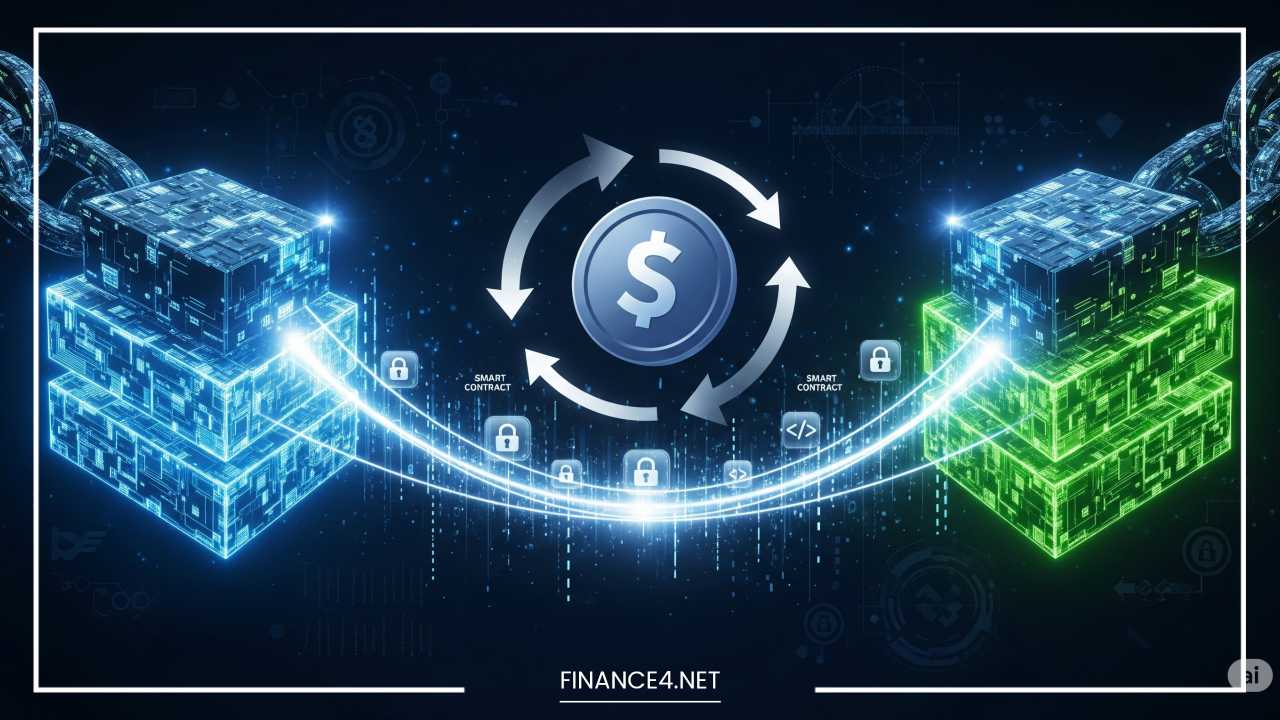
How to Create Bridging-Based Perpetual Tokens | Step-by-Step Guide
In the rapidly evolving landscape of decentralized finance (DeFi), perpetual tokens have emerged as a cornerstone of sophisticated financial engineering, offering a censorship-resistant and open way to trade derivatives. Unlike traditional futures contracts that have an expiration date, perpetual tokens, or “perps,” allow traders to hold a position indefinitely, mirroring the price action of an underlying asset. This innovation has unlocked a new paradigm for capital efficiency and market access. However, as the crypto ecosystem expands beyond a single dominant chain, a significant challenge has arisen: liquidity fragmentation. Assets, users, and protocols are scattered across a multitude of blockchains, creating isolated islands of liquidity. This is where the concept of bridging-based perpetual tokens comes in—a powerful fusion of perpetual contracts and cross-chain interoperability. By integrating blockchain bridges directly into their core architecture, these tokens can unify fragmented liquidity, increase market access, and create a truly global, multi-chain derivatives market.
This article serves as a comprehensive guide to understanding and building these next-generation perpetual tokens, from foundational concepts to technical implementation and real-world challenges.
What Are Perpetual Tokens?
Perpetual tokens are a class of synthetic assets that replicate the behavior of a perpetual futures contract on a decentralized exchange (DEX). Unlike a standard token like ETH or USDC, which represents a direct claim on an asset, a perpetual token represents a leveraged, non-expiring position. The defining characteristic of a perpetual token is its funding rate mechanism. This mechanism is a small, periodic payment made between traders holding long and short positions. Its purpose is to tether the token’s price to its underlying asset’s spot price. For example, if the perpetual token’s price is trading higher than the spot price, traders holding long positions will pay a positive funding rate to those holding short positions, incentivizing new short positions to enter and pushing the price back down. Conversely, if the perpetual token trades below the spot price, longs will receive a payment from shorts, encouraging longs and driving the price up. This continuous balancing act ensures the token’s value remains closely aligned with its real-world counterpart.
Perpetual tokens are a fundamental building block for a variety of DeFi use cases, including:
- Decentralized Derivatives: They enable open and permissionless trading of leveraged positions on assets like cryptocurrencies, commodities, and even traditional stocks.
- Synthetic Assets: They can be used to create synthetic versions of assets that are not native to a specific blockchain, such as gold or Tesla stock, without needing to hold the physical asset.
- DeFi Capital Efficiency: They allow users to gain exposure to an asset’s price movements without locking up large amounts of capital, as they only need to post a small amount of collateral (margin).
Prominent examples of protocols that utilize perpetual tokens include dYdX and Perpetual Protocol. These platforms have demonstrated the immense potential of decentralized perpetual trading, but they often operate on a single chain (or a single L2), limiting their reach and user base to that specific ecosystem. This is the problem that bridging-based perpetual tokens aim to solve.
Understanding Bridging Mechanisms
A blockchain bridge is a protocol that enables the transfer of assets, data, or messages from one blockchain to another. At its core, a bridge facilitates interoperability, allowing otherwise isolated networks to communicate and interact. The simplest way to understand a bridge is to think of it as a secure lockbox on one chain that mints a mirrored representation of the asset on another.
There are two primary categories of bridges:
- Custodial vs. Non-Custodial: A custodial bridge requires a trusted third party (or a group of validators) to lock assets on one chain and release them on another. This approach, while often simpler and faster, introduces a centralized point of failure. A non-custodial bridge, on the other hand, relies on smart contracts and cryptographic proofs to manage the locking and releasing of assets, eliminating the need for a trusted intermediary.
- Trusted vs. Trustless: Trusted bridges rely on an external set of validators or a multi-signature wallet to confirm transactions. Their security depends on the honesty and integrity of these validators. In contrast, trustless bridges (also known as “light-client” or “relay-based” bridges) use cryptographic proofs and on-chain verification, meaning the security of the bridge is directly tied to the security of the underlying blockchains themselves, not a third party.
Several popular bridging protocols are used today, each with its own security model and architecture. Wormhole uses a network of guardians to validate cross-chain messages, while LayerZero employs a “light client” approach where smart contracts only verify transaction proofs, and Axelar uses a proof-of-stake validator network to secure cross-chain communication. Understanding the security and decentralization trade-offs of these bridges is critical, as a vulnerability in the bridge can expose the entire perpetual token system to risk.
Why Combine Bridging and Perpetual Tokens?
The fusion of bridging and perpetual tokens is not merely a technical novelty; it is a strategic imperative for the future of multi-chain DeFi. By combining these two concepts, developers can overcome some of the most pressing issues in the current ecosystem.
The primary benefits are:
- Solved Liquidity Fragmentation: Without a bridge, a perpetual token for an asset like ETH would have separate liquidity pools and trading markets on Ethereum, BNB Chain, and Arbitrum. This creates a fragmented user experience and inefficient capital markets. A bridging-based perpetual token allows for a single, unified liquidity pool accessible from multiple chains, ensuring that a trade on one chain affects the global liquidity pool.
- Increased Market Access: A perpetual token on Ethereum is only accessible to users on Ethereum. By using a bridge, the token can be accessed and traded from any connected chain, opening up the market to a much wider audience. This is crucial for protocols aiming for global adoption.
- Cross-Chain Arbitrage and Efficiency: Bridges enable arbitrageurs to take advantage of price discrepancies for the same perpetual token across different chains. This constant balancing act helps to ensure price alignment and market efficiency, benefiting all users.
This combination unlocks powerful use cases, such as a perpetual token for a specific asset that can be seamlessly collateralized with native tokens from various chains. For instance, a trader on Avalanche could use AVAX as collateral to trade a perpetual token on a protocol primarily hosted on Ethereum, with the bridge handling the necessary collateral locking and messaging.
Architecture of Bridging-Based Perpetual Tokens
The architecture of a bridging-based perpetual token is a multi-layered system designed to maintain synchronization and security across disparate blockchains.
At a high level, the design involves:
- Token Contracts on Multiple Chains: The core of the system is the perpetual token contract, which is deployed on a base chain (e.g., Ethereum) and then mirrored on one or more target chains (e.g., Polygon, Optimism). These contracts, while similar in function, are specifically designed to interact with the bridge.
- Synchronization via Bridge: The bridge acts as the communication layer, transmitting critical information between the chains. When a user deposits collateral or opens a position on one chain, the bridge sends a message to the base chain, updating the global state.
- Oracle Support and Price Feeds: Perpetual tokens rely heavily on real-time price data to calculate funding rates and determine liquidation thresholds. The oracle system must be robust enough to provide price feeds to all relevant contracts across all chains.
The smart contract components of this architecture are particularly complex:
- Mint/Burn Logic: The system must include a mechanism to mint new perpetual tokens when a user opens a position and burn them when the position is closed. The bridging mechanism needs to be integrated into this logic to ensure the total supply of the token remains consistent across all chains.
- Margin Management: This component tracks a user’s collateral and position value. A crucial part of this is the ability to accept collateral from multiple chains, which requires the bridge to securely transfer information about collateral deposits.
- Liquidation Engine: The liquidation engine monitors positions and liquidates them if they fall below the required margin threshold. In a bridging-based system, this engine must be able to pull state data from multiple chains to determine the health of a position.
- Off-chain Relayers and Data Feeds: Many bridging protocols rely on a network of off-chain relayers to monitor events on one chain and relay them to another. These relayers are vital for ensuring that the perpetual token contracts on different chains are in sync. They also often manage the flow of data from price oracles.
Technical Stack & Tools
Building a bridging-based perpetual token requires a specialized technical stack that can handle the complexities of multi-chain development.
- Languages: The choice of programming language is often dictated by the target blockchain. Solidity is the standard for Ethereum and its EVM-compatible networks (Polygon, Arbitrum). Vyper is a more secure, Python-inspired language also used on the EVM. For non-EVM chains, Rust is the language of choice for Solana and Polkadot, while Go is popular for Cosmos-based chains.
- Frameworks: Development frameworks streamline the process of building, testing, and deploying smart contracts. Hardhat and Foundry are popular for EVM development, offering robust testing environments and advanced debugging features. Truffle is another well-established option.
- Bridging SDKs/APIs: To interact with a bridge, developers need to use a dedicated Software Development Kit (SDK) or API. LayerZero SDK, Axelar SDK, and Wormhole SDK provide the necessary tools to send and receive cross-chain messages, lock/unlock assets, and monitor bridge status.
- Cross-Chain Messaging Tools: Beyond asset transfers, the core of a bridging-based perpetual system is the secure transmission of data. Protocols like LayerZero are designed for this, allowing smart contracts to send arbitrary data payloads across chains.
- Oracles: Accurate and reliable price data is non-negotiable. Chainlink is the most widely used oracle network, with its decentralized network of nodes providing tamper-resistant price feeds. Pyth is another fast-growing oracle network, particularly on Solana, that aggregates data from trading firms. UMA (Universal Market Access) is used for synthetic assets and can be integrated to create new perpetual tokens for virtually any asset.
Step-by-Step Guide to Building a Bridging-Based Perpetual Token
Building this type of system is a complex, multi-step process that requires meticulous planning and execution.
Step 1: Define Token Mechanics and Collateral Model.
Before writing a single line of code, you must design the economic model. What is the underlying asset? What collateral types are accepted? How is the funding rate calculated? Will it be a variable or fixed rate? This step is crucial for the stability and security of the entire system.
Step 2: Set up Smart Contracts on Chain A (Base Chain).
The base chain will host the core logic and often the main liquidity pool. This includes the perpetual token contract, the margin management contract, and the liquidation engine. These contracts should be designed with future multi-chain integration in mind, meaning they must be able to process messages from a bridge.
Step 3: Integrate Bridge to Chain B (Target Chain).
Using a bridging SDK (e.g., LayerZero), configure the smart contracts to send and receive messages from the target chain. This involves setting up the necessary endpoints and message-passing logic within your contracts. The contracts should have a function that can be triggered by a message from the bridge, which could, for instance, update a user’s collateral balance based on a deposit on the target chain.
Step 4: Deploy Mirrored Contracts and Synchronization Logic.
On the target chain (Chain B), deploy a separate set of smart contracts. These contracts won’t hold the core logic but will act as a “proxy” or “mirror” for the base chain. Their primary purpose is to receive deposits and trade requests from users on that chain and relay them to the base chain via the bridge. They will also receive updates from the base chain and update the local state to reflect the user’s positions.
Step 5: Implement Margin Trading Features.
This involves coding the core trading functions:
- Open Position: A function that takes collateral and desired leverage as input and mints the perpetual tokens.
- Close Position: A function that burns the tokens and returns the remaining collateral.
- Add/Remove Collateral: Functions to manage a user’s margin.
Step 6: Add Price Feed Integration.
Integrate a decentralized oracle (like Chainlink or Pyth) to provide real-time price feeds. This is essential for calculating a user’s position value and margin requirements. The oracle data should be accessible by all contracts on all chains that need it.
Step 7: Testing, Audits, and Deployment.
This is the most critical step for security. Thoroughly test the contracts using frameworks like Hardhat or Foundry to simulate various scenarios, including edge cases and potential attacks. After internal testing, a professional security audit is non-negotiable. Finally, deploy the contracts and the perpetual token system to the mainnet.
Security Considerations
The complexity of bridging-based perpetual tokens introduces a new layer of security risks that must be addressed proactively.
- Smart Contract Vulnerabilities: Standard smart contract risks like reentrancy attacks, integer overflows, and oracle manipulation remain a top concern. A reentrancy attack on the margin contract, for example, could allow a user to withdraw more collateral than they are entitled to.
- Bridge-Specific Risks: Bridges are a frequent target for hackers. Vulnerabilities can range from validator collusion (in trusted bridges) to replay attacks, where a malicious actor re-sends a valid transaction to drain funds. The most significant risk is a bridge compromise, which could allow an attacker to mint an unlimited number of “bridged” perpetual tokens, devaluing the entire system.
Mitigation strategies include:
- Audits and Formal Verification: Engage reputable security firms to conduct a comprehensive audit of all smart contracts. Formal verification can mathematically prove that the contracts behave as intended, eliminating entire classes of vulnerabilities.
- Rate Limits and Circuit Breakers: Implement safeguards to limit the amount of capital that can be transferred through the bridge within a specific timeframe. A circuit breaker can halt all operations if an unusual event is detected, such as a sudden, massive minting of tokens.
- Using Established Bridge Protocols: Opt for well-tested and widely-used bridge protocols with strong security track records. A home-brewed bridging solution is an open invitation for an attack.
Regulatory and Compliance Considerations
The creation of financial instruments like perpetual tokens on a global, permissionless network introduces complex regulatory and compliance challenges.
- Jurisdictional Risks: The legal status of cryptocurrencies and DeFi is still evolving. A perpetual token project could be subject to different regulations in every jurisdiction it operates in.
- KYC/AML Implications: Because these tokens are a form of derivative, they may fall under the purview of financial regulators who require Know Your Customer (KYC) and Anti-Money Laundering (AML) checks.
- Licensing and Registration: Offering derivatives trading services may require specific licenses or registrations in certain countries. The cross-border nature of these tokens makes it difficult to comply with all relevant laws.
Real-World Examples / Case Studies
While the concept of a pure bridging-based perpetual token is still nascent, there are projects exploring similar architectures. For example, some protocols are building synthetic cross-chain assets that use bridges to maintain a consistent state across different chains. These early experiments, while not full-fledged perpetual tokens, offer valuable lessons. The primary challenge faced by these projects is maintaining synchronization without introducing unacceptable latency. The key takeaway is the need for a decentralized and fast messaging layer that can keep the state of the perpetual token contracts on multiple chains in near-perfect sync.
Challenges and Limitations
Despite the immense potential, several significant hurdles must be overcome:
- Latency in Cross-Chain Messaging: The time it takes for a message to be sent and confirmed from one chain to another can be a few seconds to a few minutes. This latency is a major obstacle for a real-time trading system like a perpetual exchange, where every millisecond counts.
- Gas Fee Discrepancies: Gas fees vary wildly between different blockchains. A high gas fee on the base chain could make it economically unfeasible for users on a low-fee target chain to interact with the protocol.
- Scalability and UX Concerns: As more chains are added, the system’s complexity and potential for failure increase. The user experience can also be fragmented, as users may need to understand multiple chains and bridging mechanisms.
- Fragmented Liquidity and User Trust: Even with a bridging solution, getting users to trust a new, multi-chain protocol and migrate their liquidity is a monumental challenge.
Future Outlook
The future of bridging-based perpetual tokens is intertwined with the evolution of blockchain interoperability. As bridges become faster, more secure, and truly trustless, they will become the invisible infrastructure upon which a multi-chain financial system is built. We can expect to see:
- Shared Security: New bridging architectures that inherit security from the underlying blockchains, such as protocols built on modular blockchains.
- Cross-Chain Lending: Perpetual tokens could be used as collateral for lending protocols on different chains.
- Synthetic Real-World Assets: Bridges will facilitate the creation and trading of perpetual tokens that track the price of real-world assets, such as stocks, real estate, and carbon credits, on any blockchain.
Final Thoughts
The creation of bridging-based perpetual tokens represents the next frontier in decentralized finance. By addressing the critical problem of liquidity fragmentation, these tokens have the potential to unlock a new era of global, open, and efficient derivatives trading. While the technical and regulatory challenges are significant, the tools and architectural patterns are emerging to make this vision a reality. As interoperability protocols mature and developers continue to innovate, bridging-based perpetual tokens will not only redefine how we trade but also pave the way for a more integrated, resilient, and inclusive financial ecosystem.