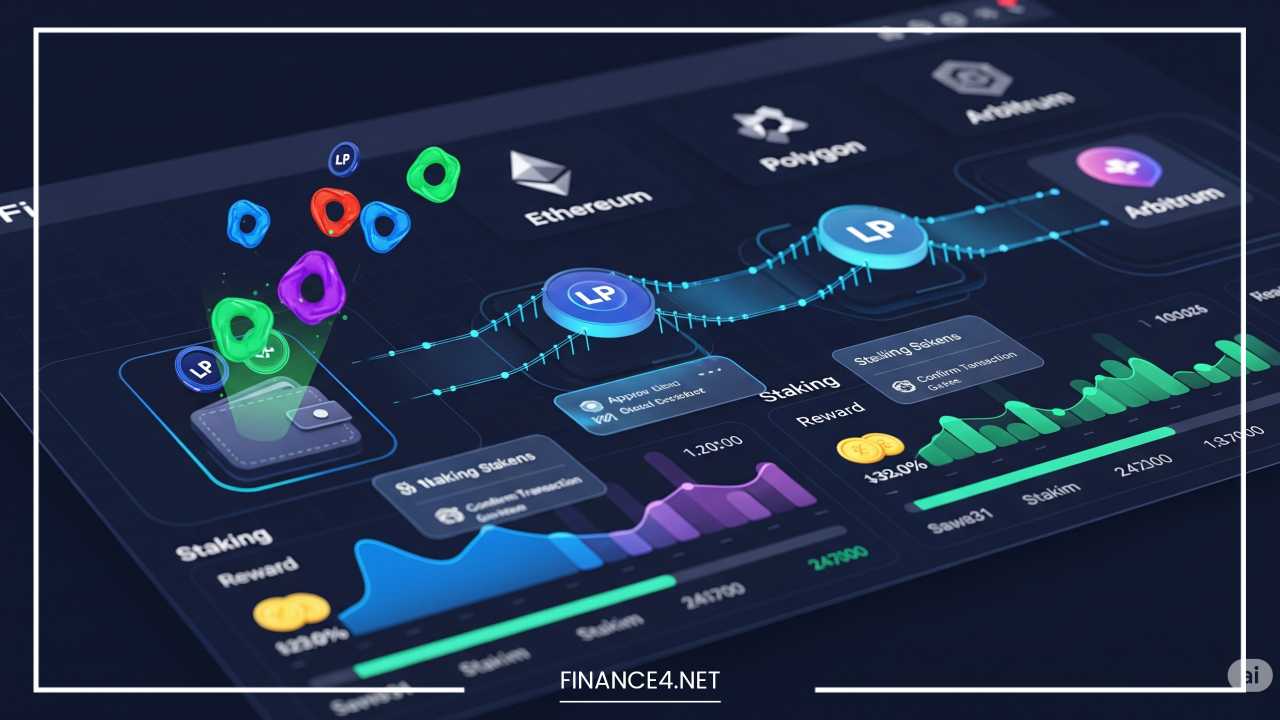
How to Stake Cross-Chain Tokens
 by
by 
How to Stake Cross-Chain Tokens | Step-by-Step Guide
The blockchain landscape is rapidly evolving from a collection of isolated networks to a more interconnected and interoperable ecosystem. This shift has paved the way for innovative opportunities within decentralized finance (DeFi), one of the most compelling being cross-chain staking. For those familiar with the concept of staking – locking up cryptocurrency to support a blockchain network and earn rewards – cross-chain staking opens up a wider array of yield-generating possibilities across different blockchains.
This article will delve into the intricacies of staking cross-chain tokens, covering everything from the fundamental concepts to practical steps, popular platforms, inherent risks, and best security practices. Whether you’re a seasoned crypto enthusiast or new to the world of digital assets, understanding how to navigate the realm of cross-chain staking can significantly enhance your DeFi strategy.
Introduction to Cross-Chain Staking
At its core, staking is the process of locking a certain amount of a specific cryptocurrency to participate in the operation of a blockchain network. This is primarily associated with Proof-of-Stake (PoS) consensus mechanisms, where validators are selected based on the amount of cryptocurrency they have staked. By staking their tokens, users contribute to the network’s security and stability, and in return, they are typically rewarded with additional tokens.
Cross-chain tokens, on the other hand, are digital assets that originate on one blockchain but can be used or represented on another. This interoperability is achieved through various mechanisms, such as wrapped tokens (where the original asset is locked and a representative token is issued on another chain) and bridged tokens (where assets are transferred between chains using specialized protocols).
Cross-chain staking therefore involves staking these tokens on a blockchain that is not their native chain. This capability is becoming increasingly important in the DeFi space as it allows users to access potentially higher yields and participate in governance across a broader range of blockchain networks without having to hold the native tokens of each individual chain. The rise of multichain ecosystems necessitates such functionalities, enabling greater capital efficiency and flexibility for users.
The benefits of cross-chain staking are manifold. It allows investors to diversify their staking portfolio, potentially accessing higher Annual Percentage Yields (APYs) offered on different networks. It also provides more flexibility in managing assets across various blockchains and participating in the governance of different projects. Ultimately, cross-chain staking contributes to a more interconnected and efficient decentralized financial system.
What Are Cross-Chain Tokens?
To understand cross-chain staking, it’s crucial to grasp the nature of cross-chain tokens. These are digital assets that have the ability to move and function across multiple distinct blockchain networks. This functionality is typically facilitated through two primary methods: wrapping and bridging.
Wrapped tokens are essentially representations of an asset from one blockchain on another. The original asset is locked in a secure smart contract on its native chain, and an equivalent amount of a “wrapped” version is minted on the target chain. The value of the wrapped token is pegged to the value of the underlying asset. A prominent example is Wrapped Bitcoin (wBTC), which allows users to utilize Bitcoin on the Ethereum network for DeFi activities. The wBTC is backed 1:1 by actual Bitcoin held in custody.
Bridged tokens, on the other hand, are assets that are transferred between blockchains using cross-chain bridges. These bridges are protocols that facilitate the movement of assets and information between disparate networks. When a user sends a native token through a bridge, the token is often locked or burned on the source chain, and a corresponding amount of the same asset (or a representative version) is minted on the destination chain. Examples include USD Coin (USDC), which can exist on multiple chains like Ethereum, Solana, and Avalanche through bridging mechanisms.
The key difference between these lies in the underlying mechanism. Wrapped tokens are essentially derivatives, always linked back to an original asset held in reserve. Bridged tokens involve a more direct transfer of value, although the specifics of how this transfer is secured can vary greatly.
Cross-chain tokens differ from native tokens in that native tokens are inherent to their specific blockchain. For instance, Ether (ETH) is the native token of the Ethereum network, and its primary functions (like paying for gas fees) are within that ecosystem. Cross-chain tokens, by their nature, have the capability to exist and be utilized across multiple environments.
The use cases for cross-chain tokens in DeFi are extensive. They enable users to access a wider range of decentralized applications (dApps) and services across different blockchains with a single asset. For example, someone holding Bitcoin can use wBTC on Ethereum to participate in lending protocols or yield farms. Similarly, bridged stablecoins like USDC allow for seamless value transfer and utilization across various DeFi ecosystems, enhancing liquidity and interoperability.
Understanding Staking (Basics Refresher)
Before diving deeper into the cross-chain aspect, it’s beneficial to revisit the fundamentals of staking. In the context of blockchain, staking typically involves locking up a certain amount of cryptocurrency to support the network’s operations and security. This is most prevalent in blockchains that utilize a Proof-of-Stake (PoS) consensus mechanism.
In traditional PoS staking, token holders can “stake” their tokens, essentially pledging them to participate in the network’s consensus process. Those who stake are often chosen to become validators (or delegators to validators), responsible for verifying and adding new transactions to the blockchain. In return for their contribution, stakers typically receive rewards in the form of newly minted tokens or a portion of transaction fees.
Cross-chain staking builds upon this foundation but introduces the complexity of dealing with tokens that are not native to the blockchain on which they are being staked. This often involves using the wrapped or bridged versions of the original asset.
There are several types of staking models. Direct staking involves users running their own validator nodes (which requires technical expertise and a significant token holding). Delegated staking is more common, where token holders delegate their stake to existing validators, earning a share of the rewards without the responsibility of running a node themselves. Liquid staking is a more recent innovation that allows users to stake their tokens and receive a liquid representation of their staked assets (often referred to as “liquid staking derivatives” or LSDs). These LSDs can then be used in other DeFi protocols, providing liquidity while still earning staking rewards.
The rewards for staking vary depending on the blockchain network, the amount staked, and the duration of the staking period. Generally, networks with higher perceived risk or lower market capitalization might offer higher APYs to incentivize participation. However, it’s crucial to also consider the risks associated with staking. These can include slashing (where staked tokens are penalized for validator misbehavior or downtime), lock-up periods (where staked tokens cannot be accessed for a specific duration), and the inherent volatility of the underlying cryptocurrency. In the context of cross-chain staking, additional risks related to the bridging or wrapping mechanisms also come into play, which will be discussed later.
Cross-Chain Technology Explained
The ability to stake cross-chain tokens hinges on the underlying cross-chain technology that enables interoperability between different blockchain networks. This interoperability is achieved through various methods, the most prominent being cross-chain bridges.
Cross-chain bridges are protocols that facilitate the transfer of assets and data between two or more independent blockchains. They essentially act as conduits, allowing different networks to communicate and exchange value. Bridges can be broadly categorized into trusted (centralized or federated) and trustless (decentralized) models.
Trusted bridges rely on a central authority or a federation of entities to validate and facilitate cross-chain transactions. While often more efficient in terms of speed and cost, they introduce a single point of failure and require users to trust the involved parties.
Trustless bridges, on the other hand, utilize cryptographic techniques and on-chain verification mechanisms to ensure the security and integrity of cross-chain transfers without relying on a central intermediary. These bridges often employ techniques like light clients, zero-knowledge proofs, or multi-signature schemes to verify transactions on the source chain before releasing the corresponding assets on the destination chain.
Several protocols are at the forefront of enabling cross-chain functionality, which is crucial for cross-chain staking:
- Inter-Blockchain Communication (IBC): Primarily used within the Cosmos ecosystem, IBC is a standardized protocol that allows independent blockchains to transfer tokens and other data in a secure and decentralized manner. This facilitates native cross-chain staking of assets within the Cosmos network.
- LayerZero: This is an omnichain interoperability protocol designed to connect all blockchains. It utilizes “Ultra-Light Nodes” and independent oracles to verify cross-chain messages, enabling the transfer of assets and data with a high degree of security and efficiency.
- Wormhole: A popular bridging protocol that supports transfers between numerous prominent blockchains. It employs a guardian network of validators to attest to cross-chain messages.
- Synapse: Another widely used bridge focusing on seamless asset transfers and swaps across various EVM-compatible and non-EVM chains.
- Multichain (formerly Anyswap): A comprehensive cross-chain router protocol supporting a vast number of blockchains and asset transfers.
Smart contract considerations are also paramount in cross-chain technology. The logic for locking, minting, burning, and releasing assets across different chains is typically governed by smart contracts deployed on each participating network. The security and correctness of these smart contracts are critical to the safety of cross-chain operations, including cross-chain staking. Vulnerabilities in these contracts can lead to significant financial losses, as has been witnessed in various bridge exploits.
How to Stake Cross-Chain Tokens: Step-by-Step Guide
Staking cross-chain tokens involves a series of steps that require careful attention to detail. Here’s a general guide to navigate the process:
1. Choose your token and destination chain:
- Identify a cross-chain token: Decide which token you want to stake. This might be a wrapped version of a native asset (e.g., wETH on Solana) or a natively cross-chain asset (e.g., ATOM via IBC).
- Research staking opportunities: Explore different blockchains and DeFi platforms that offer staking for your chosen cross-chain token. Consider the APY, lock-up periods, and the reputation of the staking platform or validator.
- Select a destination chain: Choose the blockchain where you want to stake your token. This will likely be a chain that offers attractive staking rewards for the specific cross-chain asset you hold or plan to acquire.
2. Use a bridge or DEX aggregator:
- If necessary, bridge your tokens: If your chosen token is on a different blockchain than your desired staking destination, you’ll need to use a cross-chain bridge to transfer it. Popular bridge options include Stargate, Synapse, and Multichain, depending on the source and destination chains.
- Consider DEX aggregators: Some Decentralized Exchange (DEX) aggregators, like 1inch or Paraswap, have integrated bridging functionalities, allowing you to swap assets across chains in a single transaction. This can sometimes be more convenient than using a standalone bridge.
3. Connect your wallet:
- Ensure wallet compatibility: You’ll need a blockchain wallet that is compatible with both the source and destination chains. Popular options include MetaMask (for EVM-compatible chains), Keplr (for the Cosmos ecosystem), and Phantom (for Solana).
- Connect to the bridge or staking platform: Visit the website of the chosen bridge or staking platform and connect your wallet following their instructions. This usually involves clicking a “Connect Wallet” button and authorizing the connection within your wallet interface.
4. Bridge token to target chain:
- Initiate the transfer: On the bridge platform, select the token you want to transfer, the source chain, and the destination chain. Enter the amount you wish to bridge.
- Review transaction details: Carefully review the estimated fees, the receiving address (which should be your wallet address on the destination chain), and the expected arrival time.
- Confirm the transaction: Approve the transaction in your wallet. This will involve paying gas fees on the source chain.
- Wait for confirmation: The bridging process can take varying amounts of time depending on the bridge and the network congestion. Once the transaction is confirmed on both chains, your bridged tokens should appear in your wallet on the destination chain.
5. Stake via native protocol or third-party staking platform:
- Native staking: Some blockchains allow you to stake bridged tokens directly through their native staking interface or command-line tools. You’ll typically need to select a validator to delegate your stake to.
- Third-party staking platforms: Many DeFi platforms offer staking services for various cross-chain tokens. These platforms often provide a user-friendly interface and may offer additional features like auto-compounding rewards or liquid staking options. Examples include Ankr and Lido, which support liquid staking across multiple chains.
- Select a staking option: Choose the staking method that suits your preferences and risk tolerance. Research the reputation and performance of validators or staking platforms before delegating or depositing your tokens.
- Initiate the staking process: Follow the platform’s instructions to stake your tokens. This will typically involve depositing or delegating your tokens through a smart contract interaction, which you’ll need to confirm in your wallet.
6. Confirm transaction and monitor rewards:
- Verify the staking transaction: Once the staking transaction is confirmed on the blockchain, you should be able to see your staked tokens and start accruing rewards on the staking platform or through your wallet interface (depending on the method used).
- Monitor your rewards: Regularly check your staking dashboard or wallet to track your earned rewards. Some platforms may automatically compound rewards, while others may require you to manually claim them.
- Understand unstaking procedures: Familiarize yourself with the unstaking process, including any potential lock-up periods or unbonding times required before you can access your staked tokens.
Note: The specific steps and platforms available will vary depending on the cross-chain token you choose to stake and the blockchains involved. Always conduct thorough research before engaging in any cross-chain staking activity.
Popular Platforms Supporting Cross-Chain Staking
Several platforms have emerged that facilitate or directly support cross-chain staking, catering to different needs and ecosystems:
- Cosmos (ATOM via IBC): The Cosmos network, with its Inter-Blockchain Communication (IBC) protocol, enables seamless transfer and staking of native Cosmos-based assets like ATOM across connected chains. Users can stake ATOM to secure the Cosmos Hub or delegate to validators on other IBC-enabled chains, earning rewards in the respective native tokens.
- Polkadot (Parachains): Polkadot’s architecture, featuring a central Relay Chain and interconnected parachains, allows for staking mechanisms where DOT holders can bond their tokens to support the security of the Relay Chain or participate in parachain auctions. While not direct cross-chain staking in the same vein as bridging, it involves staking within a multichain ecosystem.
- Ankr: Ankr offers liquid staking solutions across various blockchains, including Ethereum, BNB Chain, and Polygon. Users can stake native tokens and receive liquid staking tokens (LSTs) that can be used in other DeFi protocols, potentially earning yield on their staked assets across different ecosystems.
- Lido: Similar to Ankr, Lido is a popular liquid staking platform supporting major blockchains like Ethereum, Solana, and Polygon. Users can stake their native tokens and receive stTokens (e.g., stETH, stSOL), which represent their staked assets and accrued rewards. These stTokens can then be deployed in various DeFi activities on their respective chains.
- Pendle and EigenLayer (Advanced Restaking Platforms): These platforms represent newer developments in the cross-chain staking landscape. EigenLayer, built on Ethereum, introduces the concept of “restaking,” allowing users who have staked ETH on the consensus layer to opt-in to restake their ETH on other applications to secure additional protocols and earn extra rewards. Pendle is a yield trading platform that allows users to tokenize and trade future yield from staked assets, including potentially cross-chain staked derivatives.
Pros and cons of each platform:
- Cosmos/IBC:
- Pros: Native cross-chain functionality, decentralized, secure communication between connected chains.
- Cons: Limited to the Cosmos ecosystem.
- Polkadot:
- Pros: Interoperable multichain network, robust security through the Relay Chain.
- Cons: Staking mechanisms are primarily focused on securing the Polkadot ecosystem itself.
- Ankr/Lido:
- Pros: Liquid staking provides flexibility and composability, allowing users to earn staking rewards while participating in other DeFi activities. Support for multiple blockchains.
- Cons: Reliance on the security of the liquid staking platform and the peg of the LST.
- Pendle/EigenLayer:
- Pros: Innovative approaches to yield generation and security provision, potential for higher returns.
- Cons: More complex and potentially higher risk due to the novelty of the protocols and smart contract interactions.
When choosing a platform for cross-chain staking, it’s essential to weigh these pros and cons against your own risk tolerance, investment goals, and technical understanding. Thorough research into the security, reputation, and functionality of each platform is crucial.
Risks and Challenges
While cross-chain staking presents exciting opportunities, it also comes with a unique set of risks and challenges that users must be aware of:
- Bridge exploits and smart contract bugs: Cross-chain bridges are complex protocols that often involve significant amounts of locked assets. They have become prime targets for hackers, and vulnerabilities in their smart contracts can lead to catastrophic losses of funds. Similarly, bugs in the smart contracts of staking platforms or the underlying blockchains can pose a risk to staked assets.
- Slashing risks: If you are delegating your stake to a validator, the validator’s misbehavior or technical issues can lead to slashing, where a portion of the staked tokens (including yours) is penalized by the network. This risk is amplified when dealing with less established or less reputable validators on different chains.
- Centralization concerns: Some cross-chain solutions, particularly trusted bridges, rely on a small number of entities to operate. This centralization can create single points of failure and censorship risks, undermining the decentralized nature of blockchain.
- Liquidity fragmentation: The movement of assets across multiple chains can lead to fragmentation of liquidity, making it harder to execute large trades efficiently on any single chain. This can indirectly impact the value and usability of cross-chain staked assets.
- Hidden fees/gas costs: Bridging tokens and interacting with staking platforms on different blockchains can incur various fees, including gas fees on the source and destination chains, as well as potential fees charged by the bridge or staking platform. These fees can eat into your potential returns, especially for smaller amounts. It’s crucial to understand all associated costs before engaging in cross-chain staking.
Best Practices & Security Tips
To mitigate the risks associated with cross-chain staking, it’s essential to adopt best practices and prioritize security:
- Always DYOR (Do Your Own Research): Before staking any cross-chain token, thoroughly research the underlying technology, the security audits of the bridge and staking platform, the reputation of the team and validators involved, and the potential risks. Don’t rely solely on APY figures; understand the project’s fundamentals.
- Diversify staking to minimize risks: Avoid staking all your assets on a single platform or through a single bridge. Spreading your stake across different reputable protocols and chains can help mitigate the impact of a potential exploit or failure on one platform.
- Use hardware wallets when possible: Hardware wallets provide an extra layer of security by keeping your private keys offline and protected from online threats. Integrate your hardware wallet with the web interfaces of bridges and staking platforms.
- Monitor validator performance (if applicable): If you are delegating your stake, regularly monitor the performance and reputation of the validators you have chosen. Look for validators with a strong track record, low commission fees (but not suspiciously low), and reliable uptime. Be aware of any governance proposals that might affect the network or your staked assets.
- Understand the bridge’s security model: If you are using a bridge, understand whether it is trusted or trustless, and research any known vulnerabilities or past incidents. Opt for bridges with strong security measures and a good track record.
- Be cautious of high APYs: While high APYs can be attractive, they often come with higher risks. Be wary of platforms offering unsustainably high returns, as they could be Ponzi schemes or involve riskier underlying protocols.
- Start with small amounts: If you are new to cross-chain staking or a particular platform, start by staking a small amount to understand the process and assess the risks before committing a larger portion of your portfolio.
- Stay informed: Keep up-to-date with the latest news and developments in the cross-chain and DeFi space. Follow security alerts and be aware of any potential vulnerabilities or exploits that might affect the platforms you are using.
Future of Cross-Chain Staking
The future of cross-chain staking looks promising, driven by several emerging trends:
- Modular blockchains: The development of modular blockchain architectures, where different layers handle specific functions like execution, data availability, and settlement, is expected to enhance interoperability and potentially simplify cross-chain staking.
- Restaking (EigenLayer): The concept of restaking, pioneered by EigenLayer, could expand to other blockchains and cross-chain scenarios, allowing staked assets to secure multiple networks simultaneously and earn compounded rewards.
- Intent-based protocols: These protocols aim to abstract away the complexities of cross-chain interactions, allowing users to express their desired outcomes (e.g., “stake X token for Y yield”) without needing to manually navigate bridges and staking platforms. This could significantly improve the user experience for cross-chain staking.
- More seamless multichain UX: As the multichain ecosystem matures, we can expect to see more user-friendly interfaces and tools that simplify the process of discovering and managing cross-chain staking opportunities. Wallets and DeFi aggregators will likely integrate more comprehensive cross-chain functionalities.
- Regulatory outlook: The evolving regulatory landscape for cryptocurrencies will undoubtedly impact cross-chain staking. Clarity in regulations could foster greater adoption and innovation in this space, while restrictive measures could pose challenges.
Overall, the trend towards greater blockchain interoperability suggests that cross-chain staking will become an increasingly important and accessible tool for DeFi users seeking to maximize their yield opportunities and participate in a more interconnected web of decentralized networks.
Final Thoughts
Cross-chain staking represents a significant evolution in the DeFi space, offering users the ability to leverage their assets across multiple blockchain networks to earn rewards and participate in diverse ecosystems. While the potential benefits are substantial, it is crucial to approach this emerging field with caution and a thorough understanding of the underlying technologies and associated risks. By carefully choosing platforms, diligently researching security measures, and adhering to best practices, users can navigate the complexities of cross-chain staking and potentially unlock new avenues for yield generation in the ever-expanding world of decentralized finance. As the multichain ecosystem continues to develop, cross-chain staking is poised to play a vital role in fostering a more interconnected, efficient, and dynamic blockchain landscape.