Top Bridging Aggregator for the Cosmos Ecosystem
 by
by 
Top Bridging Aggregator for the Cosmos Ecosystem
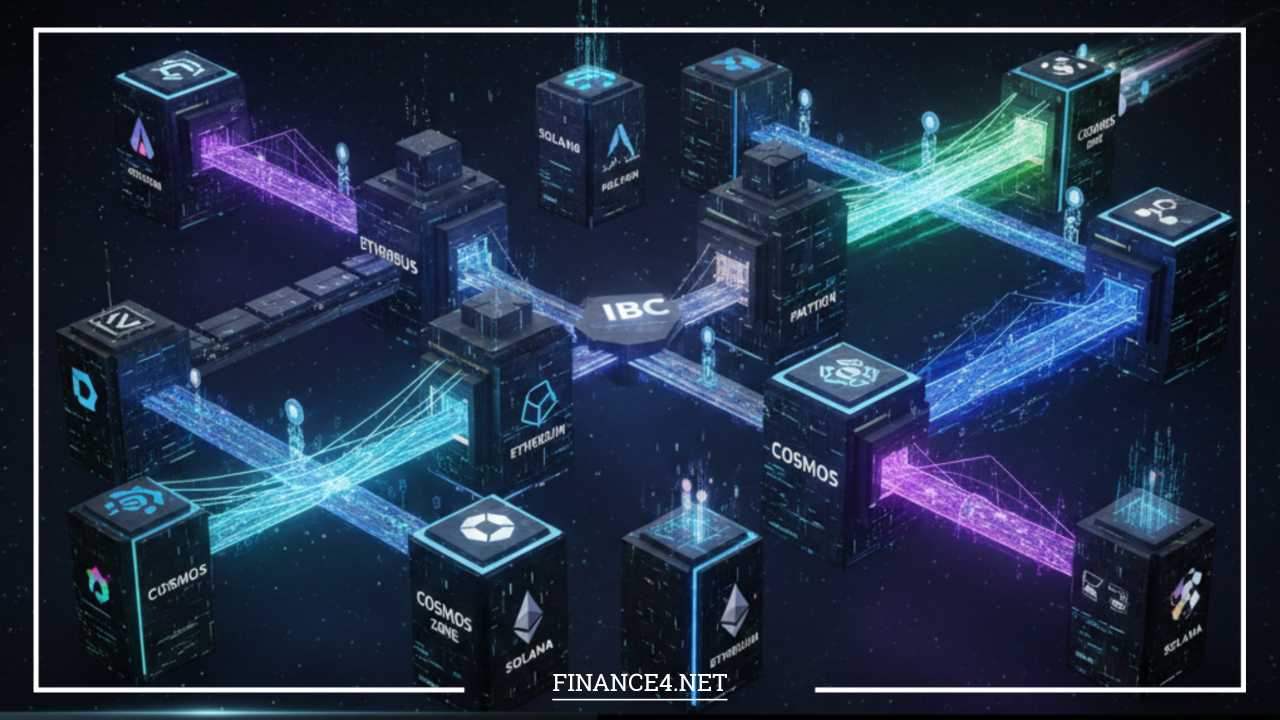
The blockchain world, often envisioned as a single, seamless digital ledger, is in reality a vast multi-chain universe composed of disparate, specialized networks. Among these, the Cosmos ecosystem stands out as an architectural marvel. Built upon the principles of sovereignty and specialization, Cosmos is often dubbed the “Internet of Blockchains.” Its core technology, the Inter-Blockchain Communication (IBC) Protocol, allows chains within its network—like Osmosis, Celestia, Injective, and the Cosmos Hub—to communicate and exchange value natively and securely.
However, the rapid growth of the decentralized finance (DeFi) landscape has expanded far beyond the Cosmos perimeter. To fully harness the vast liquidity and diverse applications residing on external chains like Ethereum, Polygon, or Solana, Cosmos assets must be able to bridge across these foreign boundaries. This process of cross-chain transfer is crucial, but it is frequently fraught with complexity, varying fee structures, and significant security risks associated with individual bridge designs.
This challenge gives rise to a critical piece of infrastructure: the bridging aggregator. A bridging aggregator acts as a universal router, scanning and comparing dozens of individual bridge routes to find the fastest, cheapest, and safest path for a user’s cross-chain transfer. For the vibrant, yet internally focused, Cosmos ecosystem, a robust bridging aggregator is not just a convenience—it is the critical gateway to the trillions in external liquidity, defining its next era of growth and full realization of its interoperability vision. This article will deep-dive into the top bridging aggregators that are currently streamlining cross-chain operations and cementing the Cosmos ecosystem’s connection to the wider Web3 world.
Understanding Cosmos and Its Ecosystem
The Cosmos ecosystem is fundamentally different from monolithic blockchains like Ethereum. It is an intricate network of independent, parallel blockchains—called “Zones”—each built using the Cosmos SDK (Software Development Kit). The Cosmos Hub, secured by its native token, ATOM, serves as the central coordinating chain, although it is not mandatory for all chains to connect through it. Each Zone is sovereign, possessing its own validator set, governance, and specialized function (e.g., Osmosis for DEX services, Injective for finance, Akash for cloud computing). This specialized architecture drives superior performance, scalability, and flexibility.
Cosmos’s Interoperability Core: IBC
The true innovation of Cosmos lies in Inter-Blockchain Communication (IBC). IBC is a secure, reliable, and permissionless protocol that allows data and tokens to pass directly between any two IBC-enabled chains. This native interoperability is what makes the Cosmos ecosystem a truly connected network. Unlike traditional “bridges” which rely on a centralized set of multisig wallets or external validators to lock a token on one chain and mint a representation on another, IBC functions by sending cryptographically verified proof of a transaction from a source chain’s light client running on the destination chain. This method makes IBC one of the most trust-minimized and secure forms of interoperability available in Web3.
The Need for External Bridging
Despite the brilliance of IBC, its utility is confined to blockchains that implement the IBC protocol. The vast majority of the Web3 world, including Ethereum, its Layer 2s, and other major Layer 1s like Solana, do not natively use IBC. Therefore, to bring valuable assets like ETH or major stablecoins like USDC from external chains into the Cosmos ecosystem, a separate, more complex solution—an external bridge—is required. This is where the concept of bridging aggregators becomes indispensable, acting as a sophisticated layer above these diverse external bridges to manage the complexity and risk of moving assets into the IBC-connected ecosystem.
What is a Bridging Aggregator?
In the decentralized space, the term “bridge” typically refers to a protocol that facilitates the transfer of assets or data between two specific blockchains (e.g., Ethereum ↔ Osmosis). In contrast, a bridging aggregator is a sophisticated routing service designed to simplify cross-chain transactions by providing an optimized single interface to multiple underlying bridges and liquidity routes.
Aggregator vs. Single Bridge
The difference is analogous to a travel booking engine versus a single airline’s website. A single bridge offers one fixed route, one fee structure, and one security model. A bridging aggregator, on the other hand, acts as a smart routing layer.
- Route Comparison: It instantly scans all relevant cross-chain protocols, including direct bridges, DEX-based routes (where the asset is swapped on the source chain, bridged, and then swapped again on the destination chain), and various liquidity pools.
- Optimization: The aggregator algorithm compares routes based on user preferences—typically prioritizing lowest cost, fastest speed, and least slippage. For large transfers, it can even split the transaction across multiple bridges to minimize slippage and ensure better execution.
- Unified UX: The user interacts with a single application and a single smart contract, shielding them from the complexity of connecting multiple wallets, comparing fees manually, and tracking transactions across disparate bridge explorers.
Key Benefits of Aggregation
Bridging aggregators are transformative for user experience and capital efficiency:
- Cost Efficiency: Guarantees the user gets the lowest fee by comparing gas costs, bridge fees, and swap/slippage costs across all routes.
- Speed: Selects the route with the shortest confirmation time, dynamically choosing faster options if primary routes are congested.
- Risk Mitigation: By routing through a diverse set of protocols, the failure or downtime of a single underlying bridge does not halt the entire cross-chain system. It also reduces exposure to any one protocol’s specific security model.
- Enhanced Liquidity: By combining liquidity from multiple protocols, aggregators can handle significantly larger transaction volumes without the high slippage that a single liquidity-constrained bridge might impose.
Importance of Bridging in Cosmos
Cosmos is an isolated, though beautifully connected, garden. Without robust external bridging, the value generated within the ecosystem risks remaining siloed. The rise of bridging aggregators is paramount to the ecosystem’s continued growth and its promise as the “Internet of Blockchains.”
Challenges of Single-Bridge Transactions
Using an individual bridge to connect to Cosmos presents significant hurdles for the average user:
- High Slippage and Fees: Bridges, particularly older designs, often have limited liquidity pools. Moving large stablecoin amounts can result in massive slippage. Users must also manually compare a host of fees: source chain gas, bridge service fees, and destination chain gas.
- Protocol Fragmentation: A user might need to use Axelar for Polygon to Osmosis, Gravity Bridge for Ethereum to Cosmos Hub, and Wormhole for Solana to Injective. This requires complex knowledge of which bridge supports which chain and asset, creating a massive barrier to entry.
- Security Risk Concentration: Placing all trust and capital through a single bridge protocol means a single point of failure. The history of cross-chain bridges is riddled with multi-million dollar exploits (e.g., the Wormhole and Ronin hacks), underscoring the risk of relying solely on a single mechanism.
How an Aggregator Solves the Cosmos Dilemma
For the Cosmos user, a top-tier aggregator is a quantum leap in user experience:
- Simplified Multi-Chain Operations: It provides a single, intuitive “Send From” and “Send To” interface. The user doesn’t need to know if the transaction is going through Axelar, Wormhole, or a combination of an external bridge and IBC. The system handles the multi-hop routing automatically.
- Optimizing the “Cold Start” Problem: Many new Cosmos-based app-chains are created. An aggregator instantly connects these new chains to external liquidity by leveraging existing underlying bridge infrastructure (like Axelar’s General Message Passing) without the new chain needing to forge its own direct, bespoke bridge to every external network.
- DeFi and Liquidity Access: Aggregators allow Cosmos DeFi protocols (on chains like Osmosis or Injective) to instantly access the deepest liquidity from external chains, driving competitive yields and allowing users to seamlessly enter and exit the Cosmos ecosystem with minimal cost, thus bolstering the entire ecosystem’s capital attractiveness.
Top Bridging Aggregators for Cosmos
While the Cosmos ecosystem is natively focused on IBC, the most crucial tools for its growth are those that connect it to the massive liquidity of the EVM world. The top “bridging aggregators” and routers in the Cosmos space combine underlying protocols like Axelar and Wormhole with a smart-routing layer to deliver a superior user experience.
Rango Exchange: The True Bridging Aggregator
Overview of the Platform
Rango Exchange is a leading cross-chain DEX aggregator, built to provide a seamless, multi-step swap experience across virtually all major ecosystems, including EVM, Cosmos, Solana, and more. It is the closest example to a true bridging aggregator, as it is designed to find the best path for any-to-any-chain swaps, often combining multiple bridges and DEXs in a single transaction.
Supported Chains and Assets
Rango supports an industry-leading range of over 70 blockchains and integrates with over 100 decentralized exchanges (DEXs) and 15 bridge protocols. Critically for Cosmos, it connects to all major IBC-enabled chains (Cosmos Hub, Osmosis, Juno, Injective, Celestia, etc.) and routes liquidity to them from EVM chains like Ethereum, Arbitrum, Polygon, and non-EVM chains like Solana and Bitcoin (via relevant protocols).
Key Features (Fees, Speed, Security, UX)
- Smart Routing: Rango’s core technology is its sophisticated routing algorithm. It calculates the optimal route, which may involve a multi-hop path (e.g., Asset A on Ethereum → Bridge 1 → Swap on DEX → IBC to Destination Chain).
- Security: As an aggregator, its security is inherited from the underlying protocols it uses (Axelar, Wormhole, Symbiosis, etc.). It prioritizes audited and battle-tested infrastructure.
- UX: The user only needs to connect their EVM wallet (like MetaMask) and their Cosmos wallet (like Keplr or Leap), and Rango handles the rest, simplifying the complex multi-step process into one click.
Unique Selling Points in Cosmos Ecosystem
Its sheer breadth of supported chains and its ability to act as a DEX-Bridge Aggregator makes it the go-to tool for users who need to swap and bridge in one go (e.g., swapping ETH for OSMO directly from Ethereum to Osmosis).
Potential Drawbacks or Limitations
Its reliance on multiple underlying protocols means the user must implicitly trust the security models of all those protocols. The transaction complexity can also make debugging a failed transaction more challenging, although Rango provides extensive transaction tracking.
Squid Router (Powered by Axelar): The Protocol Router
Overview of the Platform
Squid is not a bridge itself; it’s a router and development tool built on top of the Axelar Network. Axelar is a decentralized cross-chain communication network built with the Cosmos SDK, providing General Message Passing (GMP)—a secure way to send data and execute function calls across various chains. Squid acts as the application layer, using Axelar to enable one-click cross-chain swaps between any application and any asset.
Supported Chains and Assets
Squid leverages Axelar to support a deep connection between the Cosmos ecosystem and over 60 external chains, including all major EVM chains, Layer 2s, and other major ecosystems. It supports the transfer of $axlUSDC (Axelar-bridged USDC) and other canonical tokens into Cosmos.
Key Features (Fees, Speed, Security, UX)
- Canonical Asset Focus: Axelar is the canonical bridge provider for a number of major Cosmos chains, securing the asset (like $axlUSDC) that is used in pools on DEXs like Osmosis.
- General Message Passing (GMP): Allows dApps to execute logic across chains (e.g., “send my tokens and immediately stake them on the destination chain”).
- Security: Axelar’s security is derived from its decentralized Proof-of-Stake (PoS) validator set and Threshold Cryptography, offering a strong, battle-tested security model that is fully integrated with the Cosmos stack.
Unique Selling Points in Cosmos Ecosystem
Squid/Axelar is arguably the most deeply integrated external bridging protocol within Cosmos. For developers, its GMP capability unlocks the design space for true “omn-ichain” applications that can live on one chain but access liquidity or execute smart contracts on any other.
Potential Drawbacks or Limitations
While highly secure, the Axelar model introduces its own sovereign validator set, which users must trust for security, contrasting with IBC’s more trust-minimized, light-client verification model.
Wormhole (Portal): The Multi-Chain Backbone
Overview of the Platform
Wormhole is a generic message-passing protocol that connects over 30 high-value chains, including a critical link to the Cosmos ecosystem via the Wormhole Gateway and Portal Bridge. While Wormhole is a foundational protocol rather than a final-user aggregator, its deep adoption means that many swap aggregators ultimately rely on its infrastructure for certain routes, especially for non-EVM transfers (like Solana to Cosmos).
Key Features and Role in Cosmos
- Guardian Network: Wormhole’s security is managed by a decentralized set of “Guardians” who observe and verify cross-chain messages, prioritizing speed and broad adoption.
- Cosmos Gateway: Wormhole created a specific IBC-enabled gateway on Cosmos that allows Wormhole-wrapped assets (e.g., assets from Solana) to be brought into the IBC network, making it a powerful link to the non-EVM world.
How to Use a Bridging Aggregator in Cosmos
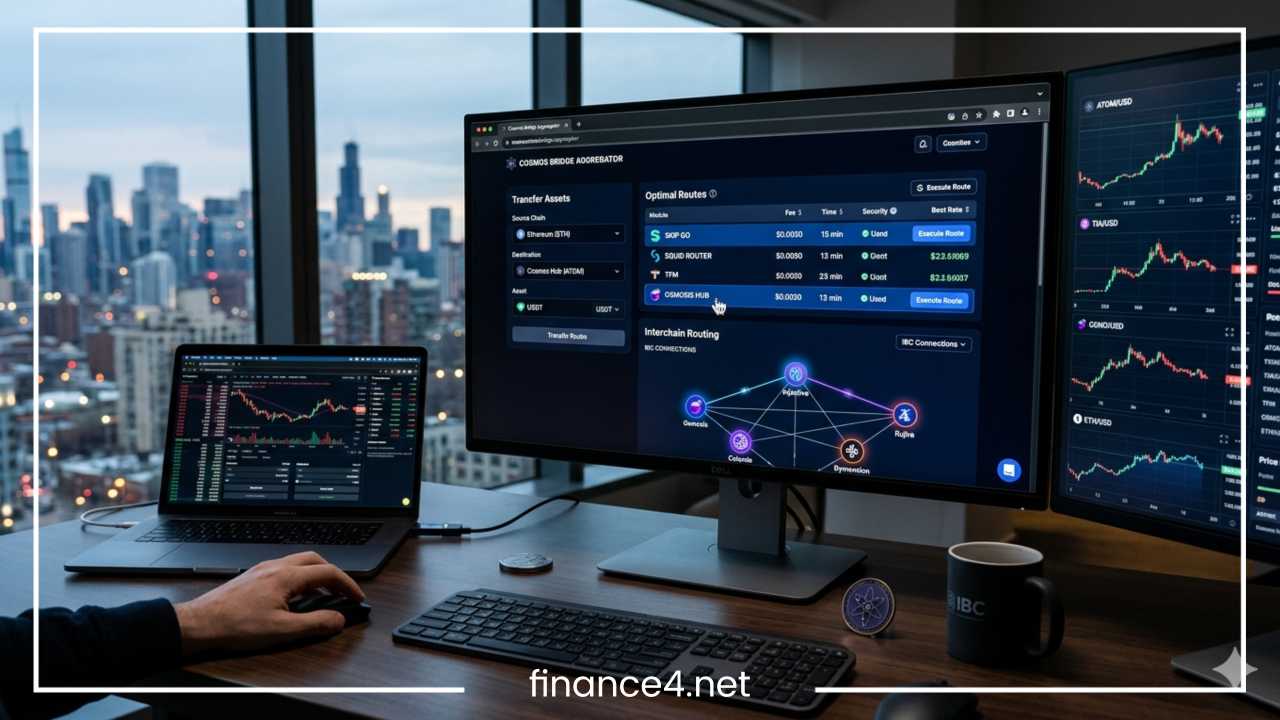
Using a bridging aggregator significantly simplifies the complex process of cross-chain asset transfer. The following guide outlines the general, multi-step process for a top aggregator like Rango Exchange or a router like Squid.
Step-by-Step Guide
- Select the Aggregator and Connect Wallets:
- Navigate to the chosen aggregator’s website (e.g., Rango Exchange).
- Connect Wallets: You will need to connect two wallets:
- The Source Wallet (e.g., MetaMask for Ethereum/EVM chains).
- The Destination Wallet (e.g., Keplr or Leap for the Cosmos chain).
- Ensure both wallets are on the correct, funded networks.
- Define the Transfer Parameters (The “Swap”):
- “From” Chain & Asset: Select the source blockchain (e.g., Polygon) and the asset you wish to send (e.g., USDC).
- “To” Chain & Asset: Select the destination Cosmos blockchain (e.g., Osmosis) and the asset you wish to receive (e.g., OSMO, or the bridged USDC).
- Review the Aggregated Routes:
- The aggregator’s algorithm instantly calculates and displays several possible transfer routes.
- Routes are typically ranked by:
- Best Price/Lowest Slippage
- Fastest Time
- Lowest Gas Fee
- The aggregator will often show the complex multi-hop path, for example: Polygon (USDC) → Axelar Bridge → Osmosis (axlUSDC) → Swap on Osmosis DEX → OSMO
- Execute and Track the Transaction:
- Approval: Click the “Approve” button to allow the aggregator’s smart contract to spend your tokens in your source wallet.
- Swap/Transfer: Click the final “Swap” or “Bridge” button and confirm the transaction in your source wallet.
- Tracking: The aggregator will provide a unified tracking interface. It will monitor the transaction across the source chain, the bridge protocol (Axelar, Wormhole, etc.), and finally the destination Cosmos chain via IBC.
Tips for Safe Bridging
- Confirm Supported Chains: Always verify that the destination chain and asset are correctly displayed in your Keplr/Leap wallet before confirming the transaction.
- Check Transaction Fees: Do not rely solely on the “Best Price.” Always check the detailed breakdown of the total fee, including gas costs on both chains and the bridge service fee.
- Slippage Tolerance: For large transactions, ensure the slippage tolerance is set low enough to protect against price volatility but high enough for the transaction to execute across multiple DEXs/bridges.
Risks and Security Considerations
While bridging aggregators dramatically improve user experience, they do not eliminate all cross-chain risks. The primary security model of the final transaction is inherited from the underlying bridge protocol chosen by the aggregator.
Common Cross-Chain Risks
- Smart Contract Vulnerabilities: The core risk lies in the smart contracts of the individual bridge protocols. A bug in the lock-and-mint mechanism or the external validator set can lead to massive losses, as evidenced by historical bridge exploits.
- Centralization/Malicious Validators: Bridges that rely on a small, centralized set of signers or an external, non-Cosmos validator set (like a Guardians or multi-sig committee) introduce a trust assumption. If these external validators are compromised or collude, the security of the bridged assets is at risk.
- Wrapped Asset Risk: When bridging, the user often receives a wrapped asset (e.g., ETH → wETH or axlETH). The value of this wrapped asset relies entirely on the security and integrity of the bridge protocol to redeem the original asset. If the original collateral is lost, the wrapped asset becomes worthless.
How Aggregators Mitigate Risk
Aggregators help manage this risk profile through intelligent routing and user experience improvements:
- Diversification of Risk: By routing, they prevent users from being locked into a single protocol. If one bridge experiences a security issue or is temporarily paused, the aggregator can automatically redirect liquidity through another, operational protocol.
- Trust in Audited Protocols: Top aggregators tend to integrate only with battle-tested, heavily audited bridge protocols, effectively creating a layer of due diligence for the user.
- Reduced User Error: A complex multi-step transfer that would involve manual swaps, bridge transfers, and IBC transfers is reduced to a single interface, significantly reducing the chances of a user sending tokens to a wrong address or selecting a non-existent route.
The Future of Bridging in Cosmos
The current state of bridging in Cosmos is sophisticated, but the future promises an era of even greater seamlessness, where external bridges begin to feel as native as IBC.
Upcoming Innovations
The evolution of bridging is moving toward trust-minimized architectures.
- Interchain Security (ICS) and Replication: While not directly a bridge, the expansion of ICS—where the Cosmos Hub’s validator set secures other, smaller Cosmos chains—sets a precedent for shared security that could eventually be extended to external bridging protocols.
- ZK-Proof Integration: Zero-Knowledge (ZK) proofs are emerging as the holy grail for cross-chain communication. ZK bridges would allow one chain to cryptographically verify the state of another chain without trusting external validators or running a full light client. The integration of ZK-proofs into protocols like Axelar or into future IBC upgrades will fundamentally revolutionize external bridging security.
- Permissionless Bridge Deployment: Future interoperability protocols are focused on making it permissionless for developers to connect any new chain, meaning new Cosmos-based app-chains can instantaneously be connected to the broader EVM ecosystem, driving immediate liquidity.
Ecosystem Growth and Trends
The role of the aggregator will only increase as the number of chains and bridges grows.
- Multi-Chain DeFi: Aggregators are the linchpin for truly multi-chain applications. A yield aggregator could use Rango or Squid to instantly move assets from a Layer 2 to Osmosis to access a high-yield vault, all in the background, making the Cosmos ecosystem a core destination for global DeFi yield.
- NFT and Gaming Interoperability: Future aggregators will not only route tokens but also complex data, enabling NFTs and game assets to be seamlessly moved across the entire ecosystem, creating a new wave of composable, cross-chain experiences that are not yet possible. The bridging aggregator is the traffic control for the inevitable blockchain internet.
Final Thought
The Cosmos ecosystem has succeeded in creating the “Internet of Blockchains” internally through the elegant and secure design of IBC. However, the mission is incomplete without a robust and secure connection to the rest of the crypto world. Bridging aggregators like Rango Exchange and routing protocols built on infrastructure like Axelar Network are the essential tools that transform this internal success into global relevance.
They solve the fragmentation problem, converting a complicated, risky process of manually selecting and using single bridges into a single, optimized transaction. This layer of abstraction is what will ultimately onboard the next wave of liquidity and users to the Cosmos ecosystem. By prioritizing the lowest cost, fastest speed, and most secure routes, aggregators ensure that capital can flow freely, empowering Cosmos DeFi to become a global hub. As the ecosystem matures, the bridging aggregator will not just be a tool for advanced traders, but the standard gateway that secures the Cosmos ecosystem’s place as a dominant, interoperable force in the future of Web3.