Best Aggregator for Bridging Solana Program NFTs
 by
by 
Best Aggregator for Bridging Solana Program NFTs | Top NFT Bridges
The blockchain landscape is rapidly evolving from isolated digital islands to an interconnected digital ocean. In this multichain future, the ability to seamlessly move assets, particularly Non-Fungible Tokens (NFTs), between disparate ecosystems is paramount. Solana, with its high throughput and low transaction costs, has carved out a significant space for its NFT ecosystem, yet its separation from the dominant Ethereum Virtual Machine (EVM) chains creates a crucial need for robust bridging solutions.
This article delves into the specialized world of aggregators—platforms that route transactions across multiple underlying bridges—and identifies the best options for bridging Solana Program NFTs.
Why Bridging Matters in the Multichain Era (Especially for Solana)
The concept of a single, all-dominant blockchain has proven to be a myth. Instead, we are entering a multichain era where different blockchains specialize in different functions—Solana for high-speed, low-cost operations, Ethereum for high-security and high-value settlements, and various Layer-2s for specialized scaling.
For an ecosystem like Solana, bridging is not merely a convenience; it’s a necessity for unlocking global liquidity and access. By bridging, Solana NFTs can tap into the deep liquidity pools, established buyer bases, and foundational DeFi (Decentralized Finance) primitives of chains like Ethereum or Polygon. Without bridging, a vibrant local Solana ecosystem risks remaining isolated.
What We Mean by “Aggregator” in This Context (Versus a Simple Bridge)
A traditional bridge is a point-to-point protocol designed to transfer assets between two specific blockchains. It offers a single path with a fixed set of security and trust assumptions.
An aggregator, however, is a sophisticated platform that acts as a router. It doesn’t perform the bridge function itself but rather queries multiple existing bridges, as well as DEX (Decentralized Exchange) and bridge-swap protocols, to find the optimal path for a user’s transaction. For fungible assets, this means the lowest cost and least slippage. For NFTs, it means the most secure, efficient, and cost-effective transfer that preserves the asset’s integrity.
Why NFTs (Especially Solana-Program NFTs) Require Special Consideration
Bridging a standard fungible token (like USDC or SOL) is relatively straightforward: lock the asset on Chain A and mint a wrapped version on Chain B. NFTs, however, are non-fungible, meaning each is unique and its value is inextricably linked to its metadata, provenance, and standard.
Solana “Program NFTs” specifically refer to NFTs created and governed by the Metaplex standard, which is distinct from the ERC-721/ERC-1155 standards prevalent on EVM chains. Bridging an NFT requires not just moving a token address but ensuring the recipient chain correctly recognizes and displays the original artwork, traits, and creator royalties—a process that is far more complex than moving a simple token balance.
A Quick Preview of What the Article Will Cover
This article will first cover the distinct nature of Solana NFTs and bridging models, define the role of an aggregator, and establish key evaluation criteria. We will then examine leading solutions like LI.FI, XP.Network, and Jupiter’s aggregation layer to determine which currently provides the best routing and support for the crucial Solana NFT bridge.
Background: Solana Program NFTs & Cross-Chain Bridging
Basics of Solana NFTs / “Program NFTs”
Solana NFTs are primarily created using the Metaplex Protocol, a set of on-chain programs that define the NFT standard on Solana. This is often referred to as an “SPL NFT” or “Program NFT,” in contrast to the ERC-721/ERC-1155 tokens on Ethereum.
The key differentiation is in their architecture:
- Metadata: On Solana, metadata is stored in a separate, dedicated account whose address is referenced by the NFT token account. This separation allows for efficient updates but presents a challenge when translating to an EVM-chain’s single-contract-plus-URI structure.
- Programs: Solana’s design leverages the Solana Program Library (SPL), a collection of on-chain programs that govern token and NFT functionalities, which are inherently different from Ethereum’s smart contract design.
Common Chain-Isolation Issues and Why Bridging is Beneficial
A lack of bridging capability leads to chain-isolation and liquidity fragmentation. A collector on Ethereum cannot easily buy a highly-sought-after Solana PFP (Profile Picture) collection without first navigating a complex, multi-step process.
Benefits of Bridging:
- Access to Other Ecosystems: Solana-based games or metaverse projects can allow their NFT assets to be used, traded, or staked on Ethereum Layer-2s.
- Liquidity & Marketplaces: Bridging can expose an NFT collection to global marketplaces like OpenSea, Blur, or other dominant EVM-based trading venues, boosting its liquidity.
- Cross-Chain DApps: Enables complex cross-chain financial products, such as using a Solana NFT as collateral for a loan on an EVM-based DeFi protocol.
Key Bridging Models
To move assets between chains, bridges typically employ one of three core models:
- Lock-and-Mint (Canonical Bridges): The original asset is locked in a smart contract on the source chain (e.g., Solana), and a wrapped representation of the asset is minted on the destination chain (e.g., Ethereum). This model is common (e.g., Wormhole/Portal) but requires trust in the lock contract and the security of the minting process. The wrapped NFT’s value is dependent on the locked asset.
- Liquidity-Pool: Primarily used for fungible tokens, a user deposits Token A on Chain 1 and withdraws the native Token A on Chain 2, using pre-funded liquidity pools on both sides. This is less common for unique NFTs due to the difficulty of creating an equivalent “liquidity” model.
- Messaging/Relay Mechanisms: Protocols focused on general message passing (like Wormhole) that can transmit arbitrary data, including instructions to burn an NFT on the source chain and re-mint a new, native-like version on the destination chain. This is a more complex but potentially more secure and native approach for NFTs.
Challenges Specific to NFT Bridging
Bridging NFTs introduces unique difficulties:
- Metadata Integrity: Ensuring the original image, attributes, and most importantly, the Metaplex creator and royalty information are correctly represented in the destination chain’s standard (like the ERC-721 metadata JSON).
- Provenance: The NFT’s history—who minted it, who has owned it—must be tracked. A wrapped asset loses its original chain identity, which can impact its perceived provenance and value.
- Wrapped vs. Native: A wrapped NFT (e.g., on Ethereum) is not the same as a native NFT on Solana. This distinction is crucial for marketplaces and DApps that may only recognize one standard.
- Irreversibility: Unlike a fungible token swap where slippage is the main risk, a failed NFT bridge transaction can result in a “stuck” asset—a much more severe and irreversible loss of utility.
What is an Aggregator and Why Use One for NFT Bridging
Define “Aggregator” in Bridging Context
In the multichain world, there are dozens of bridges, each connecting different pairs of chains and offering varying trade-offs in terms of speed, cost, and security. A bridging aggregator is a meta-protocol that integrates with many of these underlying bridges and DEXes.
Its primary function is intelligent routing. When a user requests a cross-chain transfer—for example, moving a Solana NFT to Polygon—the aggregator does not perform the bridge itself. Instead, it:
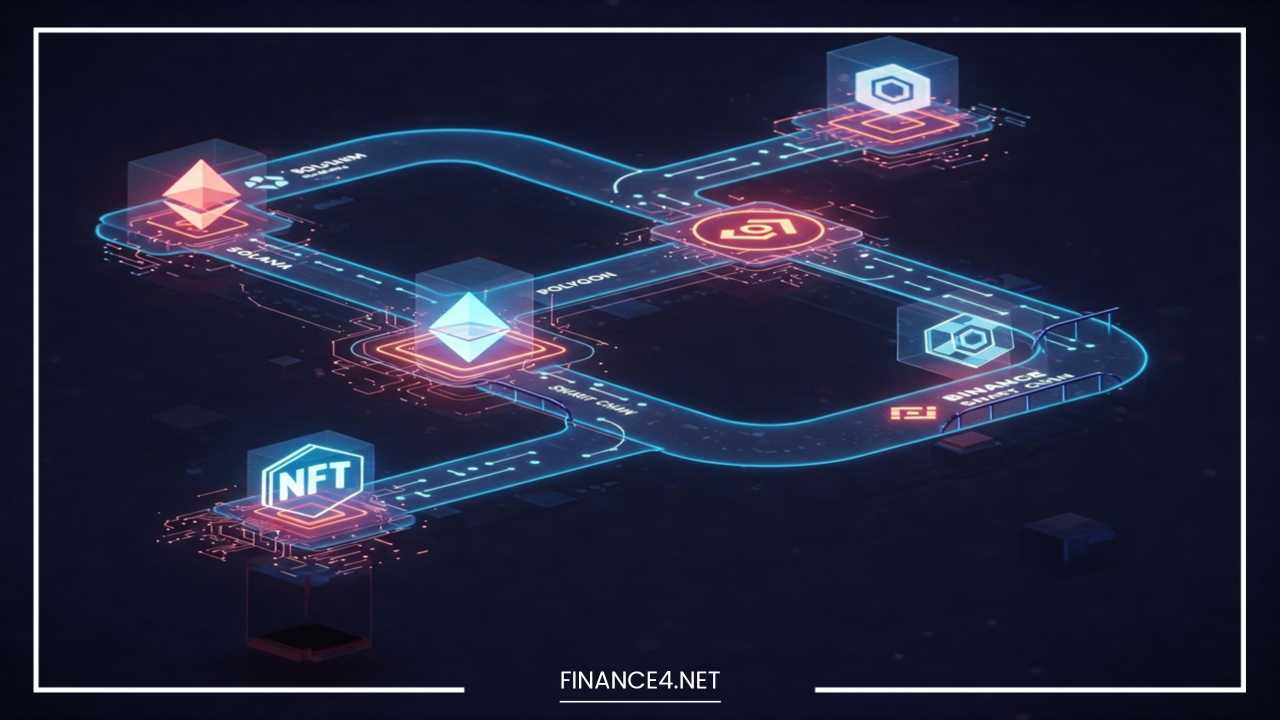
- Calculates all possible multi-step paths (e.g., Solana → Wormhole → Ethereum → Hop Protocol → Polygon).
- Estimates the total cost, time, and security profile of each route.
- Presents the single best path (or a ranked list) to the user for execution.
This is a layer of abstraction that simplifies the complex, fragmented bridging landscape for the end-user.
The Benefits of Using an Aggregator for NFTs Especially
Aggregators are particularly valuable for high-stakes, specialized transfers like NFTs:
- Better Routing / Lower Fees: The ability to combine a bridge (for cross-chain movement) with a DEX swap (for converting a token post-bridge) can drastically reduce overall cost and time compared to a manual, two-step process. For NFTs, while fees are largely fixed by the underlying bridge, the aggregator ensures the cheapest possible bridge for the necessary chain pair is used.
- Avoiding Manual Selection: Users no longer have to manually compare bridges, check their security audits, or verify which supports which chains. The aggregator handles the complex logistics.
- Improved Metadata Handling: Top-tier aggregators often abstract the complex token standard conversions (Metaplex to ERC-721) by selecting only those underlying protocols (like XP.Network or Wormhole) that have proven, tested functionality for specific NFT standards. They act as a quality control filter by only using audited, NFT-compatible paths.
- Unified UX: The entire cross-chain journey, from wallet connect on Solana (e.g., Phantom) to receiving the NFT on an EVM wallet (e.g., MetaMask), is contained within one simplified interface.
Potential Trade-offs / Things to Check
While beneficial, aggregators introduce new layers of complexity and trust:
- Increased Complexity: The transaction route may involve multiple hops and intermediate smart contracts, making debugging a failure more difficult than a single-bridge transaction.
- Trust Assumptions: Users must now trust both the aggregator’s security and the underlying bridge’s security. A weakness in either can compromise the transfer.
- Security: Aggregators are new smart contract layers. They need thorough audits, and users should verify the platform’s security track record before transferring high-value Solana Program NFTs.
Key Criteria to Evaluate When Choosing the Best Aggregator
Choosing the “best” aggregator for Solana Program NFTs requires a rigorous evaluation that moves beyond simple token-bridging metrics (like low slippage) to focus on asset integrity.
1. Chain & Standard Support
This is the most critical factor. The best aggregator must:
- Support Solana’s Wallet and Standard: Seamlessly connect with Solana wallets (Phantom, Solflare) and recognize the Metaplex Program NFT standard.
- Support Destination Chains: Offer connections to the most liquid EVM chains (Ethereum, Polygon, BNB Chain) but also emerging non-EVM chains (e.g., Near, Aptos) where Solana’s assets might find new markets.
- What to look for: Explicit documentation confirming NFT support between Solana and the target chain, not just fungible token support.
2. Metadata & Provenance Preservation
Bridging an NFT is essentially cloning it onto another chain. The aggregator must ensure the process is flawless.
- Metadata Integrity: The resulting wrapped or re-minted NFT on the destination chain must accurately point to the original, high-resolution media file and display all its original traits and attributes.
- Creator Royalty: A high-quality bridge must ensure that the original creator’s royalty fee is encoded into the new NFT’s contract, preserving the economic rights established on Solana.
- What to look for: Testimonials or case studies from major NFT collections that have successfully bridged via the aggregator’s underlying protocol.
3. Cost & Routing Efficiency
While the fee will ultimately be dictated by the underlying bridge and the destination chain’s gas, the aggregator’s role is to minimize the total cost.
- Lowest Gas: Identifying the time when a transaction on a congested chain (like Ethereum) will be cheapest.
- Optimal Path: Avoiding unnecessary intermediary bridges or swaps (i.e., multiple “hops”) that add complexity and fees.
- What to look for: An interface that clearly displays the total estimated fee (bridge fee + destination gas + aggregator fee) upfront.
4. Security & Decentralization
The history of bridges is unfortunately littered with major hacks. Security is non-negotiable.
- Trust Model: Is the underlying bridge a centralized, multi-sig custodian (higher risk) or a decentralized guardian/validator network (lower risk)? Aggregators that route through more decentralized protocols (like Wormhole) are generally preferred.
- Audits: The aggregator and all its integrated bridges must have been rigorously audited by reputable security firms.
- What to look for: Publicly available security audits and a transparent mechanism for how wrapped assets are secured on the source chain (the “lock” contract).
5. UX & Wallet Compatibility
The best technology is useless if it’s too complex.
- Ease of Use: A single, intuitive interface for connecting a Solana wallet and an EVM wallet.
- Recovery: A clear, documented process for what happens if a transaction gets stuck (a common pitfall) and how to initiate a refund or force the transaction through.
- What to look for: Support for native Solana wallets (e.g., Phantom) and a simple, single-click bridging flow.
6. Liquidity & Destination Marketplace Integration
The point of bridging an NFT is to use it.
- Marketplace Compatibility: The resulting NFT on the destination chain must be immediately listable and tradable on the major marketplaces (e.g., OpenSea, LooksRare, Magic Eden on Polygon). This relies on the bridged asset conforming perfectly to the destination chain’s most liquid NFT standard.
- What to look for: Explicit mention that the bridged NFT is compatible with major EVM marketplaces.
Current Leading Aggregators / Bridges Relevant to Solana NFT Bridging
The cross-chain NFT space is highly specialized. While many aggregators support token bridging to/from Solana, only a select few integrate the protocols necessary for robust NFT bridging.
| Aggregator/Protocol | Solana NFT Support | Primary Focus | Strengths | Weaknesses |
| LI.FI (Aggregator) | Yes (via underlying bridges) | Token & Bridge Aggregation | Excellent routing, broad chain support, integrates with major Solana bridges (Wormhole/Mayan). | NFT-specific features rely entirely on the underlying bridge’s implementation. |
| XP.Network | Explicit, Dedicated Support | NFT-Focused Bridge Aggregator | Built specifically for NFTs, excellent metadata preservation focus, supports many non-EVM chains. | Lower overall volume compared to pure token aggregators; may have higher fees. |
| Jupiter Aggregator | Token Bridging Focus (Aggregator) | Solana DEX & Bridge Aggregation | Dominant on Solana, best fungible token routing, high speed, in-wallet integration (e.g., Phantom). | Primary strength is fungible tokens; NFT bridging is typically outsourced to dedicated partners. |
| Wormhole/Portal | Yes (Canonical Bridge) | Cross-Chain Messaging & Bridge | Highly secure (Guardian network), used by major collections for migration, foundational infrastructure for many aggregators. | It is a bridge, not an aggregator; users must manually compare its path vs. others. |
LI.FI (Jumper)
LI.FI positions itself as a universal bridge and DEX aggregator, connecting a vast array of EVM and non-EVM chains. Its strength lies in its intelligent routing engine, which dynamically chooses the best combination of bridges and swaps for a user’s transaction.
- Solana/NFT Handling: LI.FI’s support for Solana bridging is robust for fungible assets, often integrating Wormhole/Portal and Mayan Finance. While it is a token aggregator at its core, its ability to route transactions through NFT-specialized bridges like XP.Network (if integrated) or the dedicated Wormhole NFT pathways makes it a strong contender for a generic NFT aggregator solution.
- Strength: Maximum route options, user-friendly interface (Jumper.Exchange), and deep integration of Solana’s best bridges.
- Weakness: The quality of the NFT transfer is dependent on the best-found underlying bridge rather than the aggregator’s own NFT-specific logic.
XP.Network
XP.Network is unique as it is one of the few platforms built specifically to bridge NFTs across multiple chains, explicitly listing Solana (Metaplex) as a supported standard. It is not just a router; it’s a protocol designed to handle the complex, unique data structure of non-fungible assets.
- Solana/NFT Handling: It offers a dedicated solution for minting wrapped versions of Solana NFTs on other chains, prioritizing the correct mapping of metadata and collection data. It is known for supporting a broad mix of chains, including non-EVM ecosystems.
- Strength: Native focus on metadata preservation and NFT standards, which is the most critical element for Solana Program NFTs. Supports a large number of EVM and non-EVM destination chains.
- Weakness: Lower transaction volume and mindshare compared to massive token-focused aggregators; its trust model requires scrutiny.
Jupiter Aggregator
Jupiter is the undisputed champion of DEX aggregation within the Solana ecosystem. While its initial focus was on finding the best on-chain swap price on Solana, it has expanded to include a powerful bridge aggregator feature, primarily for fungible tokens.
- Solana/NFT Handling: Jupiter’s bridge feature is geared toward getting tokens (like USDC or ETH) to or from Solana quickly and cheaply, leveraging bridges like Wormhole, Allbridge, and Mayan. While its interface can facilitate the necessary step before an NFT transfer, it is not primarily an NFT aggregator. Users would likely use Jupiter to bridge the necessary SOL/USDC for gas/payment, and then a dedicated NFT bridge for the asset itself.
- Strength: Best price and routing for fungible tokens, deep integration with the Solana wallet ecosystem (Phantom’s built-in swapper uses Jupiter), and unparalleled speed.
- Weakness: Not natively focused on the complex, non-fungible nature of NFT bridging.
Conclusion on Best Aggregator:
For bridging Solana Program NFTs, the best current option is an NFT-specific aggregator like XP.Network or a universal aggregator like LI.FI that routes through proven underlying NFT bridges (like Wormhole/Portal). XP.Network offers a dedicated, NFT-centric approach that ensures metadata and standard compatibility are prioritized, giving it a slight edge in terms of specialized function. LI.FI offers better routing efficiency and chain breadth for users comfortable with the underlying bridge’s security.
Use Case Walkthrough: Bridging a Solana Program NFT Step-by-Step
Let’s imagine a collector wants to move a valuable Solana NFT to Ethereum to list it on OpenSea.
Step-by-Step Walkthrough (Using an Aggregator like LI.FI or a dedicated protocol like XP.Network):
- Connect Wallets: The user connects their Solana wallet (e.g., Phantom) to the aggregator’s interface and their destination wallet (e.g., MetaMask) for the Ethereum chain.
- Select Asset and Route: The user selects the Solana NFT from their wallet portfolio within the aggregator’s interface. They choose the destination chain, Ethereum. The aggregator’s smart routing engine instantly analyzes all possible paths (e.g., Solana $\leftrightarrow$ Wormhole $\leftrightarrow$ Ethereum) and displays the estimated total cost and expected time.
- Verify Compatibility and Execute: Before confirming, the user should see a note verifying that the chosen route supports the Metaplex Program NFT standard and will result in a fully compatible ERC-721 token on Ethereum. They approve the transaction in their Solana wallet, allowing the aggregator’s protocol (or the underlying bridge) to lock the NFT in a smart contract.
- Bridging in Progress (Lock-and-Mint): The underlying bridge protocol (e.g., Wormhole’s Guardians) verifies the lock transaction on Solana. It then initiates the minting of a wrapped ERC-721 token on the Ethereum network. Crucially, this new token is minted with a URI that points to a metadata file containing the original Metaplex information.
- After Bridging – Destination Check: After a few minutes, the user switches their MetaMask to the Ethereum network. The NFT should appear in their wallet, often recognized by its correct image and traits. They can then navigate to OpenSea and the NFT should be immediately listable.
- Reversion: If they later wish to move the NFT back to Solana, they would reverse the process: send the wrapped NFT to the bridge contract on Ethereum, which then burns it and triggers the unlock of the original native Metaplex NFT on the Solana chain.
Highlight Potential Pitfalls
- Metadata Fields: The most common issue. The bridge may successfully move the token, but non-standard Metaplex metadata fields (like unique custom properties) may be lost or incorrectly translated, affecting its display on some EVM marketplaces.
- Unsupported Marketplaces: Even if the NFT is ERC-721, a specific marketplace might only index “official” wrapped collections or miss newly bridged assets.
- Stuck Transactions: Due to network congestion on either chain or an issue with the underlying bridge’s relayers, the transaction can stall. Good aggregators have clear support and recovery mechanisms.
- Gas Cost Shock: While Solana fees are tiny, the destination chain (especially Ethereum Layer 1) can have very high gas fees for the final minting/transfer step.
Risks & Considerations Specific to Solana Program NFTs Bridging
Bridging high-value NFTs carries inherent risk, which is compounded by Solana’s unique architecture.
Technical Risks
- Metadata Loss: The biggest risk. If the bridge protocol’s translation layer fails, the NFT on the destination chain may appear as a blank image or with incorrect attributes. This destroys the asset’s market value.
- Token Standard Mismatch: An incorrectly minted ERC-721 token may not be recognized by DApps or wallets on the destination chain.
- Wrapped Versions Losing Original Chain Identity: The provenance of an NFT is a key value driver. A wrapped NFT is inherently a copy of the original; true provenance requires a complex verification process that is not always seamless.
Security Risks
- Bridge/Aggregator Vulnerability: Bridges are frequent targets for hackers. The total value locked (TVL) in the underlying lock contract on Solana (which holds the original NFTs) is a honey pot. Aggregators that route through less-audited or more centralized bridges increase the user’s risk exposure.
- Custodial Minting: The wrapped NFT relies on the security of the bridge’s minting process. If the bridge’s guardians or relayer network are compromised, unauthorized NFTs could be minted, or locked assets could be permanently lost.
Chain-Specific Risks
- Solana Performance Issues: While rare now, past Solana network outages or periods of high congestion could delay the crucial locking or unlocking of the asset, leading to a stuck or failed bridge attempt.
Liquidity/Market Risk
- Weak Destination Market: Even a successful bridge transfer is only a success if the NFT can be sold or used on the destination chain. Bridging a niche Solana collection to an EVM chain where there is no community, trading pair, or marketplace support means the NFT’s utility and marketability have not been improved, effectively creating a “ghost asset.”
Operational Risk
- Unexpectedly High Fees: An aggregator’s estimate can be wrong if gas prices spike on the destination chain just before execution, or if the aggregator’s routing involves a complex, hidden intermediate step with high fees.
Future Outlook & How the Aggregator/NFT Bridging Space is Evolving
The bridging landscape is rapidly maturing, driven by the intense demand for multichain interoperability.
Key Developments to Keep an Eye On
- Better Metadata Interoperability: A major focus will be on creating universal metadata standards. Initiatives like xNFTs or enhanced cross-chain messaging protocols aim to make the transfer of complex, chain-specific data (like Metaplex’s creator royalties) a seamless, native process.
- Unified NFT Standards: The rise of Cross-Chain NFT Standards (xNFTs) or similar concepts will abstract away the Metaplex vs. ERC-721 difference, allowing a user’s wallet to present the same asset regardless of which chain it resides on.
- Layer-0 Messaging Protocols: Generic messaging layers (like LayerZero or Wormhole) are becoming the fundamental infrastructure, enabling aggregators to build more secure, flexible, and truly native cross-chain applications without relying on the lock-and-mint model.
Solana-Specific Evolution
As Solana’s ecosystem matures, especially with the introduction of new validator clients (like Firedancer) and the expansion of the Solana Virtual Machine (SVM) to other chains, bridging will become smoother:
- SVM-compatible Chains: As chains adopt the SVM, the code and asset standards become natively closer to Solana, simplifying the Metaplex-to-EVM translation.
- Deeper Wallet Integration: Wallets like Phantom are integrating aggregation directly, making the cross-chain experience invisible to the user. A user may one day simply click “List on OpenSea,” and the wallet/aggregator handles the entire bridge process automatically.
Aggregators and Ecosystem Implications
The future will see aggregators evolve beyond simple price comparison to becoming “Interoperability Operating Systems” that prioritize security, provenance, and standard compatibility.
- Advanced Routing: Routing algorithms will incorporate complex factors like the security score of the bridge, the metadata integrity track record, and the time-to-finality for different chain pairs, not just cost.
- Unlocking Global Liquidity: The successful bridging of Solana NFTs will unlock billions in value by allowing Solana’s high-volume gaming and collectible NFTs to be liquid in major EVM markets. This fosters cross-chain marketplaces where a single interface can list assets from both Solana and Ethereum natively.
In conclusion, while single-bridge solutions like Wormhole are the foundational technology, the Best Aggregator for Bridging Solana Program NFTs is a platform like XP.Network (for specialized, dedicated NFT transfers) or LI.FI (for best route optimization across multiple underlying bridges). The long-term winner will be the platform that most effectively eliminates the user’s need to worry about metadata, standard translation, and underlying bridge security, ushering in a truly unified multichain world for the digital collectibles on Solana.
Would you like to explore a specific aggregator’s security model or look up the latest updates on cross-chain NFT standards?