Best Cross-Chain Gaming Projects
 by
by 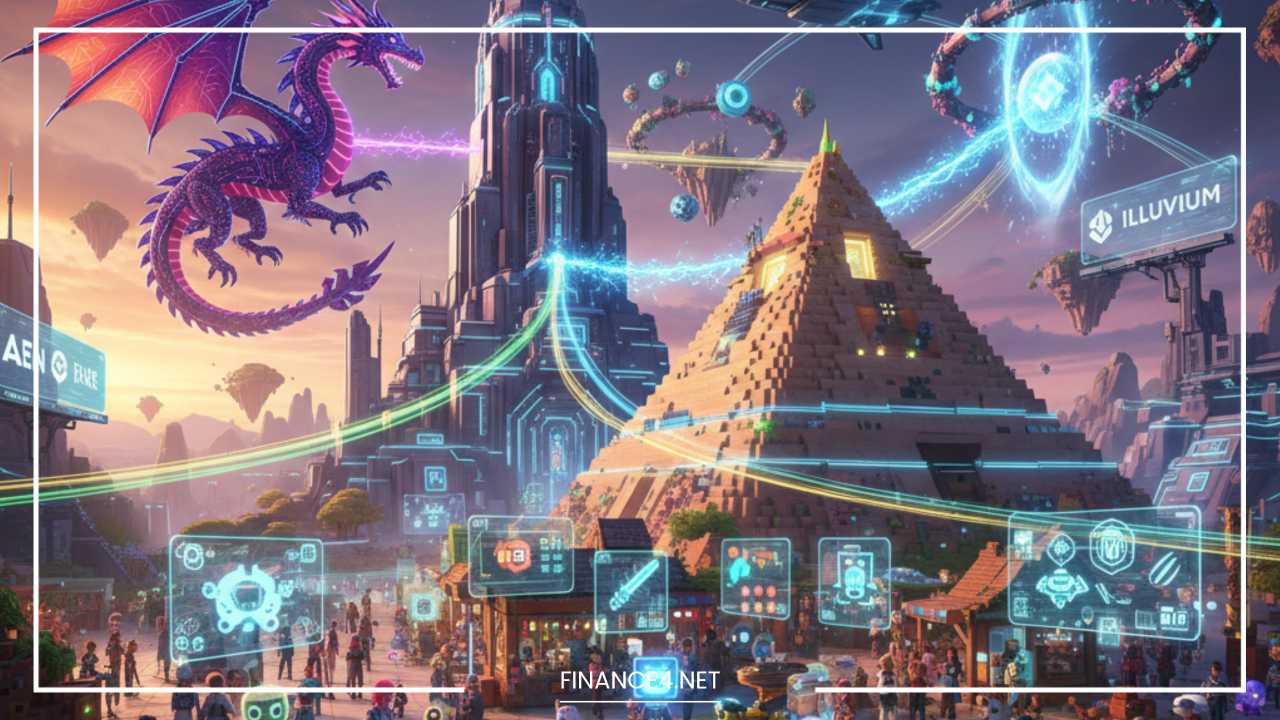
Best Cross-Chain Gaming Projects
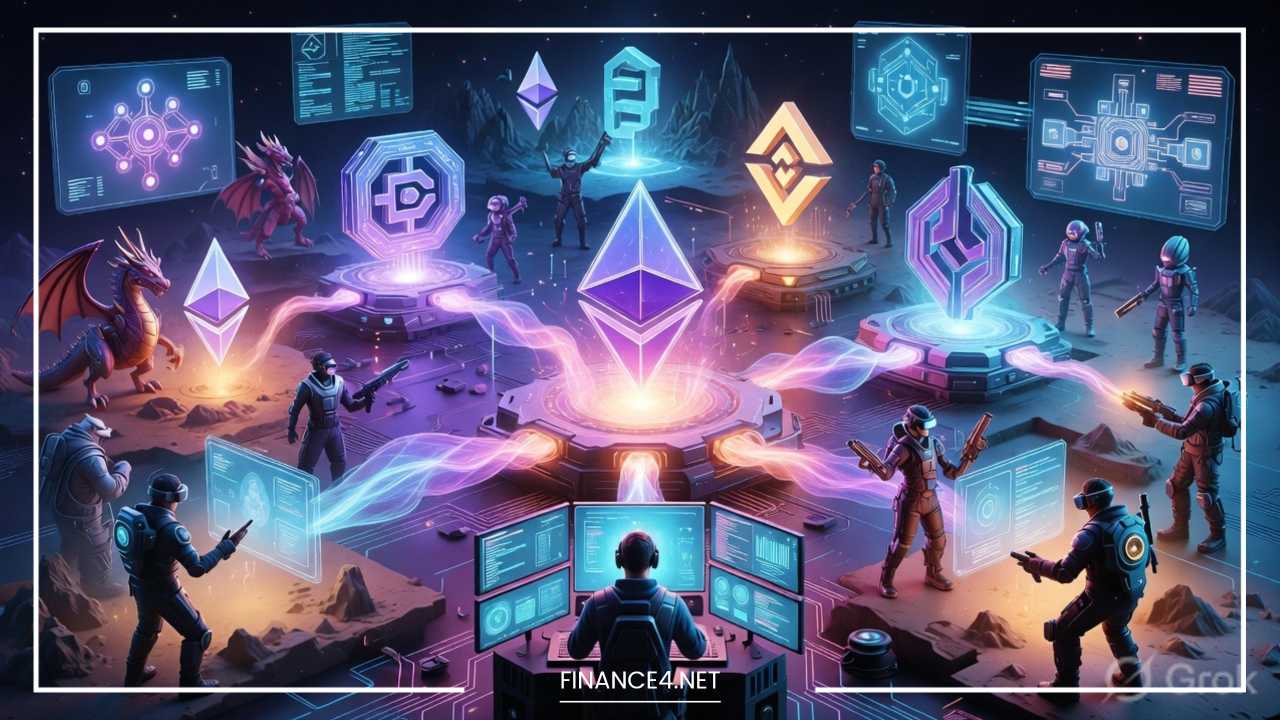
The landscape of digital entertainment is undergoing a seismic shift. For decades, video games existed as walled gardens—silos where your progress, items, and achievements were locked within a single ecosystem. If you spent hundreds of hours earning a rare sword in one game, that value vanished the moment you switched to a different title or if the developer decided to shut down the servers. Today, the advent of blockchain technology is tearing down these walls, giving rise to the era of cross-chain gaming.
Cross-chain gaming is not just a technical buzzword; it represents the “Internet of Games.” By allowing assets, data, and value to flow seamlessly across different blockchain networks, developers are creating a unified multiverse where players truly own their digital destiny. This article explores the mechanics, advantages, and the top projects leading the charge in this burgeoning sector as we move through 2025.
What is Cross-Chain Gaming?
At its core, cross-chain gaming refers to decentralized games that are compatible with multiple blockchain networks. Instead of being restricted to a single chain like Ethereum or BNB Chain, these games utilize interoperability protocols to let players move assets or interact with game logic across diverse ecosystems.
How It Works: The Architecture of Interoperability
The magic of cross-chain functionality lies in the “bridge” and “messaging” layers. There are several technical approaches to achieving this, each with its own set of trade-offs regarding speed and security:
-
Lock-and-Mint Bridges: This is the most common model. When a player wants to move an NFT from Chain A to Chain B, the asset is “locked” in a smart contract on the source chain. An identical “wrapped” version is then “minted” on the destination chain. This ensures that the total supply of the asset remains constant across all networks.
-
Burn-and-Mint Bridges: In this more permanent model, users “burn” (destroy) tokens on the source blockchain. Subsequently, new native tokens are minted on the destination blockchain. This is often used when a project is migrating its primary home from one network to another.
-
Cross-Chain Messaging Protocols: Technologies like Chainlink’s Cross-Chain Interoperability Protocol (CCIP) or LayerZero allow smart contracts on different chains to talk to one another. A player on Polygon can trigger an action—like leveling up a character—that affects a game state on Avalanche without ever manually moving a token.
-
Atomic Swaps: These allow for the direct exchange of assets between two different blockchains without a centralized intermediary. This is a “trustless” method where the trade either happens completely or not at all, protecting both parties from fraud.
The Shift from Silos to Ecosystems
In traditional gaming, the developer is the ultimate authority. In single-chain blockchain gaming, you are at the mercy of that specific network’s congestion and fees. Cross-chain gaming solves these issues by distributing the game’s economy. It transforms games from isolated products into interconnected digital economies where the player is the central point of value, not the platform.
Current Challenges
Despite its promise, the technology is still maturing. Security risks remain the top concern; bridge hacks have historically accounted for billions in lost funds. Additionally, transaction latency can be an issue, as confirming a cross-chain move often requires waiting for finality on two different networks. Finally, the user experience (UX) can be daunting, often requiring players to manage multiple wallets and gas tokens.
Advantages of Cross-Chain Gaming
The move toward interoperability offers profound benefits for players, developers, and investors alike.
1. True Asset Interoperability
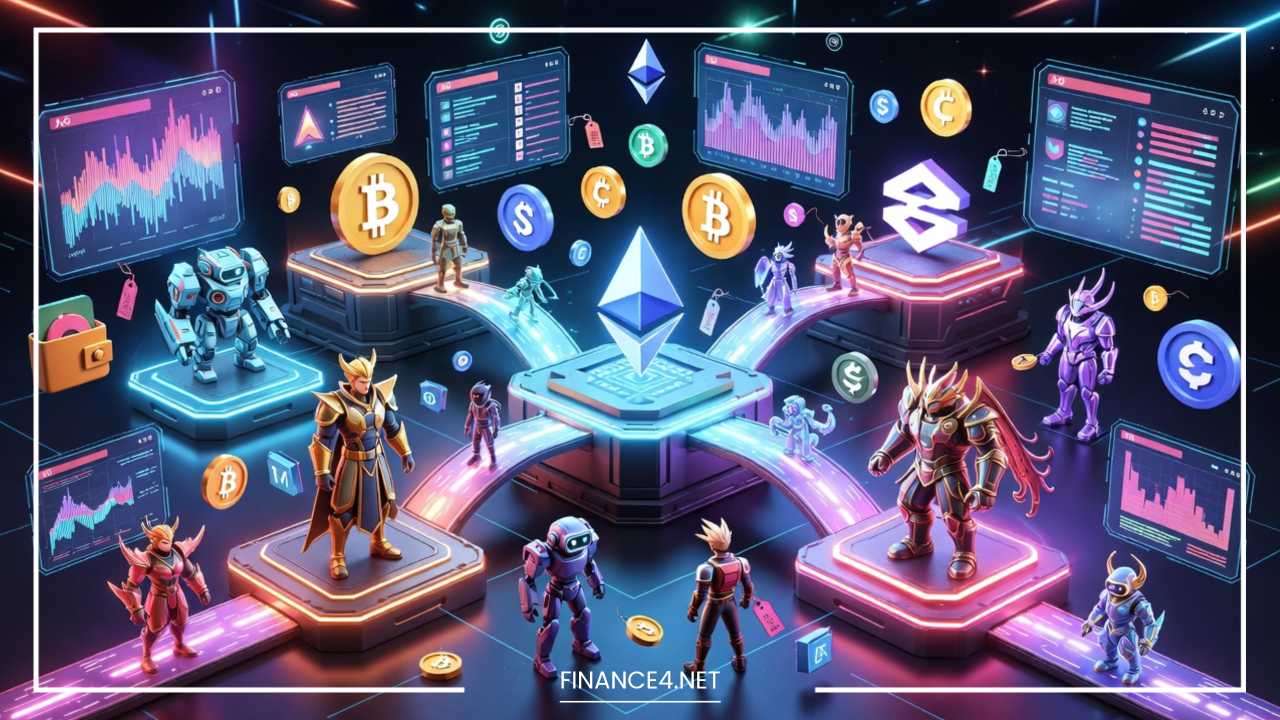
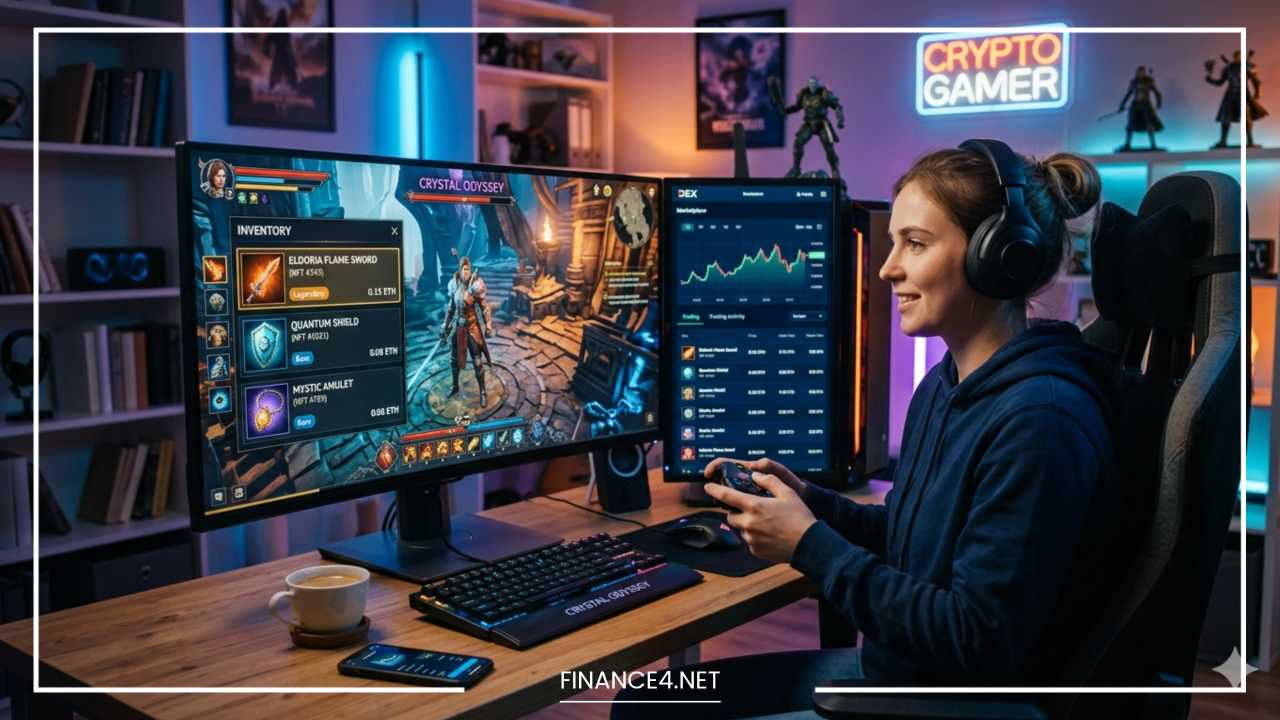
Imagine owning a character skin that you can wear in a fantasy RPG, then use as a pilot avatar in a sci-fi racing game, and finally list for sale on a marketplace that resides on a completely different blockchain. Cross-chain tech makes this “multiverse” concept a reality. It increases the inherent value of every NFT a player acquires because that asset is no longer tied to the success or lifespan of a single game.
2. Expanded Player Bases and User Onboarding
By supporting multiple chains, developers can tap into the unique communities of each network. A game launched on Ethereum might attract high-value collectors, while its integration with a faster, cheaper chain like Polygon or WAX attracts millions of daily active users who prefer microtransactions. By 2025, we are seeing “Chain Abstraction” where a user might not even know which chain they are using, significantly lowering the barrier to entry for non-crypto natives.
3. Enhanced Liquidity and Marketplace Stability
Fragmented liquidity is a major hurdle in Web3. When assets are stuck on one chain, the pool of potential buyers is limited. Cross-chain integration allows for “Aggregated Liquidity,” where items can be traded across various decentralized exchanges (DEXs) and marketplaces. This results in tighter spreads, fairer prices, and faster sales for players looking to liquidate their hard-earned items.
4. Technical Specialization and Scalability
Not all blockchains are created equal. Some are optimized for security (Ethereum), while others focus on speed (Solana) or low-cost NFT minting (WAX). Cross-chain games can “outsource” different functions: keeping the heavy-duty governance and high-value vaults on a secure chain like Ethereum Mainnet, while running high-frequency gameplay actions on a scalable Layer 2 or a dedicated gaming sidechain.
Top Cross-Chain Gaming Projects
As we move through 2025, several projects have emerged as the gold standard for cross-chain integration. These projects have moved beyond the experimental phase and now support robust, multi-chain ecosystems.
1. Axie Infinity (Ronin & Ethereum)
Axie Infinity is the pioneer that proved play-to-earn could work at scale. Originally built on Ethereum, the game struggled with high gas fees, leading the developer, Sky Mavis, to create the Ronin Network—a sidechain specifically for gaming.
-
Supported Blockchains: Ronin, Ethereum.
-
Unique Features: The Ronin Bridge V2 is one of the most battle-tested bridges in the world. It allows for the seamless transfer of AXS (governance), SLP (utility), and Axie NFTs.
-
Current State in 2025: Ronin has evolved into much more than just “the Axie chain.” It is now a gaming hub hosting third-party titles like Pixels and CyberKongz. By integrating more closely with Ethereum via zk-proofs, Ronin offers the security of the most decentralized network with the sub-second transaction speeds gamers require.
-
Future Roadmap: Sky Mavis is focusing on “Mavis Hub,” a cross-platform distribution service that aims to make Ronin the “Steam of Web3,” allowing players to use their Ronin-based assets across dozens of different game titles.
2. The Sandbox (Ethereum, Polygon, & Base)
The Sandbox is a leading decentralized metaverse where users can create, own, and monetize their gaming experiences. It has been a vocal proponent of “Layer 2” scaling to make the metaverse accessible to everyone, not just “whales.”
-
Supported Blockchains: Ethereum, Polygon, and recently, Base (Coinbase’s Layer 2).
-
Unique Features: The Sandbox utilizes Polygon for land staking and NFT minting to keep costs near zero. Its recent integration with Base has opened the doors to millions of Coinbase users, providing a direct fiat-to-metaverse pipeline.
-
2025 Updates: The project has launched its “Creator Monetization Platform,” which uses cross-chain smart contracts to distribute rewards to builders regardless of which chain they use. This means a creator on Polygon can receive payments from a player using SAND on Ethereum without manual bridging.
-
Future Vision: The Sandbox 3.0 focuses on AI-driven content creation, where assets can be procedurally generated and instantly minted as cross-chain NFTs, ready for use in any “Land” regardless of the underlying network.
3. Illuvium (Ethereum & Immutable X)
Illuvium is often cited as the first “AAA” blockchain game. It consists of an interconnected series of games: an open-world RPG (Overworld), an auto-battler (Arena), and a city-builder (Zero).
-
Supported Blockchains: Ethereum, Immutable X.
-
Unique Features: By utilizing Immutable X (a zk-rollup), Illuvium offers players a gas-free experience for minting and trading. This is crucial for a game that involves hundreds of thousands of micro-transactions as players collect “Illuvials.”
-
Interoperability: The genius of Illuvium is its internal and external interoperability. Assets earned in the mobile city-builder (Illuvium: Zero) have direct utility in the desktop RPG. Furthermore, because Immutable X is part of the “Cross-Rollup” ecosystem, Illuvium assets can be traded on marketplaces that aggregate NFTs from various Ethereum Layer 2s.
-
Current Status: With the full launch of the IlluviDex, the project has created one of the most liquid gaming marketplaces in existence, supporting “Passport” technology that allows users to sign in with an email while still maintaining self-custody of their cross-chain assets.
4. Alien Worlds (WAX, BNB Chain, & Ethereum)
Alien Worlds is one of the most played decentralized games in existence, revolving around a simulated economy where players compete for “Trilium” (TLM).
-
Supported Blockchains: WAX, BNB Chain, and Ethereum.
-
Unique Features: Alien Worlds was an early adopter of the “Teleport” mechanism. This allows players to mine TLM on the WAX blockchain—ideal for high-frequency actions due to its zero-fee model—and then “teleport” those tokens to Ethereum for deep liquidity or to BNB Chain to participate in “Missions.”
-
Governance across Chains: The game features “Planetary DAOs.” Each planet is a decentralized autonomous organization. Players can stake their TLM on different chains to gain voting power, creating a complex, multi-chain political layer that influences the game’s future.
-
2025 Developments: Alien Worlds has expanded its “Syndicates” feature, allowing community-run organizations to create their own cross-chain games and experiences using the TLM token, effectively turning the project into a decentralized gaming platform.
5. MOBOX (BNB Chain, Arbitrum, & Polygon)
MOBOX combines the best of DeFi and gaming (GameFi). It creates a platform where users can provide liquidity, farm yield, and use their “MOMO” NFTs across a suite of different games.
-
Supported Blockchains: BNB Chain, Ethereum, Arbitrum, and Polygon.
-
Unique Features: MOBOX is built on the philosophy of “NFT Interoperability.” A single MOMO NFT isn’t just a collectible; it provides “hash power” that helps the player earn MBOX tokens. This hash power is recognized across all MOBOX games, regardless of which chain the game is currently running on.
-
The MOMOverse: In 2025, the MOMOverse has become a sprawling social hub. It utilizes “LayerZero” technology to ensure that players from different chains can interact in the same virtual space in real-time.
-
Future Roadmap: MOBOX is moving toward “Open Meta,” an initiative to allow 3rd party NFT projects (like Bored Ape Yacht Club or Pudgy Penguins) to bridge their assets into the MOBOX ecosystem to be used as playable characters.
How to Choose the Right Cross-Chain Game
With the explosion of projects in 2025, players and investors must be discerning. Navigating the cross-chain world requires more than just looking at flashy graphics; it requires a look under the technical hood.
1. Evaluate Bridge Security
Bridges are the most vulnerable points in the blockchain ecosystem. Before committing significant value, research the bridge the game uses. Is it a centralized “multisig” (where a few people control the funds) or a decentralized protocol like Wormhole or Axelar? Projects that have undergone multiple third-party audits and have “bug bounty” programs are generally safer.
2. Analyze Tokenomics and Liquidity
A cross-chain game is only as healthy as its economy. Check the liquidity of the game’s tokens across all supported chains. If a token is easy to buy on Ethereum but impossible to sell on Polygon, you may find yourself “trapped” in an ecosystem. Use tools like DexScreener or CoinGecko to verify 24-hour trading volumes.
3. Check Community and Developer Activity
Interoperability is hard to build. Look for a transparent development team that provides regular updates. An active Discord or Telegram community is a good sign, but be wary of “hype-only” groups. Check GitHub repositories if possible to see if the code is being actively maintained.
4. Onboarding and “Gas” Friction
The best cross-chain games in 2025 are those that hide the complexity. Does the game require you to go to a 3rd party bridge website just to play, or is the bridging built into the game UI? Does the project offer “gasless” transactions or allow you to pay fees in the game’s native token? The less time you spend managing wallets, the more time you spend playing.
The Future of Cross-Chain Gaming
As we look toward 2026 and beyond, the friction currently associated with cross-chain technology is expected to disappear entirely, replaced by a seamless “Omnichain” experience.
Chain Abstraction: The Invisible Blockchain
The industry is moving toward “Chain Abstraction.” In this future, a player will sign up for a game using a social media account or email. Behind the scenes, a “smart account” (Account Abstraction) will be created. This account will automatically handle the bridging of assets and the payment of gas fees across various chains. To the player, it will feel like a traditional game, but they will still retain the benefits of decentralization and true ownership.
The Rise of App-Chains and Modular Gaming
We are seeing a move away from general-purpose blockchains. Many top games are now launching their own “App-Chains”—blockchains dedicated solely to one game or studio (like Ronin). These chains are then connected to “Settlement Layers” like Ethereum. This modular approach allows games to have infinite scalability without sacrificing the security and liquidity of the broader crypto market.
Metaverse Integration and Shared Standards
The dream of a “Ready Player One” style metaverse depends entirely on cross-chain tech. For different virtual worlds to be truly connected, they must share a common language. Organizations like the Metaverse Standards Forum are working on universal NFT standards (like ERC-6551 “Token Bound Accounts”) that will allow an NFT to own other NFTs, regardless of the chain. This means your digital “backpack” can travel with you across every game in the multiverse.
AI-Optimized Cross-Chain Economies
Artificial Intelligence is beginning to play a role in managing cross-chain dynamics. AI agents can monitor different blockchains to find the lowest fees or the most efficient path for a player’s asset transfer. AI will also be used to balance game economies in real-time, adjusting drop rates or rewards across different chains to prevent hyperinflation or liquidity crunches.
Final Thoughts
Cross-chain gaming is the bridge between the fragmented world of early Web3 and the unified future of digital entertainment. By breaking down the barriers between blockchains, projects like Axie Infinity, The Sandbox, and Illuvium are not just making better games—they are building a more equitable digital economy.
The transition from “walled gardens” to “open ecosystems” is the most significant change in gaming history since the move from arcades to home consoles. While the technology still faces hurdles in security and user experience, the progress made by 2025 is undeniable. For players, this means more freedom, more value, and a more immersive experience. For developers, it means access to a global, interconnected market.
The walls are falling, the bridges are being built, and the multiverse is finally becoming a reality. As you explore these projects, remember the golden rule of Web3: stay curious, stay skeptical, and always prioritize the security of your digital assets.