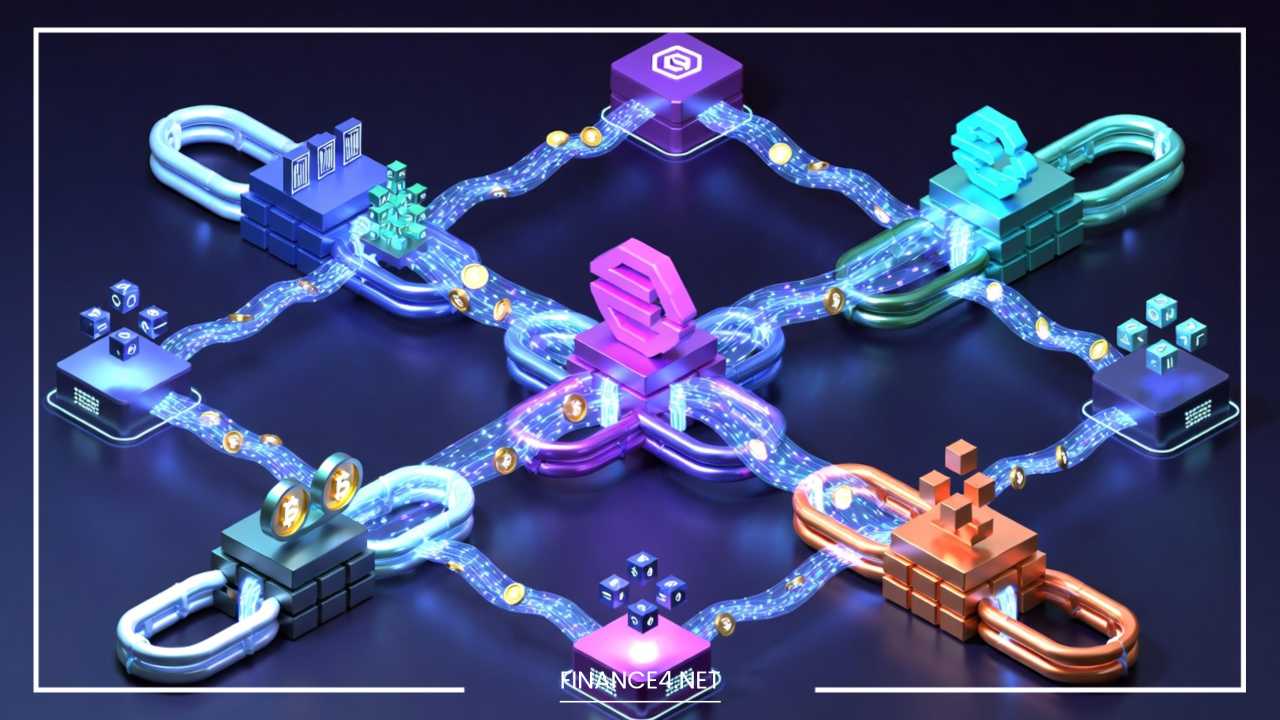
Best Aggregator for Bridging Quick Trades
 by
by 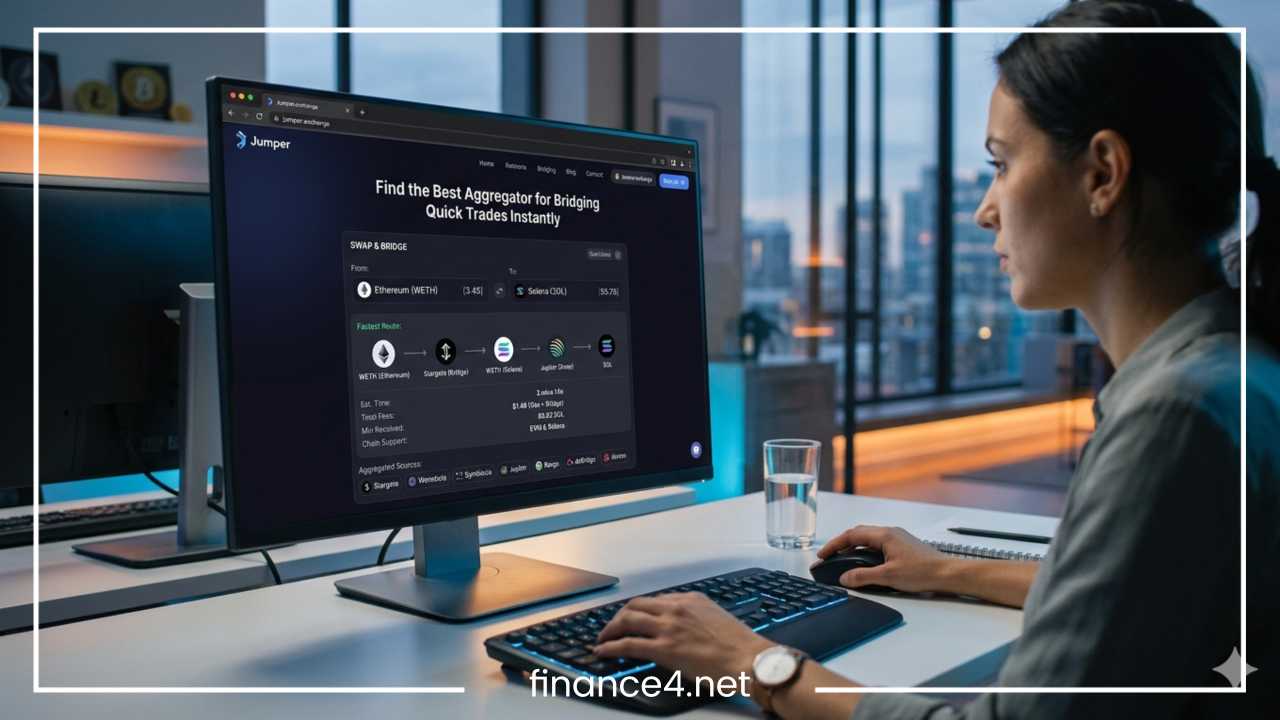
Find the Best Aggregator for Bridging Quick Trades Instantly
Why Instant Trade Bridging Matters
The landscape of decentralized finance has evolved from a single-chain dominant ecosystem into a vast, sprawling web of interconnected networks. Today, a user’s assets might be spread across Ethereum, Solana, BNB Chain, Avalanche, and a growing list of Layer 2 solutions like Arbitrum and Optimism. While this diversity encourages innovation and lowers costs, it has birthed a significant challenge: liquidity fragmentation. When opportunities arise on one chain, but your capital is locked on another, the ability to move that value quickly and efficiently becomes the difference between a successful trade and a missed opportunity.
This is where the concept of instant trade bridging comes into play. In the early days of crypto, moving assets between chains—often referred to as bridging—was a cumbersome, multi-step process that involved manual swaps, long waiting periods, and high risk. If you wanted to move USDC from Ethereum to Solana, you might have to wait ten to twenty minutes, only to find that the price of the asset you intended to buy had already shifted.
To solve this, the industry developed aggregators. An aggregator is a platform that scans the entire market to find the best possible path for your trade. When applied to bridging, these tools don’t just move your money; they find the fastest, cheapest, and most secure route across dozens of different protocols. For the modern trader, “quick trades” are no longer a luxury but a requirement. Choosing the right aggregator is about more than just convenience; it is about capital efficiency, security, and maintaining an edge in a market that never sleeps.
What Is a Trade Aggregator?
In the context of DeFi, an aggregator acts as a search engine and execution layer for liquidity. To understand why they are so vital, one must distinguish between the various components of the cross-chain ecosystem. A Decentralized Exchange (DEX), such as Uniswap or PancakeSwap, provides a venue to swap tokens within a single blockchain. A Bridge, such as Wormhole or Stargate, provides the “pipe” that moves assets from Chain A to Chain B.
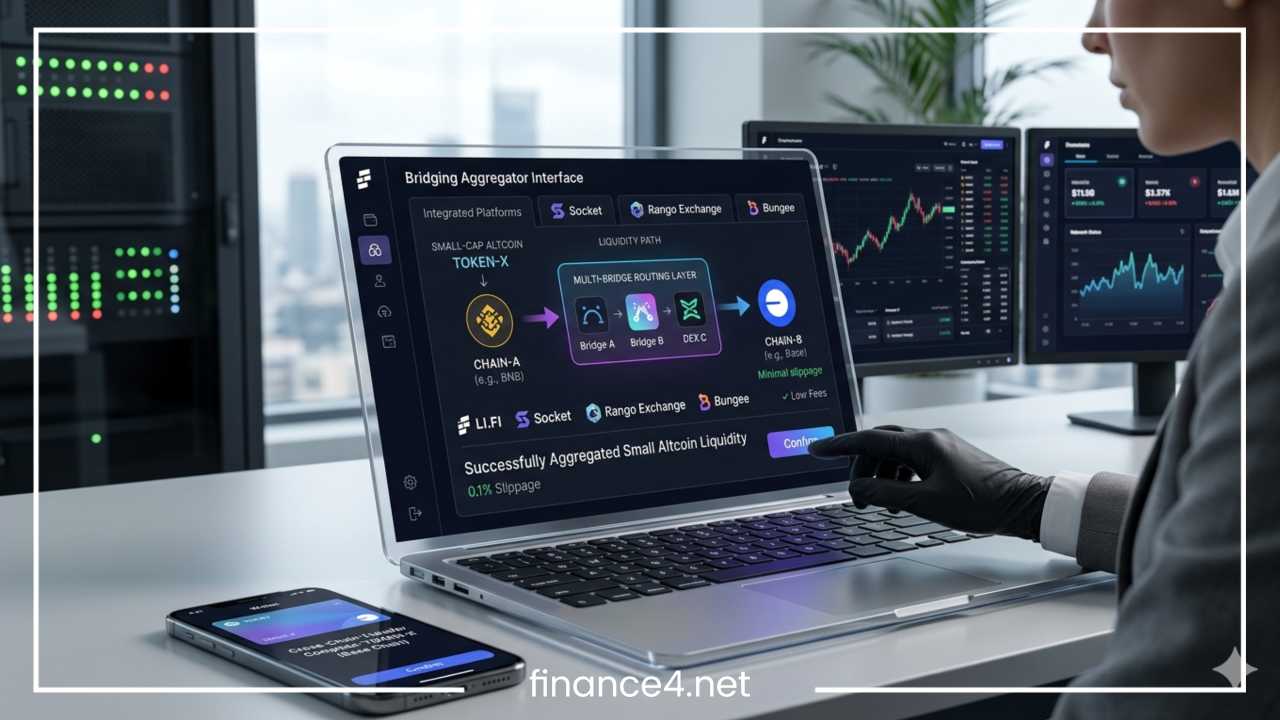
An aggregator sits above these layers. Instead of forcing you to visit a specific bridge or a specific DEX, an aggregator connects to dozens of them simultaneously. When you input a request to move and swap an asset, the aggregator’s algorithm calculates the most efficient route. It might split your trade across three different bridges to minimize slippage or route you through a specific DEX to ensure you get the most tokens on the destination chain.
There are three primary types of aggregators currently dominating the market:
-
DEX Aggregators: These focus on finding the best price for a swap within a single chain by pulling liquidity from various automated market makers (AMMs).
-
Cross-Chain Aggregators: These are the most complex, combining bridge protocols with DEX liquidity to allow for “cross-chain swaps.” This means you can trade ETH on Ethereum for SOL on Solana in a single transaction.
-
Intent-Based Aggregators: This is an emerging trend where users don’t specify the route; they simply state their desired outcome (e.g., “I want 1000 USDC on Polygon for the lowest cost”). Market makers, known as solvers, then compete to fulfill this “intent” as quickly as possible.
How Cross-Chain Bridging Works
To find the best aggregator, it is helpful to understand the underlying plumbing of the bridging process. Bridging isn’t a literal “transfer” of tokens in the way a physical wire transfer works; rather, it is a series of coordinated actions across two different ledgers.
The most common method is the lock-and-mint model. In this scenario, you lock your original tokens in a smart contract on the source chain. Once the bridge confirms the lock, it mints an equivalent “wrapped” version of that token on the destination chain. Another popular method is liquidity pool bridging, where the bridge maintainers keep large reserves of native assets on multiple chains. When you send USDC to the bridge on Ethereum, the bridge simply sends you native USDC from its pool on the destination chain.
The speed of these transactions varies based on several factors, primarily “finality.” Finality is the point at which a blockchain transaction is considered irreversible. Some chains, like Solana, have near-instant finality, while others, like Ethereum, require more time for the network to reach consensus. Aggregators attempt to mitigate these delays by choosing bridges with the fastest validation methods or by using “optimistic” bridging, where transactions are processed immediately under the assumption they are valid, with a challenge period following afterward.
However, bridging is not without its risks. Historically, bridges have been some of the most targeted pieces of infrastructure in crypto. Risks include:
-
Smart Contract Vulnerabilities: Bugs in the bridge code can allow hackers to drain locked funds.
-
Slippage: In the time it takes to bridge, the price of the target asset might change, resulting in fewer tokens than expected.
-
Failed Transactions: If a bridge runs out of liquidity on the destination chain, your funds could be stuck in “limbo” until the pool is refilled.
Key Features of a Good Aggregator
When evaluating which platform to use for your quick trades, several key metrics should guide your decision. A top-tier aggregator must balance these competing factors to provide a seamless experience.
Speed
Speed is the primary requirement for “quick trades.” This includes both the time it takes for the aggregator to find a route and the time required for the bridge to complete. The best aggregators use high-frequency data feeds to provide real-time quotes and prioritize routes with the lowest transaction finality times.
Fees
DeFi users often face a “death by a thousand cuts” regarding fees. A single cross-chain swap involves gas fees on the source chain, bridge fees, gas fees on the destination chain, and potentially a small service fee from the aggregator. A transparent aggregator will break these down clearly before you sign the transaction, ensuring there are no hidden costs.
Liquidity Depth
If you are moving $100, liquidity depth doesn’t matter much. However, if you are moving $100,000, “slippage” becomes a major concern. Slippage occurs when there isn’t enough liquidity to fulfill your order at the current price, forcing the price up or down. A good aggregator should be able to tap into deep liquidity pools to ensure large trades are executed as close to the market price as possible.
Chain Coverage
An aggregator is only as good as the networks it connects. If you frequently move between “alt-L1s” like Near, Fantom, or Sui, you need an aggregator that supports more than just the standard Ethereum Virtual Machine (EVM) chains.
Security
Security should never be sacrificed for speed. The best platforms are non-custodial, meaning they never take control of your funds. They simply facilitate the interaction between your wallet and the smart contracts. You should look for platforms that have undergone multiple third-party audits and have a proven track record of handling high volume without incidents.
User Experience
For many, the “fear factor” of bridging is high. A clean, simple interface that clearly shows where your money is at every step of the process is invaluable. Features like “transaction history” and “status trackers” help reduce the anxiety of waiting for a cross-chain transfer to finalize.
Top Aggregators for Instant Trade Bridging
While the market is constantly shifting, several platforms have established themselves as leaders in the aggregation space. Below is a comparison of the top contenders for instant trade bridging.
| Platform | Best For | Key Strengths | Chain Support |
| LI.FI (Jumper.exchange) | Comprehensive Routes | Aggregates both bridges and DEXs; highly customizable. | Very High (EVM & non-EVM) |
| 1inch | Price Optimization | Industry-leading swap rates; strong gas optimization. | High (Mostly EVM) |
| Jupiter | Solana Ecosystem | The undisputed king of Solana; incredibly fast and cheap. | Solana-centric |
| Rango Exchange | Multi-Step Swaps | Excellent for “difficult” chains like BTC, Cosmos, and Solana. | Extremely High |
| Matcha | User Interface | Extremely clean UI; uses 0x protocol for deep liquidity. | High (EVM) |
| ParaSwap | Institutional Speed | Fast execution; optimized for professional traders. | Medium (Major EVM) |
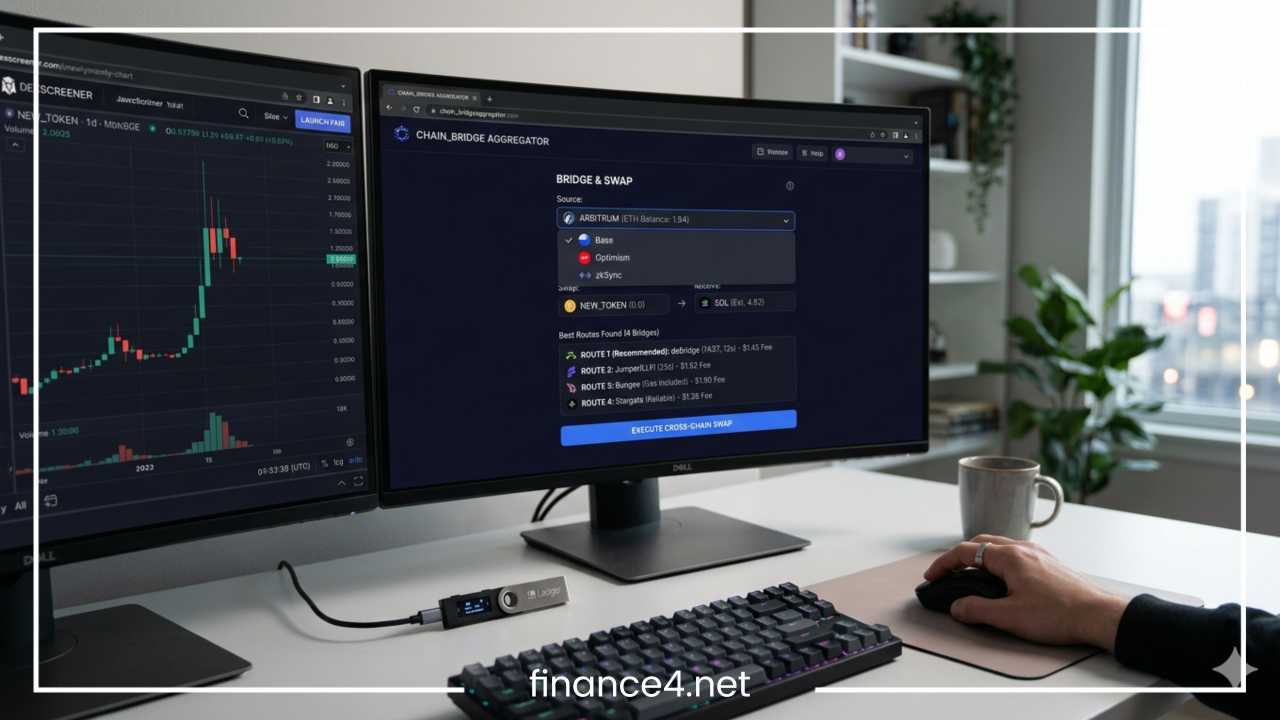
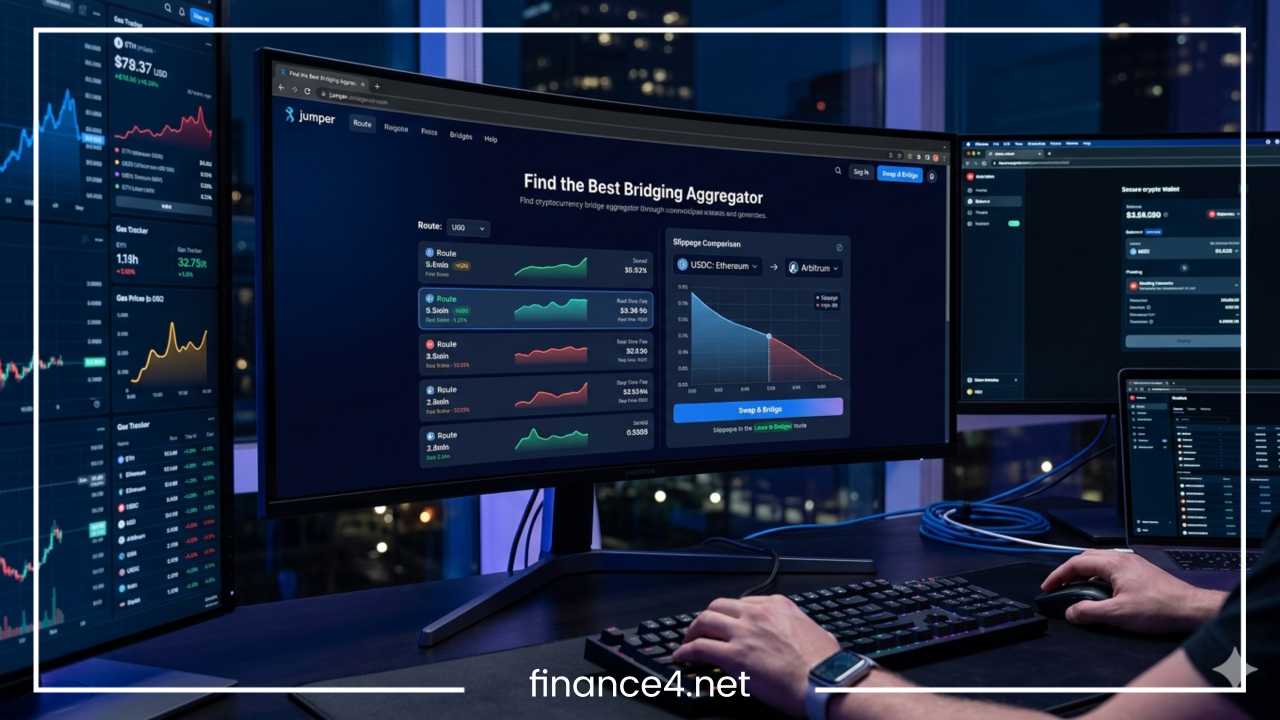
LI.FI (Jumper) is currently considered the gold standard for cross-chain aggregation. It doesn’t just find a bridge; it finds the most efficient combination of bridges and DEXs. If you need to move from Arbitrum to Avalanche, LI.FI might suggest using Stargate for the bridge and Uniswap for the swap, all bundled into one click.
1inch remains the powerhouse for single-chain swaps but has expanded into “Fusion” mode, which uses Dutch auctions to protect users from MEV (Maximal Extractable Value) attacks, ensuring you get the best possible price even in volatile conditions.
Jupiter is essential for anyone operating in the Solana ecosystem. Because Solana is built for speed, Jupiter can aggregate hundreds of liquidity sources in milliseconds, providing an experience that feels as fast as a centralized exchange.
Rango Exchange stands out for its “all-in-one” approach. While many aggregators struggle to connect non-EVM chains (like Bitcoin or ThorChain) with EVM chains, Rango handles these complex, multi-hop routes with ease, making it a favorite for power users.
How Aggregators Optimize Trade Routes
The magic of an aggregator lies in its “routing engine.” When you request a trade, the engine performs thousands of calculations per second.
One common optimization is multi-hop routing. Sometimes, there isn’t a direct liquidity pool for the two tokens you want to swap. The aggregator might trade Token A for ETH, then ETH for Token B, because that path actually results in more tokens than a direct but illiquid swap.
Another technique is order splitting. If you are making a large trade, an aggregator might send 40% of the trade through one liquidity pool, 30% through another, and 30% through a third. This prevents a single pool from being overwhelmed, which reduces slippage and saves the user money.
Furthermore, gas optimization algorithms have become highly sophisticated. These algorithms write the smart contract interactions in the most efficient way possible to minimize the amount of computational power (gas) required on the blockchain. For users on Ethereum, where gas can be expensive, these optimizations can save tens of dollars per trade.
Risks and Challenges to Consider
Despite the advancements, bridging and aggregation are not without hurdles. The most prominent challenge is network congestion. Even the best aggregator cannot force a transaction through if the underlying blockchain is clogged. During major market events, gas prices can skyrocket, and transaction times can stretch from seconds to hours.
Slippage during volatility is another concern. In a fast-moving market, the quote you receive when you click “swap” might be outdated by the time the bridge transaction reaches the destination chain. Most aggregators allow you to set a “slippage tolerance” (e.g., 0.5%), meaning the trade will only execute if the final price is within that range. If the price moves too much, the trade fails, and you keep your original assets, though you may still lose the gas fee.
Lastly, there is regulatory uncertainty. As DeFi grows, regulators are looking closer at bridges and aggregators. While these tools are decentralized and permissionless, changes in global regulations could impact the frontend websites or the specific bridges an aggregator is allowed to include.
How to Choose the Best Aggregator for Your Needs
There is no single “best” aggregator for everyone; the right choice depends on your specific goals as a trader.
-
For Beginners: Prioritize User Experience and Safety. Look for a platform like Matcha or Jumper that has a clear, intuitive interface and provides a step-by-step progress bar during the bridge. Avoid complex settings and stick to the “auto-route” features.
-
For High-Frequency Traders: Prioritize Low Fees and Speed. Platforms like Jupiter (on Solana) or 1inch (on L2s) are built for rapid-fire execution. You should also look for aggregators that offer “gasless” limit orders.
-
For Arbitrageurs: Prioritize Advanced Routing and APIs. If you are looking to capitalize on price differences between chains, you need an aggregator with an open API that can be integrated into your trading bots for near-instant execution.
-
For Large-Volume Trades: Prioritize Deep Liquidity. Platforms that aggregate institutional-grade liquidity sources (like ParaSwap) are better suited for “whales” who need to move millions of dollars without crashing the market price.
The Quick Trade Checklist:
-
Does the aggregator support both my source and destination chain?
-
Are the total fees (including gas and bridge fees) transparently listed?
-
Has the protocol been audited recently?
-
Is the estimated time of arrival (ETA) acceptable for my trade?
-
Does the platform offer “insurance” or “fail-safes” in case a bridge transaction hangs?
Future Trends in Aggregation and Bridging
The world of trade aggregation is moving toward a “frictionless” future. One of the most exciting developments is intent-based trading. In this model, you don’t even see the bridge. You simply sign a message saying what you want, and professional “solvers” handle the complexity behind the scenes. This removes the risk of a user making a mistake during the bridging process.
Another major trend is account abstraction. This technology allows users to pay for gas fees on any chain using the token they are currently bridging. For example, if you are moving USDC from Polygon to Ethereum, you won’t need to hold ETH to pay for the destination gas; the aggregator will handle it and deduct a tiny amount of USDC to cover the cost.
We are also seeing the rise of AI-driven routing. Machine learning models can analyze historical network data to predict which bridges are likely to experience delays or which liquidity pools will offer the best rates five minutes from now. This predictive capability will make “instant” trades even more reliable.
Finally, the concept of unified liquidity layers is emerging. Instead of dozens of separate bridges, we may eventually see a single, massive pool of liquidity that exists across all chains simultaneously. Aggregators will shift from being “connectors” to being “gateways” to this unified global pool.
Final Thoughts
Finding the best aggregator for bridging quick trades is an ongoing process of balancing speed, cost, and security. As the multi-chain ecosystem continues to expand, the tools we use to navigate it must become more sophisticated. Aggregators like LI.FI, 1inch, and Jupiter have already revolutionized the way we interact with decentralized finance, turning what used to be a stressful, twenty-minute ordeal into a simple, two-click process.
However, the responsibility remains with the user. No aggregator can protect you from every market risk or network failure. The key to success in modern DeFi is to stay informed, use reputable platforms, and always test new routes with small amounts of capital before committing large trades. By choosing the right aggregator for your specific needs, you can ensure that your capital is always where it needs to be, exactly when it needs to be there. In a market where every second counts, having the best bridging tool in your arsenal is the ultimate competitive advantage.
Frequently Asked Questions
What is the cheapest way to bridge ETH to Solana without a CEX?
The cheapest way to bridge ETH to Solana while avoiding centralized exchanges is to use a cross-chain aggregator like Jumper or Jupiter. These tools compare routes across protocols like Wormhole and deBridge to find the path with the lowest slippage and gas fees. For smaller amounts, aggregators often suggest using “liquidity-based” bridges which charge a flat fee rather than a high percentage of the transaction.
How can I bridge crypto with zero gas fees on the destination chain?
Many modern aggregators now support gasless bridging or “gas refueling” features. Platforms like LI.FI or Rango allow you to “top up” native tokens on your destination chain as part of the bridging transaction. This means if you are bridging USDC to a new wallet on Polygon, the aggregator can automatically convert a small portion of that USDC into MATIC so you have enough gas to make your next trade immediately.
Which bridge aggregator is the fastest for Layer 2 to Layer 2 transfers?
For transfers between Ethereum Layer 2s—such as moving funds from Arbitrum to Optimism or Base to Polygon—Across Protocol and Stargate are consistently the fastest. Because these protocols use a “liquidity rebalancing” model rather than minting new tokens, they can often finalize a bridge transaction in under two minutes.
Are cross-chain bridge aggregators safer than using a single bridge?
Aggregators do not necessarily increase or decrease the inherent risk of the underlying bridge, but they do offer a safety advantage by providing diversification. If one bridge is experiencing a delay or a security vulnerability, an aggregator can instantly route your trade through a different, healthier protocol. Always ensure the aggregator you choose is non-custodial and has multiple third-party audits.
How do I avoid high slippage when bridging large amounts of crypto?
To avoid high slippage on large trades, use an aggregator that supports multi-route splitting. Instead of sending $100,000 through a single bridge and draining its liquidity, an aggregator like 1inch or ParaSwap will split that $100,000 into smaller chunks and send them through three or four different bridges simultaneously. This ensures the price remains stable across the entire transaction.
What is the difference between native bridging and wrapped token bridging?
Native bridging sends the actual asset (like native USDC) to the destination chain, which is generally safer and more liquid. Wrapped bridging (like “USDC.e”) locks the original asset and gives you a “placeholder” token on the new chain. Aggregators are highly useful here because they can automatically swap those wrapped tokens for native assets in a single transaction, saving you the manual work of “unwrapping” your funds.