Best Cross-Chain Aggregator for Small Transactions
 by
by 
Best Cross-Chain Aggregator for Small Transactions: Low Fees & Fast Swaps
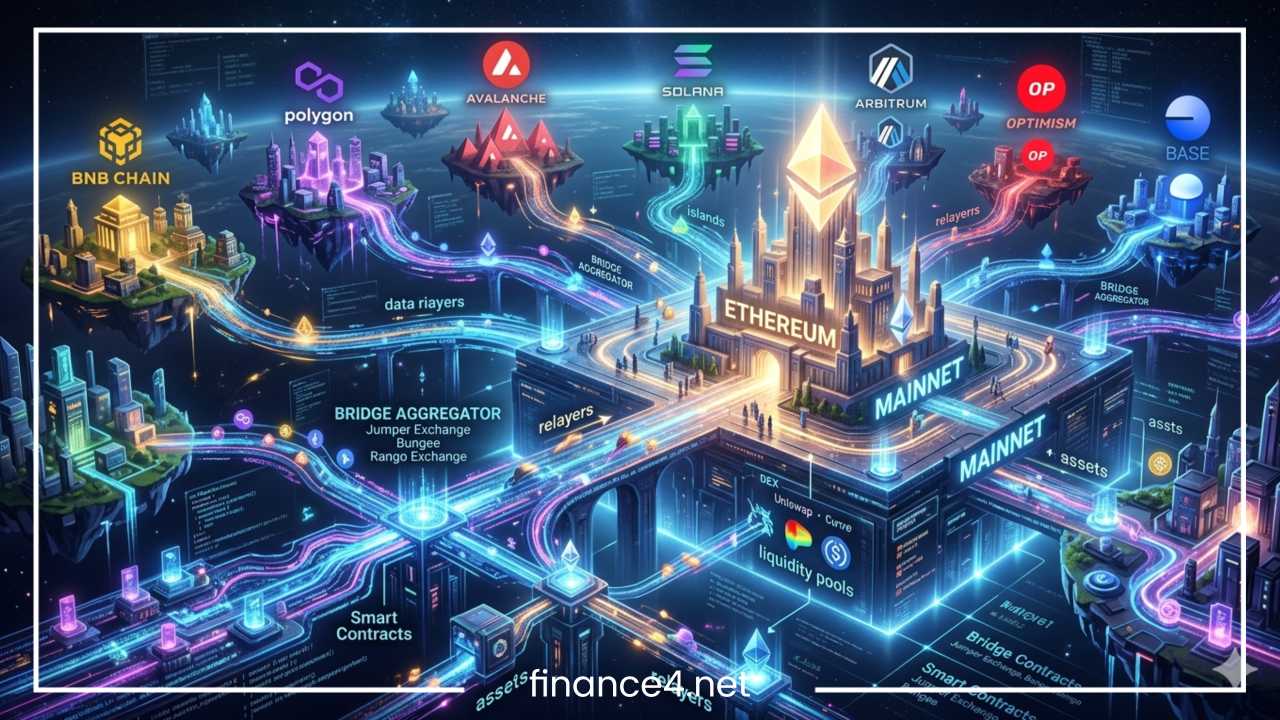
The decentralized finance landscape has evolved from a single-chain ecosystem into a sprawling multiverse of Layer 1 and Layer 2 networks. While this expansion offers incredible opportunities for yield and diversity, it has created a significant hurdle for the average user: fragmentation. Moving assets between these chains is often a complex, slow, and—most importantly—expensive process.
For those conducting small transactions, typically ranging from $10 to $500, the “on-chain tax” can be devastating. When you attempt to move $50 worth of assets and realize that gas fees, bridge tolls, and slippage will consume $15 of that value, the utility of DeFi vanishes. This is the primary pain point for retail users, DeFi beginners, and frequent traders who need to move capital without seeing it evaporate.
The solution lies in cross-chain aggregators. These are the advanced routing engines of the crypto world, designed to find the most efficient, cheapest, and fastest path across the fragmented landscape of blockchains. By understanding how these tools work and which ones prioritize low-value efficiency, you can reclaim your capital and trade with professional-grade precision.
What Is a Cross-Chain Aggregator?
To understand a cross-chain aggregator, one must first look at the components it simplifies. In the early days of multi-chain interaction, a user had to manually find a decentralized exchange (DEX) on Chain A, swap for a bridgeable asset, find a bridge that supported that asset, wait for the transfer to Chain B, and then find another DEX on Chain B to swap into the desired final token. Each step required a separate transaction, separate gas fees, and a high degree of manual oversight.
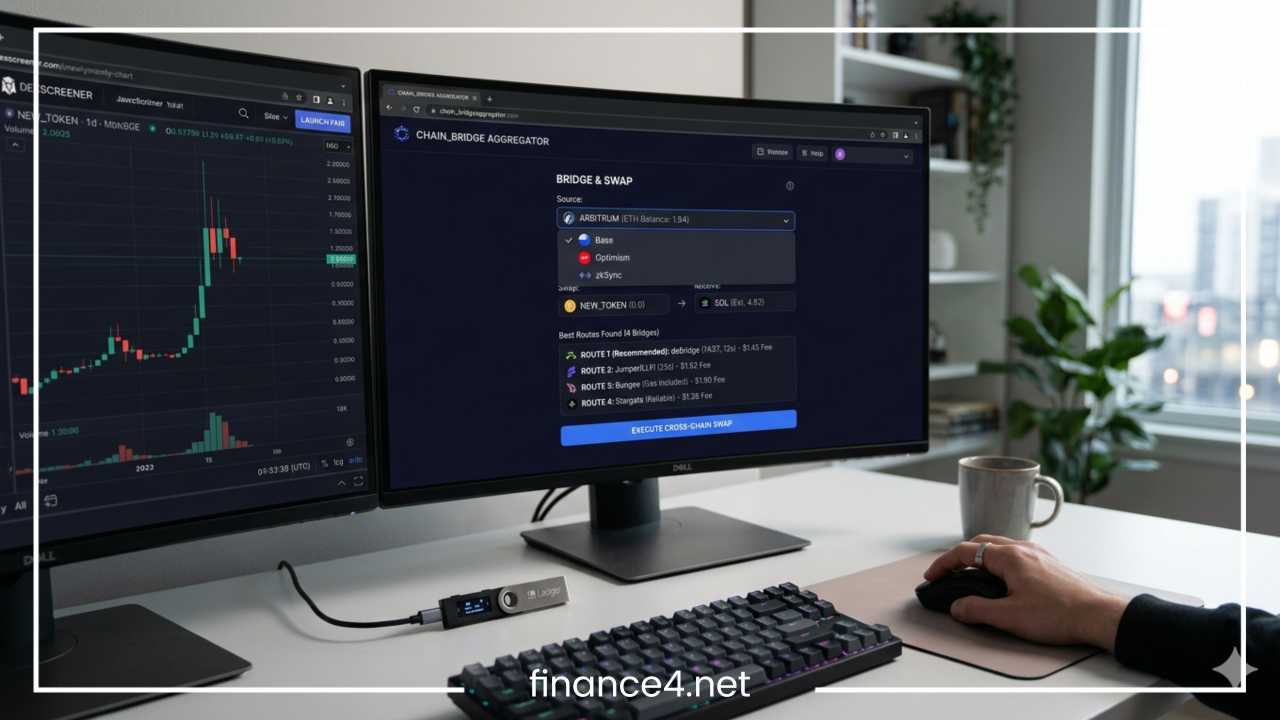
A cross-chain aggregator combines these steps into a single user interface and a single transaction flow. It acts as an overarching layer that sits above:
-
DEX Aggregators: These find the best price for a swap within a single chain by scanning multiple liquidity pools.
-
Bridges: These are the protocols that physically move or “wrap” assets from one network to another.
-
Liquidity Sources: These include market makers and private liquidity pools that can fulfill orders outside of traditional automated market makers (AMMs).
By scanning dozens of chains and hundreds of liquidity sources simultaneously, an aggregator can split a single trade across multiple routes to find the path of least resistance. This reduces the number of transactions the user has to sign, minimizes the “spread” or price difference, and automatically identifies which bridge is currently offering the lowest fees or the fastest confirmation times.
Why Small Transactions Need Special Optimization
The architecture of a cross-chain swap that works for a $100,000 “whale” move is fundamentally different from what works for a $50 “retail” move. Large transactions are primarily concerned with slippage—the price impact caused by removing a large amount of liquidity from a pool. Small transactions, however, are governed by fixed costs.
Fixed Bridge Fees vs. Percentage Fees
Many bridges charge a flat fee to cover the costs of their “relayers” or validators. If a bridge charges a flat fee of $5, that is a negligible 0.005% for a $100,000 transfer. For a $50 transfer, however, that same $5 fee represents a staggering 10% loss before the trade even begins.
Gas Dominance
Every interaction with a smart contract requires gas. A cross-chain swap often involves four or five smart contract interactions across two different chains. On a high-fee network like Ethereum, these costs can easily exceed the value of a small trade. Even on Layer 2 networks, where fees are much lower, stacking multiple contract calls can still result in a significant percentage loss for small amounts.
The Cumulative Effect
The “hidden” tragedy of small swaps is the stacking effect. You pay gas to approve a token, gas to swap the token, a bridge fee to move the token, and gas on the destination chain to claim or swap the token again. Aggregators optimized for small transactions focus on “intent-based” models or gas-efficient routing to ensure these costs do not stack to the point of insolvency.
Types of Fees in Cross-Chain Swaps
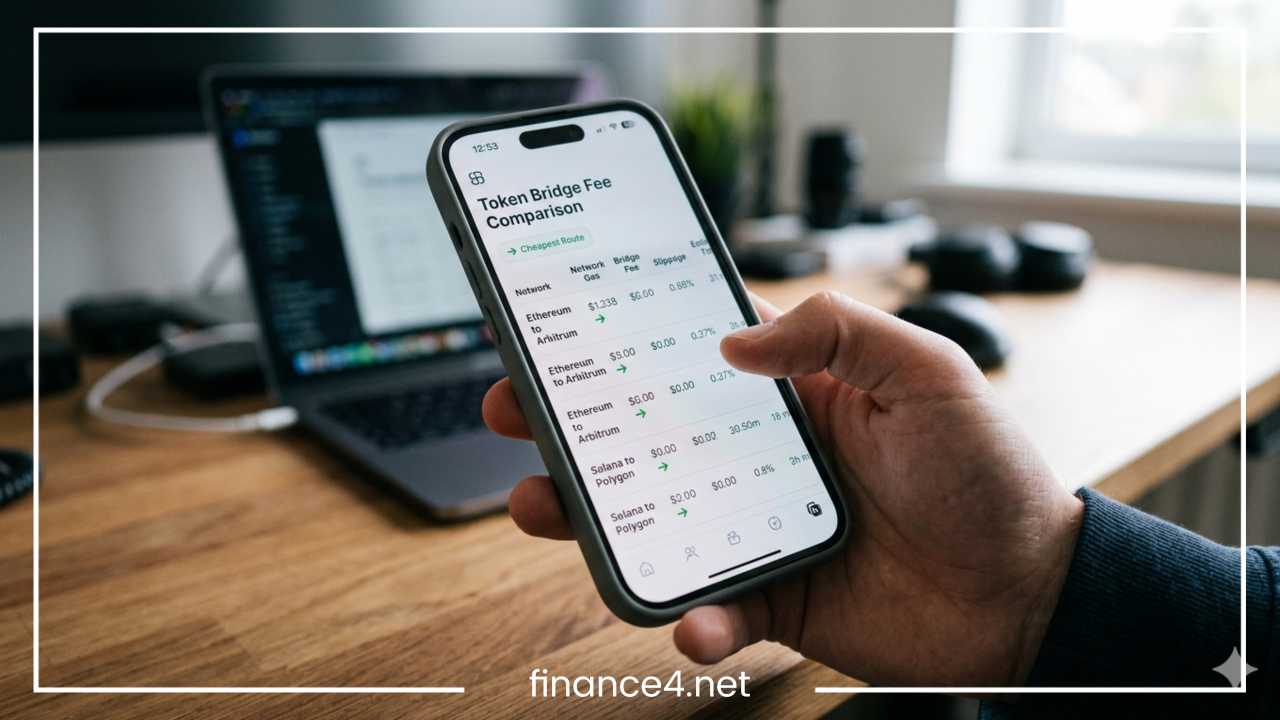
To master the art of the low-fee swap, you must be able to identify where your money is going. There are four primary categories of fees that occur during a cross-chain transaction.
Network Gas Fees
This is the fee paid to the miners or validators of the blockchain to process your transaction. The disparity between networks is vast. Ethereum remains the most expensive, often costing tens of dollars for a complex swap. Layer 2 solutions like Arbitrum, Optimism, and Base offer significantly lower fees, while networks like Solana or Polygon offer near-zero costs. A good aggregator will route you through the most gas-efficient path possible.
Bridge Fees
Bridges need to incentivize liquidity providers and pay for the infrastructure that monitors cross-chain messages. This fee is usually either a small percentage (ranging from 0.04% to 0.15%) or a flat fee. For small transactions, you should always look for bridges that use a percentage-based model without a high minimum flat fee.
Aggregator Fees
Some aggregators provide their service for free, taking no extra cut from the user, while others add a small “convenience fee” or a spread on the exchange rate. For small transactions, every basis point matters, so choosing a zero-fee aggregator is a priority.
Slippage and Price Impact
Slippage is the difference between the expected price of a trade and the price at which the trade is executed. While this is usually a bigger concern for large trades, in low-liquidity pools, even a $200 swap can cause a price shift. Aggregators mitigate this by splitting the trade across multiple pools to ensure you get the best possible execution price.
Key Features to Look for in a Low-Fee Aggregator
Not all aggregators are created equal. When your goal is to preserve as much capital as possible during a small move, you should look for the following features:
-
Smart Routing Algorithms: The engine should be able to determine if it is cheaper to go from Chain A to Chain B directly, or if it is actually more cost-effective to hop through a third “intermediary” chain with deeper liquidity.
-
Multi-Chain Support: An aggregator is only as good as the networks it connects. It should support a wide array of Layer 2s and sidechains where fees are naturally lower.
-
Gas Abstraction: Some modern aggregators allow you to pay for gas in the token you are swapping, rather than requiring the native gas token (like ETH or MATIC) on both the source and destination chains. This is a massive quality-of-life and cost-saving feature for small users.
-
Slippage Protection: The tool should offer customizable slippage settings to prevent your trade from being “sandwiched” by bots or executed at a poor rate.
-
Speed vs. Cost Toggle: The best platforms allow you to choose between the absolute cheapest route (which might take 10 minutes) and the fastest route (which might take 30 seconds).
Best Cross-Chain Aggregators for Small Transactions
Several platforms have risen to the top of the DeFi stack by offering superior routing and lower overhead. Here is a breakdown of the most effective tools for small-scale cross-chain movement.
1inch
While primarily known as a DEX aggregator, 1inch has expanded its capabilities to include robust cross-chain functionality through its “Fusion” mode.
-
Why it is good for small swaps: 1inch Fusion uses an auction model where professional “resolvers” fill your order. In many cases, these resolvers cover the gas fees themselves, incorporating the cost into the swap price. This can result in “gasless” swaps for the user, which is a game-changer for small transactions.
-
Pros: Extremely deep liquidity, high security, and no added aggregator fees.
-
Cons: Can be complex for absolute beginners, and “gasless” swaps may take longer to execute as they wait for a resolver to pick up the order.
Matcha (0x)
Matcha is built on the 0x protocol and focuses on providing the “cleanest” trading experience in DeFi.
-
Why it is good for small swaps: Matcha specializes in transparency. It shows you exactly where your fees are going and uses the 0x professional market maker network to provide competitive pricing that often beats standard AMMs.
-
Pros: Excellent user interface, very easy to use for beginners, and transparent pricing.
-
Cons: Does not support as many “niche” long-tail chains as some of its competitors.
OpenOcean
OpenOcean bills itself as a full-service aggregator for both CeFi (Centralized Finance) and DeFi, but its on-chain cross-chain routing is where it shines for small users.
-
Why it is good for small swaps: It has a very aggressive routing algorithm that specifically looks for gas-optimized paths. It aggregates a massive number of bridges and DEXs, ensuring that if a cheaper path exists, OpenOcean will find it.
-
Pros: Supports a vast number of chains including non-EVM networks like Solana and Near.
-
Cons: The interface can feel a bit cluttered with data for a casual user.
Rango Exchange
Rango is one of the most comprehensive cross-chain aggregators, acting as a “meta-aggregator” that connects other aggregators and bridges.
-
Why it is good for small swaps: Rango is excellent at finding routes between completely different ecosystems (e.g., moving assets from Cosmos to Arbitrum). It provides a clear breakdown of the time and cost for multiple different paths.
-
Pros: Unmatched reach across different blockchain ecosystems.
-
Cons: Because it connects so many different protocols, the user may occasionally encounter higher fees if they don’t manually select the “cheapest” option.
Across Protocol
Across is technically a bridge, but it functions with the efficiency of an aggregator by using an “intent-based” optimistic model.
-
Why it is good for small swaps: Across is widely considered one of the cheapest ways to move assets between Layer 2s. It uses a network of “fillers” who provide the capital to the user instantly on the destination chain. Because these fillers compete for the right to fulfill your order, the fees are pushed down to the absolute minimum.
-
Pros: Extremely fast (often under 1 minute) and incredibly low fees for L2-to-L2 transfers.
-
Cons: Limited token selection compared to a full DEX aggregator.
Stargate Finance
Built on LayerZero technology, Stargate was one of the first protocols to enable native asset bridging with unified liquidity.
-
Why it is good for small swaps: Stargate avoids the “wrapped token” problem. When you move USDC from one chain to another, you receive native USDC on the other side. This removes the need for an extra swap on the destination chain, saving the user an entire transaction’s worth of gas.
-
Pros: Very high security and “guaranteed finality” (your transaction won’t fail halfway through).
-
Cons: Higher fees during periods of network congestion.
Which Aggregator Is Best for Small Transactions?
The “best” platform is rarely a single choice; it depends on your specific needs at the moment of the trade.
-
For the Absolute Lowest Fees: Across Protocol and Stargate Finance usually win, especially if you are moving stablecoins or native assets like ETH between Layer 2 networks.
-
For an All-in-One Experience: Rango Exchange or OpenOcean are the best choices if you need to go from a specific altcoin on one chain to a different altcoin on another chain in one click.
-
For Beginners: Matcha is the clear winner. Its simplicity prevents “choice paralysis” and helps ensure you don’t make a costly mistake.
-
For Advanced Users: 1inch is the gold standard for those who want to fine-tune their routing and take advantage of gasless “Fusion” swaps.
Ultimately, the best strategy is to check at least two of these platforms before committing. Prices in DeFi change by the second, and a route that was the cheapest five minutes ago might be surpassed as liquidity shifts.
Speed Comparison: Why It Matters
In the world of small transactions, speed is often tied to cost. In a “slow” bridge, your assets might be locked in a smart contract for 10 to 30 minutes while waiting for a certain number of block confirmations. If the market is volatile during this time, the value of your assets could change by more than the amount you saved on fees.
Aggregators reduce the total time by selecting bridges with “optimistic” confirmation models. For example, instead of waiting for the entire blockchain to agree that a transaction is final, some bridges allow “liquidity providers” to step in and give you the money immediately, taking on the risk themselves in exchange for a tiny fee. For a $50 transaction, this “instant” experience is almost always worth the fraction of a cent it costs.
Real Strategies to Minimize Fees
Beyond just picking the right tool, you can apply several strategies to ensure your small transactions remain viable.
Use Layer 2 Chains as Your Base
Whenever possible, keep your activity on networks like Arbitrum, Optimism, Base, or Polygon. Avoid moving back to the Ethereum mainnet unless absolutely necessary. Moving assets between two Layer 2s is often 90% cheaper than moving assets from a Layer 2 to Ethereum.
Timing Your Trades
Gas fees fluctuate based on network demand. Using a gas tracker to time your transaction during “off-peak” hours (often late nights or weekends) can save you a significant percentage of your trade value.
Batching and Consolidating
If you have $20 on three different chains, it is often better to leave them there until you have a larger sum to move. The cost of “cleaning up” small balances across multiple chains can often exceed the value of the balances themselves.
Prefer Stablecoin Routes
Bridges generally have the deepest liquidity for stablecoins like USDC or USDT. It is often cheaper to swap your token to USDC, bridge the USDC, and then swap back to your desired token on the destination chain, rather than trying to bridge a “niche” altcoin directly.
Risks and Limitations
While aggregators are powerful, they are not without risk. When you use a cross-chain aggregator, you are interacting with multiple smart contracts: the aggregator’s contract, the bridge’s contract, and the DEX’s contract. This increases the “attack surface.” If any one of those protocols has a vulnerability, your funds could be at risk during the transition.
Furthermore, “routing failures” can occur. Occasionally, a transaction might pass through the bridge but fail on the destination chain due to a sudden spike in gas prices or a lack of liquidity. In these cases, your funds aren’t lost, but they may be stuck as an “intermediary” token on the destination chain, requiring you to manually complete the final swap.
Finally, watch out for “hidden slippage.” Some low-quality aggregators may show a low fee but give you a significantly worse exchange rate than the market average. Always compare the “total output” (how many tokens you actually receive) rather than just looking at the stated fee.
Future of Cross-Chain Aggregators
The industry is moving toward a concept called “intent-based” architecture. In this future, users won’t choose a bridge or a route at all. Instead, they will simply state their intent: “I want to have $100 of Token X on Chain B, and I am willing to pay $1 to make it happen.”
Market makers, known as “solvers,” will then compete to fulfill that intent in the background. This will lead to even lower fees and faster swaps, as the technical complexity is moved away from the user and onto professional entities who can optimize for gas and liquidity at a scale that individuals cannot.
Additionally, “gas abstraction” will likely become the standard. The frustration of needing to hold a small amount of five different native tokens just to pay for gas will disappear, as aggregators handle the conversion of gas fees automatically.
Final Thoughts
For the retail DeFi participant, the ability to move small amounts of capital efficiently is the difference between a functional financial system and a gated community for the wealthy. Cross-chain aggregators have democratized access to the multi-chain world by automating the complex math of fee optimization and liquidity discovery.
Small transactions require a different mindset—one that prioritizes low fixed costs and gas-efficient routing over raw liquidity depth. By using tools like Across for speed, 1inch for gasless options, and Matcha for simplicity, you can ensure that your capital goes toward your investments rather than disappearing into the void of network fees. The most important rule in DeFi remains: always compare your options, stay on Layer 2 whenever possible, and let the routing engines do the heavy lifting for you.
Frequently Asked Questions
What is the cheapest way to bridge crypto with low fees?
The cheapest way to bridge crypto is typically to use a cross-chain aggregator that supports Layer 2 to Layer 2 transfers. Protocols that utilize liquidity pools rather than expensive mint-and-burn mechanisms often provide the lowest fees for small transactions. By avoiding the Ethereum mainnet and sticking to networks like Arbitrum, Polygon, or Base, you can reduce your total costs by up to 90%.
How can I swap cross-chain without paying gas fees?
Swapping cross-chain without paying native gas fees is possible through platforms that use intent-based routing or resolvers. Certain “Fusion” or auction modes allow you to sign a message to swap tokens without holding the native gas token (like ETH or MATIC); instead, a professional filler executes your order and covers the gas fee, incorporating that cost into the final swap price.
Which cross-chain aggregator is best for small transactions?
For transactions under $100, aggregators that prioritize transparency and percentage-based fees are highly recommended. Look for platforms that offer a clean interface highlighting exactly where costs are coming from. These tools help you avoid “flat fees” that can sometimes consume a disproportionate percentage of a small trade.
Why are my bridge fees so high for small amounts?
Bridge fees are often high because many older protocols charge a fixed minimum fee to cover the cost of relaying your transaction. If a bridge has a $5 minimum fee, a $20 transfer will immediately lose 25% of its value. To avoid this, look for aggregators that prioritize percentage-based fee models and use gas-efficient Layer 2 networks.
How long does a fast cross-chain swap take?
A fast cross-chain swap usually takes between 1 to 5 minutes. Speed depends on the number of block confirmations required by the source and destination chains. Aggregators that use optimistic bridging can often complete swaps in under 60 seconds because liquidity providers provide the funds on the destination chain before the full blockchain confirmation cycle is finished.
Can I bridge stablecoins cross-chain for free?
While entirely free bridging is rare, you can achieve near-zero fee bridging by utilizing native stablecoin transfer protocols. Moving stablecoins like USDC across chains is often significantly cheaper than bridging volatile assets, as these tokens usually have the deepest liquidity and the lowest slippage across the entire DeFi ecosystem.
Is it safe to use a cross-chain aggregator for small trades?
Yes, using a reputable cross-chain aggregator is generally safe, but it involves smart contract risk. Because an aggregator interacts with multiple protocols simultaneously, you are relying on the security of the aggregator, the bridge, and the underlying DEXs. It is best to use well-audited, high-volume platforms with a proven track record of security.
How do I avoid slippage on cross-chain aggregators?
To avoid slippage, you should set a maximum slippage tolerance (such as 0.5% or 1%) in the settings before confirming the trade. Additionally, bridging during low volatility periods and using stablecoins as an intermediary can help ensure you receive the expected amount of tokens on the destination chain.