Best Cross-Chain Bridging Protocols
 by
by 
Best Cross-Chain Bridging Protocols: Top Picks for Interoperability
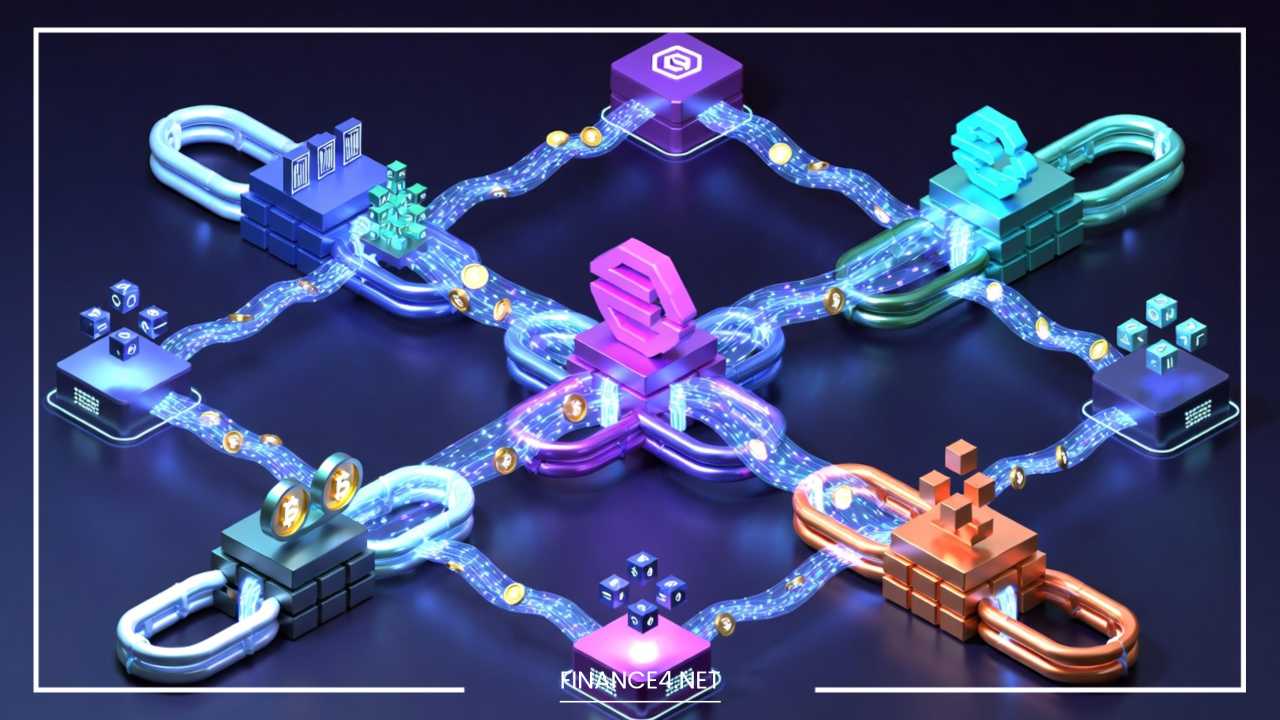
The blockchain landscape has undergone a radical transformation. What began as a singular focus on Bitcoin has expanded into a vast, sprawling map of Layer 1 blockchains like Ethereum, Solana, and Avalanche, alongside a rapidly growing ecosystem of Layer 2 scaling solutions such as Arbitrum, Optimism, and Base. While this proliferation of networks fosters innovation and scalability, it creates a fundamental problem: isolation. Blockchains are, by their very nature, closed systems. They are distributed ledgers that can see and verify what happens within their own borders but remain blind to the activity on other chains.
This isolation leads to fragmented ecosystems where liquidity, users, and data are trapped within specific networks. For the decentralized web to reach its full potential, these “walled gardens” must be connected. This is where cross-chain interoperability comes into play. It is the technological glue that allows different blockchain protocols to communicate, share data, and transfer value seamlessly.
As users navigate the decentralized finance (DeFi) space, collect NFTs across different platforms, or engage in blockchain-based gaming, the need to move assets between chains becomes a daily necessity. Whether it is moving capital to a new yield farm on a different Layer 2 or bridging a stablecoin to pay for a mint on an alt-L1, bridges are the essential infrastructure making these actions possible. However, bridging is not without its complexities and risks. From security vulnerabilities to high fees and complicated user interfaces, the bridging experience can be daunting. This article provides a comprehensive guide to the best cross-chain bridging protocols, exploring how they work, why they matter, and which ones lead the pack in security and efficiency.
What Are Cross-Chain Bridges?
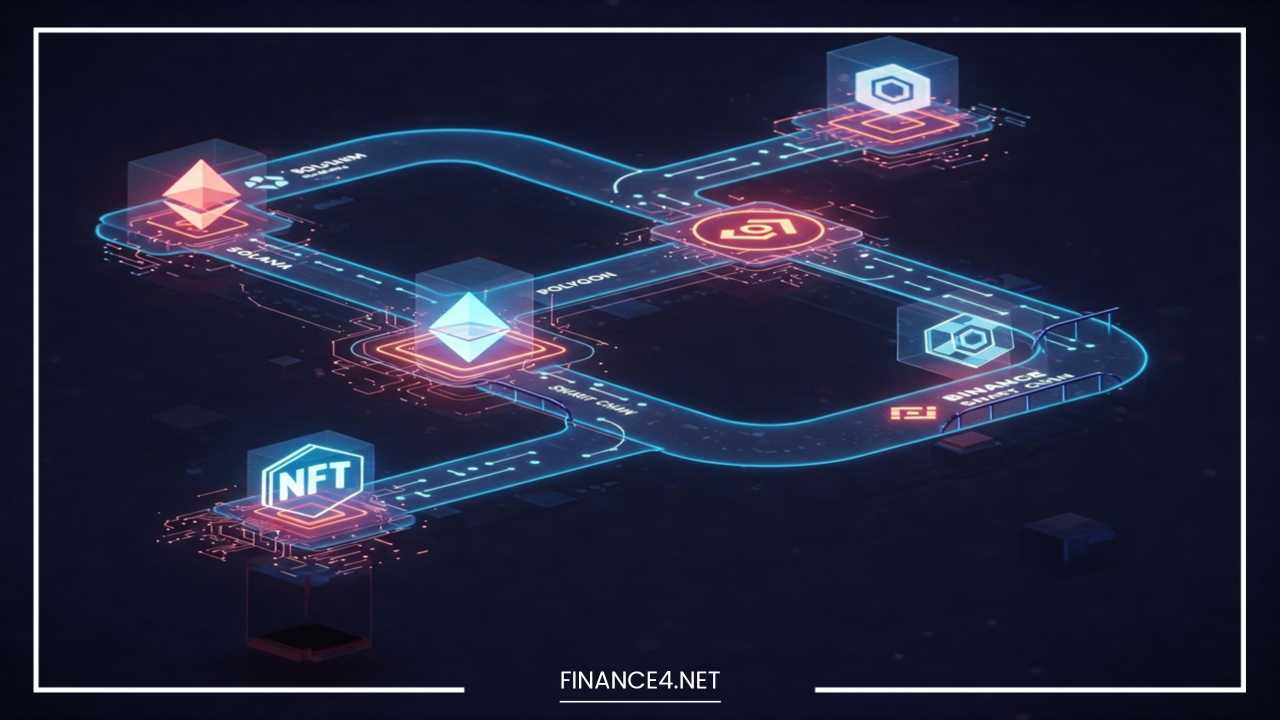
At its most basic level, a blockchain bridge is a protocol that connects two or more blockchains, enabling the transfer of assets or data between them. Since a token cannot literally “leave” its native chain to arrive on another, bridges use a variety of technical mechanisms to simulate this movement.
How Bridges Work
The underlying mechanics of a bridge determine its security, speed, and cost. There are four primary models used today:
-
Lock and Mint: This is the most common mechanism. A user sends their native assets (e.g., ETH) to a smart contract on the source chain, where they are “locked.” The bridge then triggers the minting of an equivalent “wrapped” version of that asset (e.g., wETH) on the destination chain. When the user wants to return, the wrapped tokens are “burned,” and the original assets are unlocked.
-
Burn and Mint: Used primarily by native asset issuers like Circle (for USDC), this model involves burning the asset on the source chain and minting a fresh, native version on the destination chain. This eliminates the need for “wrapped” assets, which are often considered less secure.
-
Liquidity-Based Transfers: These bridges maintain large pools of assets on both the source and destination chains. When a user sends a token to the bridge on Chain A, the bridge simply sends the corresponding token from its pool on Chain B to the user’s destination address. This is often faster but relies heavily on the bridge having deep liquidity available.
-
Messaging-Based Systems: These are the most advanced protocols. Rather than just moving tokens, they transmit arbitrary data. This allows a smart contract on one chain to trigger a function in a smart contract on another chain, enabling “cross-chain native” applications.
Differences in Architecture
It is important to distinguish between Asset Bridges, which focus solely on moving tokens; Messaging Protocols, which provide the underlying communication layer; and Cross-Chain Application Layers, which use that communication to build user-facing products like cross-chain lending or decentralized exchanges.
Why Cross-Chain Interoperability Matters
The current state of the blockchain industry is often compared to the early days of the internet, where different intranets existed but could not talk to one another. Interoperability is the “TCP/IP moment” for Web3.
Overcoming Fragmentation
As more Layer 2 solutions emerge to solve Ethereum’s scaling issues, liquidity becomes increasingly diluted. If a million dollars is split across ten different chains, it is much harder for a large trader to execute an order without significant slippage than if that million were in one place. Interoperability protocols allow for “liquidity aggregation,” effectively making the entire multi-chain world feel like a single, deep pool of capital.
Enhancing DeFi Composability
One of the core strengths of DeFi is “money legos”—the ability for different protocols to work together. Without bridges, these legos are restricted to their native chains. Interoperability allows a user to provide collateral on Ethereum and borrow assets on an L2, or use a yield aggregator that automatically moves funds to whichever chain currently offers the highest return.
NFTs and Gaming
In the world of digital collectibles and gaming, interoperability prevents users from being “stuck” in a specific ecosystem. A gamer might earn an item in a game built on Polygon but want to sell it on an Ethereum-based marketplace. Cross-chain protocols ensure that digital ownership is global, not local. As multi-chain user behavior becomes the norm, the “invisible” movement of assets becomes the benchmark for a successful user experience.
Types of Cross-Chain Bridging Protocols
Not all bridges are created equal. They are generally categorized by their trust assumptions and their technical approach to moving data.
Canonical Bridges
These are the “official” bridges built by the developers of a specific chain—for example, the Arbitrum Bridge or the Optimism Gateway.
-
Pros: They are generally considered the most secure because they rely on the same security assumptions as the chain itself.
-
Cons: They are often slow (especially for withdrawals from L2 to L1, which can take seven days) and usually only connect two specific networks.
Liquidity-Based Bridges
Liquidity bridges use “automated market maker” (AMM) style pools to facilitate swaps. If you want to move USDT from Ethereum to Avalanche, you deposit into the Ethereum pool, and a relayer sends you USDT from the Avalanche pool.
-
Pros: They provide near-instant transfers.
-
Cons: They are limited by the amount of liquidity in the pools. If a pool is empty, the bridge cannot function for that specific route.
Messaging Protocols
These protocols provide a generalized communication layer. They don’t just move money; they move “state.” This means they can tell a contract on Solana that a specific action happened on Ethereum.
-
Pros: They enable complex cross-chain logic beyond simple transfers.
-
Cons: They are more complex for developers to integrate and often require sophisticated validator sets to ensure the messages are authentic.
Intent-Based Systems
This is the cutting edge of bridging. In an intent-based system, the user doesn’t specify the technical route (e.g., “Bridge via Protocol X using Route Y”). Instead, they specify an “intent” (e.g., “I want 100 USDC on Base, and I am paying with 100 USDC on Ethereum”).
-
Pros: Third-party “solvers” compete to fulfill the user’s request as fast and cheaply as possible. This removes the technical burden from the user.
-
Cons: These systems are still maturing and rely on a robust network of active solvers.
Key Factors to Evaluate Cross-Chain Bridges
Before using or integrating a bridge, it is crucial to evaluate it based on several key metrics. The “Bridge Trilemma” suggests it is difficult to achieve all three of these simultaneously: Security, Scalability, and Speed.
-
Security Model: Is the bridge “trustless” (secured by code and math) or “trusted” (secured by a group of people/validators)? History has shown that trusted bridges are more susceptible to hacks if their validator keys are compromised.
-
Transaction Finality: How long does it take for the funds to be usable on the destination chain? Some bridges offer “fast-mint” features, while others require you to wait for the source chain to reach absolute finality.
-
Liquidity Depth: For large transfers, liquidity is king. If you are moving $1 million, a bridge with only $2 million in its pool will cause massive slippage.
-
Supported Chains: Does the bridge connect the specific ecosystems you use? Some focus on the Ethereum Virtual Machine (EVM) world, while others bridge between EVM and non-EVM chains like Solana or Cosmos.
-
Fees: Bridging involves gas fees on two chains plus the bridge’s own service fee. Users must weigh the cost against the convenience.
Best Cross-Chain Bridging Protocols
The following protocols represent the gold standard in the current interoperability market. Each has chosen a unique approach to solving the challenges of cross-chain communication.
Stargate Finance
Stargate is the first bridge built on top of the LayerZero messaging protocol. It focuses on “Unified Liquidity,” solving the problem of fragmented pools.
-
How it works: Stargate allows users and dApps to transfer native assets cross-chain while accessing the protocol’s unified liquidity pools with instant guaranteed finality. When you bridge on Stargate, you are getting a guarantee that the funds exist on the destination chain.
-
Strengths: It is exceptionally strong for stablecoin transfers. Because it uses native assets rather than wrapped tokens, users don’t have to worry about the “de-pegging” of a wrapped asset. Its interface is clean, making it a favorite for DeFi beginners.
Wormhole
Wormhole is one of the most expansive protocols in the industry, connecting a massive array of ecosystems including Ethereum, Solana, Cosmos, and many others.
-
How it works: Wormhole operates as a generic message-passing protocol. It relies on a set of nodes called “Guardians” who observe the state on various chains. When a transaction is initiated, the Guardians sign the message, which is then relayed to the destination chain for execution.
-
Strengths: Its ecosystem coverage is unmatched. It was the primary bridge connecting Solana to the rest of the crypto world. Today, it serves as a foundation for many other applications that need to move data across diverse chain architectures.
LayerZero
LayerZero is not a bridge in the traditional sense; it is an “omnichain” interoperability protocol. It provides the low-level infrastructure that bridges like Stargate use.
-
How it works: LayerZero uses “Ultra Light Nodes.” It transmits messages between chains by splitting the responsibility between an Oracle (which moves the block header) and a Relayer (which moves the transaction proof). If both match, the message is considered valid.
-
Strengths: It is designed to be lightweight and cost-effective. It enables the creation of “Omnichain Fungible Tokens” (OFTs), which can move between chains without needing to be wrapped, as the token itself is native to all supported chains.
Axelar
Axelar provides a decentralized network and tools that connect users, assets, and dApps across multiple blockchain ecosystems.
-
How it works: Unlike some protocols that rely on simple multisigs, Axelar is its own Proof-of-Stake blockchain. It uses a set of validators to vote on the state of other chains. This allows for “General Message Passing,” enabling developers to build truly cross-chain native applications.
-
Strengths: Its decentralized nature provides a higher security threshold than many centralized bridge alternatives. It excels at complex integrations where a developer needs to call a contract on a different chain securely.
Across Protocol
Across has gained significant traction by focusing on the specific needs of the Layer 2 ecosystem.
-
How it works: Across uses an “intent-based” model supported by an optimistic oracle. When a user wants to bridge, “relayers” provide the funds to the user immediately on the destination chain. These relayers then claim the funds back from the source chain after a short challenge period.
-
Strengths: It is arguably the fastest and cheapest bridge for moving assets between Ethereum and L2s. Because it relies on relayers taking the “time risk,” the user gets their funds in seconds.
deBridge
deBridge is a high-performance interoperability layer that facilitates the transfer of both assets and arbitrary data.
-
How it works: deBridge uses a validation layer consisting of independent validators who secure the cross-chain infrastructure. Its “dePort” feature allows for the creation of interoperable assets that can move across chains while maintaining their utility.
-
Strengths: It is highly developer-friendly and offers deep liquidity through its intent-based execution engine, DLN (deBridge Liquidity Network). This allows for zero-slippage transfers regardless of the size of the trade.
Circle CCTP (Cross-Chain Transfer Protocol)
While the other entries are general-purpose, Circle’s CCTP is a specialized utility for USDC, the second-largest stablecoin.
-
How it works: This is the “gold standard” for the burn-and-mint model. When you move USDC from Ethereum to Arbitrum via CCTP, the USDC is physically destroyed on Ethereum and a new, native USDC is created on Arbitrum.
-
Strengths: It eliminates “bridge risk” entirely for USDC transfers. There is no pool to be drained and no wrapped asset to lose value. It is the most secure way to move the world’s most popular digital dollar.
Comparison of Top Bridges
Choosing the “best” bridge depends entirely on what the user or developer is trying to achieve.
| Protocol | Best Use Case | Security Model | Speed |
| Stargate | Stablecoin transfers | LayerZero messaging | Moderate |
| Wormhole | Connecting Solana/EVM | Guardian Network | Fast |
| LayerZero | Building cross-chain apps | Oracle + Relayer | Variable |
| Axelar | General Message Passing | Proof-of-Stake Network | Moderate |
| Across | L2 to L1/L2 transfers | Intent-based (Relayers) | Very Fast |
| deBridge | Zero-slippage large trades | Independent Validators | Fast |
| Circle CCTP | Moving native USDC | Native Burn/Mint | Fast |
-
For Speed: Across and deBridge are the current leaders due to their intent-based models.
-
For Security: Circle CCTP is unrivaled for USDC; Canonical bridges are best for those with no time constraints.
-
For Versatility: Wormhole and Axelar provide the widest range of non-EVM connections.
Risks and Challenges of Cross-Chain Bridges
Despite the innovation, bridges remain one of the most vulnerable parts of the blockchain ecosystem.
Smart Contract Vulnerabilities
Bridges often hold vast amounts of capital in their “lock” contracts. This makes them “honeypots” for hackers. If there is a bug in the code that allows someone to mint tokens without locking them on the source chain, the entire bridge can be drained.
Validator and Relayer Risks
For protocols that rely on a set of validators, the system is only as secure as the people running it. If a majority of validators are compromised or collude, they can sign fraudulent messages, leading to the theft of assets.
Liquidity Fragmentation
While bridges try to solve fragmentation, the existence of so many different bridges can actually worsen it. If five different bridges all create their own “wrapped ETH” on the same chain, those five versions of ETH are not interchangeable, leading to a confusing and inefficient market.
User Experience Complexity
Bridging is still too hard for the average person. Understanding gas on two different chains, waiting for confirmations, and ensuring you are on the right website are all points of failure. This complexity is a significant barrier to mainstream adoption.
Future of Cross-Chain Interoperability
The long-term goal of the industry is “Chain Abstraction.” In this future, the user will not even know they are using a bridge.
The Rise of Intent-Based Architecture
The shift toward intents will continue. Instead of interacting with a bridge interface, users will interact with a wallet that asks, “What do you want to do?” The wallet will then find the best bridge, the best route, and the best price behind the scenes. This turns bridging into a backend service rather than a manual task.
Cross-Chain Smart Contracts
We are moving away from simple “A-to-B” transfers. Future dApps will be “cross-chain native.” For example, a decentralized exchange could have its user interface on a fast L2 like Base, its governance on Ethereum, and its liquidity distributed across five different chains—all functioning as a single, cohesive application.
Unified Liquidity Layers
Efforts are underway to create standardized protocols so that wrapped assets become a thing of the past. If the industry can agree on a shared standard for how tokens move, we can eliminate the fragmentation caused by having multiple bridge versions of the same asset.
Final Thoughts
Cross-chain bridging protocols are the highways of the decentralized world. Without them, the blockchain industry would be a collection of isolated islands, unable to trade or communicate effectively. Today, we have a diverse range of options, from the speed-optimized intent models of Across to the broad interoperability of Wormhole and the infrastructure-level innovation of LayerZero.
There is no single “best” bridge. A retail user looking to move $50 between Layer 2s will value the speed and low cost of Across, while an institutional player moving millions in USDC will prioritize the native security of Circle’s CCTP. As the technology matures, the “bridge” will likely disappear from the user’s view altogether, becoming a silent, automated component of a truly interconnected global financial system. For now, staying informed about the security and mechanics of these protocols is the best way to navigate the multi-chain frontier safely.
Frequently Asked Questions
What is the safest cross-chain bridge for high-value transfers?
For large transfers, canonical bridges are generally considered the safest choice. These are the official bridges built by the network developers, such as the Arbitrum Bridge or Polygon PoS Bridge. They inherit the security of the underlying blockchain directly. For multi-chain movements where a canonical option isn’t available, Circle CCTP is a top choice because it uses a native burn-and-mint mechanism, removing the risk associated with wrapped assets.
Which bridge has the lowest fees for Ethereum to Layer 2 transfers?
Across Protocol and deBridge are among the most cost-effective options for moving assets between Ethereum and Layer 2s like Base, Optimism, and Arbitrum. These protocols utilize intent-based systems where professional relayers compete to fulfill your request, often significantly undercutting the gas costs of traditional lock-and-mint bridges.
How do I bridge ETH to Solana without high slippage?
To move ETH to Solana with minimal slippage, Wormhole or deBridge are excellent options. These protocols connect the Ethereum Virtual Machine (EVM) ecosystem to Solana’s architecture. They leverage deep liquidity or professional market-maker integration to ensure users receive a fair market rate, which is particularly important when moving volatile assets like ETH.
Can I lose my crypto if a bridge gets hacked?
Bridging carries smart contract risk. In a traditional lock-and-mint model, if the bridge’s vault on the source chain is compromised, the wrapped assets on the destination chain may lose their backing and value. To mitigate this, many users are shifting toward intent-based bridges or burn-and-mint protocols that do not rely on massive, centralized pools of locked collateral.
What is the fastest way to bridge stablecoins between blockchains?
Stargate Finance and Across are specifically optimized for speed when it comes to stablecoins like USDC and USDT. By utilizing pre-funded liquidity pools or intent-based relayers, these bridges can often complete a cross-chain transfer in under a minute, providing a much faster experience than the several hours sometimes required by older bridge designs.
Do I need the native gas token of the destination chain to bridge?
Generally, yes. A common issue is bridging tokens to a new chain and then having no native gas (like SOL, MATIC, or ETH) to pay for the next transaction. However, modern interoperability layers like deBridge and Axelar frequently offer gas-on-destination features. This allows you to swap a small portion of your bridged asset into the native gas token of the new chain automatically during the transfer.