Best Cross-Chain Explorer Tools
 by
by 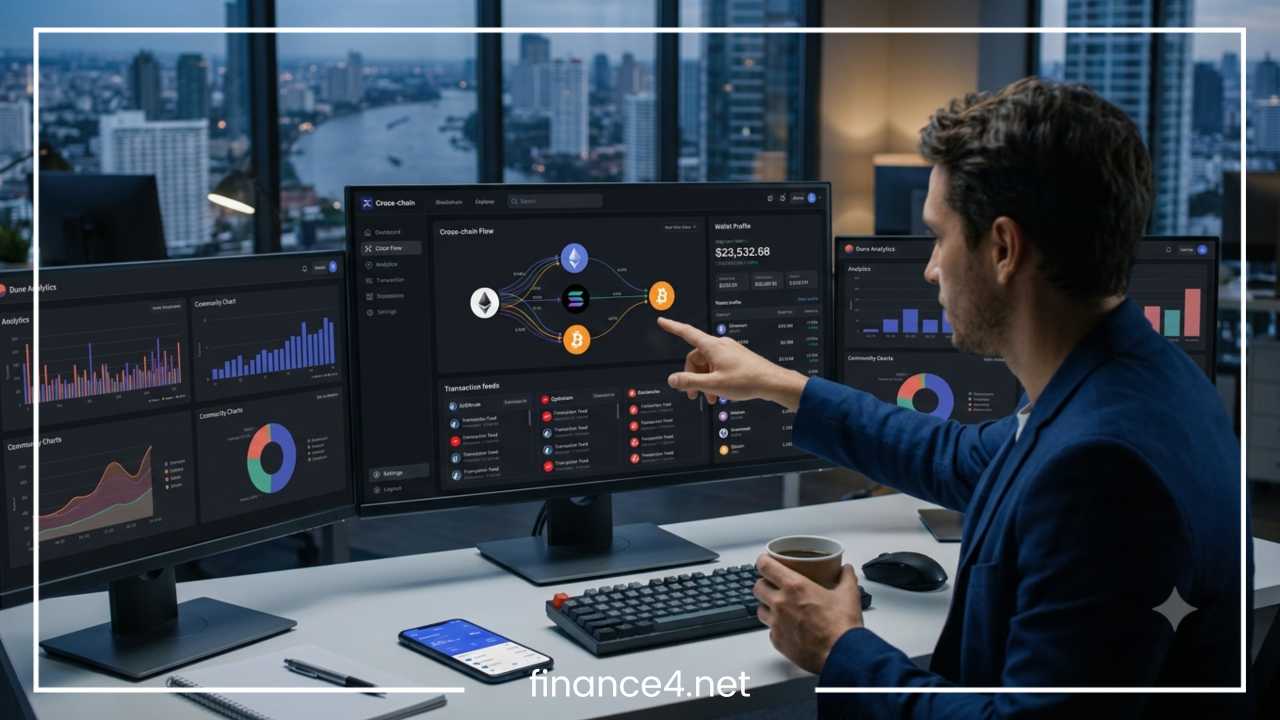
Best Cross-Chain Explorer Tools for Blockchain Tracking
The blockchain ecosystem has evolved from a collection of isolated networks into a massive, interconnected web of Layer 1 protocols, Layer 2 scaling solutions, and sovereign app-chains. In the early days of cryptocurrency, tracking on-chain activity was relatively straightforward. Bitcoin users relied on basic block explorers, while early decentralized finance enthusiasts monitored Ethereum transactions via Etherscan. Today, a single user journey might involve bridging assets from Ethereum to Arbitrum, swapping tokens on a decentralized exchange, and sending the proceeds to a Solana wallet.
This shift to a multi-chain paradigm has created a significant challenge: data fragmentation. Traditional, single-chain explorers operate within strict silos, blinding users to the broader movement of assets across network boundaries. When liquidity flows through cross-chain bridges, decentralized protocols, and distinct consensus environments, tracking a single entity’s footprint becomes incredibly tedious.
Cross-chain explorer tools address this visibility gap. By aggregating data from dozens of distinct networks into unified interfaces, these specialized block explorers and analytics platforms provide a holistic view of the decentralized web. They parse disparate data structures, index bridge contracts, and decode multi-chain transaction paths, giving users clarity in an otherwise fragmented landscape. Whether you are an investor monitoring a portfolio, a developer tracking smart contract interactions, or an investigator tracing illicit funds, cross-chain visibility is no longer a luxury—it is a necessity. This comprehensive guide breaks down the best cross-chain explorer tools available, evaluating their features, strengths, and ideal use cases to help you choose the right platform for your needs.
What Is a Cross-Chain Explorer?
A cross-chain explorer is a specialized blockchain search engine and data analytics platform capable of indexing, parsing, and displaying transaction data, smart contract interactions, and wallet activities across multiple distinct blockchain networks simultaneously. Unlike traditional blockchain explorers built to read a single ledger, cross-chain tools integrate disparate data architectures into a single, cohesive interface.
Traditional blockchain explorers function as specialized windows into specific networks. For example, standard Etherscan only displays Ethereum mainnet data, Solscan tracks Solana, and bscscan focuses entirely on the BNB Chain. If a wallet address is active across all three networks, an observer using traditional tools must open three separate browser tabs, search the address three times, and manually piece together the user’s on-chain profile.
Cross-chain tools fundamentally change this workflow by abstracting the underlying network layer. When you query a multi-chain wallet address or transaction hash, a cross-chain explorer searches its unified database to present a consolidated overview of that asset or entity across every supported environment.
The core functionalities of a true cross-chain explorer center on three pillars:
-
Multi-Chain Transaction Visibility: Merging transaction histories from various networks into a single chronological feed, allowing users to see sequential actions regardless of where they occurred.
-
Cross-Chain Bridge Tracking: Specifically identifying and monitoring transactions that pass through interoperability protocols like Wormhole, LayerZero, or Axelar. The explorer matches the outbound transaction on the source chain with the corresponding inbound mint or release transaction on the destination chain.
-
Unified Wallet Tracking: Calculating the total balances, token holdings, and historical performances of a single cryptographic public key or labeled entity across Ethereum, EVM-compatible Layer 2s, and non-EVM networks like Solana or Bitcoin.
Why Cross-Chain Tracking Matters
As the decentralized economy grows, the ability to monitor data across multiple blockchains provides distinct advantages to various participants within the industry. No single group operates in a vacuum, and assets rarely stay confined to a single ecosystem.
For crypto investors and day traders, cross-chain tracking is critical for accurate portfolio management and alpha generation. Investors often scatter capital across various staking protocols, yield farms, and liquidity pools across five or six distinct networks. Without multi-chain tracking tools, calculating net asset value, tracking cost basis, and monitoring impermanent loss becomes practically impossible. Furthermore, tracking “smart money” wallets—whale accounts with historical track records of profitable trades—requires looking across ecosystems, as these market participants frequently shift capital to wherever yield or volatility presents the highest returns.
For decentralized finance users and non-fungible token collectors, cross-chain visibility ensures transaction safety and asset verification. When interacting with bridges, users can verify if their funds are temporarily stuck in a bridge contract or if a transaction has successfully finalized on the target network. NFT collectors use these tools to track the provenance of cross-chain digital art collections, ensuring that an asset minted on one chain and bridged to another maintains its legitimate metadata and ownership history.
From an institutional, research, and security perspective, cross-chain tracking tools serve as the foundation for decentralized forensic investigations and compliance. Blockchain researchers, compliance officers, and analytics teams rely heavily on these platforms to map the flow of funds. Bad actors frequently use cross-chain bridges to obfuscate their audit trails, hoping that investigators will lose the scent when funds jump from an EVM network to a privacy-preserving chain or an independent Layer 1. Cross-chain exploration tools reconstruct these fractured pathways, allowing teams to maintain a continuous chain of custody during asset tracing and anti-money laundering investigations.
Features to Look for in a Cross-Chain Explorer
Selecting the right cross-chain tracking tool depends heavily on your specific goals. However, any institutional-grade or high-performance platform must be evaluated across several core technical dimensions.
Supported Blockchains
The breadth and depth of network support is the primary indicator of an explorer’s utility. A top-tier tool should seamlessly index major Layer 1 networks like Ethereum, Bitcoin, and Solana, alongside dominant Layer 2 solutions such as Arbitrum, Optimism, Base, and Polygon. It should also support specialized networks like Avalanche and BNB Chain. Beyond simply listing these networks, the tool must index them deeply, capturing smart contracts, internal transactions, and token standards unique to each ecosystem.
Real-Time Data and Indexing Speeds
Cryptocurrency markets move rapidly, and delayed data can result in missed liquidations, failed trades, or inaccurate forensic tracking. The explorer must feature robust, low-latency node infrastructure capable of updating balances, block heights, and transaction feeds within seconds of a block being finalized on-chain.
Advanced Wallet Tracking
A high-quality platform should offer comprehensive wallet profiles. This includes auto-detecting all networks associated with a public key, calculating aggregate net worth across all chains, breaking down asset distribution by token type and network, and providing a clean, searchable historical log of all historical transfers.
Smart Contract and Bridge Analysis
The ability to decode smart contract execution data into human-readable terms is vital. For cross-chain tracking specifically, the platform must clearly surface bridge transaction logs, detailing the lock/burn mechanics on the source chain and the mint/release mechanics on the destination chain, including the exact protocol fees paid.
Token Analytics and API Access
Users need deep token-specific insights, such as total liquidity pools, holder distributions, historical volume, and cross-chain supply metrics. For developers, quantitative traders, and enterprises, the presence of a robust, well-documented API is mandatory. This allows teams to extract multi-chain structured data programmatically to power custom applications or algorithmic trading systems.
10 Best Cross-Chain Explorer Tools
1. Etherscan Multichain Services
Etherscan Multichain Services represents the expansion of the blockchain industry’s most trusted explorer architecture into the multi-chain era. Recognizing that the proliferation of Ethereum Layer 2 solutions and EVM-compatible networks was fragmenting the user experience, the team behind Etherscan developed unified search capabilities that let users track addresses, tokens, and hashes across dozens of separate EVM instances through a familiar interface.
Features
-
Unified global search across all supported EVM networks via a single input bar.
-
Integrated Blockscan chat functionality for secure, wallet-to-wallet communication across different chains.
-
Standardized interface for reading and writing to smart contracts across multiple networks.
-
Detailed tracking of internal transactions, contract deployments, and ERC token transfers.
Pros
-
Features a highly familiar, industry-standard user interface that requires no learning curve for existing Web3 users.
-
Exceptional reliability and precision in contract decoding and gas fee tracking.
-
Comprehensive developer tools, including verified contract source code repositories across networks.
Cons
-
Strictly limited to Ethereum and EVM-compatible ecosystems; it cannot natively track non-EVM networks like Solana or Bitcoin.
-
Lacks a fully integrated, visual portfolio asset dashboard out of the box without diving into specific token balance sub-menus.
Best For
Developers, advanced DeFi power users, and technical analysts who operate primarily within the Ethereum, Layer 2, and EVM ecosystems and require deep, reliable smart contract interaction data.
2. OKLink Explorer
OKLink Explorer, developed by OKG Technology, is an enterprise-grade, comprehensive multi-chain block explorer designed to give users a macro and micro view of data across dozens of distinct blockchain architectures. It stands out by bridging the structural gap between EVM networks, UTXO-based systems like Bitcoin, and specialized non-EVM environments like Solana and Cosmos.
Features
-
Aggregated homepage displaying real-time gas prices, burning metrics, and transaction volumes across over 40 distinct chains.
-
Dedicated cross-chain bridge tracker that monitors asset flows through popular interoperability protocols.
-
Rich data visualization panels for tracking market capitalizations, active addresses, and network hash rates.
-
Built-in compliance and AML tracking indicators for addresses flagging potential security risks.
Pros
-
Incredibly broad network coverage, bridging the gap between EVM, UTXO, and Move/Wasm-based networks.
-
Excellent real-time macroeconomic charting for blockchain infrastructure health.
-
Clean, professional dashboard suitable for both retail users and institutional researchers.
Cons
-
The user interface can feel cluttered and overwhelming due to the sheer volume of data displayed simultaneously.
-
Deep smart contract debugging tools are not as robust as those found on specialized, single-chain explorers.
Best For
Multi-asset traders, institutional researchers, and compliance teams who need a bird’s-eye view of capital movement across completely different blockchain architectures.
3. Blockscout
Blockscout is a fully open-source, decentralized multi-chain block explorer that provides an alternative to proprietary commercial tracking platforms. It can be deployed on any EVM-based blockchain, allowing communities, rollups, and corporate networks to maintain a transparent, self-hosted interface for tracking transactions, tokens, and network health.
Features
-
Completely open-source codebase, allowing anyone to host their own instance of the explorer.
-
Unified dashboard capabilities that let users toggle between mainnets, testnets, and custom L2/L3 rollups.
-
Advanced contract verification tools supporting various compiler versions and optimization settings.
-
Integrated token tracking for ERC-20, ERC-721, and ERC-1155 standards with built-in metadata viewing.
Pros
-
Promotes maximum decentralization and data privacy; users are not subject to corporate tracking or ad networks.
-
Highly customizable interface that can be tailored to show specific metrics for novel rollup architectures.
-
Free to use and deploy without commercial API limits or paywalls for community networks.
Cons
-
Requires technical infrastructure knowledge to host and maintain instances at scale.
-
Out-of-the-box cross-chain correlation features require manual configuration compared to centralized aggregators.
Best For
Rollup developers, DAO communities, privacy advocates, and enterprise blockchain teams who require a self-hosted, non-proprietary tracking solution.
4. Chainbase Explorer
Chainbase Explorer is a data-focused multi-chain platform designed from the ground up to cater to the needs of blockchain developers, data scientists, and quantitative analysts. Rather than focusing solely on a consumer-facing web portal, Chainbase structures on-chain data into highly accessible, indexed relational formats, making multi-chain queries remarkably fast.
Features
-
Structured, multi-chain relational data indexing across EVM and select non-EVM chains.
-
Comprehensive SQL query interfaces allowing users to run custom analytics across multiple networks simultaneously.
-
High-availability cross-chain APIs that deliver real-time and historical block, transaction, and log data.
-
Built-in token metadata and NFT pricing aggregation across supported ecosystems.
Pros
-
Unmatched query speeds for complex, historical multi-chain data analysis.
-
Eliminates the need for developers to build and maintain their own complex indexing nodes.
-
Seamless integration between the web explorer interface and programmatic developer APIs.
Cons
-
Possesses a steep learning curve; it is not designed as a casual portfolio tracker for retail investors.
-
Minimal native visual charting within the default explorer view without writing custom queries.
Best For
Web3 developers, data scientists, and decentralized application teams who need to integrate real-time, multi-chain data streams directly into their applications or research engines.
5. DeBank
DeBank is a leading consumer-focused multi-chain portfolio tracker and wallet explorer. It specializes in parsing the highly complex data generated by decentralized finance protocols, transforming raw transaction logs into an intuitive, visual breakdown of a user’s exact assets, liabilities, yields, and farming positions across over 50 blockchain networks.
Features
-
Complete visual breakdown of wallet assets categorized by wallet balance, DeFi yield farming, staking, and locked collateral.
-
Automated multi-chain debt tracking, alerting users to loan-to-value ratios across lending protocols like Aave or Compound.
-
Real-time “Whale Tracking” feed allowing users to follow the portfolios and live transaction feeds of prominent on-chain entities.
-
Integrated Web3 social feed based on on-chain credentials, net worth, and historical portfolio activity.
Pros
-
Offers one of the best user interfaces for reading complex DeFi portfolio positions across multiple chains.
-
Excellent auto-discovery of obscure tokens, liquidity provider tokens, and yield farm deployments.
-
Provides clear insight into historical transaction flows, broken down by protocol actions rather than raw hashes.
Cons
-
Focuses heavily on DeFi and portfolio tracking; it lacks deep block infrastructure data or raw transaction log analysis.
-
Some premium tracking features and advanced filtering parameters require holding specific platform tokens or badges.
Best For
DeFi yield farmers, active retail investors, and on-chain analysts who want a comprehensive, clean, and visual overview of specific wallet portfolios across the entire crypto landscape.
6. Arkham Intelligence
Arkham Intelligence is a powerful deanonymization and on-chain intelligence platform that applies advanced analytics to cross-chain tracking. Arkham relies on a proprietary AI engine to match raw cryptographic addresses with real-world entities, corporations, and individuals, revealing the exact networks, counterparties, and histories behind institutional capital flows.
Features
-
“Profiler” feature providing an exhaustive, cross-chain overview of any entity, showing their net worth, historical balance charts, and top counterparties.
-
Visual “Network Graph” that charts cross-chain transaction flows between entities in real time, exposing cluster relationships.
-
Advanced multi-chain filtering tools allowing users to isolate transactions by volume, asset, token, time, and specific counterparty.
-
Custom multi-chain alert system that sends instant notifications via Telegram or email when targeted wallets execute a transaction.
Pros
-
Unrivaled entity-labeling system that converts abstract hex strings into recognizable corporate and individual names.
-
Incredible visual mapping of fund movements, making complex cross-chain tracing accessible.
-
Robust, granular filtering mechanisms that make it easy to isolate specific high-value transactions.
Cons
-
Raises data privacy concerns within decentralized communities due to its focus on deanonymization.
-
Data attribution models, while highly accurate, are occasionally based on probabilistic heuristics that can misidentify private wallet groupings.
Best For
Investigative journalists, on-chain analysts, security researchers, and institutional funds tracking competitor movements and major capital flows.
7. Breadcrumbs
Breadcrumbs is an intuitive, visual blockchain analytics and investigation platform designed to track the flow of crypto assets across multiple networks. Built with a focus on compliance, anti-money laundering investigations, and forensic tracing, Breadcrumbs uses a canvas-based approach that lets users map out transactions and trace fund origin paths visually.
Features
-
Interactive graph visualization canvas where users can expand transaction inputs and outputs across supported networks.
-
Customizable wallet monitoring and attribution tags, allowing teams to collaborate on specific tracking cases.
-
Asset lineage tracking that shows exactly what percentage of a wallet’s funds originated from specific mixers, exchanges, or known malicious entities.
-
Seamless multi-chain address screening against globally recognized sanctions lists and high-risk clusters.
Pros
-
Exceptional visual canvas interface that makes complex multi-chain tracking highly intuitive.
-
Highly effective tool for generating clear audit trails and forensic compliance reports for law enforcement or legal purposes.
-
Strong collaboration tools for distributed security and compliance teams.
Cons
-
Support for non-EVM chains is less mature than its deeply optimized EVM and Bitcoin tracking modules.
-
Advanced forensic features, compliance scores, and extensive canvas saving require a paid subscription model.
Best For
Compliance officers, blockchain forensic investigators, legal teams, and individuals trying to track and recover stolen or hacked crypto assets.
8. Token Terminal
Token Terminal is an analytics platform that treats blockchains and decentralized applications like traditional corporations. By aggregating financial data across multiple chains, the platform calculates fundamental financial metrics such as price-to-earnings ratios, protocol revenues, active user fees, and total value locked, allowing for direct financial comparisons between diverse crypto ecosystems.
Features
-
Standardized financial statements (Income Statements, Balance Sheets) for blockchains and major decentralized applications.
-
Cross-chain protocol benchmarking tools that compare revenue generation and fee structures across different L1s and L2s.
-
Aggregated developer activity metrics tracking monthly active developers and code commits across networks.
-
Comprehensive download capabilities for financial datasets via CSV formats or direct API endpoints.
Pros
-
Translates complex on-chain data into traditional financial metrics, making fundamental analysis accessible to traditional finance professionals.
-
Provides exceptionally clean, institutional-grade financial charts comparing network performance.
-
Helps investors strip away speculative hype by focusing entirely on verifiable revenue and user metrics.
Cons
-
Not suitable for tracking individual transaction hashes or identifying smart contract bugs.
-
Focuses entirely on major protocols and liquid tokens; smaller, nascent multi-chain projects are rarely indexed.
Best For
Venture capitalists, hedge funds, traditional finance analysts, and quantitative investors who evaluate crypto assets based on fundamental value and revenue generation.
9. Dune Analytics
Dune Analytics is a powerful community-driven data platform that democratizes cross-chain exploration through collaborative querying. Anyone can write custom SQL queries to extract data from a vast repository of indexed blockchains, creating highly customized, public dashboards that track everything from bridge volumes to protocol-specific user retention rates.
Features
-
Massive, community-curated repository of thousands of free, interactive data dashboards covering dozens of chains.
-
Raw and abstracted SQL databases indexing a wide variety of EVM networks, Solana, Bitcoin, and specific L2 scaling solutions.
-
Highly flexible visualization tools that convert text-based SQL query outputs into bar charts, line graphs, and scatter plots.
-
Robust API access options for executing queries and pulling processed data sets into external stacks.
Pros
-
Infinite flexibility; if the data exists on-chain, a user can write a custom script to find, filter, and display it.
-
Massive, active community of data engineers who continuously publish and maintain popular dashboards.
-
Completely transparent data methodology, as users can inspect the underlying SQL code powering every chart.
Cons
-
Requires a solid understanding of SQL syntax and database architecture to build custom tracking tools.
-
Performance and dashboard loading times can vary significantly based on query complexity and platform demand.
Best For
Data analysts, crypto researchers, community managers, and curious retail investors who want deep, macroeconomic insights into niche cross-chain trends without being limited by fixed, static user interfaces.
10. Zerion
Zerion is an established multi-chain portfolio manager and non-custodial wallet explorer designed to streamline asset tracking and interaction for everyday Web3 users. It aggregates wallet data across an extensive array of EVM chains, Layer 2 networks, and non-EVM ecosystems, delivering a clean mobile and web interface focused on user experience.
Features
-
Real-time portfolio valuation engine that automatically aggregates balances, historical performance, and profit/loss metrics.
-
Comprehensive NFT tab that displays digital collectibles across all supported networks with accurate floor price estimates.
-
In-app cross-chain swapping and bridging aggregator that routes trades through the most cost-effective liquidity providers.
-
Native mobile application featuring custom push alerts for multi-chain wallet balances and gas changes.
Pros
-
Exceptionally clean, intuitive user experience optimized for both desktop and mobile platforms.
-
Fast, automated discovery of newly minted tokens and multi-chain network additions.
-
Highly secure interface designed for everyday tracking without technical friction.
Cons
-
Lacks the deep contract parsing, raw internal transaction logging, and forensic tracking metrics required by developers and investigators.
-
Monetizes certain convenient tracking or transaction features through marginal in-app routing fees.
Best For
Retail investors, casual Web3 participants, and NFT collectors who require an easy-to-use, attractive platform to monitor their daily multi-chain holdings on the go.
Comparison Table
Evaluating the various capabilities of these multi-chain tools highlights how each platform serves distinct operational requirements. The following comparison highlights the structural differences across the top options available in the market today.
| Tool | Supported Chains | Wallet Tracking | Bridge Tracking | Token Analytics | API | Best For | Free Plan |
| Etherscan Multichain | EVM Only (Ethereum, L2s) | Basic | Limited | Advanced | Yes | Developers & Technical Users | Yes (Generous tier) |
| OKLink Explorer | EVM, UTXO, Solana, Cosmos | Advanced | Full | Intermediate | Yes | Macro Researchers & Traders | Yes (Basic tier) |
| Blockscout | EVM Only (Customizable) | Basic | No | Intermediate | Yes | Open-Source Advocates & DAOs | Yes (100% Free) |
| Chainbase Explorer | EVM & Select Non-EVM | Basic | Limited | Advanced | Yes | Data Scientists & Engineers | Yes (Developer tier) |
| DeBank | EVM, Layer 2s, 50+ Networks | Advanced | Intermediate | Advanced | Yes | DeFi Yield Farmers & Whales | Yes (Core dashboard) |
| Arkham Intelligence | EVM, Bitcoin, Solana | Entity-Based | Intermediate | Intermediate | Yes | Investigators & Fund Managers | Yes (Feature-rich) |
| Breadcrumbs | EVM, Bitcoin, Major Chains | Advanced | Intermediate | Limited | Yes | Compliance Teams & Forensic AML | Yes (Basic canvas) |
| Token Terminal | Major L1s & Active L2s | Limited | No | Financial Focus | Yes | Fundamental Investors & VCs | Yes (Basic charts) |
| Dune Analytics | EVM, Solana, Bitcoin, etc. | Custom | Custom | Custom | Yes | Data Analysts & Researchers | Yes (Public dashboards) |
| Zerion | EVM, Solana, 40+ Networks | Advanced | Integrated | Intermediate | No | Retail Investors & Mobile Users | Yes (Core app) |
How to Choose the Right Cross-Chain Explorer
With so many specialized tools available, selecting the right cross-chain explorer requires analyzing your specific role and objective within the decentralized ecosystem. No single platform perfectly answers every on-chain query, and many power users combine multiple tools to build a comprehensive analytics stack.
If you are primarily an investor or yield farmer, your main priority is understanding net asset allocation, performance metrics, and cost basis. Platforms like DeBank or Zerion are highly effective here, as they abstract raw blockchain logs to focus on displaying clean portfolio visual summaries, protocol rewards, and debt ratios across various networks.
For Web3 developers and data engineers, visual wallet interfaces are far less critical than reliable data infrastructure and rapid querying speeds. If you are building multi-chain applications or testing new rollups, platforms like Chainbase Explorer, Etherscan Multichain Services, or the open-source architecture of Blockscout provide the necessary raw node indexing, API access, and smart contract verification tools.
If your focus centers on security, compliance, and asset tracing, you require tools capable of uncovering hidden connections and deanonymizing entity behavior. Arkham Intelligence and Breadcrumbs excel in this domain. Their custom alert engines, entity-labeling features, and interactive canvas graphs allow investigators to follow assets through complex bridge interactions and network jumps without losing the trail.
Finally, for quantitative researchers and fundamental analysts evaluating macro market trends, platforms like Dune Analytics and Token Terminal are invaluable. They provide the necessary tools to bypass individual wallet analytics and focus instead on high-level data parsing—allowing you to write custom SQL scripts or analyze corporate-style income statements to assess the economic health of entire blockchain networks.
Common Challenges of Cross-Chain Tracking
Despite massive technological leaps, cross-chain blockchain tracking remains a highly complex engineering endeavor fraught with architectural hurdles. Blockchains were originally designed as isolated ledgers, and forcing them into a unified data structure presents structural challenges.
The foremost hurdle is data fragmentation and structural variance. Different blockchain ecosystems use entirely different consensus models, execution environments, and account schemas. For instance, translating the account-based model of Ethereum into the UTXO (Unspent Transaction Output) model of Bitcoin or the account-rent mechanics of Solana requires immense computing overhead. Explorers must normalize these variances into a standard format without losing the unique contextual data of each network.
Bridge complexity and indexing delays present another significant challenge. Cross-chain bridges do not move assets linearly; instead, they lock or burn tokens on a source chain and mint synthetic equivalents on a destination chain. Tracking this process requires an explorer to monitor two or more independent consensus networks simultaneously. If one network experiences high congestion or a delayed indexing node, the explorer may display inaccurate balances, causing user anxiety during asset transfers.
Furthermore, the rise of privacy networks and asset mixers continuously challenges the efficacy of tracking tools. Advanced zero-knowledge protocols can deliberately obscure transaction inputs, outputs, and wallet values. While compliance-focused tools work constantly to identify and flag addresses interacting with these protocols, maintaining a clear chain of custody across privacy-centric layers remains a continuous game of cat-and-mouse between blockchain architects and analytical data systems.
Future of Cross-Chain Blockchain Exploration
As multi-chain networks continue to scale, the next generation of tracking tools will evolve from static search engines into highly proactive, intelligent data hubs. The convergence of artificial intelligence, automated indexing, and institutional compliance requirements will redefine how we interact with on-chain data.
Artificial intelligence will play an increasingly prominent role in predictive analytics and automated entity classification. Instead of relying entirely on manual address labeling, machine learning models will analyze real-time transaction heuristics to flag malicious actors, identify institutional accumulation patterns, and automatically cluster related wallets with high probability. This will significantly reduce the time it takes for security teams to respond to smart contract exploits and cross-chain hacks.
We will also see deep structural shifts toward unified, plug-and-play data indexing layers. As the deployment of custom Layer 2 and Layer 3 rollups becomes instantaneous, cross-chain explorers will offer native, automated indexing capability. When a new rollup launches, the explorer framework will auto-detect its architecture, index its blocks, and display its transactions on a global dashboard without requiring custom code from the rollup developers.
Finally, institutional adoption and automated compliance tooling will drive the standardization of cross-chain explorers. As traditional financial systems continue to integrate with public ledgers through tokenized real-world assets, explorers will build native compliance modules directly into their core views. Real-time screening against sanctions lists, automated tax reporting calculations, and certified asset provenance auditing trails will become default features, making the process of exploring multiple blockchains as structured, reliable, and compliant as traditional corporate finance reporting.
Final Thoughts
The expansion of the blockchain space into a multi-chain ecosystem has made comprehensive data visibility more critical than ever. Relying on isolated, single-chain explorers in a world dominated by interconnected Layer 1 platforms, Layer 2 scaling networks, and cross-chain bridges limits your ability to interact effectively with the technology.
Cross-chain explorer tools bridge this data divide, offering unified platforms that clean up raw, fragmented on-chain information into actionable insights. Whether your priority is optimizing DeFi yield strategies, building decentralized software, investigating fund movements, or running fundamental financial analysis, there is a specialized tool tailored directly to your workflow.
Because the landscape is constantly evolving and different platforms offer unique data advantages, you should avoid relying on just a single tool. Testing multiple explorers, experimenting with custom dashboards, and matching specific platforms to individual tasks will ultimately give you the clearest view of the decentralized web. Use this guide as a foundation to build your personal analytics stack and navigate the multi-chain ecosystem with confidence.
Frequently Asked Questions
What is the best free cross-chain wallet tracker for DeFi portfolios?
The best free cross-chain wallet tracker for deeply mapping decentralized finance (DeFi) positions across multiple networks is DeBank. It auto-discovers obscure liquidity provider (LP) tokens, staked assets, and protocol debts across over 50 chains. For users seeking a mobile-first application with clean profit-and-loss charts and a seamless non-custodial interface, Zerion is a premier free multi-chain portfolio manager.
How do security researchers track crypto transactions across multiple blockchains?
Security researchers track assets jumping across distinct network layers by utilizing cross-chain block explorers and specialized blockchain investigation tools like Arkham Intelligence or Breadcrumbs. These platforms index interoperability protocols (such as Wormhole or LayerZero), matching the initial lock or burn hash on the origin network with the corresponding mint or unlock hash on the target destination chain to maintain an uninterrupted asset lineage.
Can a single multi-chain blockchain explorer monitor both EVM and non-EVM networks?
Yes. While popular options like Etherscan Multichain Services are restricted strictly to Ethereum Virtual Machine (EVM) environments, advanced platforms like OKLink Explorer, Dune Analytics, and Arkham Intelligence bridge the technical gap. They index entirely different network structures, allowing users to track activity simultaneously across EVM layers, UTXO-based protocols like Bitcoin, and Rust/Wasm environments like Solana.
Why do blockchain data explorer tools show different token balances for the same wallet?
Variances in token balances typically happen due to differences in indexing latency and protocol coverage. A platform focused on raw infrastructure data might only show native token balances held directly in an address, whereas a dedicated portfolio explorer decodes specific smart contract positions, surface-level staking pools, and complex liquidity farm yields that standard trackers fail to parse.
What are the best blockchain monitoring tools for tracking real-time smart money whale alerts?
The most reliable platforms for setting up real-time multi-chain whale transaction alerts are Arkham Intelligence and DeBank. Arkham allows users to create custom parameters—such as transaction volume, target counterparty, and token type—and routes instant notifications directly via Telegram or email when high-value entities execute on-chain moves across disparate blockchains.