How to Find Reliable NFT Artists
 by
by 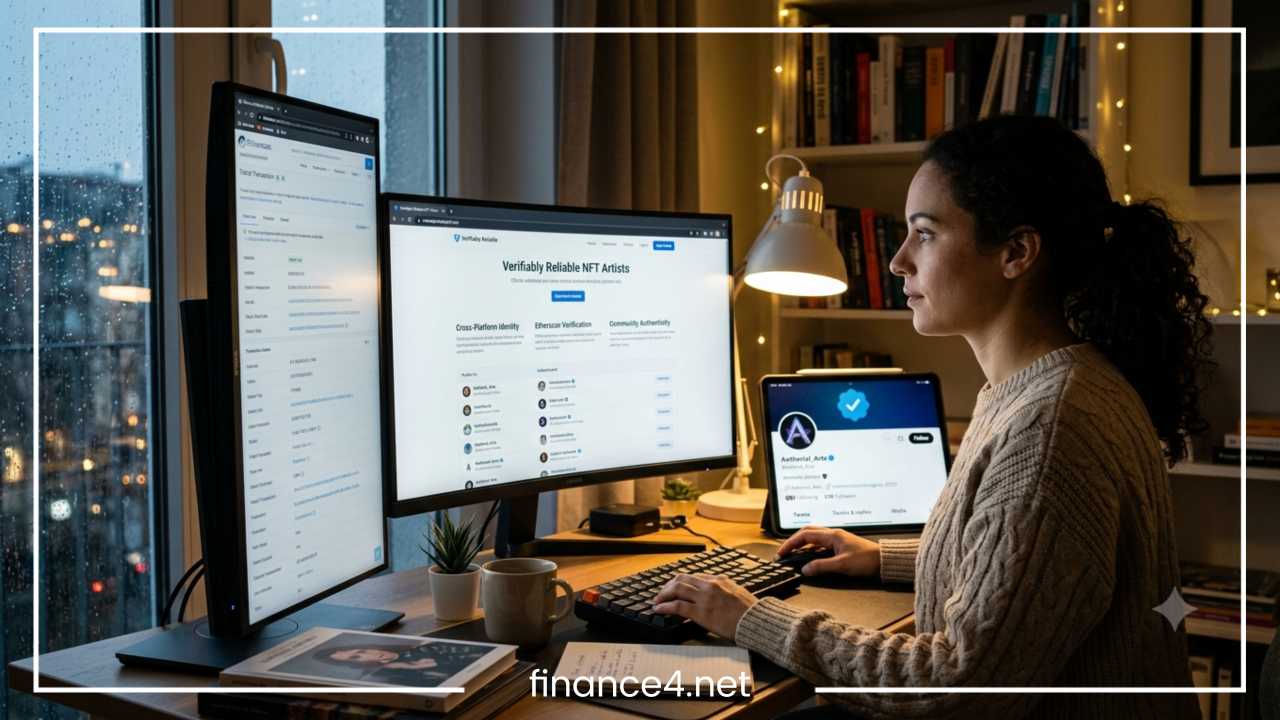
How to Find Reliable NFT Artists: The Complete Guide
The non-fungible token (NFT) landscape has fundamentally transformed how digital creators distribute, monetize, and protect their intellectual property. In the broader Web3 ecosystem, digital art is no longer just a visual asset; it represents a unique cross-section of culture, community, software utility, and decentralization. As a collector, investor, or brand looking to collaborate, the success of your journey relies heavily on the creators behind the smart contracts. NFT artists are the structural backbone of this space, establishing the emotional connection, aesthetic identity, and long-term vision that give a collection its intrinsic value.
However, the rapid growth and decentralized nature of the blockchain market have introduced significant challenges. Because anyone can launch a smart contract and mint an image to the blockchain, the space has seen a rise in bad actors. Scams, wash trading, fake collections, plagiarized digital art, and social media impersonators are constant hurdles for unsuspecting participants. Navigating this environment requires more than just an eye for compelling visuals; it requires a systemic approach to verification and risk assessment.
Finding trusted, verified NFT artists requires a mix of artistic evaluation, digital forensic investigation, and behavioral analysis. This comprehensive guide outlines a step-by-step strategy to identify reliable creators, verify the authenticity of their work on-chain, assess their reputation within the community, and protect your capital from fraudulent projects.
What Makes an NFT Artist Reliable?
In traditional art markets, reliability is established through gallery representation, institutional curation, and documented physical provenance. In the Web3 landscape, reliability must be redefined through the lens of open-source data, cryptography, and digital identity. A reliable NFT artist is a creator who demonstrates a consistent track record of execution, undeniable ownership of their intellectual property, and a transparent, accountable online presence.
True reliability manifests across several core dimensions:
-
Consistent Track Record: A reliable creator does not disappear after a primary sale. They maintain a visible timeline of artistic development, project delivery, and technological execution across market cycles.
-
Authentic Ownership of Work: They can definitively prove that the source files, conceptual drafts, and intellectual properties originate from their own hands and minds.
-
Transparent Online Presence: They do not hide behind untraceable identities to avoid accountability. Even if they choose to remain pseudonymous (a common practice in Web3), their digital persona remains stable, traceable, and consistent over time.
Distinguishing between reliable professional artists and high-risk creators comes down to verification, community engagement, and historic on-chain data.
| Trait | Professional NFT Artist | High-Risk or Unreliable Creator |
| Profile Verification | Verified across primary marketplaces and connected to official, long-standing social accounts. | Unverified, newly created profiles with disconnected or hidden social media handles. |
| Community Engagement | Organic interactions, deep dialogue with collectors, and transparent communication regarding roadmaps. | Reliance on generic hype, artificial bot engagement, and avoidance of technical questions. |
| Sales History | Verifiable secondary market volume, transparent distribution of tokens, and consistent pricing logic. | Erratic pricing, zero secondary market interest, or clear patterns of self-buying (wash trading). |
| On-Chain Footprint | Clean smart contract deployments, clear wallet provenance, and historic stability. | Newly generated deployer wallets funded via privacy mixers with no previous on-chain history. |
While hobbyist creators are not inherently malicious, professional NFT artists treat their collections as long-term digital enterprises. They manage their smart contracts responsibly, secure their creative pipelines, protect their community from security exploits, and view their collectors as stakeholders in their broader artistic legacy.
Where to Find NFT Artists
Discovering reliable digital creators requires expanding your search beyond standard search engines. The Web3 community relies on a specific ecosystem of marketplaces, decentralized social networks, and community-driven hubs.
Curated and Open NFT Marketplaces
The primary venues for finding creators are the marketplaces where NFTs are minted, bought, and sold. These platforms generally fall into two categories: curated platforms and open permissionless marketplaces.
-
SuperRare and Foundation: These are premier, curated, or creator-invitation platforms focused primarily on fine art and 1-of-1 editions. Because these platforms require an application process, peer nominations, or direct curation by an editorial board, the risk of encountering outright art theft or direct impersonation is drastically lower. Discovering artists here provides a baseline layer of artistic vetting.
-
OpenSea and Rarible: These are open, high-volume marketplaces where anyone can mint an NFT collection. While they host the largest volume of legendary Web3 artists, they also require the highest level of personal due diligence. Collectors must rely heavily on verification badges and independent cross-referencing to separate real artists from copycat profiles.
Social Platforms and Community Hubs
Blockchain technology records the transactions, but the cultural conversation around Web3 art occurs entirely on modern social platforms.
-
Twitter / X: This platform functions as the town square for the NFT community. It is where artists announce upcoming drops, share behind-the-scenes work-in-progress (WIP) content, engage in conceptual debates, and host live audio sessions via Spaces. If an artist does not have an active, referenceable presence here, it is a significant anomaly in the current Web3 landscape.
-
Instagram: While less integrated with direct smart contract interaction, Instagram remains an exceptional discovery engine for visual digital art. Illustrators, 3D animators, and generative designers use it as a living portfolio to showcase their artistic development before bringing those concepts on-chain.
-
Discord Communities: Dedicated Discord servers focused on digital art, specific generative collections, or alpha-discovery groups serve as vetting grounds. Observing how an artist interacts within their own Discord, or how other collectors talk about an artist in third-party servers, provides raw, unedited insight into their professional standing.
Launchpads, Curated Platforms, and Virtual Exhibitions
For those interested in generative code art or institutional digital fine art, platforms like Art Blocks provide access to heavily vetted algorithmic artists. Furthermore, digital art exhibitions within virtual worlds or physical Web3 art galleries in major global metropolises offer opportunities to discover creators who have already successfully passed professional peer-review processes.
How to Check Artist Authenticity
Once you discover an artist whose style resonates with you, you must shift your focus from artistic evaluation to technical authentication. In a decentralized environment, you cannot rely blindly on a profile picture or a biography. You must audit the digital footprint.
Cross-Platform Identity Consistency
The first line of defense against impersonation is confirming that the artist’s social channels, personal website, and marketplace profiles form an unbroken, self-referencing chain.
An authentic artist will link to their marketplace profiles directly from their verified, long-standing social accounts. Conversely, their marketplace profiles will link directly back to those exact social handles. If you find an OpenSea profile claiming to belong to a famous illustrator, but the official website of that illustrator does not list that specific wallet address or collection link anywhere, treat the profile as fraudulent. Always navigate to a minting page from the artist’s official, pinned social media links, rather than searching for the collection name manually within an open marketplace search bar.
Wallet Provenance and On-Chain Verification
The absolute truth of Web3 resides on the blockchain. By utilizing blockchain explorers like Etherscan, Solscan, or Polygonscan, you can track the exact history of the digital asset.
To confirm authenticity on-chain, you must trace the cryptographic lineage directly through the ledger. First, locate the contract address of the NFT asset. Second, trace the initialization or creation transaction back to the specific deployer wallet that executed the smart contract. Finally, verify if that deployer wallet matches the public wallet address publicized by the artist on their official website or verified social channels.
If the smart contract was deployed by a completely unlinked, anonymous wallet that received its initial funding from a privacy mixer, and the artist has made no public statement acknowledging that specific contract, the collection is likely an unauthorized bootleg.
Utilizing Reverse Image Searches and Metadata Audits
Art theft is one of the most common issues in the open digital marketplace. Malicious actors frequently download portfolios from traditional art platforms like ArtStation, Behance, or DeviantArt, and then mint them as NFTs without the creator’s permission.
To combat this, perform a reverse image search using tools like Google Lens, TinEye, or Yandex on the collection’s artwork. Look for instances where the image appeared online years prior under a different creator’s name. If the artwork belongs to an illustrator who has no knowledge of Web3, or who has explicitly stated they do not participate in the blockchain ecosystem, you are looking at a stolen asset. Additionally, check the metadata embedded within the smart contract to ensure the hosting domains and storage solutions (such as IPFS or Arweave) point to secure, permanent infrastructure rather than insecure, temporary personal servers that can be shut down at any moment.
Evaluating Artist Reputation
An artist may be authentic, but that does not automatically mean they are reliable in executing a project, managing secondary market growth, or maintaining professional relationships. Evaluating reputation requires assessing community sentiment and market behavior.
Analyzing Community Engagement Quality
A reliable artist cultivates an organic community built on mutual respect and shared appreciation for the underlying medium. When reviewing an artist’s social interactions, look past the raw numbers. A profile with hundreds of thousands of followers but only a handful of generic comments is a primary indicator of purchased bot networks.
Look for deep, qualitative interactions:
-
Does the artist answer technical questions about their creative process?
-
Do they show behind-the-scenes process videos, layered files, or early conceptual sketches?
-
Are the comments filled with long-term collectors discussing the art, or are they dominated by repetitive spam accounts demanding free promotional giveaways?
Examining Holder Sentiment and Industry Affiliations
The health of an artist’s ecosystem can be measured by looking at their current collectors. Join the public communication channels and observe the overall sentiment. If the community is anxious, hostile, or entirely focused on short-term price speculation, it often indicates the creator has mismanaged expectations or overpromised unrealistic returns.
Furthermore, look at the artist’s professional relationships. Have they collaborated with established, reputable platforms? Have other well-known, fully transparent Web3 figures collected their work? In Web3, your network functions as a reputation engine. If highly respected curators and collectors trust a creator enough to hold their tokens in their public vault wallets, it serves as a meaningful validation of that creator’s standing.
Assessing Secondary Market Performance Metrics
While short-term price fluctuations occur naturally across all asset classes, looking at long-term secondary market trends can reveal an artist’s commitment to their ecosystem. A stable or organically growing floor price, balanced token distribution (where a single wallet does not own an overwhelming majority of the supply), and consistent trading volume show a healthy collector base that values the art for its long-term cultural significance rather than short-term financial speculation.
Red Flags of Fake or Unreliable NFT Artists
Protecting your digital assets requires learning to identify specific warning signs. If a project or creator exhibits any of the following characteristics, pause your investigation and assume a defensive position.
Isolated or Single-Platform Digital Footprints
A genuine digital artist rarely exists in a vacuum. If a creator has a highly polished marketplace profile but possesses absolutely no historical footprint on standard portfolio sites, search engines, or social networks prior to the launch of that specific collection, it is a massive red flag. Reliable creators have a paper trail of digital existence that often spans years before their entry into the blockchain ecosystem.
Complete Anonymity Without Cryptographic Verification
While pseudonymity is a valid option in Web3, it requires an established, verifiable reputation to be trusted. If an artist is entirely anonymous, uses a newly created profile, provides no links to previous creative works, and refuses to show any verifiable proof of past professional history, there is nothing holding them accountable if they choose to abandon the project immediately post-mint.
The Anatomy of High-Risk Creator Behavior
Fraudulent operations rely on emotional manipulation, manufactured urgency, and psychological pressure.
-
Guaranteed Financial Returns: Any creator or project promoter who promises or implies guaranteed profit, floor-price manipulation, or risk-free investment returns is engaging in predatory marketing. True artists focus on artistic execution and community utility; they do not promise speculative gains.
-
Sudden, High-Pressure Launches: Reliable collections are built with intentionality. Be wary of stealth drops or surprise mints that use high-pressure tactics like “Only 5 minutes left to mint!” or “Supply running out fast, click this unverified link now!” These mechanisms are designed to bypass your logical due diligence processes.
-
Inconsistent Art Styles: If an artist’s profile features a chaotic mix of hyper-realistic 3D rendering, simple flat 2D vector icons, and oil painting styles without any cohesive narrative or stated explanation, the account is likely a hub for various pieces of stolen intellectual property gathered across the internet.
Tools to Help You Discover and Verify NFT Artists
Conducting professional-grade due diligence requires leveraging specialized digital tools designed to interpret data from both web servers and distributed ledgers.
On-Chain Analytics and Ledger Trackers
To understand an artist’s market reality, you must read the data straight from the source.
-
Etherscan / Block Explorers: These platforms allow you to analyze the exact origin of a token, review contract security, view the distribution of holders, and track where the mint funds are transferred. If the primary mint proceeds are immediately routed to a centralized exchange or a privacy mixing service, it suggests the project creators are exiting the ecosystem rather than funding development.
-
NFTGo and CryptoSlam: These data aggregation platforms provide macros-level visibility into collection performance. They allow you to easily identify wash trading patterns (where a small group of wallets repeatedly sell an asset back and forth to artificially inflate volume tracking algorithms) and monitor individual whale wallet movements.
Identity Vetting and Digital Forensics
-
Reverse Image Search Platforms: Utilizing tools like Google Lens, TinEye, and Yandex is the fastest way to flag stolen artwork before committing capital to a collection.
-
Social Analytics Trackers: Platforms like Social Blade or twXplorer allow you to monitor an artist’s follower acquisition history. A sudden spike of 50,000 followers within a 24-hour period, unaccompanied by a viral post or major announcement, indicates artificial follower manipulation.
How to Build Relationships with NFT Artists
The unique value of the Web3 space is the unprecedented level of direct access it provides between collectors and creators. Engaging with artists respectfully and consistently can grant you access to early reservation lists, private editions, and valuable industry insights.
Meaningful Digital Communication
Do not approach an artist with transactional inquiries such as “When will the price go up?” or “Can you give me a free token?” Instead, build an authentic relationship by engaging with their actual craft.
Comment on their specific design choices, ask about the conceptual themes driving their collections, attend their audio spaces, and share their work within your own networks. Artists remember individuals who take a genuine interest in their creative output, and this social equity frequently translates into priority access for future artistic milestones.
Supporting Creative Ecosystems Long-Term
True collectors provide support that extends far beyond buying a single primary mint. You can establish yourself as a valuable member of an artist’s community through various supportive actions:
-
Collecting Open Editions and Lower-Tier Items: Purchasing an artist’s accessible editions shows long-term support for their creative journey, regardless of your personal budget size.
-
Retaining Assets Through Market Fluctuations: Holding onto an artwork during market downturns signals to the artist and the broader community that you value the work for its cultural merit rather than short-term price fluctuations.
-
Participating Actively in Governance: If the artist operates a community-driven collection or decentralized autonomous organization (DAO), use your voting tokens to provide constructive feedback and help shape the project’s long-term future.
Strategic Tips for Collectors and Buyers
When entering the digital art space, implementing a structured risk-management framework protects your capital and ensures a sustainable journey through the ecosystem.
-
Begin with Conservative Capital Allocations: When discovering a new artist whose background you are still actively vetting, avoid making large financial commitments right away. Start by collecting smaller, lower-cost editions to safely observe their communication style, delivery reliability, and post-sale community management over a multi-month period.
-
Prioritize Artistic Merit and Functional Utility: Market trends fluctuate rapidly. If you acquire an asset solely because of temporary hype, you risk holding an illiquid asset if that hype fades. If you collect an item because you genuinely appreciate the visual execution, value the artist’s personal narrative, or benefit from the concrete utility attached to the token, the asset retains its subjective value regardless of macro market conditions.
-
Diversify Your Collector Profile: Avoid concentrating your entire portfolio into a single creator or project. Spreading your support across multiple reliable artists across various genres (such as generative art, photography, and digital illustration) helps insulate your collection from project-specific volatility.
-
Maintain Personal Security Hygiene: No matter how reliable an artist is, their personal social media accounts or community channels can still be compromised by external security exploits. Never sign a smart contract transaction that you have not independently verified, never reveal your wallet’s private seed phrase to anyone, and use dedicated hardware wallets to store your long-term digital art collections safely.
Final Thoughts
The decentralized revolution has created incredible opportunities for digital artists and collectors to connect without traditional gatekeepers. However, this newfound freedom transfers the responsibility of due diligence entirely onto your shoulders. Finding reliable creators is not an impossible task; it simply requires replacing emotional impulse with systematic verification.
Remember that a reliable NFT artist’s reputation is always built on three foundational elements: verifiable authenticity, clear on-chain transparency, and a proven track record of execution. By consistently utilizing block explorers, cross-referencing digital identities, analyzing community health, and keeping a watchful eye out for common red flags, you can safely discover exceptional creators and confidently build a meaningful digital art collection.
Frequently Asked Questions
How do I know if an NFT artist is real?
To confirm an NFT artist is genuine, cross-check the official collection link listed on their verified social media bios against the marketplace URL. Authentic creators maintain an interconnected digital presence across platforms. If a collection appears on a marketplace but is not linked from the creator’s official website or public channels, it is highly likely an unauthorized copycat profile.
How to do a reverse image search for digital art authenticity?
You can use free digital tools like Google Lens, TinEye, or Yandex to audit the visual origins of an artwork. Right-click the NFT image, upload it into the search engine, and check the historic results. If the art was posted years ago on a portfolio site like ArtStation or Behance under a completely different name, the current seller likely does not own the copyright and has minted stolen property.
What are the main warning signs of an NFT scam project?
The most frequent warning signs include anonymous creators with zero past work history, newly generated social media accounts showing massive but inactive follower bases, and artificial hype cycles driven by high-pressure marketing tactics. Additionally, look out for deployer wallets funded exclusively through privacy mixers, and inconsistent art styles across a single collection, which often points to stolen visual assets.
How to find smart contract address on Etherscan for verification?
Navigate to the item page on your chosen marketplace, find the details section, and click on the token’s contract address. This action redirects you to a block explorer like Etherscan. Once there, view the contract creation transaction to trace the origin back to the deployer wallet. If this deployer address cannot be verified through the artist’s official, public disclosures, avoid interacting with the contract.
What is the difference between open and curated NFT marketplaces?
Curated platforms like SuperRare and Foundation filter their talent through strict application processes, editorial boards, or peer invitations, significantly lowering the risk of plagiarism. Open marketplaces like OpenSea or Rarible allow anyone to mint tokens instantly without prior screening. While open networks host major established creators, they demand a higher level of personal due diligence from buyers.
Why is community engagement important for evaluating Web3 creators?
Organic community interaction helps separate real digital artists from automated bot networks. Look at the comments on the artist’s social profiles to see if collectors are engaging in real, meaningful discussions about the medium, technique, and creative milestones. If the communications consist solely of repetitive giveaway requests or generic hype statements, it suggests manipulated metrics.