
Top NFT Aggregator dApps
 by
by 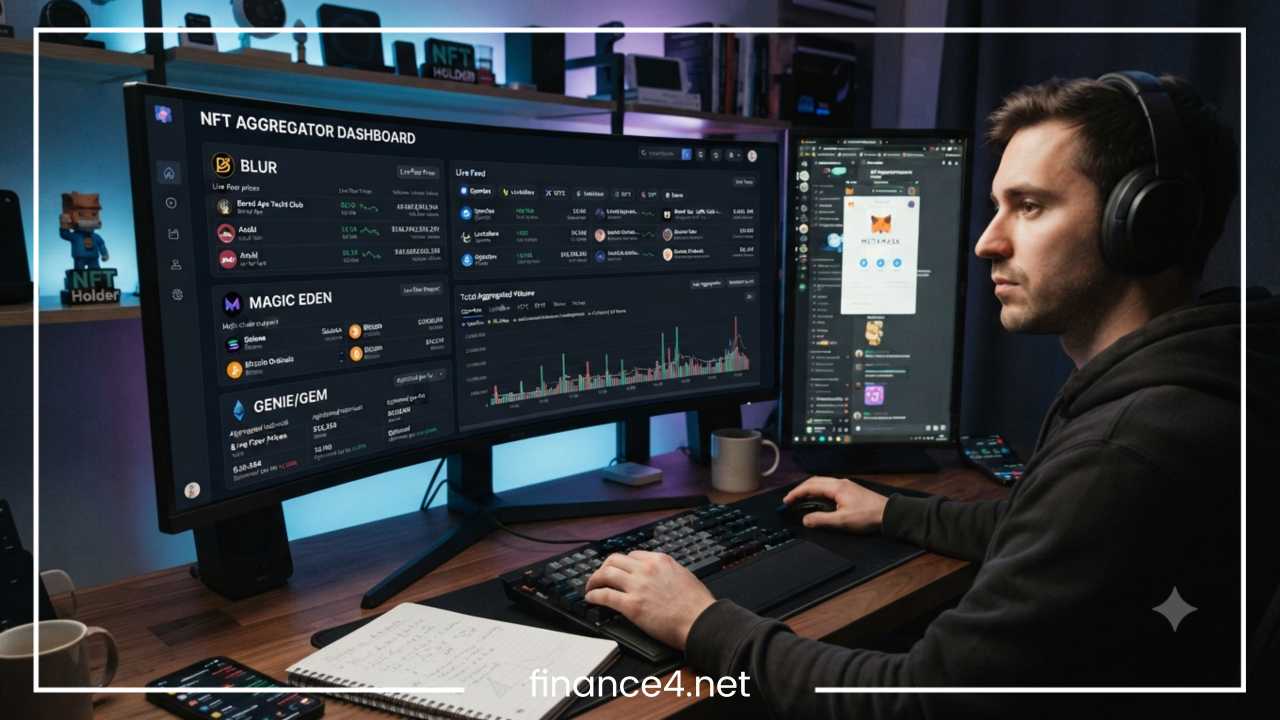
Top NFT Aggregator dApps for Buying & Trading NFTs
The digital asset ecosystem has evolved into a vast, multichain universe. NFTs are no longer confined to basic digital art; they now anchor complex ecosystems across web3 gaming, virtual worlds, decentralized music platforms, community token gates, and tokenized real-world assets (RWAs). As digital collectibles continue to mature, the infrastructure supporting them has had to scale exponentially.
In the early days of digital collections, finding, purchasing, or trading assets was a relatively simple process. You would visit one or two dominant marketplaces, browse their native catalogs, and execute a trade. Today, the landscape is highly fragmented. Prominent ecosystems run across completely separate blockchain networks, each hosting distinct marketplaces with independent order books, varying liquidity pools, and proprietary smart contracts.
For an active collector or trader, navigating this scattered ecosystem presents a massive challenge. Checking dozens of websites to find the lowest price for a specific asset or trait is highly inefficient, results in missed opportunities, and subjects users to fragmented liquidity. This friction paved the way for a specialized class of decentralized applications: NFT aggregator dApps.
NFT aggregators act as the search engines and routing protocols of the web3 world. By pulling real-time data from countless secondary markets into a unified dashboard, these platforms enable users to optimize their strategies, reduce transaction costs, and trade with maximum efficiency. This comprehensive guide explores how NFT marketplace aggregators operate, the tangible benefits they offer, and the top aggregator dApps you can use to master the market.
What Is an NFT Aggregator dApp?
An NFT aggregator dApp is a specialized web3 platform that consolidates listings, liquidity, and transactional data from multiple underlying marketplaces into a single interface. Instead of requiring you to open separate browser tabs for individual platforms, an aggregator compiles all available data into a centralized dashboard.
Understanding the difference between a traditional NFT marketplace and an NFT marketplace aggregator is crucial for modern trading:
-
Traditional NFT Marketplaces: These platforms operate their own proprietary smart contracts, database listings, and matching engines. Sellers list their assets directly on the platform, and buyers interact solely with that specific marketplace’s contract infrastructure.
-
NFT Aggregators: These platforms do not necessarily host native listings. Instead, they act as an umbrella layer over the entire market. They index on-chain data and leverage web3 APIs to fetch current listings from numerous separate marketplaces simultaneously.
When you connect your wallet to an aggregator, you gain instantaneous exposure to a massive cross-section of the entire web3 supply. If a seller lists an asset on one platform, and another lists the identical collection on a completely separate application, the aggregator displays both options side by side in real time. This architecture allows you to cross-reference prices, track comprehensive floor changes, and buy NFTs globally without interacting directly with the native frontends of multiple independent websites.
How NFT Aggregator dApps Work
Behind the scenes, an NFT aggregator relies on a sophisticated stack of web3 infrastructure to deliver a seamless, high-speed trading experience. The workflow combines heavy data indexing, real-time communication, and specialized smart contract routing.
The entire user journey follows a structured path designed for efficiency:
1. Wallet Connection
The user initiates the process by connecting a non-custodial web3 wallet (such as MetaMask, Phantom, or Coinbase Wallet) to the aggregator dApp. This provides the application with the public address required to read portfolio contents and prepare outbound transactions.
2. Search and Cross-Market Indexing
The aggregator continuously scans multiple blockchains using custom indexing engines and third-party APIs. When a user searches for a specific collection, token ID, or trait, the platform queries all integrated marketplaces simultaneously to compile a comprehensive global view.
3. Comparing Real-Time Listings
The platform organizes the retrieved data into a clean, unified feed. The user can view historical candlestick charts, volume trends, and individual item listings sorted by price, rarity, or timestamp, regardless of which underlying marketplace hosts the original listing.
4. Identifying the Lowest Prices
Because sellers list the same or similar items across different platforms with varying fee structures, pricing discrepancies occur frequently. The aggregator automatically surfaces the absolute lowest global price for any given asset, ensuring the trader achieves optimal capital efficiency.
5. Batch Purchases and Routing
If a trader wants to purchase multiple digital assets at once, they add them to a single checkout cart. The aggregator’s backend smart contracts then analyze the layout of the listings and calculate the most efficient transactional route across the blockchain.
6. Executing Smart Contracts
Instead of sending five separate transactions to five different marketplaces, the aggregator bundles the orders. It executes a single transaction through its own optimized router contract, which interacts with the target marketplaces simultaneously, distributes the required crypto funds, and transfers the assets back to the user’s wallet in a single block confirmation.
Benefits of Using NFT Aggregators
Utilizing an aggregator provides concrete, quantifiable advantages over navigating individual platforms manually. Whether you are a casual collector or an enterprise-grade trader, these applications drastically alter the way you interact with digital property.
Better Price Discovery
Price discrepancies are incredibly common across fragmented markets. An asset might be listed for 1.2 ETH on one platform, while an identical asset from the same collection is listed for 1.15 ETH on an alternative app. Aggregators instantly bring these inefficiencies to light, allowing you to secure the absolute best deal without executing tedious manual research.
Unified Dashboard
Managing digital assets can quickly become overwhelming when assets are scattered across various applications and chains. Aggregators solve this by acting as a single, centralized command center. From one window, you can view market analytics, list assets for sale across multiple platforms simultaneously, cancel listings, and track your total portfolio valuation.
Batch Buying and Bulk Sweeping
For active traders, timing is everything. If a project gains sudden momentum, manually buying items one by one is far too slow and driving up the floor price against yourself is counterproductive. Aggregators allow you to execute “floor sweeps”—buying dozens of items at the lowest available price in a single click.
Reduced Gas Fees
On networks like Ethereum, gas costs can severely eat into profit margins. When you buy multiple items individually on traditional platforms, you pay baseline smart contract execution fees for every single interaction. Aggregators utilize highly optimized custom smart contracts that compress data, allowing you to batch buy multiple items while saving up to 30% to 40% on cumulative network gas fees.
Unprecedented Time Savings
Manually keeping track of live order books across multiple distinct platforms requires immense time and focus. Aggregators automate this entire tracking process. They update listings in milliseconds, providing an instant edge over traders relying on manual webpage refreshes.
Access to Deeper Liquidity
Liquidity is the lifeblood of any financial asset class. By pooling the order books of dozens of separate platforms together, an aggregator creates a deep, synthetic liquidity pool. This massive pool ensures that large volume orders can be filled quickly with minimal price slippage.
Rare NFT Discovery and Analytical Insights
Many top-tier aggregators integrate mathematical rarity protocols directly into their user interfaces. Instead of relying on external tertiary websites to determine if an item is a rare specimen, you can view integrated rarity tiers, historical sales data, and trait premiums right alongside the pricing information.
Top NFT Aggregator dApps
Selecting the right aggregator depends heavily on the specific blockchain networks you utilize, the scale of your trading volume, and your personal need for professional-grade analytics. The following platforms represent the industry leaders in the aggregator space.
1. Blur
Blur stands as one of the most dominant forces in the Ethereum digital asset ecosystem. Launched specifically to cater to high-volume, professional digital asset traders, Blur operates simultaneously as a native zero-fee marketplace and a hyper-fast aggregator. Backed by premier venture capital firms like Paradigm, it revolutionized the space by prioritizing raw transaction speed and data transparency.
-
Key Features: Features real-time floor price sweeps that execute up to ten times faster than legacy alternatives. It provides deep analytical charts, advanced collection-level bidding systems, trait-specific bidding filters, and a proprietary peer-to-peer lending protocol called Blend, which allows users to borrow liquidity against their digital assets.
-
Supported Blockchains: Ethereum.
-
Pros: Absolutely zero marketplace trading fees; ultra-low latency data feeds; powerful batch processing architecture; advanced financial tools like Blend lending.
-
Cons: The user interface is highly technical, dense with charts, and can be deeply overwhelming for casual collectors or beginners.
-
Best Suited For: Professional high-frequency day traders and institutional-grade volume flippers looking for maximum capital efficiency and speed.
2. OpenSea Pro
Originally entering the market as an independent aggregator under the name Gem.xyz, the platform was acquired by industry titan OpenSea to serve as its high-performance trading arm. Rebranded as OpenSea Pro, it synthesizes listing data from hundreds of marketplaces across the broader Ethereum landscape, integrating seamlessly with OpenSea’s unparalleled native volume.
-
Key Features: Advanced bulk inventory management allowing users to list, delist, and adjust prices on multiple distinct platforms simultaneously. It features heavily optimized gas routing mechanics, live trait-based filtration, instant floor tracking tools, and live data updates that bypass typical blockchain delays.
-
Supported Blockchains: Ethereum, Polygon, and major Layer-2 scaling solutions.
-
Pros: Highly intuitive UI that balances professional features with clean design; excellent optimization for gas savings during batch checkouts; direct backing by the largest brand in the ecosystem.
-
Cons: Certain promotional low-fee tiers can adjust over time depending on broader OpenSea corporate changes.
-
Best Suited For: Active mid-tier and advanced collectors who want deep aggregative liquidity paired with a highly polished, reliable user experience.
3. Magic Eden Aggregator
Magic Eden initially rose to prominence as the undisputed leader of the Solana digital asset ecosystem. Recognizing the multi-chain trajectory of the broader web3 space, it underwent massive expansions to transform into a cross-chain marketplace and aggregator powerhouse. It stands out for its unique ability to aggregate liquidity from completely separate cryptographic infrastructures.
-
Key Features: Cross-chain aggregation that spans multiple completely different network architectures. It features advanced cross-chain checkout capabilities, unified digital loyalty reward hubs, a native multi-chain web3 wallet, and an extensive launchpad infrastructure for new creator mints.
-
Supported Blockchains: Solana, Bitcoin (Ordinals & Stamps), Ethereum, Polygon, and Base.
-
Pros: Unmatched multi-chain versatility; arguably the best destination for sourcing Bitcoin Ordinals and Solana assets simultaneously; cohesive, community-oriented rewards systems.
-
Cons: Cross-chain operations can occasionally introduce minor user interface delays due to processing disparate block confirmation times across separate networks.
-
Best Suited For: Diversified web3 enthusiasts who actively maintain portfolios across Solana, Bitcoin, and Ethereum Layer-2 networks simultaneously.
4. Tensor
Tensor is a highly optimized, professional-grade trading platform and aggregator built natively for the high-throughput Solana ecosystem. Designed as the Solana equivalent to Blur, Tensor focuses heavily on lightning-fast trade execution, deep mathematical data visualizations, and automated market-making features.
-
Key Features: Real-time historical candlestick charts for individual digital asset collections. It integrates Automated Market Maker (AMM) pools allowing for instantaneous buy and sell execution. It also features specialized financial derivatives tools such as “Price Locks,” allowing advanced traders to open long or short positions on digital collections with minimal upfront capital.
-
Supported Blockchains: Solana.
-
Pros: Exceptional speed tailored to the high performance of the Solana network; robust automated financial tools; deep, gamified loyalty rewards programs.
-
Cons: Completely tailored to Solana, offering no native coverage for Ethereum Mainnet or Bitcoin Ordinals assets.
-
Best Suited For: Hyper-active Solana traders who prioritize automated market making, rapid programmatic sweeping, and advanced chart analytics.
5. Reservoir
Reservoir takes a radically different approach to digital asset aggregation by operating primarily as an open-source web3 developer protocol rather than a standard consumer-facing retail website. It acts as the underlying logistical infrastructure that powers aggregation for numerous other platforms across the decentralized web.
-
Key Features: Provides programmatic, developer-friendly open-source APIs, SDKs, and modular UI toolkits. It enables any creator or community to spin up their own fully aggregated, custom community marketplace in a matter of minutes, completely pre-populated with global order books.
-
Supported Blockchains: Multichain, including Ethereum, Arbitrum, Optimism, Base, Polygon, and ZKsync.
-
Pros: Completely open-source infrastructure without proprietary corporate lockouts; highly granular data access for developers; decentralized architecture that strengthens web3 censorship resistance.
-
Cons: It lacks a traditional, plug-and-play retail-focused consumer website dashboard, requiring basic programming knowledge to maximize its capabilities.
-
Best Suited For: Web3 developers, gaming studios, and community DAOs looking to deploy native marketplace solutions with instant, pre-aggregated liquidity.
6. UnleashNFTs
Developed by the data analytics firm bitsCrunch, UnleashNFTs functions as an AI-powered analytics engine and market intelligence platform that aggregates data specifically to protect users from systemic digital asset risks.
-
Key Features: Advanced machine learning tools that scan global marketplaces to flag artificial wash trading volume. It provides precise fair-value estimation calculations, comprehensive collection health rankings, asset portfolio tracking, and deep security forensic analysis to identify counterfeits or stolen assets.
-
Supported Blockchains: Ethereum, Polygon, Avalanche, and BNB Chain.
-
Pros: Deep, unparalleled security analysis tools; excellent tracking metrics for auditing the true organic demand of a project; highly effective asset pricing models.
-
Cons: The platform focuses significantly more on raw information, analytics, and security metrics than it does on direct high-frequency batch buying or execution mechanics.
-
Best Suited For: Long-term value investors, research analysts, and collectors who prioritize risk mitigation and deep forensic data over speed.
7. Element Marketplace
Element Marketplace is a community-driven, highly optimized multi-chain aggregator designed to provide high-efficiency trading across an expansive variety of EVM-compatible ecosystems.
-
Key Features: Consolidated multi-chain data feeds that bundle listings across dozens of distinct native marketplaces. It features low-fee trading architecture, custom gas-saving smart contracts, comprehensive portfolio tracking dashboards, and an automated decentralized reward program that returns platform incentives back to active traders.
-
Supported Blockchains: Ethereum, BNB Chain, Polygon, Avalanche, Arbitrum, Optimism, and Base.
-
Pros: Exceptionally wide multichain EVM network support; highly accessible, user-friendly interface design; consistent promotional gas rebates and rewards.
-
Cons: Liquidity pools for highly specialized, non-EVM chains like Solana or Bitcoin are entirely excluded from the platform.
-
Best Suited For: Everyday retail traders who frequently hop between various Ethereum Layer-2 networks and BNB chain ecosystems in search of low fees.
Features to Look for in an NFT Aggregator
With so many platforms competing for market share, evaluating specific functionalities ensures you choose an application tailored to your personal trading workflow.
-
Multi-Chain Support: Ensure the platform natively reads the specific networks you use. If you trade heavily on Layer-2 solutions like Base or Arbitrum, a strictly Ethereum-only aggregator will limit your flexibility.
-
Wallet Compatibility: The dApp must natively support your non-custodial wallet provider. Top platforms offer broad integrations including MetaMask, WalletConnect, Phantom, and Ledger hardware wallet direct connections.
-
Advanced Gas Optimization: Review whether the platform utilizes modern, gas-compressed smart contracts. Saving gas during high-volume trades directly impacts your bottom line.
-
Granular Analytical Toolsets: Look for platforms providing real-time trait filters, accurate rarity ranks, historical candlestick charting, and wall-volume books so you can gauge buy and sell walls before placing orders.
-
Comprehensive Portfolio Management: A top-tier application should allow you to view your entire multichain inventory, monitor unrealized gains or losses, and let you modify multiple active listings simultaneously from one hub.
-
Robust Security Infrastructure: The aggregator should explicitly flag stolen, reported, or unverified copycat collections to prevent you from accidentally purchasing illiquid, blacklisted assets.
NFT Aggregator vs NFT Marketplace
While both types of decentralized applications allow you to buy and trade digital property, their underlying structure, data sourcing, and operational goals differ fundamentally.
| NFT Marketplace | NFT Aggregator |
| Single Marketplace Inventory: Displays only the assets listed directly on its own proprietary platform. | Multiple Marketplaces Inventory: Consolidates order books from dozens of individual platforms simultaneously. |
| Limited Isolated Supply: Traders can only purchase what is actively hosted within that platform’s isolated database. | Wider Global Inventory: Grants instant access to the collective supply of the entire secondary market. |
| Individual Purchases: Typically requires separate blockchain transactions for each individual item purchased. | Batch Purchases: Allows users to buy dozens of separate items across different platforms in a single transaction. |
| Manual Comparison: Requires users to manually navigate multiple tabs to compare prices across different venues. | Automatic Price Comparison: Automatically sorts global listings to surface the lowest possible price. |
| Basic Search Functionality: Standard search tools limited to searching their own internal indexing database. | Advanced Filtering Engine: Powerful cross-market filtering by price, traits, rarity, and historical volume trends. |
Are NFT Aggregator dApps Safe?
Security is paramount when interacting with decentralized financial tools. Because aggregators interact with highly complex smart contracts and require broad wallet permissions, users must exercise disciplined safety practices.
Smart Contract Vulnerabilities
Aggregators function by writing custom routing contracts that bridge your funds to external marketplaces. If an aggregator’s custom code contains a flaw or exploit, malicious actors could compromise the protocol. Always use established, audited, open-source protocols that have withstood prolonged market exposure.
Wallet Permissions and Phishing
When buying or listing assets, aggregators will request signature permissions to interact with your tokens. Always verify the exact URL you are visiting. Phishing applications frequently mimic popular aggregators like Blur or Magic Eden to trick users into signing malicious “Approve All” transactions, which can instantly drain a crypto wallet.
Scam Collections and Flagged Items
Because aggregators scrape massive amounts of open web data, they can occasionally surface counterfeit or malicious token collections. Furthermore, platforms like OpenSea frequently lock or flag assets that have been reported stolen, preventing them from being traded on that platform. A premium aggregator should clearly display these flags to prevent you from accidentally acquiring an untradable, high-risk asset.
Security Best Practices
To ensure your digital property remains completely protected while trading:
-
Always utilize a reputable hardware wallet (like a Ledger or Trezor) for storing high-value collections.
-
Maintain a separate, low-balance “hot wallet” specifically designated for interacting with new or experimental dApp routers.
-
Regularly audit and revoke old smart contract approvals using decentralized security tools like Revoke.cash.
How to Choose the Best NFT Aggregator
There is no single “best” aggregator for every single participant in the web3 space. The ideal application depends entirely on aligning the dApp’s native strengths with your primary trading activities.
If you are a professional, high-frequency trader focusing on the Ethereum mainnet, Blur provides the low-latency speed and advanced collection bidding structures required to maintain a professional edge. If you prefer a highly polished, clean user interface that balances deep analytics with reliable, secure infrastructure, OpenSea Pro stands as an excellent choice.
For traders whose portfolios are highly diversified across alternative cryptographic networks, Magic Eden provides an unparalleled home for managing Solana assets, Bitcoin Ordinals, and EVM collections under a unified multi-chain ecosystem. Meanwhile, high-speed Solana power users will find their needs perfectly met by the advanced AMM execution mechanics and financial shorting capabilities native to Tensor.
Future of NFT Aggregators
As the digital property landscape continues to mature, aggregator dApps are poised to undergo massive transformations. The next evolution of these platforms will move significantly beyond basic order-book scraping, integrating advanced technologies to create highly liquid, frictionless financial environments.
We can expect to see heavy integration of machine learning and AI-powered discovery engines. These systems will analyze your historical collection preferences, wallet behavior, and on-chain trends to automatically surface undervalued assets or hidden rarity mispricings before the broader public detects them.
Furthermore, cross-chain smart contract abstractions will continue to advance. Future iterations will allow a user holding native Solana tokens to instantly purchase an Ethereum-based gaming asset in a single click, completely automating the background bridging, swapping, and routing processes seamlessly. As corporate enterprise sectors continue to tokenize real-world assets—such as real estate deeds, financial securities, and high-end physical luxury goods—aggregators will adapt to route institutional compliance data alongside traditional digital art.
Finally, the lines separating decentralized finance (DeFi) and digital collectibles will blur entirely. Aggregators will increasingly build native support for advanced financialization tools, including instant fractionalized token trading, automated yield generation through asset lending pools, and cross-collection collateralized borrowing protocols.
Final Thoughts
NFT aggregator dApps have fundamentally reshaped the mechanics of digital asset trading. By solving the challenges of market fragmentation, isolated liquidity, and inefficient manual browsing, these platforms provide traders with a unified window into the global web3 landscape.
Whether your priority is saving on network gas fees through advanced batch checkouts, executing high-speed floor sweeps during competitive project reveals, or cross-referencing multi-chain prices across Solana and Ethereum, aggregators provide the technological leverage necessary to navigate the market efficiently.
As you explore the various top-tier applications available, always place an absolute premium on personal security. Prioritize protocols with robust smart contract histories, carefully verify transaction signatures, and match your selected platform with your specific blockchain preferences. By pairing advanced aggregative toolsets with disciplined security habits, you can confidently navigate the future of digital asset ownership.
Frequently Asked Questions
What is the best NFT aggregator for beginners?
For individuals new to the digital asset space, OpenSea Pro and Magic Eden are widely considered the best options. While professional tools like Blur or Tensor offer deep liquidity and high-speed execution, their interfaces are densely packed with complex financial charts and advanced bidding metrics that can be overwhelming for beginners. OpenSea Pro and Magic Eden balance professional-grade aggregation features—such as batch buying and real-time floor price comparison—with clean, intuitive, and user-friendly dashboards that make navigating the multichain ecosystem straightforward.
How do NFT marketplace aggregators save on gas fees?
NFT marketplace aggregators save users money on gas fees by utilizing highly optimized, custom smart contracts capable of transaction batching. When buying multiple items individually on traditional marketplaces, you must execute separate blockchain interactions, paying the baseline network fee for every single transaction. Aggregators compress transactional data and bundle your entire checkout cart into a single transaction. This routes multiple purchases across different underlying platforms simultaneously, cutting down cumulative gas fees by up to 30% to 40% on networks like Ethereum.
Can you use an NFT aggregator for cross chain trading?
Yes, certain modern NFT aggregators are purpose-built for cross-chain trading. Platforms like the Magic Eden Aggregator allow users to track collections, view analytics, and buy assets across fundamentally different blockchain networks—including Solana, Bitcoin (Ordinals), Ethereum, Base, and Polygon. As web3 infrastructure continues to mature, top aggregators are actively integrating cross-chain smart contract routers that allow you to purchase an asset on one chain using cryptocurrency held on an entirely different network in a single checkout process.
Are NFT aggregator dApps safe to connect to crypto wallets?
Connecting your crypto wallet to a reputable, mainstream NFT aggregator is generally safe, but it carries standard web3 smart contract risks. Established platforms like Blur, Tensor, and OpenSea Pro undergo rigorous security audits, but they require wallet signature permissions to interact with your digital assets. The biggest security risk comes from phishing websites that clone the visual interface of popular aggregators to trick users into signing malicious “Approve All” permissions. Always verify the exact URL before connecting your wallet, and use a dedicated hardware wallet to secure high-value assets.
Why are prices lower on NFT aggregators compared to traditional marketplaces?
Prices are not inherently lower on aggregators, but aggregators make it vastly easier to find the absolute lowest global listing. Because sellers list identical or similar items across multiple independent marketplaces with varying platform fee structures, localized pricing inefficiencies happen frequently. An aggregator automatically crawls all integrated platforms in real time and surfaces the absolute lowest price across the entire internet. This allows you to bypass higher-priced listings that you might have otherwise bought if you were only browsing a single isolated marketplace.