Bridging Fantom to NEAR
 by
by 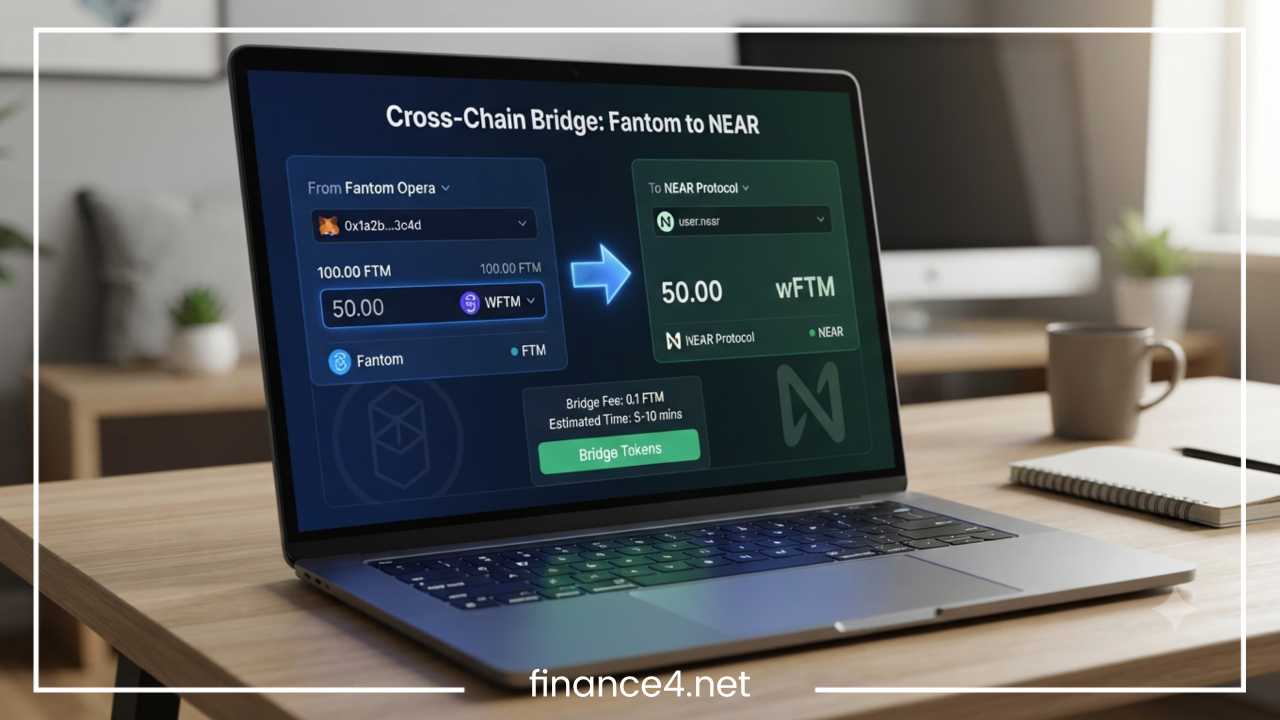
Bridging Fantom to NEAR: Secure Step-by-Step Cross-Chain Guide
The modern blockchain landscape is characterized by hundreds of independent networks, each optimized for specific use cases, throughput capacities, and consensus mechanisms. However, this multi-chain reality creates fragmentation, isolating liquidity and locking communities into specific ecosystems. Cross-chain bridging solves this challenge by enabling the seamless transfer of digital assets and data across disparate blockchain networks.
Moving assets from Fantom to NEAR represents a strategic shift for many cryptocurrency users. Fantom is widely recognized for its high-performance, EVM-compatible environment that supports a robust decentralized finance economy. Conversely, NEAR Protocol offers a uniquely scalable, developer-friendly Layer-one infrastructure powered by Nightshade sharding and human-readable accounts. Bridging assets between these two ecosystems allows participants to explore novel financial products, optimize yield strategies, and leverage unique application layers that neither network can provide in isolation.
This comprehensive guide covers everything required to execute a secure cross-chain transfer from Fantom to NEAR. Readers will learn the fundamental architectural differences between Fantom and NEAR, the motivations behind cross-chain asset movement, the availability of direct and indirect bridging routes, necessary wallet preparations, and an exhaustive step-by-step tutorial. Additional sections detail fee breakdowns, critical security best practices, troubleshooting strategies for common technical hiccups, and advanced post-bridge use cases designed to maximize capital efficiency.
Understanding Fantom and NEAR
What is Fantom?
Fantom is a high-throughput, scalable, smart-contract-enabled platform designed to overcome the limitations of older blockchain generations. At its core, the primary network layer is the Fantom Opera network, an independent, permissionless, and open-source distributed ledger. Fantom achieves consensus through a custom-built asynchronous Byzantine Fault Tolerant proof-of-stake mechanism known as Lachesis. This architectural design allows the network to achieve near-instant transaction finality without sacrificing decentralization or security.
One of Fantom’s most attractive attributes is its total compatibility with the Ethereum Virtual Machine. Developers can deploy standard Solidity smart contracts directly onto Fantom with minimal modifications, allowing established decentralized applications, automated market makers, and lending protocols to function seamlessly. Furthermore, the ecosystem has evolved to include innovative developments like the Sonic upgrade, enhancing scalability and processing capabilities. Fantom features remarkably low transaction fees and fast block times, making it a favorite hub for high-frequency traders, yield farmers, and decentralized finance participants.
What is NEAR?
NEAR Protocol is a layer-one blockchain built from the ground up to serve as a community-run cloud platform capable of hosting decentralized applications. Unlike traditional monolithic blockchains, NEAR implements a unique sharding technology called Nightshade. In Nightshade, the ledger is split into multiple fragments or shards, allowing transactions to be processed in parallel across multiple validator sets. This design fundamentally solves the scalability bottleneck, enabling the network to scale horizontally as demand increases while maintaining low operational overhead.
NEAR is celebrated for its exceptional user experience features. It utilizes human-readable account names, replacing traditional hexadecimal wallet addresses with intuitive dot-NEAR namespaces, which dramatically simplifies onboarding for newcomers. Transaction finality on NEAR is rapid, and transaction fees remain consistently minimal. The underlying virtual machine supports Rust and AssemblyScript, encouraging a vibrant ecosystem of high-performance decentralized applications spanning finance, gaming, and identity management.
Key Differences Between Fantom and NEAR
Evaluating the architectural and operational differences between Fantom and NEAR provides crucial context for cross-chain activity. The following table highlights their core properties:
| Feature / Metric | Fantom (Opera / Sonic) | NEAR Protocol |
| Consensus Mechanism | Lachesis Asynchronous Byzantine Fault Tolerant (aBFT) | Nightshade Proof-of-Stake (Sharded) |
| Virtual Machine | EVM (Ethereum Virtual Machine) compatible | NEAR VM (supports Rust and AssemblyScript) |
| Primary Token Standards | ERC-20, ERC-721 | NEP-141, NEP-171 |
| Native Wallet Types | MetaMask, Rabby, Ledger (EVM accounts) | NEAR Wallet, MyNearWallet, Meteor |
| Address Format | Hexadecimal (0x…) | Human-readable (username.near) |
| Average Transaction Speed | Sub-second to 2 seconds | 1 to 2 seconds |
| Gas Fee Structure | Low (measured in Gwei/FTM) | Ultra-low (measured in YoctoNEAR) |
Why Bridge Assets from Fantom to NEAR?
The decision to migrate capital from Fantom to NEAR is typically driven by portfolio diversification, ecosystem exploration, and yield optimization. While Fantom offers a mature and lightning-fast decentralized finance environment, NEAR provides alternative financial primitives and unique application layers that attract liquidity from across the web3 space.
One primary motivation is accessing NEAR decentralized finance opportunities. NEAR hosts rapidly expanding liquidity pools, decentralized lending markets, and yield aggregation platforms that offer competitive incentives. By bridging assets, investors can reallocate capital to capture emerging yield opportunities or hedge against market volatility specific to individual token economies.
Furthermore, cross-chain investing enables multi-chain strategies. Savvy participants rarely restrict their capital to a single ecosystem. Diversifying across Fantom and NEAR reduces single-chain risk, ensuring that unexpected technical disruptions or localized liquidity crunches on one network do not compromise an entire portfolio. Additionally, NEAR boasts an innovative non-fungible token and gaming ecosystem, where unique digital assets, metaverse properties, and interactive applications thrive on high throughput and low friction. Bridging stablecoins or native tokens provides the necessary capital to participate dynamically in these specialized markets.
Can You Bridge Fantom Directly to NEAR?
Executing a cross-chain transfer between two fundamentally different architectures requires specialized interoperability infrastructure. Because Fantom is an EVM-compatible network utilizing hexadecimal addressing and the ERC-20 token standard, and NEAR is a sharded non-EVM network utilizing NEP-141 token standards, direct native asset routing is rarely supported by a single, monolithic protocol.
In many cases, cross-chain transfers between dissimilar networks like Fantom and NEAR require intermediate routing chains, generalized message passing protocols, or liquidity network aggregators. Certain third-party cross-chain routers abstract this complexity away from the user, facilitating what appears to be a direct swap or bridge. However, beneath the surface, the protocol may utilize an intermediate multi-sig vault, a decentralized validator network, or a trusted burn-and-mint mechanism to exchange tokens.
Liquidity limitations represent another critical factor. Because Fantom and NEAR have distinct liquidity depths for various tokens, direct bridging pairs might be restricted primarily to high-volume assets such as major stablecoins (USDC, USDT) or wrapped native tokens. Attempting to bridge low-cap or highly specialized tokens directly may result in high slippage or outright rejection by the bridge interface. Consequently, users frequently choose to swap specialized tokens into major stablecoins on Fantom before initiating the bridge transfer to NEAR, ensuring smooth execution and maximum liquidity availability.
Prerequisites Before Bridging
Set Up a Fantom Wallet
Before initiating any cross-chain transfer, you must ensure your source wallet on Fantom is fully configured and funded. Popular EVM-compatible wallets such as MetaMask, Rabby, or hardware solutions like Ledger connected to an EVM interface are standard choices. Ensure your wallet is connected directly to the Fantom Opera or Sonic network, and verify that your seed phrase or private key is securely backed up offline. Never store your recovery phrase digitally or share it with any online entity.
Set Up a NEAR Wallet
Simultaneously, you must establish a destination wallet on NEAR Protocol. Modern NEAR-native wallets such as MyNearWallet, Meteor Wallet, or Sender Wallet allow you to create secure, human-readable accounts. During creation, the wallet interface will generate a 12-word or 24-word recovery phrase. Write this phrase down physically and store it in a secure location. Account security on NEAR relies heavily on maintaining custody of these keys and leveraging secondary security methods if provided by the wallet application.
Have Enough Gas Tokens
Cross-chain transactions require native gas tokens on both the source and destination chains. On Fantom, you must maintain a sufficient balance of FTM to cover the initial token approval and the bridge initiation transaction. On NEAR, you must ensure your destination address holds a small amount of native NEAR tokens to cover storage staking and future outgoing transactions. Many bridging platforms fail or leave assets stranded on destination contracts if the target wallet lacks the native gas required to process the incoming transfer. Always keep a liquidity buffer of native tokens on both sides of the bridge.
Verify Supported Tokens
Not all tokens existing on Fantom possess equivalent representations on NEAR. Prior to initiating a transfer, check the bridge interface to confirm that your specific token is supported. Verify whether the bridge delivers a native asset, a wrapped asset, or a bridged liquidity token on the NEAR side. Understanding the exact nature of the destination token is crucial, as wrapped or bridged tokens carry distinct smart contract risks compared to native assets.
Best Ways to Bridge Fantom to NEAR
Cross-Chain Bridges
Cross-chain bridges represent the most common pathway for moving assets between disparate blockchains. These systems generally fall into several categories:
-
Native and Third-Party Bridges: Protocols that utilize lock-and-mint or burn-and-mint models, where assets deposited on Fantom are locked in a smart contract while corresponding wrapped representations are minted on NEAR.
-
Liquidity Network Bridges: Protocols utilizing decentralized liquidity pools on both chains, allowing users to deposit tokens on Fantom and receive pre-existing native tokens from a pool on NEAR, significantly reducing finality times and wrapping complications.
Cross-Chain Swap Platforms
Cross-chain swap platforms differ from traditional bridges by combining routing, swapping, and bridging into a single unified action. Instead of manually bridging an asset and then swapping it on a decentralized exchange on the destination network, a cross-chain swap protocol handles the entire composite transaction automatically. While convenient, these platforms may incorporate higher routing fees or slippage tolerances to account for multi-step market execution.
Centralized Exchange Route
Utilizing a centralized exchange as an intermediary is an alternative method for moving value between Fantom and NEAR. This approach involves depositing your assets from your Fantom wallet into a centralized exchange that supports Fantom network deposits, trading those assets for a universally supported token or withdrawing them directly to your NEAR wallet via the NEAR network.
-
Pros: Highly reliable, eliminates complex multi-sig bridge interactions, ideal for beginners unfamiliar with cross-chain mechanics.
-
Cons: Requires identity verification (KYC), subjects funds to exchange custody risks, and incurs withdrawal and trading fees.
Step-by-Step Guide to Bridge Fantom to NEAR
Step 1: Choose a Bridge
Research and select a reputable, audited cross-chain bridge or routing protocol that supports transfers from Fantom to NEAR. Verify the official URL through trusted tracking sites or community channels to avoid phishing scams.
Step 2: Connect Your Fantom Wallet
Navigate to the chosen bridge application interface and click the connect wallet button. Select your EVM-compatible wallet (such as MetaMask or Rabby), approve the connection request, and verify that your wallet interface is actively pointed to the Fantom network.
Step 3: Select Fantom as Source
Locate the source network selection menu within the bridge interface and set Fantom (or Opera/Sonic) as the origin chain from which your funds will be dispatched.
Step 4: Choose NEAR as Destination
Locate the destination network selection menu and choose NEAR Protocol as the target blockchain where your transferred assets will arrive.
Step 5: Select the Token
Choose the specific cryptocurrency you wish to transfer from the available asset list. Ensure the bridge interface indicates healthy liquidity for your chosen token pair.
Step 6: Enter Transfer Amount
Input the exact quantity of tokens you wish to move. Pay close attention to minimum and maximum transfer limits imposed by the protocol, as well as estimated price impact or slippage warnings.
Step 7: Review Fees
Carefully examine the fee breakdown provided by the interface. This will include estimated Fantom gas costs, protocol bridging fees, and destination network execution costs. Ensure you are comfortable with the total cost before proceeding.
Step 8: Approve Token
Before the bridge smart contract can move your funds, you must grant it spending permission. Click the approval button in the bridge interface, and confirm the transaction prompt inside your Fantom wallet. Wait for the approval transaction to be confirmed on the Fantom blockchain.
Step 9: Confirm Bridge Transaction
Once the token approval is finalized, click the bridge, transfer, or swap button. A new transaction prompt will appear in your Fantom wallet detailing the transfer parameters. Confirm this transaction and wait for the network to process it.
Step 10: Receive Assets on NEAR
After the source transaction is confirmed, the bridge protocol’s validator network or relayer system will process the cross-chain message. Once complete, navigate to your NEAR wallet, verify that the target address is correct, and confirm that your assets have successfully arrived.
How Long Does Bridging Take?
The duration of a cross-chain transfer from Fantom to NEAR varies based on several technical and environmental factors. While Fantom transactions achieve finality rapidly, cross-chain messaging requires additional verification steps across independent validator networks.
-
Network Congestion: High traffic on either the Fantom source network or the NEAR destination network can delay transaction inclusion in blocks.
-
Bridge Architecture: Cryptographic light-client bridges, optimistic verification bridges, and multi-sig validator relayers all operate at different speeds. Validator-based bridges are typically faster, whereas optimistic bridges may incorporate a challenge window for enhanced security.
-
Finality Requirements: The bridge protocol may require a specific number of block confirmations on Fantom to ensure the source transaction cannot be subject to a chain reorganization before releasing funds on NEAR.
-
Token Type and Liquidity: Standardized liquid assets usually process rapidly, whereas custom or wrapped tokens requiring manual liquidity provisioning may experience processing delays.
Under normal network conditions, a complete cross-chain transfer typically ranges from a few minutes to roughly fifteen minutes.
Fees Involved When Bridging
Navigating cross-chain transfers requires an understanding of the various fee components that impact total execution costs. Budgeting accurately ensures transactions do not fail due to depleted balances.
-
Fantom Gas Fee: Paid in native FTM to execute the initial token approval and the bridge transfer transaction on the Fantom network.
-
Bridge Fee: Charged by the protocol operators or liquidity providers to cover the operational costs of cross-chain messaging and relayer maintenance.
-
Liquidity Fee: A small percentage deducted from the transfer amount when utilizing automated market maker liquidity pools on the bridge.
-
Protocol Fee: Supplemental platform fees levied by specific third-party bridge interfaces.
-
NEAR Network Fee: Minimal computational costs paid in native NEAR to execute the minting or release of tokens on the destination ledger, alongside storage staking fees for new token accounts.
-
Slippage: Potential price variance occurring if you utilize a cross-chain swap route during periods of high market volatility.
To reduce overall costs, consider executing transfers during periods of low network activity when gas prices on Fantom reach daily troughs. Additionally, batching transfers rather than executing multiple small transactions minimizes cumulative fixed gas costs.
Security Tips for Safe Bridging
Security is paramount in cross-chain operations because bridges represent high-value targets for malicious actors. Adopting rigorous safety protocols protects digital assets from theft and loss.
-
Use Audited Bridges: Only interact with bridging protocols that have undergone comprehensive security audits by reputable smart-contract auditing firms.
-
Verify URLs: Always double-check web addresses against official documentation and community channels to avoid sophisticated phishing clones.
-
Check Token Contracts: Confirm the official token contract addresses on both Fantom and NEAR to prevent interacting with fraudulent copycat tokens.
-
Test with a Small Amount: When utilizing a new or unfamiliar bridge, always execute a preliminary test transfer with a minimal amount of capital before moving large sums.
-
Beware of Phishing: Exercise extreme caution regarding unsolicited direct messages, fake support accounts, or unverified browser extensions claiming to fix bridge errors.
-
Avoid Fake Wallet Popups: Ensure that wallet interaction prompts originate from legitimate extension windows and match the exact parameters of the intended transaction.
-
Keep Wallets Updated: Maintain the latest software versions for your web3 wallets and browser environments to patch known vulnerabilities.
-
Review Transaction Details: Carefully inspect gas limits, recipient addresses, and spending caps before confirming any transaction in your wallet.
-
Never Share Seed Phrases: Legitimate support staff, bridge operators, and community moderators will never ask for your private keys or recovery phrases under any circumstances.
Common Problems and Solutions
Transaction Pending
If a transaction remains stuck in a pending state, check the Fantom block explorer using your transaction hash. Network congestion or low gas pricing are the most common culprits. If supported by your wallet, utilizing a speed-up or cancel function by submitting a replacement transaction with higher gas can resolve the bottleneck.
Insufficient Gas
A common error occurs when users spend their entire FTM balance on token transfers, leaving no native gas to pay for network fees. Always maintain a dedicated reserve of FTM and NEAR tokens specifically for transaction execution costs.
Unsupported Token
Attempting to bridge a token that lacks an established liquidity pool or cross-chain mapping will result in a failed transaction or error message. Always verify supported asset lists within the bridge documentation before initiating transfers.
Wrong Destination Network
Selecting an incorrect destination network within a multi-chain router can result in funds being routed to an unintended ledger. Always double-check chain selections prior to clicking confirm.
Assets Not Appearing
If a bridge transaction reports success but assets do not show up in your NEAR wallet, you may need to manually add the specific token contract address or custom token identifier to your NEAR wallet interface to make the balance visible.
Failed Bridge Transaction
If a transaction fails midway through execution, smart-contract safety mechanisms generally revert the state, returning your funds to your source wallet minus any consumed gas fees. Check the transaction receipt on the block explorer to verify asset restitution.
Wallet Connection Issues
Persistent wallet disconnection problems can often be resolved by clearing your browser cache, disconnecting and reconnecting the wallet extension, or restarting your browser.
Liquidity Unavailable
During periods of extreme market volatility, specific liquidity pools on bridges may become depleted. If this occurs, try reducing the transfer amount, selecting an alternate bridge, or swapping your assets into a major stablecoin before bridging.
How Long Does Bridging Take?
Verifying the status of a cross-chain transfer provides peace of mind and confirms that capital has successfully transitioned between networks. Several tools allow users to track their transactions in real time.
Every blockchain transaction generates a unique transaction hash or signature. Copying this hash allows you to query public block explorers specific to each network. For Fantom transactions, use explorers like FTMScan or Sonic-specific equivalents to monitor the source chain dispatch. For NEAR transactions, use NEAR Blocks or the official NEAR Explorer to inspect incoming receipt execution.
Additionally, most reputable cross-chain bridges feature dedicated transaction tracking pages or user dashboards. Entering your transaction hash or wallet address into these dashboards reveals the precise status of the cross-chain message, confirming whether the relay, verification, and minting stages have completed successfully. Finally, checking your destination NEAR wallet balance directly serves as the ultimate confirmation of receipt.
Best Practices for Cross-Chain Transfers
Adopting systematic habits significantly minimizes operational risks when navigating multi-chain environments.
-
Start with Small Transfers: Always validate the entire pipeline with a trivial amount of funds before moving significant portions of your portfolio.
-
Keep Gas Reserves: Maintain healthy balances of native tokens on both source and destination chains to prevent stranded assets.
-
Double-Check Wallet Addresses: Manually verify destination addresses or utilize address book features to ensure funds are not routed to incorrect destinations.
-
Understand Wrapped Assets: Recognize the differences between native tokens and wrapped or bridged assets, as well as the smart contract dependencies associated with them.
-
Monitor Bridge Status: Keep bridge application tabs open until transaction completion notifications appear.
-
Record Transaction IDs: Save transaction hashes in a secure personal log for future reference or customer support inquiries.
-
Stay Informed About Network Maintenance: Check official protocol announcement channels for scheduled upgrades or maintenance windows that could temporarily pause bridge operations.
Alternatives to Bridging Fantom to NEAR
When traditional cross-chain bridges are unavailable, congested, or charging prohibitive fees, several alternative routes can achieve similar portfolio adjustments.
Cross-chain decentralized exchange aggregators provide seamless asset routing, automatically converting and transferring assets across multiple networks in a single workflow.
Centralized exchanges also serve as reliable routing hubs. Depositing Fantom-based assets into a centralized exchange, trading them for a universally accepted intermediate asset, and withdrawing them to NEAR via native network support bypasses smart-contract bridge risks entirely, though it introduces custodial considerations and KYC requirements.
Stablecoin transfer routes represent another viable strategy. Swapping volatile assets into high-liquidity stablecoins on Fantom, bridging those stablecoins, and subsequently trading them for desired tokens on NEAR minimizes exposure to price volatility during the transfer window. Multi-hop bridging—moving assets through an intermediate, highly liquid ecosystem like Ethereum or Arbitrum—is another advanced option for complex liquidity routing.
Use Cases After Bridging to NEAR
Successfully transferring assets to NEAR opens the door to a diverse array of decentralized applications and financial ecosystems.
-
DeFi Lending: Deposit bridged stablecoins or native tokens into NEAR-native lending and borrowing markets to earn passive yield or access liquidity without selling your assets.
-
Liquidity Pools: Provide token pairs to automated market makers on NEAR decentralized exchanges to earn a share of trading fee revenue.
-
Yield Farming: Stake liquidity provider tokens into incentivized farming contracts to maximize returns on capital.
-
Staking: Delegate native NEAR tokens to secure validators and earn protocol-level staking rewards.
-
NFT Marketplaces: Acquire, trade, and collect digital art and collectibles on high-performance NEAR NFT platforms.
-
Gaming Ecosystems: Utilize low-fee tokens to participate in blockchain-based games, metaverses, and interactive digital economies hosted on NEAR.
-
Payments: Leverage NEAR human-readable accounts and fast finality for peer-to-peer transactions and digital commerce.
-
DAO Participation: Acquire governance tokens and participate in decentralized autonomous organization voting processes to shape the future of NEAR protocols.
Fantom vs NEAR for Cross-Chain Users
Evaluating Fantom and NEAR side-by-side helps cross-chain users determine where to allocate capital based on specific operational priorities.
-
Speed: Both networks offer rapid, near-instant finality, though NEAR’s sharded architecture ensures sustained high throughput under heavy global load.
-
Fees: Both chains maintain exceptionally low transaction costs compared to legacy networks like Ethereum, making them ideal for active traders and frequent protocol interactions.
-
Security: Fantom relies on aBFT consensus via Lachesis, while NEAR utilizes sharded Proof-of-Stake via Nightshade, both offering robust security models built on modern cryptographic principles.
-
Ecosystem: Fantom excels in EVM-native DeFi depth, while NEAR specializes in sharded scalability, developer-friendly tooling, and intuitive user experiences.
-
Wallet Support: Fantom relies on standard EVM extensions like MetaMask and Rabby, whereas NEAR utilizes dedicated native wallets featuring human-readable naming conventions.
-
Developer Activity: Fantom attracts Solidity developers seeking EVM compatibility, while NEAR draws developers utilizing Rust for high-performance decentralized applications.
-
DeFi Opportunities: Fantom offers mature lending and yield markets, while NEAR provides fast-growing emerging financial primitives and innovative cross-chain integrations.
-
Scalability: NEAR’s sharded design provides horizontal scalability advantages, whereas Fantom relies on high-performance single-chain execution optimized through upgrades like Sonic.
-
User Experience: NEAR’s human-readable account system lowers onboarding friction, while Fantom offers familiar workflows for experienced EVM ecosystem participants.
Final Thoughts
Bridging assets from Fantom to NEAR represents a powerful way to expand your web3 capabilities, diversify your portfolio, and access innovative decentralized financial ecosystems. By understanding the underlying architectural differences between Fantom’s EVM environment and NEAR’s sharded infrastructure, users can navigate cross-chain transfers with confidence and clarity.
Security must always remain the highest priority when interacting with cross-chain protocols. Emphasizing careful verification of bridge interfaces, maintaining adequate gas reserves on both networks, testing transfers with small amounts, and utilizing reputable, well-audited interoperability solutions protects your digital assets from avoidable risks. Armed with the step-by-step guidance and best practices detailed throughout this guide, you are fully prepared to execute secure cross-chain transfers and unlock the full potential of both the Fantom and NEAR ecosystems.
Frequently Asked Questions
How to bridge Fantom to NEAR safely?
To execute a secure cross-chain transfer, always use audited protocols, double-check official web addresses to prevent phishing, verify token contract compatibility, and start with a small test transaction before moving large amounts of digital assets. Ensure your private keys and seed phrases remain strictly offline.
What is the best bridge from Fantom to NEAR?
The best choice depends on your specific liquidity and asset requirements. Look for decentralized cross-chain aggregators or routing protocols that support efficient transfers with low slippage, strong smart-contract security audits, and high reliability across both ecosystems.
How long does Fantom to NEAR bridging take?
Most cross-chain transfers between Fantom and NEAR complete within a few minutes to roughly fifteen minutes. The exact duration depends on current network congestion, the specific bridge architecture being used, and the necessary validator confirmation speeds on the source chain.
How are Fantom to NEAR bridge fees structured?
Bridging costs typically include the source network gas fee paid in native FTM tokens, a protocol bridging fee, liquidity provider fees, and minimal destination network costs required on NEAR to cover storage staking and transaction processing.
What are common Fantom to NEAR bridge issues and how to fix them?
Frequent challenges include pending transactions due to low gas pricing, insufficient native tokens for destination fees, or unlisted tokens. These can be resolved by increasing gas limits, maintaining separate gas reserves on both chains, and verifying asset support prior to execution.
Which tokens are supported for a cross-chain asset transfer between Fantom and NEAR?
Support varies depending on the chosen routing platform, but high-liquidity assets such as major stablecoins and wrapped versions of native network tokens are the most universally supported across cross-chain infrastructure.