Bridging Cosmos to NEAR
 by
by 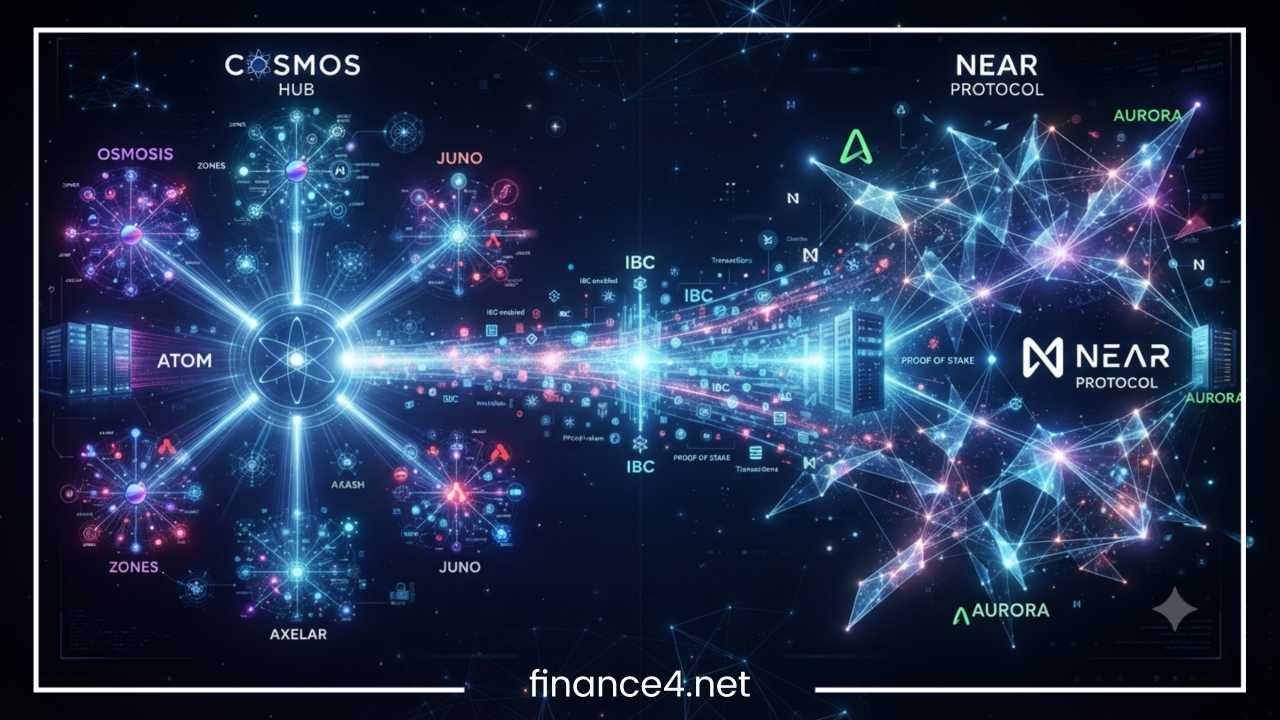
How to Bridge Cosmos to NEAR Protocol | Web3 Guide
The continuous expansion of the decentralized web relies heavily on cross-chain interoperability. Users frequently look for ways to navigate between distinct blockchain ecosystems to access specialized liquidity pools, decentralized applications, and unique financial instruments. Bridging assets from the Cosmos ecosystem to NEAR Protocol is a primary pathway for participants aiming to leverage high-speed transactions, user-friendly account abstractions, and growing decentralized finance opportunities on NEAR.
As the multi-chain landscape matures, the necessity to move capital fluidly across disparate consensus layers becomes paramount. Historically, blockchains operated as isolated silos, unable to communicate or share state without centralized intermediaries. Today, advanced cryptographic bridging mechanisms, trust-minimized relayers, and cross-chain messaging protocols allow assets to traverse sovereign network boundaries securely.
This comprehensive guide breaks down the core architecture of both networks, explains how bridging mechanisms operate, outlines wallet preparation requirements, details the step-by-step process required to execute cross-chain transfers safely, explores advanced optimization strategies, and provides deep technical insight into the evolving world of blockchain interoperability.
Cosmos and NEAR Protocol Architecture
Understanding how assets move across networks requires a foundational look at how Cosmos and NEAR Protocol operate independently, as their distinct structural frameworks dictate how cross-chain communication must be engineered.
Cosmos functions as an ever-expanding ecosystem of independent, application-specific blockchains. Rather than forcing all decentralized applications onto a single congested network, Cosmos utilizes the Cosmos SDK and the Inter-Blockchain Communication protocol. This architectural design allows individual chains, such as the Cosmos Hub, Osmosis, Celestia, and Injective, to maintain sovereign security while communicating seamlessly through standardized cryptographic channels. Each chain in the Cosmos network operates with its own validator set, consensus rules, and governance structure, yet they achieve interoperability by sharing a common packet-acknowledgment standard governed by IBC light clients.
NEAR Protocol takes a fundamentally different architectural approach, emphasizing horizontal scalability through dynamic sharding. NEAR divides the network infrastructure into multiple shards—Nightshade sharding—to handle parallel transaction processing. As network demand increases, the protocol adjusts shard capacity dynamically to maintain high throughput and low latency. Furthermore, NEAR utilizes an account-based model with built-in account abstraction, allowing human-readable addresses and flexible security permissions without requiring users to manage complex cryptographic key pairs directly.
Connecting these two distinct paradigms requires dedicated bridge protocols that can read cryptographic proofs from Cosmos-based IBC channels, interpret validator signatures, and map corresponding asset representations onto NEAR accounts via smart contracts deployed on the sharded runtime.
Why Bridge Assets From Cosmos to NEAR
Moving assets from Cosmos networks to NEAR Protocol opens up several strategic advantages for Web3 participants, expanding portfolio utility beyond single-ecosystem limitations.
-
Access to NEAR decentralized applications: Users can tap into high-performance lending markets, automated market makers, derivative trading platforms, and yield aggregators deployed within lumens of the NEAR ecosystem.
-
Diversified yield opportunities: Cross-chain liquidity deployment allows asset holders to earn attractive yields, participate in liquidity mining programs, or engage in governance across alternative networks without liquidating their original holdings.
-
Utilizing chain abstraction features: NEAR offers streamlined account management tools that simplify cross-chain interactions, making it easier to manage multi-chain portfolios from a single unified entry point without navigating complex gas mechanics on every hop.
-
Optimizing transaction costs: Leveraging networks with highly efficient fee structures allows users to execute high-frequency operations, microtransactions, and complex smart contract interactions without exhausting capital on excessive gas fees.
-
Unlocking multi-chain composability: Bridging assets enables users to combine tokens originating from sovereign Cosmos app-chains with native NEAR assets, creating novel financial primitives and trading strategies.
How Cosmos-to-NEAR Bridging Works
Cross-chain asset transfers involve moving tokens across independent consensus environments. Because a native token on a Cosmos chain cannot natively exist on NEAR, bridge infrastructure handles the transaction through specialized routing mechanisms, token locking, and cryptographic verification.
The process typically follows a structured lifecycle. First, a user initiates a transaction that deposits or locks tokens into a secure smart contract or custody vault on the source Cosmos chain. Validators or decentralized relayers observe this transaction and capture the cryptographic proof of the lock event. Once the proof is validated against the source chain state, a corresponding wrapped or synthetic asset is minted on NEAR Protocol via a smart contract and delivered directly to the user destination address.
Conversely, when bridging back from NEAR to Cosmos, the wrapped assets on NEAR are burned, triggering a cryptographic message that releases or unlocks the native tokens on the original Cosmos chain. Understanding this lifecycle helps users recognize why network confirmations can occasionally take time during periods of heavy validator traffic or network congestion.
What You Need Before Bridging
Proper preparation prevents common transaction errors, stuck transfers, and unnecessary security risks. Before initiating a cross-chain transfer, ensure you have secured the following elements:
-
A compatible Cosmos wallet: Depending on the exact source chain you are using, you will need a non-custodial wallet configured for the Cosmos ecosystem, such as Keplr, Leap, or Cosmostation. Ensure your recovery phrase is safely stored offline.
-
A NEAR wallet: An active, funded NEAR account or wallet interface (such as MyNEARWallet or alternative supported providers) capable of interacting with decentralized applications and holding native NEAR tokens alongside bridged assets.
-
Source-chain gas tokens: Ensure your Cosmos wallet holds a small surplus of the native token (such as ATOM, OSMO, or INJ) to pay for the initial transaction and network fees required to broadcast the bridge deposit.
-
Destination-chain gas tokens: Keep a minimal amount of native NEAR in your destination account to cover transaction execution fees when interacting with NEAR smart contracts after the bridge completes. Without native gas on the receiving end, you may find your bridged tokens stranded.
-
Verified token contract addresses: Always cross-reference official documentation to ensure you are interacting with legitimate asset representations and verified smart contract addresses on both networks.
How to Bridge Cosmos to NEAR Step by Step
Executing a successful cross-chain transfer requires careful attention to each stage of links in the user journey. Follow this structured workflow to move assets securely across networks:
-
Select a trusted cross-chain bridge: Navigate to an established bridge aggregator or routing protocol that officially supports pathways between Cosmos-based chains and NEAR Protocol.
-
Connect your Cosmos wallet: Click the connect wallet button on the bridge interface, select your specific Cosmos wallet provider, review the permission requests, and authorize the connection.
-
Connect your NEAR wallet: Link your NEAR account to the bridge application to establish the destination endpoint for your transferred assets.
-
Configure the source network: Choose the specific Cosmos network and token you wish to send from your portfolio, ensuring your wallet is actively viewing the correct chain.
-
Configure the destination network: Select NEAR Protocol as the target ecosystem and ensure your correct NEAR address populates the recipient field automatically or via manual entry.
-
Specify the transfer amount: Enter the exact quantity of tokens you intend to bridge, keeping transaction limits, minimum requirements, and network liquidity depth in mind.
-
Review fees and routing details: Examine the estimated gas costs, protocol fees, slippage parameters, and expected output amount displayed on the review screen before confirming.
-
Approve and execute the transaction: Confirm the prompt in your Cosmos wallet to broadcast the deposit transaction to the source chain and sign the execution payload.
-
Monitor cross-chain confirmation: Allow the decentralized relayers and light clients sufficient time to verify the block headers, validate cryptographic proofs, and mint equivalent assets on the destination network.
-
Verify funds in your NEAR wallet: Check your NEAR account balance to ensure the bridged tokens have arrived successfully before executing downstream dApp interactions or deploying liquidity.
Choosing a Cosmos-to-NEAR Bridge
Evaluating bridge options requires analyzing multiple technical and operational criteria to safeguard your capital against systemic vulnerabilities. Consider the following factors when selecting a routing platform:
| Evaluation Metric | Key Consideration |
| Supported Assets | Confirm whether the bridge handles your specific token directly or requires an intermediate swap into a generalized routing asset. |
| Security Architecture | Review whether the bridge relies on decentralized multi-sig validators, optimistic verification, fraud proofs, or trust-minimized light-client proofs. |
| Liquidity Depth | Check overall pool capacity to avoid high price impact, excessive slippage, or failed large-scale transfers during periods of high volatility. |
| Protocol Audits | Verify that smart contracts and relayer networks have undergone rigorous third-party security audits by reputable blockchain security firms. |
| Fee Structure | Compare flat network gas fees, protocol percentage cuts, and hidden slippage costs to ensure cost-efficiency for your transfer size. |
Fees, Limits, and Transaction Times
Cross-chain transfers involve multiple cost centers and operational timelines that vary depending on network congestion, validator loads, and protocol design.
Users must pay gas fees on the source Cosmos chain to initiate the locking or burning process. Additionally, the bridge protocol may deduct a small service fee to compensate relayers, validators, or liquidity providers for maintaining the cross-chain infrastructure. Destination-chain execution on NEAR also requires minor gas allocations to process the incoming minting transaction.
Transaction times depend heavily on block finality across both networks. While Cosmos chains typically achieve rapid finality within seconds, cross-chain verification can take anywhere from a few minutes to half an hour if relayer queues experience high volumes, if network traffic spikes, or if strict minimum confirmation block counts are enforced by the bridge security model. Always verify minimum and maximum transfer limits prior to initiation to prevent funds from getting locked in out-of-bounds requests or triggering manual recovery procedures.
Common Problems and How to Fix Them
Navigating complex cross-chain environments can occasionally lead to unexpected bottlenecks, failed broadcasts, or delayed settlements. Review these common issues and mitigation strategies to resolve problems efficiently:
-
Pending transactions: If a transfer remains stuck in a pending state, check the source chain explorer using the transaction hash to verify whether it successfully broadcasted and cleared consensus.
-
Insufficient destination gas: If tokens arrive on NEAR but you cannot move or trade them, you likely lack native NEAR tokens to pay for execution gas. Transfer a small amount of NEAR to the account to cover network fees.
-
Wrong network selection: Sending funds to an incorrect address format, mistyping a destination memo, or using a mismatched network layer can result in temporary loss of access or locked assets. Always double-check chain parameters before confirming.
-
Unsupported tokens: Attempting to bridge non-standard tokens, meme coins, or custom assets that lack dedicated liquidity pools on the bridge protocol will cause transaction failures. Stick to primary, highly liquid assets with official support.
-
Relayer downtime: Occasionally, decentralized relayers responsible for passing state proofs may experience temporary outages. Waiting for network recovery or checking the bridge status dashboard usually resolves these delays without manual intervention.
Security Best Practices
Protecting digital assets during cross-chain operations requires maintaining strict operational security habits and remaining vigilant against evolving attack vectors in the Web3 space.
Always verify URLs, domain names, and application links meticulously to avoid falling victim to phishing sites designed to mimic popular bridge interfaces. Bookmark official links directly and avoid clicking sponsored search engine advertisements that frequently lead to malicious clone sites.
Test new or unfamiliar bridge routes with small nominal amounts before transferring significant capital. Never share your seed phrase, private keys, or secret recovery credentials with any web application, customer support agent, or community moderator under any circumstance. Regularly review and revoke unnecessary smart contract token allowances and permissions in your wallet settings after completing cross-chain operations to minimize long-term exposure risks.
Cosmos to NEAR vs Other Interoperability Routes
Moving assets directly between Cosmos and NEAR represents one method of cross-chain mobility, but participants frequently weigh alternative pathways depending on their specific portfolio objectives and risk tolerance.
Using centralized exchanges as an intermediate step allows users to trade tokens directly into supported networks without interacting with complex smart contract bridges. However, this approach introduces counterparty risk, requires identity verification, imposes withdrawal limits, and sacrifices self-custody principles during the transit phase.
Direct cross-chain bridges eliminate intermediaries entirely and keep assets strictly non-custodial, but they shift the responsibility of security management, transaction accuracy, and risk assessment directly onto the user. Evaluating these trade-offs ensures you select the most efficient and secure route for your long-term portfolio management strategy.
Advanced Cross-Chain Strategies and Liquidity Management
Beyond basic token transfers, experienced Web3 participants often utilize cross-chain bridging as part of broader liquidity management and yield optimization strategies. When moving assets from Cosmos to NEAR, understanding how liquidity pools operate on both ends can significantly impact capital efficiency.
For instance, transferring assets into NEAR-based decentralized finance protocols allows users to participate in cross-chain lending markets where assets originating from Cosmos can be utilized as collateral. However, users must account for the risk of liquidations if the price of the bridged asset fluctuates against the underlying collateral requirements on the destination chain. Furthermore, utilizing cross-chain aggregators can help identify optimal routing paths that minimize price slippage and aggregate liquidity across multiple decentralized exchanges simultaneously.
Maintaining a disciplined approach to asset allocation across chains ensures that your portfolio remains balanced, mitigating systemic risks associated with smart contract vulnerabilities on individual bridge protocols.
The Role of Validators and Relayers in Cross-Chain Security
The security of any bridge connecting Cosmos to NEAR relies heavily on the underlying architecture of its validators and relayers. Unlike traditional centralized bridges that rely on a single custodian to hold locked funds, modern trust-minimized bridges utilize cryptographic verification models.
Relayers are off-chain actors that listen for events on the source chain and submit proof of those events to the destination chain. In a light-client bridge, the destination chain runs a cryptographic verification module that checks the consensus proofs of the source chain directly, ensuring that no intermediary can forge transactions. In contrast, multi-sig or threshold signature bridges rely on a decentralized committee of validators to sign off on transfers.
Understanding these security assumptions helps users evaluate the risk profile of the bridge they choose. Opting for protocols with decentralized validator sets and open-source verification code significantly reduces the likelihood of catastrophic bridge exploits.
Comprehensive Overview of Multi-Chain Routing Economics
Analyzing the underlying economic forces of cross-chain routing reveals why transaction execution costs fluctuate dynamically across different block heights and network conditions. When transferring tokens from the Cosmos ecosystem to NEAR Protocol, the total economic toll includes source chain state transition fees, validator commission allocations, relayer execution incentives, and destination minting gas allocations.
Because Cosmos app-chains utilize distinct gas tokens and fee markets, users must calculate the optimal denomination to hold in their origin wallet prior to broadcasting a transfer. For instance, interacting with high-throughput application zones like Osmosis requires holding sufficient OSMO to cover state transition broadcasts, whereas executing transfers originating from the Cosmos Hub requires native ATOM balances.
Furthermore, bridge protocols often implement dynamic fee models that scale proportionally with network congestion and gas price volatility on the destination NEAR runtime. Understanding these fee mechanisms ensures that participants do not encounter unexpected shortfalls or transaction execution halts midway through the cross-chain settlement pipeline.
Mitigating Slippage and Liquidity Depth Risks in Cross-Chain Swaps
When executing complex cross-chain transfers that involve token swaps alongside bridging operations, liquidity depth becomes a critical factor influencing overall asset recovery rates. If a bridge protocol lacks sufficient liquidity for a specific Cosmos asset on the NEAR destination side, the transaction can experience severe price slippage or partial execution failures.
Experienced participants mitigate these risks by splitting large-scale transfers into smaller tranches, utilizing multi-chain liquidity aggregators that automatically route transactions through the most robust liquidity pools available, and verifying pool utilization metrics before committing capital. Additionally, monitoring order book depth and decentralized exchange liquidity on the destination network prevents unexpected capital loss during periods of extreme market volatility.
Deep Dive into IBC Architecture and Near Interoperability Layers
To fully appreciate the mechanics of moving value between Cosmos and NEAR, one must examine the role of Inter-Blockchain Communication (IBC) standards and how external environments interface with NEAR runtime environments. IBC relies on the concept of client, connection, and channel abstractions, establishing a cryptographically secure message-passing protocol between distinct state machines.
When establishing cross-chain routes to NEAR, relayers bridge the gap by anchoring IBC state proofs into NEAR smart contracts, allowing the destination shard environment to verify that a lock or burn event genuinely occurred on the source Cosmos chain. This architecture eliminates the need for trusted third parties, replacing human custody with mathematical verification and cryptographic proofs.
Operational Risk Analysis for DeFi Participants Across Chains
Engaging in multi-chain yield farming and cross-chain asset deployment introduces distinct operational risks that extend beyond standard smart contract vulnerabilities. Users must evaluate bridge finality assumptions, potential re-org vulnerabilities on source app-chains, and the stability of wrapped token peg mechanisms. If a bridge validator set experiences a catastrophic failure or censorship event, bridged assets can temporarily lose their backing, resulting in depegging phenomena on destination decentralized exchanges. Maintaining rigorous risk management frameworks, diversifying across multiple bridging protocols, and keeping informed of governance proposals within both the Cosmos and NEAR communities remain vital practices for safeguarding capital.
Final Thoughts
Bridging assets from the Cosmos ecosystem to NEAR Protocol bridges the critical gap between sovereign app-chains and high-throughput sharded architecture. By understanding the underlying mechanics, preparing the correct wallet infrastructure, and following disciplined security protocols, participants can navigate multi-chain environments efficiently and securely.
Always verify supported token lists, monitor network gas conditions, review protocol security audits, and double-check destination addresses to ensure seamless cross-chain execution. As interoperability standards continue to evolve, mastering these workflows remains an essential skill for navigating the decentralized economy.
What specific tokens or NEAR decentralized applications are you planning to explore after completing your cross-chain transfer?
Frequently Asked Questions
What is the best cross-chain bridge to transfer tokens from Cosmos to NEAR Protocol?
Choosing the best routing platform depends on the specific asset you are moving, liquidity depth, and security architecture. Top cross-chain aggregators and decentralized bridge protocols utilize decentralized validator sets or light-client verification to securely map tokens between Cosmos-based app-chains and the NEAR sharded runtime without relying on centralized custodians.
How long does it take to bridge assets from the Cosmos ecosystem to NEAR?
Transfer times typically range from a few minutes to half an hour. The exact duration depends on source chain block finality, decentralized relayer queue volume, and destination network confirmation requirements. While Cosmos chains achieve rapid finality, cross-chain state proof verification on NEAR can occasionally experience slight delays during peak network traffic.
Do I need native NEAR tokens in my wallet to complete a cross-chain transfer?
Yes. Although your bridged assets will arrive in your destination account, you must hold a minimal amount of native NEAR to pay for execution gas when interacting with decentralized applications or moving funds further. Similarly, you need native gas tokens on your origin Cosmos chain to broadcast the initial deposit transaction.
What should I do if my bridged tokens do not appear in my NEAR wallet?
If your transfer shows as successful on the source chain explorer but the funds have not appeared on NEAR, first check the bridge status dashboard for relayer delays. Verify that you added the correct token contract address to your NEAR wallet interface and ensure your destination account has sufficient native gas for state updates.
Is it safe to bridge crypto assets between Cosmos app-chains and NEAR?
Cross-chain transfers are generally secure when utilizing audited, trust-minimized protocols that rely on cryptographic proofs rather than single-sig custodians. To maximize safety, always double-check official URLs to avoid phishing clones, verify smart contract audit reports, and test new routing pathways with small nominal amounts before transferring large capital allocations.