Best Bridging Aggregator for Near-to-TRON
 by
by 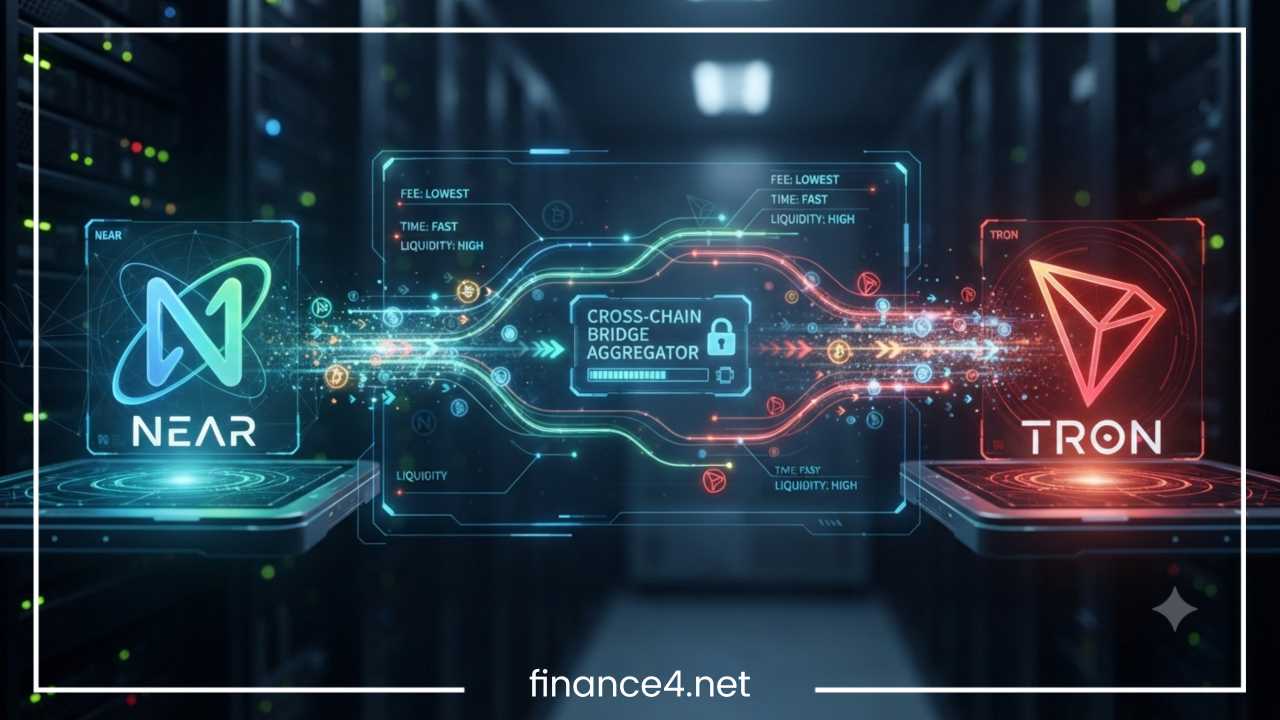
Why NEAR-to-TRON Bridging Matters and the Expanding Multi-Chain Horizon
Navigating the multi-chain digital asset landscape requires moving value across vastly different blockchain ecosystems with minimal friction, optimal routing efficiency, and maximum security guarantees. Among the various transfer corridors emerging in modern decentralized finance, connecting the NEAR Protocol to the TRON network has grown significantly in popularity. Users frequently search for a reliable NEAR to TRON bridge to capitalize on unique ecosystem features, high-yield liquidity pools, fast settlement paths, and specialized application environments.
NEAR Protocol is widely recognized for its high scalability, developer-friendly environment, account abstraction model, and advanced chain abstraction stack. TRON, on the other hand, stands out for its massive stablecoin volume—particularly USDT—and its high-throughput architecture optimized for fast, low-cost token transfers. Moving assets between these two distinct networks can present unique operational challenges. Because NEAR and TRON operate on entirely different consensus mechanisms, underlying architectures, and address formats, you cannot simply send tokens from a NEAR wallet directly to a TRON address without specialized conversion infrastructure.
This is where a cross-chain bridging aggregator comes into play. Instead of forcing users to manually evaluate dozens of independent bridges, an aggregator acts as an intelligent routing and execution layer. It scans multiple liquidity sources and bridging protocols simultaneously to find the most efficient, cost-effective path for your assets. This article explores the mechanics of cross-chain transfers, why aggregators simplify the process, and how you can select the best infrastructure for your needs using key terms like NEAR to TRON, bridge NEAR to TRON, and cross-chain transfer.
What Is a NEAR-to-TRON Bridge and Why Is Architecture Important?
At its core, a cross-chain bridge is a protocol or set of smart contracts that enables the transfer of information and value between two separate blockchain networks. Because independent blockchains operate as isolated environments and cannot natively communicate with one another, bridges solve the fundamental interoperability problem that has historically fragmented liquidity across different layer one and layer two networks.
When discussing a NEAR to TRON bridge, it is crucial to understand how assets are represented across chains. A token native to NEAR cannot exist natively on TRON unless it is locked securely on the source chain and minted as a wrapped representation on the destination chain, or swapped through a decentralized liquidity network that releases native tokens on TRON in exchange for locked assets on NEAR.
The process typically involves several critical components:
-
Smart contracts that lock, burn, or escrow tokens on the source network under strict cryptographic rules.
-
Relayers, decentralized validators, or solver networks that verify the state change and communicate it across chains without single points of failure.
-
Liquidity pools or minting mechanisms that release the corresponding asset on the destination network in a trust-minimized manner.
It is also helpful to distinguish between a standard bridge and a cross-chain swap. A traditional bridge often moves the exact same asset across chains, sometimes resulting in wrapped tokens that carry distinct security assumptions and liquidity fragmentation risks. A cross-chain swap, by contrast, might exchange a token on NEAR for a completely different token on TRON in a single transaction path, utilizing decentralized exchange liquidity alongside native bridging infrastructure.
What Is a Bridging Aggregator and How Does It Function?
A bridging aggregator is an advanced meta-layer in decentralized finance designed to optimize cross-chain routing. While a single bridge connects Chain A to Chain B through one specific path, an aggregator connects to multiple bridges, decentralized exchanges, and liquidity networks simultaneously.
When you initiate a transfer, the aggregator queries all available routes between NEAR and TRON to present you with optimized execution parameters. Instead of visiting five different bridge websites to compare rates manually, you use a unified interface that acts as a comparison engine and execution router.
Aggregators evaluate routes based on multiple variables:
-
Fees: Comparing network gas costs and protocol fees across different underlying paths to prevent hidden overhead.
-
Liquidity: Ensuring the chosen route can handle the transfer size without causing severe price impact or unexpected slippage.
-
Slippage: Minimizing losses due to market fluctuations during the transfer window and cross-chain settlement period.
-
Transfer Speed: Factoring in how many block confirmations each underlying bridge requires before releasing funds.
-
Reliability: Prioritizing protocols with strong uptime, robust validator sets, and clean security track records.
-
Destination Amount: Maximizing the final amount of tokens you receive in your TRON wallet after all deductions.
By automating this discovery phase, an aggregator removes the friction of manual research, helping users find optimal execution paths for their cross-chain transactions without needing deep technical knowledge of every underlying protocol.
Why Use an Aggregator for NEAR-to-TRON Transfers?
Utilizing an aggregator for your NEAR-to-TRON transfers offers several practical benefits compared to relying on a single, standalone bridge.
Better Route Discovery
Instead of checking multiple bridges individually to see which one currently supports your specific token pair, an aggregator instantly scans the entire market. It reveals paths that you might not have found through manual searching.
Potentially Lower Costs
Because aggregators compare available routes side by side, they help you identify more economical options. You can instantly spot paths with lower bridge fees or more favorable exchange rates, reducing unnecessary overhead.
Better Liquidity Management
Large transfers can easily overwhelm shallow liquidity pools on individual bridges, leading to high slippage. Aggregators can split routes across multiple liquidity sources or route transactions through paths with deeper reserves, ensuring better execution for larger amounts.
Faster Transfers
Different bridges rely on different validation mechanisms, ranging from instant optimistic confirmations to slower multi-signature verifications. An aggregator allows you to factor estimated settlement times into your decision, letting you choose between the absolute cheapest route or the fastest one.
Simplified User Experience
Navigating multiple bridge platforms requires managing different user interfaces, trusting various smart contracts, and learning unique workflows. An aggregator provides a unified interface, streamlining the entire process from start to finish.
How NEAR-to-TRON Cross-Chain Transfers Work Behind the Scenes
Understanding the underlying mechanics of a cross-chain transfer helps demystify what happens after you click confirm. While the user interface makes the process look simple, a series of cryptographic and computational steps take place behind the scenes.
When you execute a transfer through an aggregator, the workflow typically follows a structured path:
-
Wallet Connection: You connect your NEAR-compatible wallet to the aggregator interface and provide your destination TRON address.
-
Route Selection: The aggregator queries available liquidity pools and bridge protocols, displaying the expected output, fees, and transfer time.
-
Source-Chain Transaction: You approve and sign the transaction on the NEAR network. Your source tokens are deposited into a smart contract or liquidity pool.
-
Bridge Messaging and Validation: Relayers, validators, or decentralized oracle networks detect the deposit on NEAR and transmit a cryptographic proof or message to the TRON network.
-
Destination-Chain Settlement: Once the proof is verified on TRON, the equivalent tokens are released from a liquidity pool or minted to your destination address.
-
Confirmation: The transaction status updates on the aggregator interface, and you verify the receipt of funds in your TRON wallet.
Throughout this process, the aggregator coordinates the communication layer, ensuring that the smart contracts on both chains interact correctly without requiring manual intervention from the user.
Key Factors When Choosing the Best NEAR-to-TRON Bridging Aggregator
Selecting the best NEAR to TRON bridge aggregator requires evaluating several performance and security criteria. The right choice depends on your specific transfer size, token choice, and priority regarding speed versus cost.
| Factor | What to Look For |
| Supported assets | Does the platform support the specific token you need to move? |
| Network support | Native integration with both NEAR Protocol and the TRON network |
| Fees | Transparent breakdown of total costs without hidden charges |
| Slippage | Low expected execution impact, especially for larger transfers |
| Liquidity | Sufficient depth to handle your transfer amount smoothly |
| Speed | Estimated transfer and settlement time displayed upfront |
| Security | Independent smart contract audits and a clean operational track record |
| Route selection | Multiple bridge and liquidity options to compare |
| Wallet support | Compatibility with your preferred NEAR and TRON wallets |
| Transaction tracking | Real-time status monitoring for cross-chain progress |
| User experience | Simple, intuitive, and transparent interface design |
When evaluating these factors, always prioritize security and transparency over raw speed or minimal fees. An aggregator that clearly displays its fee structure and utilizes audited underlying bridges protects you from unexpected costs and potential exploits.
Fees, Slippage, and Exchange Rates: What Does a NEAR-to-TRON Transfer Really Cost?
Users frequently focus solely on the advertised bridge fee, only to find that the final amount received in their wallet is lower than expected. A comprehensive understanding of cross-chain costs requires looking at the total transaction cost equation.
A typical cross-chain transfer can involve several distinct cost components:
-
Network/Gas Fees: Paid to validators on the NEAR network to execute the source transaction, and transaction energy/bandwidth fees on the TRON network where applicable.
-
Bridge Fees: Charged by the underlying protocol for facilitating cross-chain messaging and asset transfers.
-
Aggregator Fees: Service fees charged by some aggregators for routing optimization.
-
Liquidity-Provider Fees: Fees paid to automated market makers or liquidity pools when swaps are involved.
-
Slippage: The difference between the expected price of a trade and the execution price, driven by market volatility and pool depth.
-
Exchange-Rate Spread: The variance introduced when converting between different token types across chains.
You can conceptualize the final outcome with a basic calculation framework:
Amount sent minus network fees minus bridge and swap costs minus slippage equals approximate amount received.
Because fee structures vary dynamically based on network congestion and market conditions, always review the final quoted output on the aggregator interface before signing any transaction.
Security Considerations When Bridging NEAR to TRON
Cross-chain bridges and aggregators represent high-value targets for malicious actors. Understanding security risks is essential for protecting your digital assets when performing cross-chain transfers.
Key security factors to keep in mind include:
-
Smart-Contract Risk: Every bridge and aggregator relies on complex smart contracts. Bugs or vulnerabilities in these contracts can lead to exploits.
-
Underlying Bridge Security: An aggregator is only as secure as the underlying bridges it utilizes. Even if an aggregator has strong security practices, a route routed through a compromised bridge carries inherent risk.
-
Custodial vs. Non-Custodial Infrastructure: Prioritize non-custodial aggregators where you retain control of your private keys throughout the transfer process rather than depositing funds into centralized intermediary accounts.
-
Phishing and Fake Websites: Malicious actors frequently purchase ads or create lookalike domains mimicking popular bridge aggregators. Always verify URLs carefully.
-
Destination Address Accuracy: Cross-chain transactions are generally irreversible. Entering an incorrect TRON address means your funds could be permanently lost.
-
Token Contract Verification: Ensure you are bridging legitimate token contracts rather than scam tokens with identical tickers.
-
Test Transfers: When using a new or unfamiliar aggregator, always execute a small test transfer with a minimal amount before moving larger sums.
Step-by-Step: How to Bridge from NEAR to TRON
Executing a cross-chain transfer smoothly requires a methodical approach. Follow these steps to complete your transfer safely and efficiently.
Step 1: Choose a Reputable Aggregator
Research and select a well-established bridging aggregator that supports both NEAR and TRON. Verify that you are visiting the official website by checking community channels or trusted crypto directories.
Step 2: Connect Your Wallet
Open the aggregator interface and connect your NEAR wallet. Ensure you are connected to the correct network and that your wallet has enough native NEAR tokens to cover initial gas fees.
Step 3: Select NEAR as the Source
Set NEAR as your source network, choose the specific token you wish to transfer, and enter the desired amount.
Step 4: Select TRON as the Destination
Set TRON as your destination network. Carefully input or verify your destination TRON wallet address. Double-check the first and last several characters of the address to ensure accuracy.
Step 5: Compare Available Routes
Review the routes displayed by the aggregator. Evaluate the expected token output, total fees, estimated transfer time, and the underlying bridge infrastructure for each option.
Step 6: Review the Transaction Parameters
Carefully check all details on the final confirmation screen, including slippage tolerance and estimated arrival times.
Step 7: Confirm the NEAR Transaction
Approve and sign the transaction within your NEAR wallet. Wait for the transaction to achieve confirmation on the NEAR blockchain.
Step 8: Wait for Cross-Chain Settlement
Allow the cross-chain infrastructure to process the transfer. Depending on the chosen route, this may take anywhere from a few minutes to a short while. Avoid closing your browser tab prematurely if ongoing monitoring is recommended.
Step 9: Verify Funds on TRON
Check your TRON wallet to confirm that the funds have arrived successfully. You can also track the destination transaction hash on a TRON blockchain explorer for complete verification.
Common Problems With NEAR-to-TRON Bridging
Even with the best aggregators, users occasionally encounter friction during cross-chain transfers. Being prepared for these common issues can prevent panic and guide your troubleshooting steps.
-
Insufficient Liquidity: If you attempt to transfer a large amount, a route might fail or display high slippage because a liquidity pool lacks adequate depth. Splitting your transfer into smaller batches can sometimes resolve this.
-
Temporary Route Unavailability: Network congestion or smart contract upgrades can cause specific bridge routes to go offline temporarily. Aggregators will typically disable these routes until they stabilize.
-
Delayed Confirmations: Cross-chain messaging can experience delays during periods of heavy network traffic on either NEAR or TRON. If a transaction appears stuck, check the transaction status on official blockchain explorers rather than immediately initiating a duplicate transfer.
-
Failed Transactions: If a transaction fails due to out-of-gas errors or slippage limits exceeded, your funds usually remain in your source wallet, though network gas fees for the attempted transaction are generally non-refundable.
-
Incorrect Destination Address: Submitting funds to an invalid or mismatched address is often irreversible. Always triple-check your destination details before signing.
If your transfer appears delayed, check the status on the aggregator tracking page or look up the transaction hash on a block explorer before attempting any alternative actions.
NEAR-to-TRON Bridge vs. Centralized Exchange
When moving assets between NEAR and TRON, users often debate whether to use a decentralized bridging aggregator or a centralized exchange (CEX). Each approach has distinct trade-offs.
| Feature | Bridging Aggregator | Centralized Exchange |
| Self-custody | Maintained throughout the process | Funds are held by the exchange during transfer |
| KYC requirements | Often not required, depending on the service | Usually mandatory for account creation and withdrawals |
| Direct cross-chain routing | Yes, executed via smart contracts and liquidity pools | Usually requires deposit, trade, and withdrawal steps |
| Route aggregation | Automatically compares multiple paths | Limited to exchange internal liquidity and pairs |
| Convenience | High for web3-native users | High for users already holding accounts on the platform |
| Asset availability | Depends on active cross-chain routes and pools | Depends entirely on exchange listing policies |
Centralized exchanges work well for users who already completed identity verification and prefer custodial management. However, bridging aggregators are generally preferred by participants who value self-custody, privacy, and direct wallet-to-wallet execution without relying on third-party custodians.
Best Practices for Fast and Secure NEAR-to-TRON Transfers
Adopting a disciplined routine ensures that your cross-chain transfers remain fast, efficient, and secure. Keep these best practices in mind every time you move assets:
-
Verify the official aggregator URL before connecting any wallet to avoid phishing scams.
-
Confirm that both your source NEAR network and destination TRON network selections are accurate.
-
Check token contract addresses carefully to avoid sending fake or impersonator tokens.
-
Compare multiple available routes on the aggregator to balance cost and speed effectively.
-
Review the final amount received and account for all associated fees and slippage parameters.
-
Double-check your destination TRON address character by character.
-
Always keep enough native gas tokens in your wallet to cover transaction execution fees.
-
Start with a small test transaction when exploring a new route or aggregator platform.
-
Never share your private keys or seed phrase with any website, support agent, or application.
-
Track your transfer progress using legitimate blockchain explorers rather than unverified links.
Final Thoughts: Choosing the Best NEAR-to-TRON Bridging Aggregator
Navigating the cross-chain space between NEAR Protocol and TRON does not have to be an exercise in frustration. While moving assets across disparate blockchain architectures involves inherent technical complexities, modern infrastructure has made significant strides in simplifying the user experience.
The best NEAR to TRON bridging aggregator is not necessarily the platform that advertises the absolute lowest fee on a single metric. Instead, the right platform provides a balanced combination of competitive execution pricing, sufficient liquidity depth, reliable and audited cross-chain infrastructure, transparent fee breakdowns, strong security practices, and an intuitive user interface.
By evaluating your options against these core criteria, comparing available routes carefully, and adhering to strict security best practices, you can execute fast, secure, and efficient cross-chain transfers between NEAR and TRON with confidence across any market cycle.
Frequently Asked Questions (FAQ)
What is the best way to transfer tokens from NEAR to TRON without losing money on fees?
The most cost-effective method to transfer digital assets across these networks is utilizing a cross-chain bridging aggregator. An aggregator simultaneously scans multiple liquidity paths and protocols to find the route with the lowest network fees, minimal slippage, and optimal exchange rates, preventing you from overpaying on individual bridge costs.
Can I send crypto directly from a NEAR wallet address to a TRON wallet address?
No, you cannot transfer assets directly from a NEAR address to a TRON address because both networks utilize completely different architectures, consensus models, and address formats. You must use a specialized cross-chain bridge or aggregator that handles the intermediary validation, locking, and release mechanism across both networks.
How long do cross-chain transfers from NEAR to TRON usually take?
Transfer settlement times vary depending on network congestion and the underlying routing protocol selected by the aggregator. Most transfers take anywhere from a few minutes to a short while, accounting for source-chain transaction confirmations, cryptographic validator messaging, and destination-chain release.
Are cross-chain bridge aggregators safe to use for large amounts?
While non-custodial aggregators do not hold your private keys, they rely on underlying smart contracts and cross-chain messaging bridges. To protect large funds, users should verify independent protocol audits, check platform track records, avoid unfamiliar routes, and always execute a small test transaction first.
What should I do if my bridged tokens do not appear in my TRON wallet immediately?
If your funds do not arrive instantly, avoid initiating a duplicate transfer. Instead, copy your transaction hash from the source network and check its real-time status on an official blockchain explorer to verify if the cross-chain messaging layer is experiencing temporary network congestion or delayed block confirmations.