Best Cross-Chain Token Management
 by
by 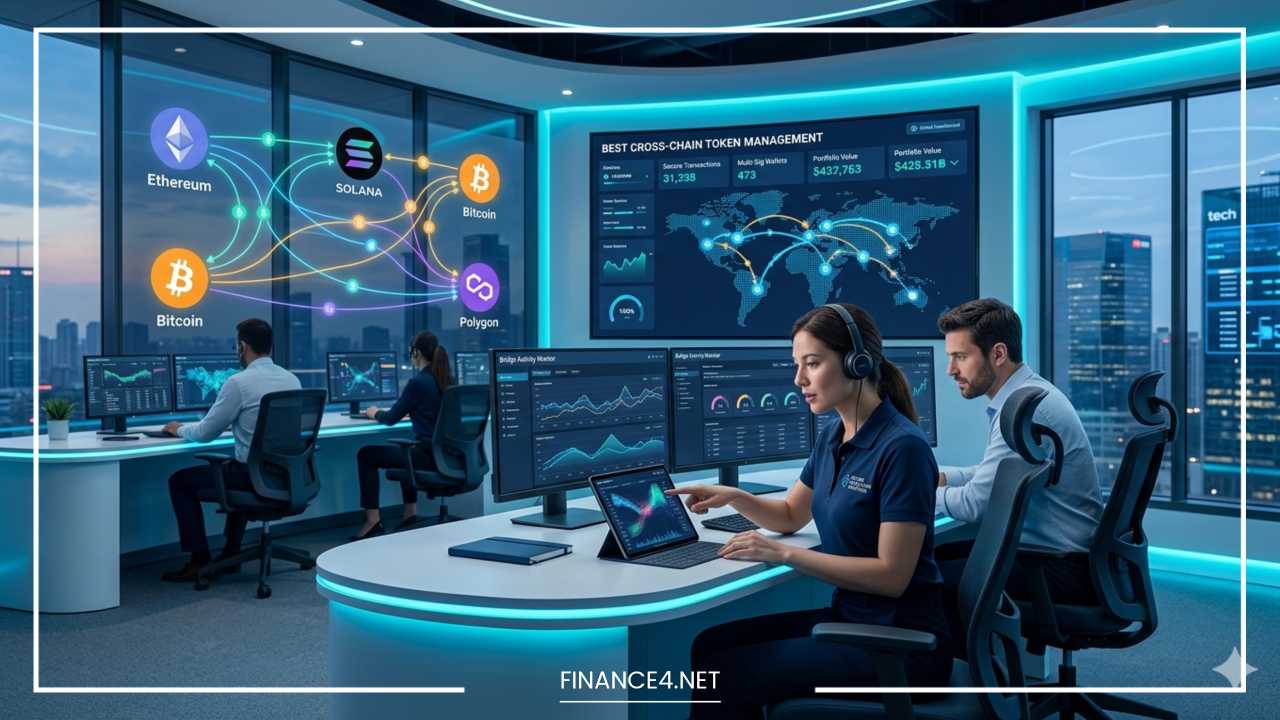
Best Cross-Chain Token Management: Secure Multi-Blockchain Asset Solutions
The decentralized finance (DeFi) and non-fungible token (NFT) sectors have evolved from a single-chain experiment into a complex, multi-layered digital economy. Today, liquidity is no longer confined to the Ethereum mainnet; it is distributed across high-speed Layer-1s like Solana and Avalanche, and various Layer-2 scaling solutions like Arbitrum, Optimism, and Base. This fragmentation has created a significant challenge for users and businesses: how to manage a diverse portfolio of assets without falling victim to security vulnerabilities or drowning in operational complexity.
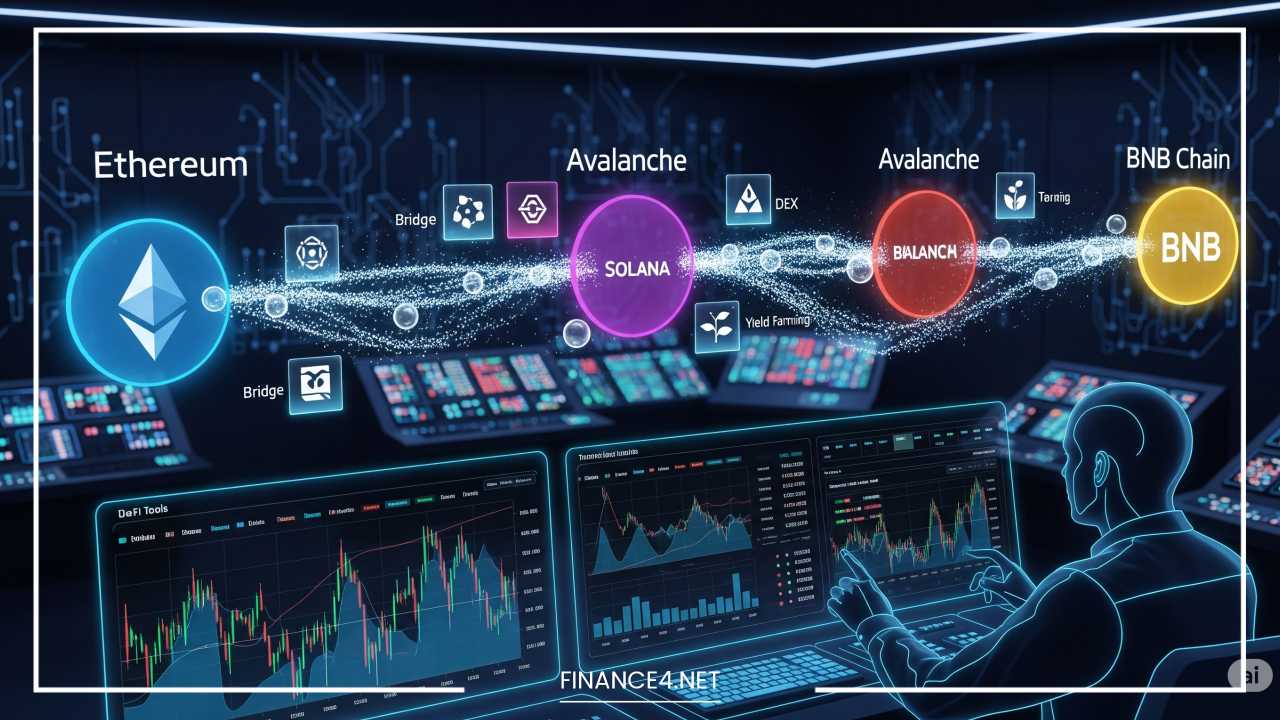
Cross-chain token management is the practice of utilizing specialized software, protocols, and security frameworks to track, transfer, and interact with digital assets residing on different blockchain ledgers from a unified interface. In the early era of cryptocurrency, management was binary—Bitcoin lived in a Bitcoin wallet, and Ether lived in an Ethereum wallet. In the modern landscape, a single user might hold stablecoins on Polygon, governance tokens on BNB Chain, and high-value NFTs on Solana.
The importance of robust cross-chain management cannot be overstated. As the industry moves toward Chain Abstraction—a future where the underlying blockchain is hidden from the end user—the demand for secure and efficient solutions has skyrocketed. For the individual investor, these tools offer a way to maximize yield and portfolio visibility. For businesses and institutional treasuries, they provide the necessary governance, auditability, and risk mitigation required to handle large-scale capital across the “Internet of Blockchains.” This article serves as a comprehensive guide to the best practices and tools available for securing and optimizing multi-blockchain asset strategies.
Managing assets across chains is not merely about convenience; it is about capital efficiency. When your assets are siloed, you miss out on arbitrage opportunities, higher lending rates on nascent chains, and the ability to participate in diverse ecosystems. However, with this opportunity comes a new surface area for attacks. Understanding how to balance the agility of multi-chain movement with the rigidity of top-tier security is the primary goal of any serious market participant.
Understanding Cross-Chain Token Management
To effectively manage multi-chain portfolios, it is essential to understand the technical “glue” that allows these isolated networks to communicate. By architectural design, a blockchain is a closed loop. A transaction on the Ethereum network has no inherent way of affecting the state of the Solana network.
What is a Cross-Chain Token?
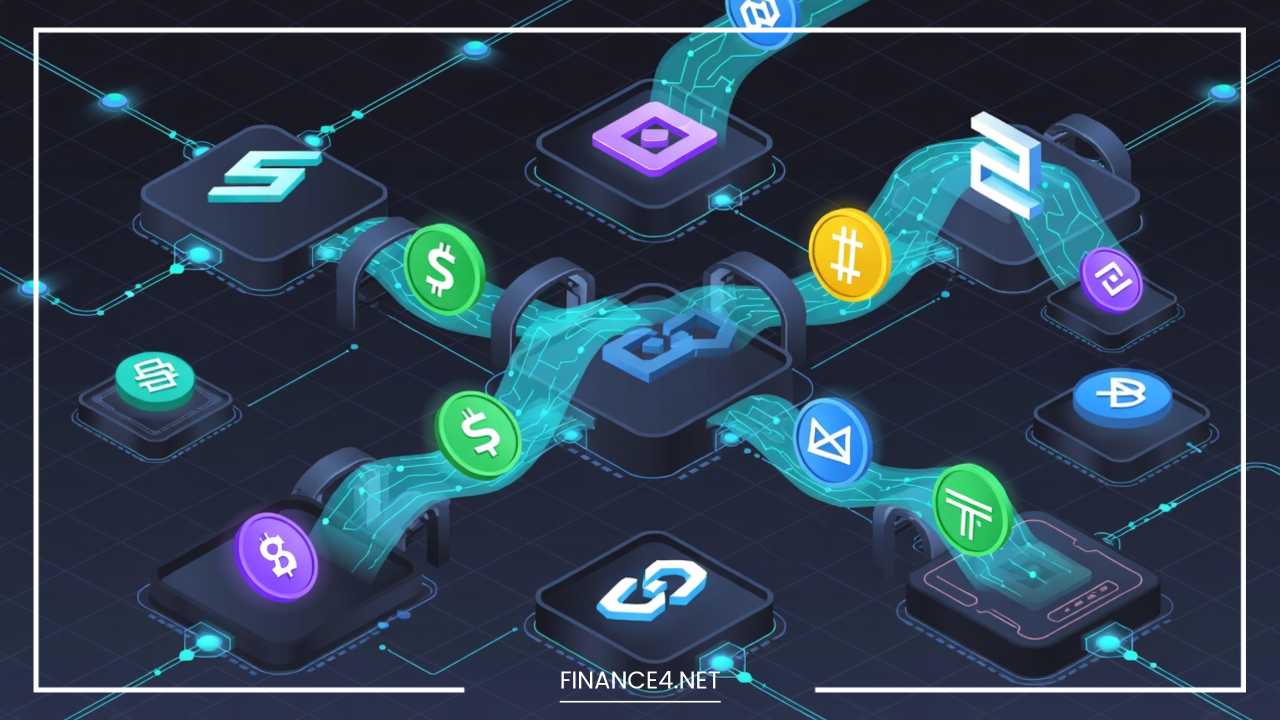
A cross-chain token is an asset that has been bridged or mirrored onto another network. This is typically achieved through three primary methods:
-
Lock-and-Mint: The original asset is locked in a smart contract on the source chain, and an equivalent “wrapped” token (e.g., WBTC) is minted on the destination chain.
-
Burn-and-Mint: The token is permanently destroyed on the source chain, and an identical native version is created on the new chain. This is often used for stablecoins like USDC via the Cross-Chain Transfer Protocol (CCTP).
-
Liquidity Pools: Bridges maintain pools of native assets on both sides. When you send Token A on Chain X, you receive the equivalent native Token A from the pool on Chain Y.
How Blockchain Interoperability Works
Interoperability relies on bridges, sidechains, and relayers. Bridges act as the physical infrastructure for value transfer, while relayers and “oracles” communicate the state of one chain to another.
-
Bridges: These are the most common tools. They can be “Trusted” (dependent on a central entity or set of validators) or “Trustless” (dependent purely on smart contracts and mathematical proofs).
-
Sidechains: Independent networks that run parallel to a mainchain (like Ethereum) and have their own consensus mechanisms but are linked via a two-way bridge.
-
Atomic Swaps: These use Hash Time-Locked Contracts (HTLCs) to allow two parties to trade different cryptocurrencies across different blockchains without a third-party intermediary. If one party fails to meet the requirements of the contract, the funds are returned to the original owners.
The Challenges of Fragmentation
Without dedicated management tools, users face “the multi-tab problem.” This involves:
-
Liquidity Silos: Having $1,000 spread across five chains, making it impossible to buy a $5,000 asset without manual, time-consuming bridging.
-
Gas Friction: The need to hold small amounts of multiple native tokens (ETH, SOL, MATIC, etc.) just to pay for transaction fees. This often leads to “dust” accounts where small, unusable amounts of capital are left behind.
-
Security Risks: Every bridge used is a new point of failure. If the bridge’s vault is compromised, the wrapped tokens in your wallet may lose their peg and become worthless.
-
Operational Overhead: Manually tracking cost basis and tax obligations across twelve different block explorers is nearly impossible for a human to do accurately.
Key Features of Leading Solutions
The best management platforms act as a “command center” for your digital wealth. When selecting a tool, ensure it offers the following core features:
Multi-Chain Wallet Integration
A superior solution must offer Unified Account Management. This allows you to see your total balance across EVM (Ethereum-compatible) and non-EVM chains (like Bitcoin, Cosmos, or Solana) in one view. Modern wallets now use Account Abstraction (ERC-4337) to let users pay gas fees on one chain using tokens they hold on another, or even use social recovery instead of seed phrases.
Seamless Cross-Chain Swap Aggregation
Rather than visiting a bridge website, then a decentralized exchange (DEX), top-tier tools integrate aggregators like Li.Fi, Socket, or 1inch. These tools automatically scan dozens of bridges and DEXs to find the path with the lowest fees and highest speed for your specific transfer. They handle the complex “routing” behind the scenes, so you only see a single “Swap” button.
Institutional-Grade Security
Security is the cornerstone of cross-chain management. Essential protocols include:
-
Multi-Party Computation (MPC): This replaces traditional private keys with “secret shares” distributed across multiple locations (e.g., your phone, your laptop, and a secure server). This ensures that even if one device is hacked, your funds remain safe.
-
Multi-Signature (Multi-sig) Support: For organizations, requiring 3-out-of-5 stakeholders to approve a cross-chain move is a standard safeguard against internal fraud or external hacks.
-
Hardware Compatibility: The ability to sign transactions with physical devices like Ledger or Trezor provides an “air-gapped” layer of protection.
Portfolio Tracking and Real-Time Analytics
Managing assets requires visibility into Net Worth, PnL (Profit and Loss), and Yields. Advanced dashboards aggregate staked positions (e.g., Lido), lending collateral (e.g., Aave), and liquidity provider (LP) positions across all chains. They should provide:
-
Historical Performance: Visualizing how your portfolio has grown over time.
-
Risk Exposure: Showing how much of your capital is concentrated in a single bridge or protocol.
-
Alert Systems: Notifying you if a collateral ratio in a lending protocol is getting too low or if a major hack is detected in a bridge you use.
Ease of Use and User Experience
Cross-chain transactions are inherently complex. A good management tool hides this complexity through:
-
One-Click Bridging: Removing the need to manually switch network settings in your wallet.
-
Human-Readable Transactions: Explaining exactly what a smart contract is going to do before you sign it.
-
Integrated Fiat On-Ramps: Allowing you to buy crypto with a credit card or bank transfer directly into the chain of your choice.
Security Considerations and Risk Management
Cross-chain infrastructure is a “honey pot” for attackers. Bridges often hold billions of dollars in locked collateral, making them the most targeted sector in the crypto industry.
Smart Contract Vulnerabilities
Bridges rely on complex smart contracts to lock and release funds. A single bug in the code can allow an attacker to mint unbacked tokens on a destination chain.
-
The Ronin Bridge Hack: This was a social engineering attack where private keys were stolen from validators, leading to over $600 million in losses.
-
The Wormhole Exploit: A smart contract bug allowed an attacker to bypass the signature verification process and mint $320 million in wrapped ETH on Solana without depositing anything on Ethereum.
Decentralized vs. Centralized Solutions
-
Centralized (Custodial): Often easier to use and offers “reversibility” in some cases. However, you are subject to the solvency and regulatory standing of the provider. If the exchange goes bankrupt, your assets are at risk.
-
Decentralized (Non-Custodial): You maintain 100% control over your keys. The risk here is purely technical (smart contract bugs) or personal (losing your seed phrase).
The Audit Imperative
Users and businesses should only interact with protocols that have undergone multiple third-party audits from reputable firms like Trail of Bits, OpenZeppelin, or ConsenSys Diligence. An audit does not guarantee 100% safety, but it significantly reduces the likelihood of “low-hanging fruit” vulnerabilities. Furthermore, active Bug Bounties on platforms like Immunefi show that a project is willing to pay white-hat hackers to find flaws before malicious actors do.
Bridge Risk Ratings
Not all bridges are created equal. Some use a small set of “trusted” validators, while others use decentralized light clients. Tools like L2Beat or DefiLlama provide risk ratings for different scaling solutions and bridges. A prudent manager will diversify their “bridge risk” by not keeping all their assets in a single wrapped token or using the same bridge for every transaction.
Popular Tools and Platforms
The market has consolidated around several high-performance tools that cater to different user profiles.
Best Multi-Chain Wallets
-
MetaMask: Remains the industry standard. Its “Portfolio” dapp offers excellent cross-chain tracking and a built-in bridge aggregator that supports dozens of chains.
-
Trust Wallet: Owned by Binance, this wallet supports an incredible 70+ blockchains. It is highly favored by mobile users who want to trade obscure tokens across diverse ecosystems.
-
Phantom: While it started as a Solana-only wallet, its expansion to Ethereum and Polygon—and its focus on a “clean” UI—has made it a top contender for multi-chain users.
-
Rabby Wallet: A favorite among DeFi power users. Rabby is designed specifically for dapps, providing a clear breakdown of exactly what each transaction does and checking for potential security risks before you sign.
Bridges and Liquidity Aggregators
-
Stargate Finance: Built on the LayerZero protocol, Stargate enables “Native Asset” swaps. This means you can swap native USDC on Ethereum for native USDT on Avalanche without dealing with the risks of intermediate wrapped tokens.
-
Across Protocol: One of the fastest and cheapest bridges on the market. It uses an “intent-based” model where market makers provide immediate liquidity to the user and settle the transaction on-chain later.
-
Wormhole: A generic messaging protocol that connects major ecosystems like Solana, Ethereum, and BSC. It is widely used by developers to build cross-chain dapps.
-
Jumper (by Li.Fi): This is the ultimate “aggregator of aggregators.” Jumper looks at every bridge and every DEX to find the absolute best route for your cross-chain move.
Portfolio Management and Dashboards
-
Zapper: Excellent for visualizing your “DeFi footprint.” Zapper identifies all your staked assets and provides a simple interface to “Zap” into new liquidity pools.
-
Zerion: Offers a very high-quality mobile app and a browser extension. It treats your crypto portfolio like a traditional banking app, with clean charts and easy-to-read transaction histories.
-
DeBank: Currently the most detailed tracker for EVM chains. DeBank shows you every single protocol you have interacted with, including unclaimed rewards and complex debt positions.
Enterprise and Treasury Management
-
Fireblocks: The gold standard for institutional custody. Fireblocks uses MPC technology to help businesses manage billions in assets with rigorous compliance and internal governance rules.
-
Safe (formerly Gnosis Safe): The most trusted multi-sig solution on Ethereum and EVM chains. Most major DeFi protocols use Safe to manage their community treasuries.
How to Choose the Right Solution
Selecting a cross-chain management strategy involves balancing three factors: Security, Speed, and Cost.
The Selection Checklist
When evaluating a new tool or bridge, ask the following questions:
-
Chain Compatibility: Does it support the specific chains you use (e.g., Do you need Solana and Bitcoin support, or just Ethereum-based Layer-2s)?
-
Transaction Fees: Are the fees flat or percentage-based? For small transactions, percentage-based is usually better. For large moves, seek flat-fee protocols.
-
Slippage and Liquidity: For large trades, will the bridge have enough liquidity to handle the move without “slippage” (the difference between the expected price and the execution price)?
-
Regulatory Compliance: If you are a business, does the platform offer the reporting tools you need for taxes and audits?
-
Community Trust: How long has the protocol been live? A bridge that has safely handled billions in volume over several years is generally safer than a brand-new “high-yield” bridge.
-
Withdrawal Limits: Does the bridge have “rate limits”? While these can be annoying, they are actually a security feature that prevents an attacker from draining the entire vault in a single minute.
Risk-Adjusted Management
A smart strategy is to use different tools for different amounts of capital.
-
For Small Amounts: Speed and low fees are the priority. Use bridge aggregators and mobile wallets.
-
For Life Savings/Treasury: Security is the only priority. Use a hardware wallet connected to a multi-sig (Safe) and only use well-established, audited bridges with high liquidity.
Future of Cross-Chain Token Management
We are currently in the “dial-up” era of cross-chain tech. The future is moving toward a state of “Chain-Agnosticism,” where the end user doesn’t even know (or care) which chain they are on.
Emerging Trends
-
Intent-Based Architectures: Instead of manually choosing a bridge, a user will simply say, “I want to have 100 USDC on Base.” A network of “Solvers” will then compete to find the most efficient way to fulfill that request for the user. This is known as the “Just-In-Time” liquidity model.
-
Zero-Knowledge (ZK) Proofs: ZK-bridges are emerging as a “trustless” alternative to traditional bridges. They use advanced mathematics to prove the state of a transaction on Chain A to Chain B without requiring any central committee of validators.
-
Chainlink CCIP: The Cross-Chain Interoperability Protocol aims to create a universal communication standard between blockchains, much like TCP/IP created a standard for the internet. This would allow banks and large institutions to securely move data and value across any public or private chain.
-
Universal Gas: We will likely see the rise of wallets that allow users to pay for transactions on any chain using a single stablecoin balance, or even a credit card, removing the need to manage dozens of different native gas tokens.
The Role of AI in Management
Artificial Intelligence is beginning to play a role in multi-chain management. AI-driven “agents” can monitor your portfolio 24/7, automatically moving assets to the chain with the highest yield or pulling funds out of a protocol if it detects suspicious activity on the blockchain. This “Automated Risk Management” will be a game-changer for both retail and institutional users.
Final Thoughts
The transition from a single-chain world to a multi-blockchain ecosystem is the most significant shift in the history of decentralized ledger technology. While this landscape offers unparalleled opportunities for yield, innovation, and financial freedom, it also introduces layers of risk that require diligent management.
By adopting a security-first mindset and utilizing the next generation of multi-chain wallets and liquidity aggregators, users can navigate the complex web of blockchains with confidence. The “best” solution is not a single app, but a strategy that combines high-assurance custody, audited protocols, and transparent portfolio tracking.
As interoperability standards continue to mature and “Chain Abstraction” becomes the norm, the friction we feel today—the gas fees, the bridging wait times, and the security anxieties—will eventually fade into the background. Until then, staying informed, diversifying your bridge exposure, and using tools that prioritize transparency are the best ways to ensure your digital assets remain secure and productive in the multi-chain era.
The future of finance is interconnected, and those who master the tools of cross-chain management today will be the ones who lead the decentralized economy of tomorrow.