How to Flip NFTs on Multi-Chain Marketplaces
 by
by 
How to Flip NFTs on Multi-Chain Marketplaces | Beginner’s Guide to NFT Trading
The world of Non-Fungible Tokens (NFTs) is a rapidly evolving frontier, and for a savvy digital asset trader, it presents a unique opportunity: NFT flipping. This is the art of buying an NFT at a low price and selling it for a profit shortly after, capitalizing on market hype, scarcity, or arbitrage opportunities. It is a high-risk, high-reward endeavor that demands both market intelligence and emotional discipline.
In the past, NFT flipping was largely confined to the Ethereum network. However, with the rise of multi-chain marketplaces, the playing field has expanded dramatically. These platforms aggregate liquidity, project launches, and communities from various blockchains—including Ethereum, Solana, Polygon, Arbitrum, and Bitcoin Ordinals—creating a more complex, but ultimately more fertile, ground for traders.
The shift to multi-chain trading is not just about broader access; it’s a necessity. It addresses the core limitations of single-chain trading, namely high gas fees and fragmented liquidity. For the modern flipper, mastering the multi-chain environment is the key to identifying undervalued assets, executing lightning-fast trades, and unlocking substantial profit potential.
This comprehensive guide will arm you with the knowledge, tools, and strategies necessary to successfully flip NFTs across the fragmented but lucrative multi-chain landscape.
Understanding Multi-Chain Marketplaces
Multi-chain NFT marketplaces are platforms designed to allow users to buy, sell, and trade NFTs residing on multiple, distinct blockchain networks. They act as a central hub that connects disparate ecosystems, solving the problem of liquidity fragmentation that plagues the wider Web3 space.
Popular Multi-Chain Platforms
The marketplaces that currently dominate the multi-chain ecosystem have achieved this status either by starting on one chain and expanding aggressively, or by being platform-agnostic from the start:
- OpenSea: The historically dominant player, OpenSea has evolved into a comprehensive multi-chain platform, primarily supporting Ethereum, Polygon, Solana, and others. It remains the most user-friendly entry point for many flippers.
- Magic Eden (ME): Originating on Solana, ME has become one of the most agile multi-chain challengers, successfully expanding its reach to Ethereum and Polygon. It’s particularly strong in the gaming and PFP (Profile-For-Picture) niches and is recognized as a leader in Bitcoin Ordinals trading.
- Blur: While primarily focused on Ethereum, Blur’s influence as a trader-first platform with its bulk-buying (“sweeping”) features, advanced analytics, and token rewards has fundamentally shifted the dynamics of flipping on the dominant chain. Its model influences design and fee structure across all major competitors.
- Rarible: A creator-centric marketplace that supports multiple chains like Ethereum, Solana, Tezos, and Flow, allowing for broader asset diversification.
- Tensor: This is the high-speed, trader-focused platform that has cemented its position as the leading marketplace on Solana, often used by flippers who prefer the lower fees and faster confirmation times of the Solana ecosystem.
Supported Chains and Key Advantages
The primary chains relevant for flippers today include:
| Blockchain | Key Characteristics for Flipping | Primary Use Case |
| Ethereum (ETH) | Blue-chip NFTs, highest volume, most robust security. High gas fees. | PFPs, High-Value Art |
| Solana (SOL) | Extremely low fees, lightning-fast transaction speed, strong gaming presence. | High-Frequency Flipping, Gaming NFTs |
| Polygon (MATIC) | Low-cost sidechain of Ethereum, popular for gaming and corporate adoption. | Lower-Cost Flips, Ecosystem NFTs |
| BNB Chain (BNB) | High transaction throughput, large user base due to Binance ecosystem integration. | Gaming, Lower-Cost Collections |
| Bitcoin (BTC) – Ordinals | Novel, culturally significant, uses Bitcoin’s high security, growing interest. | Unique Collectibles, Cultural Artifacts |
The benefit of trading across these chains is simple: profit optimization. Lower fees on networks like Solana and Polygon mean a smaller profit margin can still be a successful trade, enabling high-frequency flipping that would be unprofitable on Ethereum. Furthermore, different chains offer unique community niches, providing a vast pool of potential low-cap, high-growth projects to discover before they gain cross-chain notoriety.
Research Before You Flip
Flipping is not gambling; it is a discipline rooted in data-driven research. Before you buy any NFT, you must first identify genuinely profitable collections across the various chains.
Analyzing Project Fundamentals
A quick, emotional purchase based on a cool PFP is a recipe for disaster. Successful flippers analyze core fundamentals:
- Team: Is the team fully doxxed (publicly known), or are they anonymous? If anonymous, do they have a proven track record? A strong, transparent team that delivers on its promises is the backbone of any successful long-term project.
- Utility: What actual value does the NFT provide? Is it a ticket to an exclusive club (e.g., BAYC), a character in a game (GameFi), a stake in a decentralized autonomous organization (DAO), or a claim on future airdrops? Utility-driven NFTs are the dominant trend in 2025.
- Roadmap: Is the plan clear, achievable, and compelling? Flippers often look for catalysts—specific dates for a major announcement, a new product launch, or a free airdrop—that are likely to drive demand and price appreciation in the short term.
- Community: The strength of the community, often measured by Discord engagement and X (formerly Twitter) sentiment, is the single greatest indicator of a project’s floor stability. A passionate, organic community acts as a natural floor support.
Using Analytics Tools
Professional flippers rely on advanced analytical platforms to sift through the noise:
- Dune Analytics: This is a powerful, customizable platform for on-chain data. Expert flippers use Dune to view custom dashboards tracking specific contract activity, such as whale movements, mint costs vs. floor price, and wash trading detection across major EVM chains.
- Nansen: Known for its “Smart Money” labels, Nansen allows you to track wallets that consistently outperform the market. Monitoring their transfers and purchases can provide a strong signal for a collection that’s about to pump. Its ability to track cross-chain identity is invaluable.
- CryptoSlam: Essential for getting a holistic view, CryptoSlam aggregates sales volume across a massive number of chains, helping you spot emerging market shifts, such as the rapid growth of the Bitcoin Ordinals ecosystem.
- Icy Tools / NFTGo: These tools provide real-time floor price, volume, and sales history. Use them to identify collections with low market cap but rapidly increasing volume, indicating a potential breakout.
Spotting Trends and Timing
Success in flipping often hinges on timing:
- Spotting Cross-Chain Trends: Identify a booming trend on a saturated chain (e.g., a specific GameFi utility on Ethereum) and search for nascent projects with similar utility on a lower-fee chain like Polygon or Solana before they get noticed.
- Pre-Reveal Flips: Buying an NFT before the traits are publicly revealed is a common strategy. You are betting that the average trait distribution will push the floor up, or that you might “mint a rare” and execute a sniping sell immediately after reveal.
- Hype Cycles: Collections often follow predictable hype cycles—Announcement, Whitelist/Pre-Sale, Public Sale, Reveal, Post-Reveal Dip, Utility Launch. The prime flipping windows are often Pre-Sale to Public Sale and immediately post-Reveal for rare traits.
Setting Up for Multi-Chain Trading
Engaging in multi-chain flipping requires a proper technical setup that prioritizes interoperability, speed, and security.
Wallet Setup
You need wallets capable of securely managing assets across the various ecosystems:
- MetaMask: The standard for all EVM-compatible chains (Ethereum, Polygon, Arbitrum, BNB Chain, Avalanche, etc.). You must ensure you have the correct network RPC (Remote Procedure Call) details added to your MetaMask to switch between chains and pay gas in the correct native token (e.g., ETH on Ethereum, MATIC on Polygon).
- Phantom: The dominant wallet for the Solana ecosystem. It is necessary for trading on Solana-centric marketplaces like Magic Eden and Tensor.
- WalletConnect-Compatible Wallets: Many advanced marketplaces and bridging services use WalletConnect, which allows you to connect any supported wallet (MetaMask, Phantom, etc.) by scanning a QR code, greatly simplifying cross-chain interactions.
Bridging Assets Across Chains
Multi-chain flipping requires the ability to move the base asset (usually stablecoins or the native chain coin like ETH or SOL) quickly and affordably between networks. Bridges are the protocols that facilitate this transfer.
- Portal Bridge (formerly Wormhole): One of the most critical bridges, offering token and NFT transfers between a wide range of EVM and non-EVM chains like Solana, Ethereum, and Avalanche.
- Synapse Protocol: Often used for stablecoin transfers between chains, relying on liquidity pools for fast, efficient swaps rather than simply “locking and minting” wrapped assets.
- deBridge/Rhino.fi: These offer some of the fastest bridging times for crypto assets, leveraging advanced technology to provide near-instant settlements, which is crucial for capitalizing on time-sensitive arbitrage opportunities.
Gas and Security
Fees are a major component of the flipper’s PnL (Profit and Loss):
- Gas Comparison: Always factor in gas. The cost of a failed or slow transaction on Ethereum can wipe out your profit, making high-frequency flipping uneconomical. Solana, Polygon, and BNB Chain offer significantly lower fees, making them the default choice for low-value, high-volume trades.
- Security: Never compromise on security. Use a hardware wallet (like Ledger or Trezor) for storing long-term investment NFTs and the bulk of your capital. Only use a hot wallet (like MetaMask/Phantom) for the small amount of capital needed for immediate trading. Avoid phishing by double-checking all URLs and never clicking links from unverified sources.
How to Flip NFTs (Step-by-Step Guide)
The mechanics of flipping across chains require a calculated, systematic approach.
Step 1: Find Undervalued NFTs
Undervalued NFTs fall into two categories:
- Underpriced Rarity: An NFT with rare traits that is listed for a price close to the collection’s floor price (the lowest listed price). The listing party often mistakes the rarity value, which you can quickly spot using a rarity tool.
- Market-Inertia Arbitrage: A collection that has a low floor on its native chain (e.g., an Avalanche-based collection) but has recently been listed on an OpenSea aggregator at a higher price, indicating an upcoming price pump as new liquidity enters the market.
Actionable Tip: Use an aggregator like Blur or Mintify to quickly scan floor prices across multiple collections on a single chain (like Ethereum). For Solana, use Tensor to spot discrepancies.
Step 2: Evaluate Listing Price vs. Floor Price
Before executing a purchase, assess the entire order book:
- Floor Price: The absolute minimum price an NFT from that collection is currently listed for. This is your immediate competition when you relist.
- Listing Price: The price of the specific NFT you are evaluating.
- Listing Depth: Check how many NFTs are listed just above the floor. A “thin” listing wall (few listings) means a small buy can push the floor significantly higher. A “thick” wall means the floor is likely resistant to upward movement.
Step 3: Check Volume and Sales History
Volume is a primary signal of demand. A collection with a stable floor but little to no recent volume is risky—you may get stuck holding it.
- Analyze the 24h/7d Volume: High, sustained volume, even during a price dip, suggests market activity and healthy liquidity. A large spike in volume often precedes a significant floor price movement.
- Review Sales History: Look at the most recent sales. Are they frequent and at or above the floor price? Frequent sales slightly above the floor are a bullish sign. A large gap between sales is a sign of stagnant demand.
Step 4: Buy, Hold, or Relist at Higher Price
- The Buy: Execute the purchase only if your research indicates a profit margin large enough to cover all transaction fees (gas, marketplace fees, creator royalties). On Ethereum, this margin should be significantly larger.
- The Relist: The instant you own the NFT, you should relist it. Time is the enemy of the flipper. List aggressively at a price slightly above the current floor or at the true rarity value you identified. For a successful rarity flip, relist at a price that is a demonstrable discount to the next-rarest NFT, ensuring a quick sale.
- Cross-Chain Arbitrage Execution: If you spot an arbitrage opportunity (e.g., an NFT is cheaper on Magic Eden/Solana than on OpenSea/Ethereum):
- Buy the NFT on the cheaper chain (Solana).
- Use a specialized NFT bridge (like Portal) to move the asset to the more expensive chain (Ethereum).
- List on the more expensive marketplace (OpenSea/Blur) to capture the price difference. Note: This requires accounting for bridge fees and time delay, making it an advanced, riskier strategy.
Step 5: Timing Your Exit
The classic flipping adage is: “No one ever went broke taking a profit.”
- Set a Profit Target: For a standard floor flip, a 10-20% profit margin after fees is a common target. For a successful rarity flip, the target may be 50-100%.
- When to Sell: The ideal time to sell is when the hype is peaking, often just before a major announcement (e.g., an airdrop or partnership) that the market has already factored in. Selling into strength prevents you from being caught in the inevitable “sell-the-news” event that follows. Patience is a risk: if a project suddenly loses steam or is exposed as a rug pull, you must be prepared to sell at a loss instantly.
Risk Management & Psychology of Flipping
The biggest barrier to success in flipping is not the market; it is the trader’s mind. The speed and volatility of the multi-chain market amplify emotional risks.
Emotional Control
- Fear of Missing Out (FOMO): The feeling that you must buy a rising collection. This leads to chasing pumps and buying at the top. Discipline: Only buy if the price meets your pre-determined research criteria.
- Fear, Uncertainty, and Doubt (FUD): Negative sentiment or a small market correction causes panic. This leads to selling a solid investment at a loss. Discipline: Stick to your stop-loss and profit targets, trusting your initial research.
- Greed: The desire to make “just a little bit more” profit. This is the flipper’s downfall. Discipline: Always sell when your profit target is hit. A 20% gain is real; a 50% potential gain that turns into a 10% loss is devastating.
Structuring Your Capital
- Setting Profit Targets and Stop-Loss Levels: Before you click “Buy,” know your “Sell.” A clear stop-loss (e.g., sell if the floor drops 10% below your purchase price) prevents a small loss from becoming a catastrophic one. A profit target ensures you monetize successful trades.
- Diversification: Never commit all your capital to one project or one chain.
- Chain Diversification: Keep a portion of your capital on low-fee chains (Solana, Polygon) for rapid, low-cost flips and another portion on Ethereum for blue-chip, high-value opportunities.
- Collection Diversification: Spread your risk across multiple collections and narratives (PFP, GameFi, RWA, Art).
- Avoiding Scams and Rug Pulls: The multi-chain environment increases scam vectors. Always check the smart contract address against the official project links. Be wary of projects promising impossibly high returns, and never engage with a “surprise airdrop” that asks you to approve a transaction without detailed scrutiny.
Advanced Flipping Strategies
As a flipper progresses, they move beyond basic floor trading to more complex, higher-yield strategies that require technical skill and deeper market understanding.
Sniping Floor NFTs
Sniping is the act of buying an NFT the instant it is listed well below the prevailing floor price, usually due to a listing error or a panicked seller.
- Rarity Sniping: Using tools like Rarity Sniper or an integrated marketplace feature to instantly see a rare NFT listed at the floor price. The goal is to execute the transaction before anyone else. This often involves paying a higher priority fee (extra gas) on Ethereum or Solana to ensure your transaction is included in the next block.
- Bulk Sweeping: Using features on platforms like Blur or Tensor to “sweep the floor”—buying multiple floor-priced NFTs simultaneously in a single transaction. This is a common tactic used by whales to absorb liquidity and quickly push the floor price up, betting on the resulting FOMO.
Tracking Whales and Smart Money Wallets
Whales are large holders whose actions can single-handedly move a collection’s floor price.
- Nansen’s Smart Money: As discussed, this tool categorizes and labels wallets that have a history of profitable trades. Monitoring when a Smart Money wallet starts accumulating a specific NFT is a major buy signal.
- On-Chain Monitoring: Use block explorers (like Etherscan or Solscan) or analytical platforms (Dune) to track the top holders of a collection. If a large holder starts transferring or selling a significant portion of their assets, it’s a warning sign that the project may be in for a steep correction.
Cross-Chain Arbitrage Explained
True cross-chain arbitrage occurs when the price of the same asset (or its wrapped/bridged equivalent) is significantly different on two separate marketplaces residing on different chains.
The Opportunity: An NFT is listed on OpenSea (Ethereum) at 1 ETH, but the same collection’s floor on Magic Eden (Solana) is currently 50 SOL (equivalent to 0.8 ETH).
The Execution:
- Buy the NFT on Magic Eden (Solana) for 50 SOL.
- Use a secure NFT Bridge (e.g., Portal) to transfer the NFT from the Solana chain to the Ethereum chain.
- List the NFT on OpenSea for a price between the original floor and the current Ethereum floor (e.g., 0.95 ETH).The Catch: The profit must outweigh the bridging fee, marketplace fees on both sides, gas fees on both sides, and the time delay of the bridge, which could allow the price to normalize before your asset arrives. This strategy is fast, complex, and best executed with automation or deep liquidity.
Tools & Resources for Multi-Chain NFT Flipping
The modern flipper’s success is directly proportional to the quality of their toolkit.
Marketplaces and Aggregators
- Marketplaces: OpenSea (volume/accessibility), Magic Eden (Solana/Arbitrum/Polygon, low fees), Blur/Tensor (trader-first, bulk listing/buying).
- Aggregators: Gem (now part of OpenSea), Genie (now part of Uniswap), Mintify. These platforms display listings from multiple marketplaces in a single interface, allowing you to instantly see the lowest price (the true floor) across all competing platforms. This is crucial for efficient floor-sniping.
- Rarity Tools: Rarity Sniper, HowRare.is, Moonrank. These tools calculate the statistical rarity of an NFT’s traits, essential for identifying underpriced assets.
Portfolio Tracking
- Zerion/Debank: These multi-chain dashboards allow you to view the value of all your tokens, DeFi positions, and NFTs across different chains (Ethereum, Solana, Polygon, etc.) in a single, unified view. This is vital for managing your risk and tracking your real-time performance.
- Wallet Profilers: Use Nansen’s Wallet Profiler or similar tools to track your own profit and loss (PnL) on a granular level, helping you identify your most and least successful flipping strategies.
Analytics Platforms
- Dune Analytics: For deep, customized, on-chain data and whale tracking.
- Nansen: For Smart Money insights and cross-chain wallet behavior.
- CryptoSlam: For broad, cross-chain volume and sales trend monitoring.
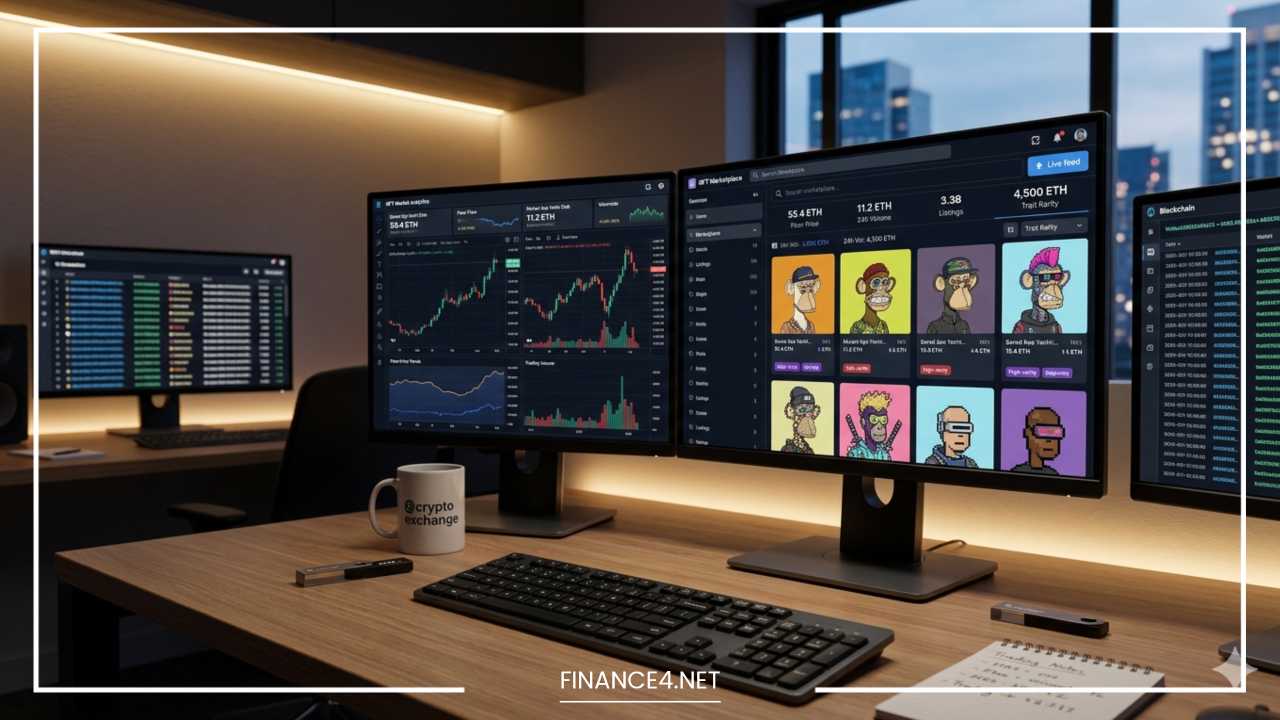
A professional flipper treats their set of tools as a cockpit, where all necessary information—price, volume, rarity, and whale activity—is displayed in real-time, enabling split-second, data-driven decisions.
Real Case Studies (Optional but Powerful)
Example 1: A Successful Flip on Solana → Ethereum
The Setup (Late 2024): A new high-utility GameFi collection launches on Solana, featuring a unique token-staking mechanism. Due to low Solana gas fees, minting is accessible, and the price jumps from 2 SOL to 8 SOL post-reveal. An experienced flipper notices that similar high-utility, cross-chain GameFi collections on Ethereum are trading at a significantly higher valuation (e.g., 0.5 ETH, or approx$ 15 SOL).
The Flip:
- Buy: The flipper purchases 10 floor-priced NFTs on Magic Eden for an average of 8.5 SOL each. (Total cost: 85 SOL).
- Bridge: The flipper immediately uses the Portal Bridge to move the 10 NFTs from Solana to Ethereum. This incurs a small bridging fee and takes a few minutes.
- Relist: Upon arrival on Ethereum, the flipper lists them on OpenSea for a slightly discounted Ethereum floor price of 0.4 ETH each (Total expected revenue: 4.0 ETH).
- Result: The NFTs sell quickly. Assuming a 1 ETH = 3000 USD and 1 SOL = 100 USD rate:
- Initial Cost: 85 SOL ($8,500$) + Fees
- Revenue: 4.0 ETH ($12,000$) – Fees/Royalties
- Approximate Net Profit: {$3,000 – $3,500}$ in a matter of hours, capitalizing purely on the chain-specific valuation discrepancy and the project’s cross-chain utility narrative.
Example 2: Arbitrage Opportunity Between Blur and Magic Eden
The Setup (Early 2025): The price of Bitcoin Ordinals is spiking. A prominent Ordinal collection has listings on a centralized exchange-integrated marketplace and on a decentralized marketplace, Magic Eden, which now supports Ordinals. A whale sweeps a large volume on the centralized platform, causing a momentary price surge.
The Flip:
- Find Discrepancy: A flipper notices the Ordinal floor on Blur (Ethereum-centric market with Ordinal trading) is 0.12 BTC, but the floor on Magic Eden (which has deeper Ordinal liquidity) is 0.105 BTC.
- Buy/Execute: Using fast automation or a manually pre-funded wallet, the flipper quickly buys 5 floor Ordinals on Magic Eden (0.105 BTC times$ 5 = 0.525 BTC).
- Relist and Sell: The flipper simultaneously lists them for 0.118 BTC on Blur, slightly undercutting the current Blur floor, ensuring a quick sale.
- Result: The entire trade, facilitated by fast execution and low fees on the Solana side of Magic Eden, results in a gross profit of {0.065 BTC}$ (0.118 BTC times$ 5 – 0.525 BTC) before fees. Arbitrage opportunities like this are high-frequency and low-margin but can yield substantial profits when scaled.
Final Thoughts
The multi-chain marketplace is the ultimate evolution of NFT flipping, demanding both technical dexterity in bridging and market sophistication in trend spotting. Success hinges on a foundational understanding that value is fragmented, and profit lies in uniting that fragmentation.
- Recap of Key Points: Master your wallet setup for all major chains (MetaMask for EVM, Phantom for Solana). Rely heavily on analytics tools (Dune, Nansen) to track Smart Money. Always factor in gas and bridging fees—the difference between profit and loss is often pennies on the transaction cost.
- Long-Term vs. Short-Term: Most flipping focuses on the short-term catalyst (reveal, airdrop, pump-and-dump), but the greatest profits are found when a short-term flip accidentally becomes a long-term hold due to exceptional utility or community strength.
- Emphasis on Risk Management: The multi-chain world is a minefield of smart contract risks and rug pulls. Never invest capital you cannot afford to lose entirely. Set your stop-loss, take profit when targets are met, and remember that emotional control is the flipper’s most valuable asset.
Start small, learn your preferred chain, and let data—not hype—guide your trades. The opportunities in the multi-chain universe are boundless for the prepared and disciplined flipper.