NFT Forging: Combining Digital Collectibles into Powerful New Assets
 by
by 
NFT Forging: Combining Digital Collectibles into Powerful New Assets
The digital asset landscape has undergone a radical transformation. In the early days of the NFT boom, the market was dominated by static images—often referred to as “digital collectibles” where the value was derived almost exclusively from scarcity and social signaling. However, as we navigate through 2026, the narrative has shifted from passive ownership to active utility. The question is no longer just “What do you own?” but “What can your asset do, and how can it evolve?”
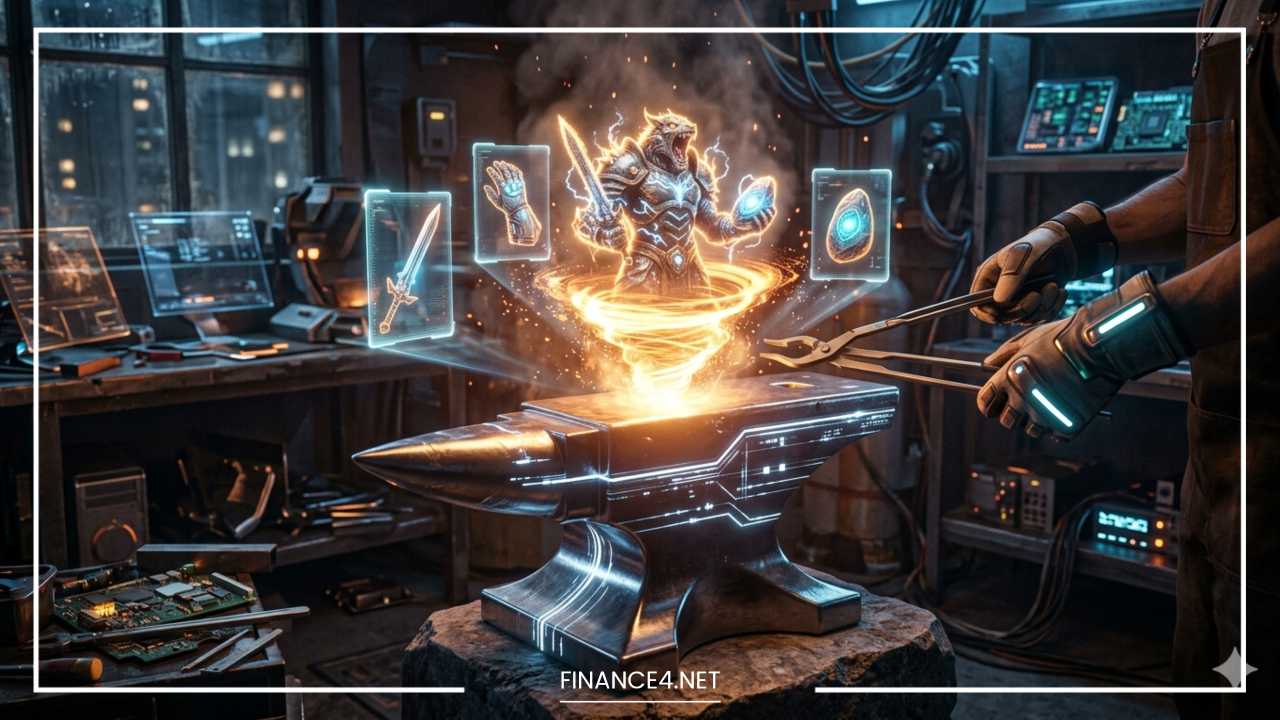
At the heart of this evolution is NFT Forging. This mechanic represents the transition from static metadata to dynamic, programmable assets. Forging allows users to take existing digital items and combine, upgrade, or sacrifice them to create something entirely new and more powerful. It is the bridge between simple digital art and complex decentralized applications, turning collectors into creators and players into engineers of their own digital destiny.
What Is NFT Forging?
Definition
NFT forging is a process where two or more non-fungible tokens are combined through a smart contract to produce a new, often superior, digital asset. Unlike a standard purchase, forging requires the “destruction” or “transformation” of the input assets. This creates a “sink” for digital supply, ensuring that as more high-tier items are created, the base-layer items become rarer through consumption.
In most forging ecosystems, this manifests in three primary ways:
-
Combining: Merging multiple low-tier items to create one high-tier item (e.g., five “Common” swords becoming one “Rare” sword).
-
Burning: Permanently removing assets from circulation to “fuel” the creation of a rare output, often used to create deflationary pressure.
-
Upgrading: Using a base NFT and adding “ingredients”—which could be other NFTs or fungible utility tokens—to enhance its traits, stats, or visual appearance.
Technical Foundation
Forging is made possible by the flexibility of smart contracts on networks like Ethereum, Polygon, and Solana. While the standard ERC-721 (individual unique tokens) and ERC-1155 (multi-token standard) provide the framework, forging adds a layer of executable logic that governs asset lifecycle.
When a user initiates a forge, the smart contract executes a set of instructions: it verifies the user owns the required inputs, executes a “burn” function (sending the inputs to a 0x00… null address) or a “lock” function (holding them in escrow), and then triggers the “mint” function for the new asset. This ensures that the provenance of the new asset is cryptographically linked to the history of the old ones, creating a “lineage” of value.
How Forging Differs From Other Mechanics
It is easy to confuse forging with other Web3 terms, but the distinctions are vital for understanding the economic impact:
-
Minting: The initial creation of an NFT from nothing. Forging requires existing NFTs as “raw materials.”
-
Staking: Locking an NFT to earn rewards. In forging, the asset is usually lost or permanently changed, not just parked in a contract.
-
Breeding: Popularized by early games like Axie Infinity, breeding creates a “child” from two “parents” who remain in the wallet. Forging typically consumes the “parents” to create the “offspring,” making it a net-negative supply mechanic.
-
Token Wrapping: Putting one token inside another (like Wrapped Bitcoin). Forging changes the underlying metadata and identity of the asset entirely.
The Origins of Forging Mechanics
Gaming Roots
The concept of forging is not a blockchain invention; it is deeply rooted in the history of Massive Multiplayer Online Role-Playing Games (MMORPGs) and “Looter-Shooters.” For decades, players of World of Warcraft, Runescape, or Diablo have engaged in “crafting.” You find a hilt, a blade, and a magical gem, then visit a blacksmith to forge a legendary sword.
In traditional gaming, these items were locked within the “walled garden” of the game developer’s servers. You owned the sword in the game, but you couldn’t sell it for real-world value or move it to another platform. Web3 has taken these beloved engagement mechanics and applied “Property Rights” to them.
Transition to Web3
The “Play-to-Earn” (P2E) explosion of 2021-2022 served as the proof of concept for bringing these mechanics on-chain. Developers realized that by gamifying ownership, they could create more sustainable economies. Instead of simply selling 10,000 identical avatars, they could sell components—bases, skins, and accessories—that users had to assemble themselves.
This led to the rise of Dynamic NFTs (dNFTs)—tokens that can change their metadata based on external triggers or user actions. Forging is the ultimate expression of dNFTs, as it represents a permanent, user-driven evolution of the blockchain record. In 2026, we see this as the standard for any project claiming to offer “utility.”
How NFT Forging Works (Step-by-Step)
The forging process is designed to be intuitive for the user while remaining mathematically rigorous on the backend. It involves a high-stakes “moment of truth” that adds excitement to the digital collecting experience.
Step 1: Asset Requirements
Every forge begins with a “recipe.” A project might require:
-
Specific NFT collections (e.g., “Season 1” characters).
-
Rarity tiers (e.g., three “Common” items to make one “Uncommon”).
-
Utility tokens required to pay for the “gas” or “labor” of the forge.
-
“Catalysts” or “Blueprints,” which are often limited-edition NFTs that act as the permission slip for the forge.
Step 2: Smart Contract Interaction
The user visits a specialized “Forge” interface or “Blacksmith” portal. After connecting their wallet, they select the assets they wish to sacrifice. This triggers a multi-step transaction request. The user must provide “Approval” for the smart contract to move their NFTs. Once confirmed, the assets are sent to the contract, and the transaction is indexed on-chain.
Step 3: Creation of New Asset
Once the inputs are received and the burn is confirmed, the contract performs its logic. This is where the magic happens:
-
New Metadata: The new NFT points to a fresh IPFS (InterPlanetary File System) link with updated art and stats.
-
Rarity Recalculation: If you forge two “Silver” items, the contract might have a 90% chance of creating a “Gold” item and a 10% chance of a “Legendary” one, adding an element of “Gacha” or luck-based excitement.
-
On-Chain Proof: The transaction history shows exactly which tokens were destroyed to create the new one, preserving the “pedigree” of the asset.
Models of Forging
-
Burn-to-Mint: The most common model. It permanently reduces the supply of the base collection.
-
Lock-and-Upgrade: The base NFT is locked in a contract, and “attachments” are added. This is popular in “Digital Fashion,” where a jacket can be upgraded with different patches.
-
Merge-and-Evolve: Two identical assets merge to become a “Level 2” version, increasing stats like power, speed, or yield-generation capability.
-
Randomized Output: A “blind forge” where the resulting asset is a mystery until the reveal, used primarily by art projects to maintain secondary market hype.
Real-World Use Cases
1. Gaming NFTs
This is the primary driver of forging. In competitive Web3 games, forging allows for a “sink” in the economy. If every player finds a “Wooden Shield,” the market becomes flooded and the price hits zero. By allowing players to forge 10 Wooden Shields into 1 “Iron Shield,” the developers create constant demand for low-level items. This supports the floor price for new players while providing a progression path for veterans.
2. Art Evolution
Digital artists are using forging to create “Interactive Collections.” An artist might release 1,000 “Sketch” NFTs. As collectors forge these together, they unlock “Finished Paintings.” This creates a secondary market where the “finished” art is significantly rarer, rewarding collectors for their patience and commitment to the artist’s vision.
3. DeFi & Utility NFTs
In Decentralized Finance (DeFi), forging is being used to enhance yield. A user might forge multiple “Liquidity Provider” NFTs to create a “Governor” NFT. This new asset might provide a 1.5x multiplier on staking rewards or grant higher voting power in a DAO. It turns “Yield Farming” into a visual and strategic experience.
4. Metaverse Applications
In platforms like The Sandbox or Decentraland, forging is used for “Digital Wearables” and “Architectural Upgrades.” A user might forge raw materials (represented as NFTs) to create a high-fashion jacket for their avatar. Because these items can be worn across different areas of the metaverse, the “Forged” status acts as a badge of prestige and effort.
Economic Implications of NFT Forging
Supply Reduction
The most significant impact of forging is deflation. In the 2021 NFT era, many projects failed because they had too much supply and no “burn” mechanics. Forging solves this. Every time a user forges a higher-tier asset, multiple lower-tier assets are removed from the blockchain forever. This creates a supply-side pressure that can sustain the value of a project long after the initial hype.
Scarcity Engineering
Forging allows developers to create “Engineered Scarcity.” Instead of just saying “There are only 10 Legendary items,” they can say “A Legendary item only exists if a player manages to collect and sacrifice 100 Common items.” This shifts the rarity from luck (the mint) to effort and capital (the forge), making the top-tier items more prestigious.
Market Psychology
Forging introduces a “Game Theory” element to collecting. Do you sell your three common NFTs now for a quick profit, or do you hold them and spend more money to forge them into a rare asset that might be worth ten times as much later? This creates complex “Diamond Hand” incentives that stabilize communities during market downturns.
Impact on Floor Price
When a “Forge Event” is announced, the floor price of the required “ingredients” typically rises. This creates a healthy secondary market where even the least rare items in a collection have value because they are needed for the next tier of evolution.
Benefits of NFT Forging
-
Adds Utility Beyond Static Ownership: It gives the owner something to do with their asset rather than just letting it sit in a wallet.
-
Encourages Long-Term Holding: Users are less likely to “dump” an asset if they are halfway through the process of collecting the ingredients for a major forge.
-
Community Engagement: Forging often requires specific combinations of assets, encouraging players to trade with one another to complete their “recipes,” which builds social bonds.
-
Gamifies Collecting: It turns the act of buying NFTs into a quest-based experience.
-
Creates Layered Value: It allows for “Value Accrual.” The price of a forged NFT is naturally supported by the cumulative cost of the items and tokens required to make it.
Risks and Challenges
Smart Contract Risks
Forging is technically complex. If a “Forge” contract has a bug, a user could sacrifice their NFTs and receive nothing in return, or an attacker could “mint” high-level items without providing the necessary inputs. In the decentralized world, there is no “undo” button for a failed forge.
Market Risk: Value Dilution
If the “output” of a forge is not significantly more valuable than the “inputs,” users will stop forging, and the economy will stagnate. Conversely, if forging is too easy, the market might become flooded with “Rare” items, causing a “rarity collapse” where nothing feels special anymore.
Regulatory Uncertainty
In some jurisdictions, the act of “burning” one asset to “create” another for the purpose of profit could be viewed as a financial derivative or a security. As the space grows, projects will face increased scrutiny over whether their forging mechanics constitute unregulated gambling or financial products.
Centralization Concerns
Many forging recipes are controlled by the project developers. If a developer changes the “recipe” overnight—making it harder or easier to forge—they can drastically affect the net worth of their holders. This creates a power imbalance that many Web3 purists find concerning.
NFT Forging vs. NFT Evolution vs. Breeding
To understand where forging fits, it helps to compare it to its “cousin” mechanics:
| Mechanism | Input | Output | Burned? | Randomness? | Use Case |
| Forging | Multiple Assets | One Superior Asset | Yes (Usually) | Low | Weapons, Gear, Tiers |
| Evolution | Single Asset + Time/XP | Upgraded Asset | No (Transformed) | None | Leveling characters |
| Breeding | Two Parent Assets | One New “Child” | No | High | Pets, Avatars, Creatures |
| Wrapping | One Asset + Token | Wrapped Asset | No (Locked) | None | DeFi, Staking |
While Breeding focuses on expansion (adding more tokens to the supply), Forging focuses on consolidation (reducing the supply to increase quality and power).
The Future of NFT Forging
AI-Driven Forging
As we look toward the future, Artificial Intelligence is beginning to merge with forging. Instead of a static recipe, an AI could analyze the “DNA” of the sacrificed NFTs and generate a completely unique, one-of-a-kind output that has never been seen before. This makes the forging process truly creative rather than just a mathematical combination. Imagine an AI “Blacksmith” that designs a unique weapon specifically for your playstyle based on the items you give it.
Cross-Collection Forging (Interoperability)
We are entering the era of “Interoperability.” Imagine forging a “Sword” from Project A with a “Magic Spell” from Project B to create a “Flaming Sword” that works in both games. This “Cross-Project Forging” will require massive cooperation between studios but represents the “Holy Grail” of the open metaverse, where assets from different worlds can interact and combine.
Layer 2 & Gas Optimization
In the past, forging was expensive due to Ethereum’s gas fees. With the maturity of Layer 2 and Layer 3 solutions, the cost of forging has dropped to fractions of a cent. This allows for “Micro-Forging,” where players can combine hundreds of tiny, low-value items frequently without worrying about transaction costs.
Institutional & Brand Adoption
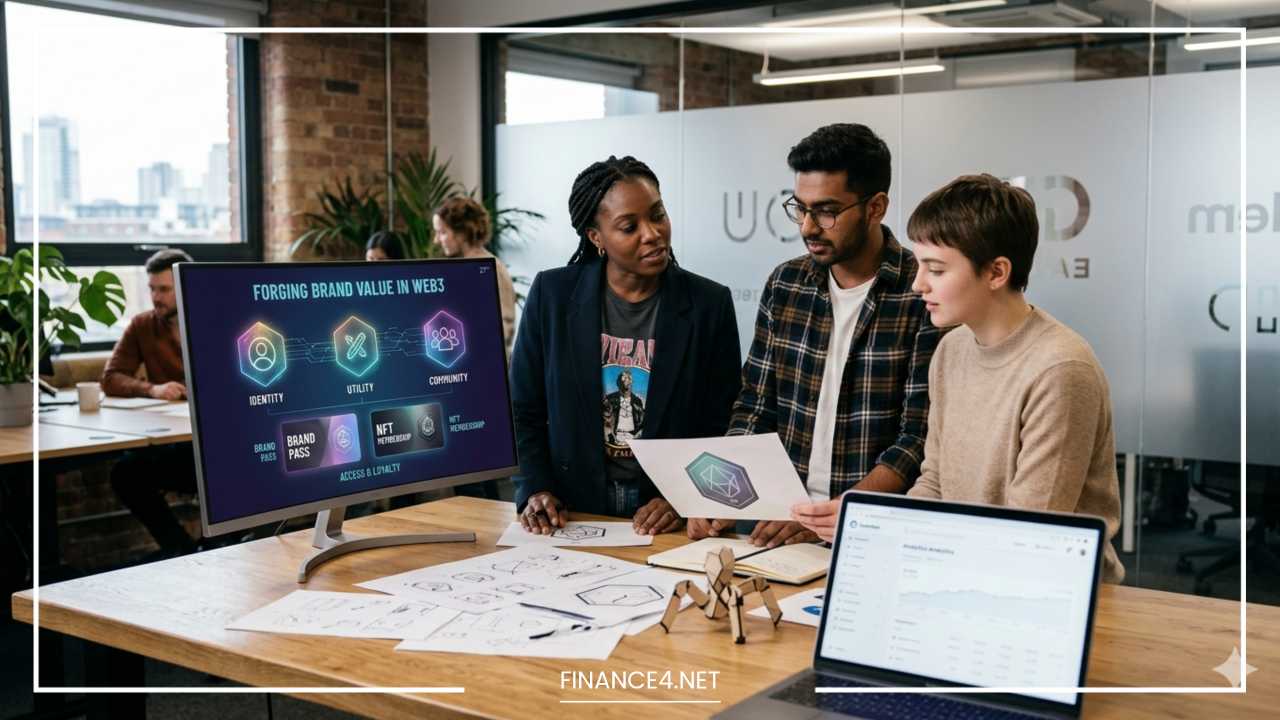
Global brands are taking notice. A luxury fashion house could sell “Digital Fabric” NFTs. Once a customer collects enough fabric, they can “forge” them into a digital twin of a limited-edition jacket. This “Phygital” forging bridges the gap between our digital and physical identities, allowing brands to reward their most loyal collectors with exclusive physical goods.
Strategic Considerations for Collectors
For those looking to engage in NFT forging, the landscape requires more than just a “buy and hold” mentality. It requires an understanding of Economic Velocity and Recipe Arbitrage.
Collectors must analyze the “Cost to Forge” against the “Market Value of Output.” Often, the most profitable collectors are those who act as “Suppliers”—collecting the common ingredients and selling them to “Whales” who are eager to forge the top-tier assets. In this way, forging creates a multi-layered economy with roles for every level of investor.
Final Thoughts
NFT forging marks the end of the “Static NFT” era. We are moving into a period where digital assets are dynamic, interactive, and economically productive. By allowing users to combine, burn, and upgrade their holdings, projects are creating deeper engagement and more robust digital economies.
The shift from “collecting” to “forging” reflects a broader change in the internet itself. Users are no longer content to just browse or own; they want to build and iterate. Forging provides the tools to do exactly that, turning the blockchain into a global, decentralized workshop where the only limit to what you can create is the rarity of your components and the boldness of your strategy.
As we look toward 2027 and beyond, the “Forged” asset will likely become the gold standard of digital ownership. It represents not just a purchase, but a history of participation, a commitment to an ecosystem, and a tangible evolution of value. The digital blacksmith has arrived, and the forge is hot.