
Top Bridging Aggregator for Near Protocol
 by
by 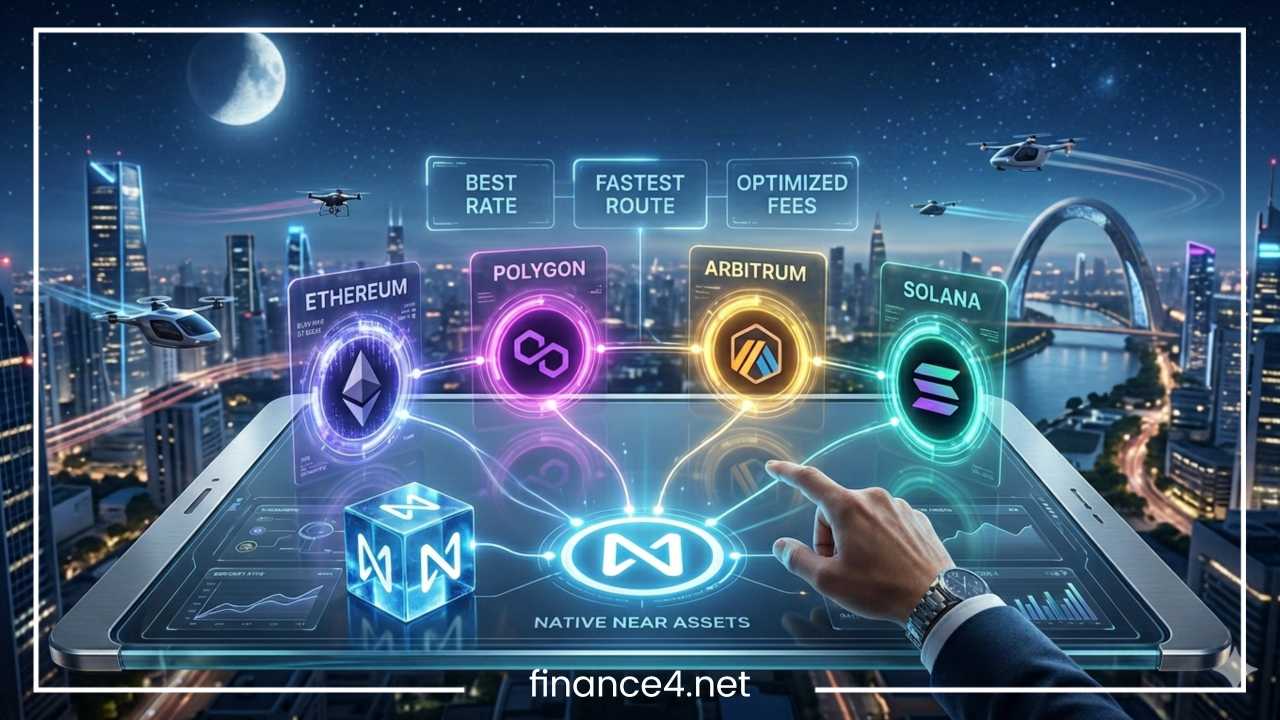
Best Cross-Chain Bridge Aggregators for NEAR Protocol
The evolution of the blockchain landscape has moved decisively toward a multi-chain future. In this environment, the ability to move assets seamlessly between disparate networks is no longer a luxury but a fundamental necessity for decentralized finance (DeFi), non-fungible tokens (NFTs), and gaming. As ecosystems like the NEAR Protocol grow in complexity and user base, the demand for efficient, secure, and cost-effective bridging solutions has skyrocketed.
Traditional blockchain bridges often act as isolated islands, connecting only two specific networks. This fragmentation forces users to manually research routes, compare fees, and risk liquidity issues. Enter the bridging aggregator: a sophisticated meta-layer designed to simplify cross-chain interactions by sourcing the best possible routes across multiple individual bridges. This comprehensive guide explores the mechanics of these aggregators, the specific needs of the NEAR ecosystem, and the top platforms currently dominating the space.
Introduction: The Multi-Chain Mandate
In the early days of decentralized ledger technology, the industry operated in silos. Ethereum users stayed on Ethereum; Bitcoin holders remained within the Bitcoin network. However, as specialized networks like NEAR Protocol emerged—offering distinct advantages in scalability and user experience—the need for “liquidity highways” became apparent.
Blockchain bridges serve as the physical infrastructure of these highways. They allow a user to “lock” an asset on one chain and “mint” a representation of it on another. But as the number of chains grew from a handful to hundreds, the user experience became fragmented. A user moving funds from Avalanche to NEAR might have to cross three different bridges, pay multiple gas fees, and wait hours for finality.
Bridging aggregators were born out of this friction. They represent the “expedia” phase of Web3, where the complexity of the underlying infrastructure is abstracted away, leaving the user with a simple, optimized interface for moving value across the digital frontier.
What Are Bridging Aggregators?
At its core, a bridging aggregator is a platform that routes assets across different blockchains by tapping into a variety of underlying bridge protocols. If a standard bridge is like a single ferry service between two ports, a bridging aggregator is a travel search engine that compares every available flight, train, and ferry to find the fastest and cheapest journey.
Definition and Functionality
Bridging aggregators do not typically hold liquidity themselves. Instead, they are software layers that interact with the smart contracts of other bridges (like Across, Stargate, or Celer) and decentralized exchanges (DEXs). When a user inputs a desired trade—for example, “Swap 1 ETH on Ethereum for NEAR on the NEAR network”—the aggregator calculates thousands of possible permutations of bridges and swaps to find the most efficient path.
Comparing Single Bridges vs. Aggregators
A single bridge, such as the native Rainbow Bridge, operates on a specific set of smart contracts designed to move assets specifically between NEAR, Aurora, and Ethereum. While highly secure and specialized, it is limited in scope. If a user wants to move assets from Solana or Arbitrum to NEAR, a single-purpose bridge may not offer a direct path, or it may be prohibitively expensive at that specific moment.
An aggregator solves this by integrating dozens of these single bridges into a single interface. The primary benefits include:
-
Better Rates: By comparing prices across multiple DEXs and bridges, aggregators find the route with the lowest slippage.
-
Faster Routes: If one bridge is congested or has a long withdrawal period, the aggregator identifies a faster alternative.
-
Reduced Complexity: Users only need to interact with one UI instead of learning the quirks of ten different bridge platforms.
The Risks of the Meta-Layer
Despite their utility, aggregators introduce unique risks. They add a layer of complexity to the transaction. If a user utilizes an aggregator that routes through a specific bridge, they are effectively trusting both the aggregator’s smart contracts and the underlying bridge’s security. This “dependency chain” means that a vulnerability in any part of the route could potentially impact the user.
Why NEAR Needs Bridging Solutions
NEAR Protocol is built on a unique sharding architecture known as Nightshade, which allows it to scale linearly while maintaining incredibly low transaction fees. However, a high-performance blockchain is only as valuable as the assets and users it can attract. For NEAR to continue its upward trajectory, it must maintain deep connectivity to other major hubs.
Ecosystem Growth and Liquidity Inflow
Liquidity is the lifeblood of DeFi. For NEAR-based decentralized exchanges like Ref Finance or lending protocols like Burrow to offer competitive rates, they need a steady inflow of capital from major hubs like Ethereum, Arbitrum, and Polygon. Bridging aggregators act as the primary gateways for this capital.
Specific Use Cases for NEAR Interoperability
-
DeFi Arbitrage: High-frequency traders move assets between NEAR and other chains to take advantage of price discrepancies.
-
NFT Portability: As NEAR grows as a hub for digital art and gaming, users need to move funds into the ecosystem to purchase NFTs or move their assets to cross-chain marketplaces.
-
Stablecoin Utility: Many users hold their primary savings in USDC or USDT on Ethereum or L2s. Efficient bridging allows them to move these stables to NEAR to earn yield without losing a significant percentage to fees.
Key Features to Evaluate Bridging Aggregators
When determining which aggregator stands at the top of the pile, several technical and operational criteria must be considered. These criteria form the basis of a “Top Aggregator” ranking.
Supported Chains and Tokens
The most basic metric is reach. A top-tier aggregator should support a wide array of EVM (Ethereum Virtual Machine) chains and non-EVM chains like NEAR, Solana, and Cosmos. The breadth of supported tokens is equally important; a bridge is of little use if it only supports major assets like ETH or WBTC and ignores the long tail of ecosystem-specific tokens.
Fees: Gas and Protocol Costs
Fees are typically split into two categories:
-
Gas Fees: Paid to the source and destination networks.
-
Protocol/Service Fees: Paid to the bridge or the aggregator for the service provided.
A superior aggregator will find “gas-efficient” routes, sometimes even bundling transactions to save the user money.
Speed and Finality
Speed is often the deciding factor for retail users. Some bridges rely on optimistic verification, which can take hours or even days for finality due to challenge periods. Others use zero-knowledge proofs or multi-party computation (MPC) for near-instant transfers. A top aggregator allows the user to filter by “Fastest” versus “Cheapest.”
Security Model and Audit History
Security is the most critical factor. Users should look for aggregators that prioritize audited bridges and those that use trustless or highly decentralized verification methods. Transparency regarding the “trust assumptions” of each route is a hallmark of a high-quality aggregator.
UI/UX and Developer Tools
For retail users, simplicity is king. For developers, the availability of a robust SDK or API is essential. A top aggregator provides a seamless experience for both, allowing for easy integration into wallets and dApps.
Top Bridging Aggregators for NEAR
The following platforms represent the leading edge of bridging technology, each offering unique ways to connect with the NEAR Protocol.
1. LI.FI (The Developer’s Choice)
LI.FI is widely considered one of the most advanced bridge and DEX aggregators in the space. It functions as a “middle-tier” infrastructure that allows developers to plug cross-chain capabilities into their own applications.
-
How it Works: LI.FI uses a sophisticated routing algorithm that looks at both bridges and DEXs. It doesn’t just bridge; it performs “cross-chain swaps.”
-
NEAR Compatibility: LI.FI provides deep connectivity to the NEAR ecosystem, often routing through specialized bridges to ensure that users can land assets directly on NEAR or its EVM-compatible layer, Aurora.
-
Pros: Advanced routing, deep liquidity, and excellent documentation for developers.
-
Cons: The “Jumper.exchange” front-end, while powerful, can display a daunting amount of data for a first-time user.
2. Socket / Bungee (The Smooth Operator)
Socket is a modular interoperability protocol that powers Bungee, one of the most popular front-end aggregators for retail users.
-
Architecture: Socket focuses on “chain abstraction.” It wants the user to forget which chain they are on entirely. By using its Modular Order Flow Auctions (MOFA), it creates a competitive environment for liquidity providers.
-
NEAR Integration: Socket has been a long-time supporter of NEAR. Its routing efficiency is particularly high for stablecoin transfers.
-
Pros: Extremely clean UI, “Refuel” feature (which allows users to bridge small amounts of native gas tokens), and high reliability.
-
Cons: Sometimes has slightly fewer supported “long-tail” tokens compared to Rango.
3. Rango Exchange (The Universal Aggregator)
Rango Exchange is a “meta-aggregator” that prides itself on being the most inclusive platform for different wallet types and blockchain architectures.
-
Multi-Chain Mastery: Rango supports an enormous range of wallets, including those specific to NEAR (like Meteor or MyNearWallet) and those for Cosmos, Solana, and EVM chains.
-
Performance: Rango’s engine is capable of finding complex, multi-hop routes that other aggregators might miss, such as moving an asset from the IBC (Cosmos) ecosystem directly to NEAR.
-
Pros: Exceptional wallet support and a highly intuitive UI that makes complex cross-chain movements feel like a simple swap.
-
Cons: Because it searches so many routes, the initial quote generation can occasionally be slower.
4. XY Finance (The Speed Specialist)
XY Finance is a cross-chain aggregator that focuses on “one-click” swaps. It is designed to be a high-speed bridge and swap combination.
-
Routing Logic: XY Finance uses its “X Swap” algorithm to find the best path. It has a strong focus on minimizing the steps a user has to take, which reduces the chance of manual errors.
-
NEAR Support: It provides consistent liquidity for NEAR and its sub-ecosystems, making it a reliable choice for traders who need to move capital quickly.
-
Pros: High-speed execution and a focus on competitive pricing for large-volume traders.
-
Cons: The interface is more focused on trading than general exploration.
5. Rainbow Bridge (The Native Trustless Standard)
While not an aggregator, any discussion of NEAR bridging must include the Rainbow Bridge. It is the official bridge of the NEAR Protocol and serves as the benchmark for security.
-
Trustless Design: Unlike most bridges that rely on a set of validators, the Rainbow Bridge is trustless. It uses light clients to verify the state of the connected chains directly. This means you aren’t trusting a “bridge committee”—you are trusting the code of the blockchains themselves.
-
Limitations: It primarily connects Ethereum, Aurora, and NEAR. It does not aggregate other bridges, so it won’t show you a cheaper route via a third party.
-
Pros: Maximum security and official support.
-
Cons: Can be slow (up to 16 hours for Ethereum finality on withdrawals) and limited chain support.
Comparison Table: Top NEAR Aggregators
| Aggregator | Primary Chains | NEAR Support Type | Best For | Key Feature |
| LI.FI | 30+ | Native & Aurora | Power Users / Devs | Smart Routing |
| Socket | 30+ | Native & Aurora | Retail Users | Refuel (Gas) |
| Rango | 50+ | Extensive Native | Multi-Ecosystem | Wallet Support |
| XY Finance | 20+ | Native | High-Volume Traders | One-Click Swaps |
| Rainbow | 3 | Official Native | Security Purists | Trustless |
Security Considerations and Best Practices
The history of blockchain bridging is, unfortunately, littered with high-profile hacks. Because bridges serve as massive pools of locked liquidity, they are primary targets for malicious actors.
Understanding Bridge Security Models
When using an aggregator, you are opting into the security model of the bridge it selects. Common models include:
-
Lock and Mint: Assets are locked on Chain A, and synthetic assets are minted on Chain B. If the vault on Chain A is hacked, the assets on Chain B become worthless.
-
Liquidity Providers (LP): Bridgers use existing pools of liquidity on both chains. This is generally safer but more expensive.
-
Trustless/ZKP: Uses mathematical proofs to verify transactions. This is the most secure but technically complex to implement.
Best Practices for Safe Bridging
-
Verify the URL: Always ensure you are on the official site of the aggregator to avoid phishing.
-
Start with a Test: If moving a large sum, send a small amount first to verify the route and your wallet’s compatibility.
-
Check the “Slippage”: High slippage can result in receiving significantly fewer tokens than expected. Aggregators usually allow you to set a slippage tolerance.
-
Revoke Permissions: After bridging, use tools like Revoke.cash to remove the bridge’s permission to spend your tokens if you don’t plan on using it again soon.
How to Choose the Right Aggregator
The “best” aggregator is subjective and depends on your specific needs at the moment.
The Beginner User
If you are new to NEAR and want to move funds from a centralized exchange or another chain, Rango Exchange is highly recommended. Its broad wallet support means you likely won’t have to download new software just to complete the bridge.
The Advanced Trader
If you are looking for the absolute lowest fees for a $50,000 swap, LI.FI (via Jumper) or XY Finance are your best bets. Their deep integration with DEXs ensures that the swap on either end of the bridge is as efficient as the bridge itself.
The Developer
If you are building an app on NEAR and want your users to be able to fund their accounts from any chain, Socket or LI.FI provide the best SDKs for seamless “in-app” bridging.
The Future: Chain Abstraction and Beyond
The ultimate goal of bridging technology is to disappear. In a perfect world, a user shouldn’t know they are “bridging.” This is a concept NEAR refers to as Chain Abstraction.
Intent-Based Bridging
In the near future, we will move away from manual bridging toward “intents.” A user will simply say, “I want to buy this NFT on NEAR using my ETH on Arbitrum.” A network of “solvers” will compete to fulfill that intent instantly, handling the bridging and swapping behind the scenes. Aggregators are the natural evolution point for these solver networks.
NEAR Chain Signatures
NEAR is introducing Chain Signatures, a technology that allows a single NEAR account to sign transactions on any other blockchain (Bitcoin, Ethereum, etc.). This could potentially revolutionize bridging by allowing a NEAR smart contract to directly hold and move assets on other chains without the need for traditional “lock-and-mint” mechanisms.
Final Thoughts
As the NEAR Protocol continues to scale and attract global talent, the role of bridging aggregators will only become more vital. Platforms like LI.FI, Socket, and Rango are more than just tools; they are the connective tissue of the decentralized internet.
By using these aggregators, users can bypass the headaches of manual routing, save on fees, and explore the NEAR ecosystem with the confidence that they are using the most optimized paths available. Whether you are a retail user moving your first stablecoins or a developer building the next big dApp, the top bridging aggregators for NEAR provide the essential infrastructure to thrive in a multi-chain world.