Best Aggregator for Bridging Privacy Coins
 by
by 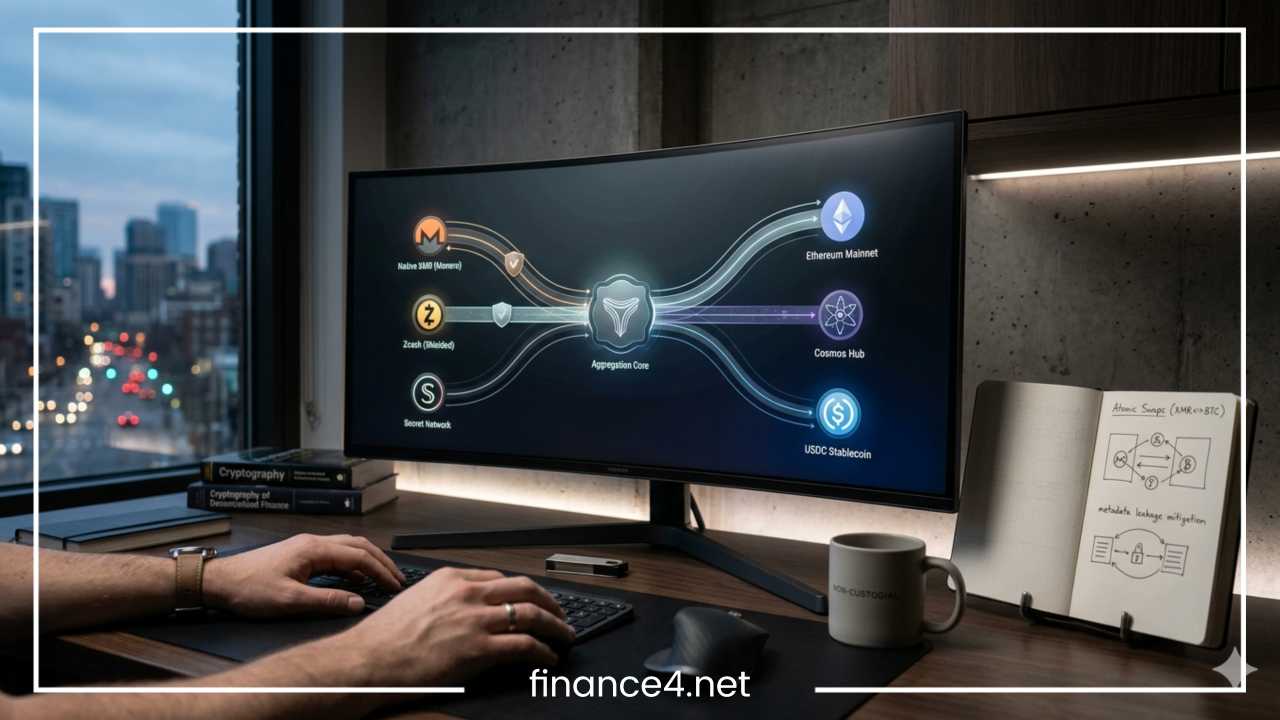
Best Aggregator for Bridging Privacy Coins: Top Picks
The digital asset landscape is built upon a fundamental tension between the radical transparency of public blockchains and the human right to financial privacy. While mainstream assets like Bitcoin and Ethereum offer pseudonymity, privacy coins—such as Monero (XMR) and Zcash (ZEC)—aim to provide true anonymity. However, as regulatory scrutiny intensifies and centralized exchanges delist these assets, the technical barrier to moving value between privacy networks and the broader decentralized finance (DeFi) ecosystem has grown significantly. This is where aggregators and bridging protocols become essential infrastructure.
Why Privacy Coins Need Aggregators
Privacy coins are designed to obscure transaction details, including sender identities, receiver addresses, and transaction amounts. While this is a boon for individual liberty and security, it creates a “silo” effect. Because these coins often operate on their own unique, non-Ethereum Virtual Machine (EVM) compatible blockchains, they do not natively “talk” to other networks. This isolation creates a liquidity problem: if you hold a significant amount of a privacy asset but need to participate in a lending protocol on a different chain or simply swap for a stablecoin, the path is often blocked by a lack of direct bridges.
Users seek aggregators for several critical reasons:
-
Liquidity Fragmentation: Privacy coins are often relegated to niche exchanges or specific liquidity pools. Finding a deep enough pool to swap a large amount without massive slippage is a constant struggle. In a fragmented market, the price of Monero on one small DEX might be significantly different from its price on a P2P platform. Aggregators bridge this gap by scanning all available sources.
-
Cross-Chain Swaps: Moving value from a privacy-centric chain like Monero to a utility-centric chain like Arbitrum requires multiple steps, different wallet types, and often, high technical risk. An aggregator acts as the glue, handling the complex “backend” logic of moving value across incompatible ledgers.
-
Usability Issues: The average user does not want to manage five different bridge interfaces, each with its own fee structure and risk profile. Aggregators simplify this by providing a single point of entry, often allowing for “one-click” swaps that hide the underlying complexity.
The role of an aggregator in this context is to act as an intelligent router. It scans various decentralized exchanges (DEXs), automated market makers (AMMs), and cross-chain bridges to find the most efficient path for a swap. However, a key tension remains: every time a user interacts with a bridge or an aggregator, they risk “leaking” metadata. The goal of the best privacy aggregators is to simplify the swap without compromising the very anonymity the user is seeking.
What Is a Crypto Aggregator in This Context?
To navigate the market, one must distinguish between the different types of aggregation tools available. The term “aggregator” is often used loosely, but in the realm of privacy coins, the technical implementation varies wildly.
DEX Aggregators vs. Swap Aggregators vs. Cross-Chain Bridges
A standard DEX aggregator (like 1inch) focuses on finding the best price across multiple liquidity sources on a single chain. If you are swapping USDT for ETH on Ethereum, the aggregator splits your order across Uniswap, SushiSwap, and Curve to minimize slippage.
A swap aggregator often includes “off-chain” or “cross-chain” routing. It doesn’t just look at one chain; it looks at the entire ecosystem. For privacy coins, we are almost always looking at cross-chain swap aggregators. These tools might use a centralized engine to calculate the best path before executing the trade through various decentralized nodes.
A cross-chain bridge is the actual plumbing. It is the protocol that moves the value. An aggregator sits on top of these bridges, choosing the most reliable or cheapest one at any given moment.
How Privacy Coin Aggregation Differs from Standard DeFi
Standard DeFi aggregation usually involves swapping one ERC-20 token for another. Privacy coin aggregation is much harder because it involves:
-
Non-Programmable Chains: Monero, for example, does not support smart contracts in the way Ethereum does. You cannot simply “lock” Monero in a contract and have it automatically trigger an event on another chain without some form of intermediary or specialized multi-signature setup.
-
Privacy Preservation: The aggregator must ideally avoid KYC (Know Your Customer) requirements. If an aggregator requires you to upload a passport to swap a privacy coin, it has effectively defeated the purpose of the coin itself.
On-Chain vs. Off-Chain Routing
On-chain routing happens entirely via smart contracts. This is the most “trustless” method but is often limited by the speed and cost of the host blockchains. Off-chain routing is faster and can handle more complex paths (such as hopping through three different chains to find liquidity), but it requires a higher degree of trust in the aggregator’s backend API.
Key Challenges in Aggregating Privacy Coins
Integrating privacy coins into a seamless bridging experience is one of the most difficult tasks in blockchain engineering.
Limited Exchange Support and Regulatory Pressure
Global regulators have placed immense pressure on centralized exchanges (CEXs) to remove privacy coins. This “de-platforming” makes it harder for aggregators to find reliable liquidity. Many aggregators historically relied on “shadow” liquidity from large exchanges; as those exchanges delist privacy coins, the aggregators must find new, more decentralized ways to source assets.
Delisting and Liquidity Fragmentation
When a major asset is delisted, liquidity doesn’t just disappear; it fragments. It moves to smaller, less regulated exchanges or into P2P networks. This makes the job of an aggregator much harder, as it must now track dozens of smaller “liquidity islands” rather than a few large ones. This fragmentation often leads to higher fees and larger spreads for the end user.
Lack of Smart Contract Compatibility
Many privacy coins use technologies like Ring Signatures or Zero-Knowledge Succinct Non-Interactive Arguments of Knowledge (zk-SNARKs). These are mathematically elegant but difficult to integrate with the “Account Model” used by Ethereum or Solana. This lack of compatibility means that “atomic swaps”—trades that happen simultaneously or not at all—are technically difficult to build and even harder to scale.
Compliance and KYC Restrictions
Even decentralized aggregators are not immune to regulatory reach. Some routing paths might be blocked if the aggregator detects that a specific pool or bridge has been “tainted” by sanctioned funds. This creates a “compliance-induced fragmentation” where certain paths are only available to certain users, complicating the routing logic.
Privacy Leakage Risks During Swaps
This is the most subtle and dangerous challenge. Even if a swap is successful, the metadata can betray you. If you swap exactly 105.234 XMR for a corresponding amount of Bitcoin, an observer can look at the Monero chain and the Bitcoin chain, find those exact timestamps and amounts, and link your two addresses. The best aggregators must implement “obfuscation” techniques, such as splitting transactions into multiple parts or introducing random time delays.
Evaluation Criteria for Best Aggregators
When selecting an aggregator for privacy-centric flows, the following metrics are paramount:
Privacy Preservation
The platform should not require an account, email, or identity verification. Furthermore, the protocol should ideally hide the user’s IP address or encourage the use of Tor. It should also minimize the “linkability” of the input and output transactions. If an aggregator stores a database of which Monero address swapped for which Bitcoin address, that database becomes a honeypot for hackers and regulators.
Liquidity Depth and Routing Efficiency
An aggregator is useless if it routes you through a pool with 5% slippage. We evaluate how many different liquidity sources the aggregator taps into and whether it can split a single order across multiple paths to get a better price. High-quality aggregators provide transparency regarding the “price impact” before you click swap.
Supported Assets
Does it support the “big three” (Monero, Zcash, Dash)? Does it also support newer privacy-preserving layers? A wide range of supported assets indicates a robust routing engine that can handle various cryptographic standards.
Security Track Record
Bridges and aggregators are high-value targets. We look at whether the code is open-source, if it has undergone third-party audits, and if there is a history of successful, hack-free operation.
Custodial vs. Non-Custodial Design
Non-custodial designs are the gold standard. You should never have to “deposit” your coins into a wallet controlled by the aggregator for an extended period. The swap should be as close to “instant” as possible, with funds moving directly from your wallet to the swap mechanism and back to your destination wallet.
Top Aggregators Supporting Privacy Coin Flows
While the market is constantly shifting, several platforms and protocols have established themselves as leaders in handling privacy-to-public value flows.
DEX Aggregators and Routing Tools
Standard DEX aggregators like 1inch or Matcha are excellent for moving between “wrapped” versions of privacy coins on a single chain. For example, if you hold Wrapped Zcash (WZEC) on Ethereum and want to swap it for a stablecoin, these tools will find the best price across Uniswap, Curve, and others.
-
Strengths: Deep liquidity for wrapped assets, high security, and low fees.
-
Limitations: They do not handle the “unwrapping” process or native privacy coins. To use them, you must already be within a transparent ecosystem.
Cross-Chain Swap Protocols
Protocols like Thorchain represent a major leap forward. Thorchain is a decentralized cross-chain liquidity protocol that allows for the exchange of native assets.
-
Overview: It uses a network of nodes and a native token (RUNE) to facilitate swaps between native BTC, ETH, and various privacy-adjacent assets.
-
Strengths: Completely non-custodial and decentralized. There is no central company to shut down or subpoena.
-
Privacy Considerations: While it facilitates native swaps, the Thorchain ledger itself is public. However, it does not require KYC, providing a high level of “functional privacy.”
Privacy-Focused Swap Services
Services like FixedFloat or ChangeNOW act as “instant” aggregators. They maintain their own liquidity or route through other exchanges to provide a simple “Input A, Output B” interface.
-
Overview: These are popular for their speed and lack of complex wallet connections. You simply send your privacy coin to a generated address, and they send the destination coin to you.
-
Limitations: They are technically “custodial” for the few minutes the swap is processing. They also have “Risk Management” systems that can occasionally freeze funds for KYC, which is a major point of failure for privacy-minded users.
P2P and Atomic Swap Systems
This is the most robust category for those who refuse to compromise on privacy. Atomic swaps allow two users to trade assets directly across blockchains.
-
Overview: Projects working on ASMR (Atomic Swaps for Monero) allow for BTC-XMR swaps without any middleman.
-
Strengths: Theoretically perfect privacy and security.
-
Limitations: Extremely low liquidity and high technical complexity. You cannot easily swap $1,000,000 via an atomic swap today because there simply isn’t enough “counterparty” interest at any given moment.
Notable Privacy-Friendly Swap Mechanisms
Beyond simple aggregators, several mechanisms are being developed to facilitate these trades more securely.
Atomic Swaps (BTC to XMR)
Atomic swaps use Hashed Timelock Contracts (HTLCs). The beauty of this mechanism is its “all-or-nothing” nature. If one party fails to fulfill their side of the bargain, the transaction times out and everyone gets their money back. There is no central bridge to be hacked. The challenge is that Monero doesn’t have standard “scripts,” so developers have had to invent clever workarounds using “scriptless scripts” to make this work.
Decentralized Exchange Protocols with Privacy
Some DEXs are being built from the ground up on privacy-centric chains. These protocols allow you to swap assets inside a shielded environment. When you use an aggregator to find these DEXs, you are effectively “shielding” your transaction before it ever hits a public ledger.
Wrapped Versions and Tradeoffs
Wrapped Zcash (WZEC) or Wrapped Monero (if available via certain bridges) allows these assets to enter the world of Yield Farming and Lending.
-
The Risk: Wrapping usually involves a central custodian. If you send your Zcash to a company to get WZEC back, that company now knows exactly who you are and how much you have. Furthermore, once the asset is “wrapped” on Ethereum, every move you make is visible to anyone with a block explorer.
Risks and Tradeoffs
No aggregator is perfect. Users must weigh the convenience of a fast swap against the potential loss of anonymity.
Loss of Privacy at Entry/Exit Points
The most common way people lose their privacy is at the “fiat ramp.” If you buy Monero on a KYC exchange and then move it to a private wallet, the exchange knows you have it. If you then use an aggregator to swap that Monero back into Bitcoin and send it back to the same exchange, the link is complete. Privacy is a chain; it is only as strong as its weakest link.
Chain Analysis Risks
Even if the aggregator doesn’t log your data, the blockchain does. Specialized firms use “heuristics” to guess which transactions belong to the same person. They look for “change addresses,” “input merging,” and “timing patterns.” If you swap 500 XMR at 2:00 PM and 10 minutes later 12.5 BTC (the equivalent value) appears in a fresh Bitcoin wallet, the statistical likelihood of those being linked is nearly 100%.
Smart Contract Vulnerabilities
Aggregators often rely on bridges, and bridges are notorious for being hacked. If an aggregator routes your funds through a new, unaudited bridge to save you $5 in fees, you are taking a massive risk. Always check the “path” provided by the aggregator.
Centralization in Routing
Many “decentralized” aggregators use centralized APIs to calculate prices. If that API is compromised or censored, the aggregator might stop showing you the best paths or could even serve you malicious transaction data.
Emerging Trends
The world of privacy bridging is moving toward “Programmable Privacy.”
ZK-Tech Integration
Zero-Knowledge proofs are the future of aggregation. We are seeing the rise of “ZK-Aggregators” that can prove a trade happened across two chains without revealing which addresses were involved. This would allow for the liquidity of a public chain with the privacy of a shielded chain.
Cross-Chain Privacy Layers
Projects are building “privacy layers” that sit between chains. Imagine an aggregator that doesn’t just find a price but also “mixes” your coins as part of the routing process. This would solve the “timing and amount” linkage problem mentioned earlier.
Growth of Zero-Knowledge Proofs in Swaps
As the math behind ZKPs becomes more efficient, we will see them integrated into the wallets themselves. Soon, your wallet might automatically aggregate the best “shielded” path for a swap without you ever needing to visit a website.
Practical Tips for Users
To use aggregators safely, follow these guidelines:
-
Evaluate Safely: Never use an aggregator that asks for personal information. If they ask for an email “for your receipt,” provide a burner email or leave the site.
-
Avoid Custodial Exposure: Whenever possible, use “wallet-to-wallet” aggregators where the funds never leave your control for more than a few seconds.
-
Understand the Path: Before clicking “Swap,” look at the route. Is it going through three different bridges? Is it using a centralized exchange as a middleman? Knowledge is your best defense.
-
Wallet Hygiene: Use a fresh address for every swap. Never “reuse” a Bitcoin or Ethereum address that has been linked to your real identity or a public ENS name.
-
Metadata Protection: Use a VPN or the Tor browser when accessing aggregator websites to ensure your IP address isn’t being logged and associated with your transaction hashes.
Final Thoughts
The “best” aggregator for bridging privacy coins is a moving target. It depends heavily on whether you value speed, price, or absolute anonymity. For most users, a non-custodial cross-chain protocol that avoids KYC is the best middle ground. However, for those with the highest security requirements, the slow but steady world of atomic swaps remains the ultimate goal.
Privacy coin integration is still in its early stages. As regulatory pressure continues to mount, the technology will only become more sophisticated and more decentralized. By carefully evaluating aggregators based on their privacy-preserving features and liquidity depth, users can continue to navigate the digital asset space without sacrificing their right to financial anonymity. The key is to remain skeptical, stay informed, and always remember that in a transparent world, privacy is a choice you must actively make.
FAQ: Navigating Privacy Coin Aggregators
How can I swap Monero to Bitcoin without KYC?
The most effective way to swap Monero (XMR) to Bitcoin (BTC) without identity verification is through a non-custodial instant swap aggregator or a P2P exchange. Platforms that aggregate liquidity from multiple sources allow you to perform “wallet-to-wallet” trades. To maintain maximum privacy, ensure you are using a platform that does not require an account and access the service via the Tor browser or a trusted VPN to mask your IP metadata.
What is the best aggregator for anonymous cross-chain bridging?
The “best” aggregator depends on your specific needs, but for anonymity, Thorchain is a leading decentralized option for native swaps. If you are looking for ease of use without connecting a complex Web3 wallet, instant aggregators like FixedFloat or ChangeHero are popular choices. Always look for aggregators that support native-to-native swaps, as this avoids the privacy risks associated with “wrapped” tokens on public ledgers like Ethereum.
Are privacy coin bridges safe from chain analysis?
While bridges move value, they do not always hide the trail of the value. Most standard bridges are visible to chain analysis heuristics. If you bridge a specific, unique amount of a privacy coin, an observer might link the entry and exit points. To stay safe, use aggregators that offer shuffling services, split your transactions into smaller, random amounts, and avoid using the same wallet address for multiple bridging operations.
Can I bridge Zcash to Ethereum anonymously?
Yes, but the level of anonymity depends on the method. You can use an aggregator to swap Shielded Zcash (Z-addresses) for Ethereum. However, once the value arrives on the Ethereum network, it becomes transparent. For true anonymity, many users bridge Zcash to a “Secret Network” or use a privacy-preserving layer-2 before moving the funds to a public ecosystem like Ethereum.
What are the risks of using a centralized swap aggregator?
The primary risk of a centralized aggregator is the “KYC Trap.” Even if a service claims to be “no-registration,” their automated risk management systems may flag a privacy coin transaction and freeze your funds until you provide government ID. Additionally, centralized services log IP addresses and transaction links, creating a permanent record of your financial activity. Whenever possible, prioritize decentralized, non-custodial protocols.
Do aggregators support atomic swaps for privacy coins?
Support for atomic swaps is currently limited but growing. Some specialized aggregators are beginning to integrate BTC-XMR atomic swap protocols. Unlike traditional bridges, atomic swaps are mathematically guaranteed and do not require a middleman or a central liquidity pool, making them the most secure and private way to bridge assets, albeit currently slower than traditional aggregators.
Why are privacy coins being delisted from major exchanges?
Regulatory bodies often categorize privacy coins as “High-Risk Assets” due to the difficulty of performing Anti-Money Laundering (AML) checks on shielded transactions. This has led many centralized exchanges to delist them to maintain their licenses. This delisting trend is exactly why decentralized aggregators and cross-chain bridges have become the primary way for users to access and trade privacy assets.
How do I avoid high slippage when bridging privacy coins?
Privacy coin markets often have lower liquidity than Bitcoin or Ethereum. To avoid high slippage, use an aggregator that splits your trade across multiple liquidity providers (DEXs, P2P nodes, and AMMs). If you are moving a large amount, it is often better to execute the swap in smaller batches over several hours rather than one single large transaction.