Best Cross-Chain Bridging Rates
 by
by 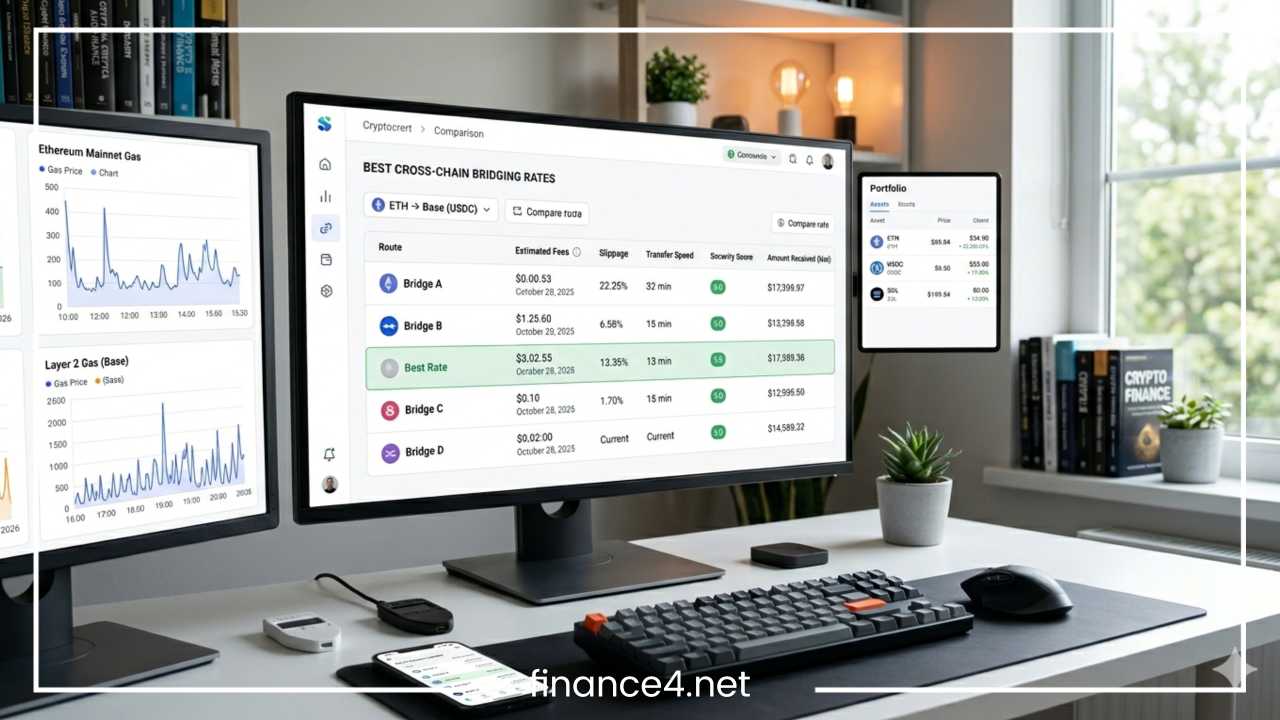
Best Cross-Chain Bridging Rates: Compare and Save on Fees
The rapid evolution of decentralized finance has shifted the blockchain landscape from a single dominant network to a thriving multi-chain ecosystem. Today, market participants no longer confine their activities to a single layer. Instead, capital constantly flows across a web of independent networks, each offering unique financial products, transaction speeds, and economic environments. This shift has turned the ability to move assets seamlessly between disparate ecosystems into a core necessity for daily operations.
Users frequently bridge assets between chains to pursue a variety of strategic goals. Whether migrating capital to capitalize on high-yield farming opportunities on an emerging network, purchasing an asset exclusive to a specific digital art marketplace, or accessing the low-overhead environment of a scaling solution for frequent trading, cross-chain movement is vital. However, this fluid migration of value comes with a major catch: the hidden cost of bridging. Many users initiate transactions only to find that a noticeable portion of their principal has vanished into an opaque web of network levies, protocol cuts, and execution slippage.
Understanding how to navigate these financial hurdles is the difference between a highly profitable strategy and an expensive mistake. This comprehensive guide breaks down the complex mechanics of cross-chain costs to help you maximize your on-chain efficiency. You will learn exactly how cross-chain bridging fees are calculated, how to effectively compare rates across competing infrastructure, practical actions to reduce your overhead, and the industry-leading aggregation tools designed to automatically discover the most economical routes across the web of Web3 networks.
What Is Cross-Chain Bridging?
A cross-chain bridge is a specialized infrastructure protocol designed to transfer data, messages, and digital assets between distinct blockchain networks. In simpler terms, it acts as a financial pipeline that connects separate decentralized ledgers, allowing value created on one network to be utilized within another. Without these pipelines, the decentralized web would exist as a series of isolated economic islands, severely limiting capital efficiency and user choice.
Blockchains cannot communicate natively due to differences in their underlying architecture. Each network operates as an independent ledger with its own unique consensus mechanism, cryptographic rules, virtual machines, and state history. An independent Layer 1 network has no inherent awareness of the state changes occurring on another Layer 1 network. Similarly, while Layer 2 scaling networks are anchored to a base layer, they process transactions in their own environments. Because one network cannot verify the validity of transactions on another without external assistance, native asset transfers between independent chains are cryptographically impossible. Bridges solve this problem by serving as the verifying intermediaries that track state changes across multiple networks simultaneously.
This translation layer underpins several common use cases across the decentralized ecosystem:
-
Moving Stablecoins: Users frequently transport stable, dollar-pegged assets to fund wallets on new networks without exposing themselves to asset price volatility during transit.
-
Accessing Unique DeFi Opportunities: Capital routinely migrates to emerging protocols that offer attractive lending, borrowing, or market-making opportunities.
-
Yield Farming: Maximizing returns often requires moving liquidity to automated platforms that yield native governance assets on alternative networks.
-
Participating in NFT Marketplaces: Digital collectibles are often bound to specific chains, requiring buyers to move capital to complete purchases on specialized platforms.
-
Engaging with Gaming Ecosystems: Modern Web3 gaming heavily utilizes dedicated scaling solutions due to their high throughput and negligible microtransaction costs.
This infrastructure ties together a wide variety of prominent networks. For instance, users might bridge assets out of the high-security but costly environment of Ethereum into hyper-efficient Layer 2 rollups like Arbitrum, Base, or Polygon to execute high-frequency strategies. Alternatively, they may exit the Ethereum virtual machine ecosystem entirely, transferring capital over to the high-performance, non-EVM environment of Solana to access its distinct financial applications and deeper liquidity pools.
Understanding Cross-Chain Bridging Fees
To accurately minimize your cross-chain transaction expenses, you must first demystify the multi-layered fee structures applied to a single cross-chain transfer. A common mistake among users is evaluating a bridge solely by its advertised upfront protocol rate, while completely overlooking the secondary costs that accumulate throughout the lifecycle of the transaction. A standard bridging transaction is broken down into four primary fee categories.
Network Gas Fees
Gas fees represent the fundamental cost of computational power required to process and validate transactions on a blockchain. In a cross-chain transfer, you must pay for gas on both ends of the transaction:
-
Source Chain Gas: This fee is paid immediately by the user to execute the initial smart contract interaction that locks, burns, or deposits the asset on the originating network. If you are starting a transaction from a resource-constrained network, this initial payment can be substantial.
-
Destination Chain Gas: Once the bridge protocol verifies the source transaction, it must execute a subsequent smart contract interaction on the destination network to release, mint, or credit the corresponding assets to your target wallet. While the bridge protocol’s backend relayer technically executes this second transaction, the protocol passes this cost down to you, wrapping it into the total transaction fee.
Bridge Protocol Fees
Protocol fees are levied directly by the bridging infrastructure to sustain its operations and incentivize external participants:
-
Liquidity Provider Fees: Many popular cross-chain bridges rely on deep, pre-funded liquidity pools maintained on both the source and destination networks. To incentivize users to deposit their assets into these pools, the bridge charges a percentage-based fee on each transfer, which is distributed directly to these liquidity providers.
-
Relayer Fees: Relayers are decentralized or centralized node networks responsible for listening for cross-chain events, passing cryptographic proofs between chains, and executing the destination transactions. A portion of the bridge fee goes toward paying these relayers for their computational work and keeping the network secure.
Slippage Costs
Slippage refers to the difference between the expected price of an asset trade and the actual price at which the trade is executed. In bridging, slippage occurs in two ways:
-
Price Impact: If you are using a pool-based bridge and your transaction size is large relative to the available liquidity in the bridge’s local pool, your transfer will shift the balance of the pool, worsening the exchange rate and causing you to receive fewer assets on the destination side.
-
Low Liquidity Routes: When bridging between less popular network pairs or less common assets, the scarcity of deep market-making capital on those specific routes can result in highly unfavorable conversion rates.
Hidden Costs
Beyond the visible expenses, several operational inefficiencies can silently drain your capital:
-
Slow Settlement Times: Certain bridging architectures require long challenge windows or high block confirmation thresholds. If an asset is stuck in transit for hours or days during a volatile market period, the opportunity cost or price depreciation of that asset can far outweigh any upfront fee savings.
-
Failed Transactions: If gas prices spike suddenly while your transaction is in transit, the destination relayer may fail to execute the release contract. While your assets are usually safe, reclaiming them often requires manual intervention, secondary transactions, and unrecoverable source gas losses.
-
Maximal Extractable Value Related Losses: Publicly visible cross-chain transactions can be intercepted by automated searcher bots. These bots use front-running or sandwich techniques within the block production queue to alter asset prices to their own advantage, extracting silent premiums from your transaction.
To see how these costs stack up, consider a user bridging $1,000 worth of an asset from a highly congested base network to a low-cost scaling network. The user might anticipate a simple 0.10% protocol fee ($1.00). However, the true financial breakdown often looks like this:
-
Source Chain Gas Fee: $15.00 (paid to initiate the deposit contract)
-
Bridge Protocol Fee: $1.00 (0.10% allocated to liquidity providers)
-
Destination Chain Gas Fee: $2.50 (reimbursing the relayer for asset release)
-
Slippage and Price Impact: $3.50 (due to shallow pool balance at execution time)
In this scenario, the total cost to transfer the $1,000 asset is $22.00. This brings the effective transaction fee up to 2.20%, demonstrating why understanding every underlying fee layer is essential.
Factors That Affect Bridging Rates
Cross-chain bridging rates are highly dynamic, changing continuously based on broader market activities, technical infrastructure variations, and liquidity balances. Recognizing the core variables that drive these changes allows you to strategically time and route your transactions to secure the best rates.
Asset Type
The volatility and standardization of the digital asset you choose to bridge heavily dictate your total cost. Stablecoins generally enjoy the tightest spreads and the lowest protocol fees across the crypto ecosystem. Because stablecoins are pegged to a stable asset, liquidity providers face almost no risk of impermanent loss—the financial divergence that occurs when pool assets change value relative to each other. Consequently, bridges can operate with thinner margins on stablecoin pools.
Conversely, volatile assets require wider spreads and higher protocol fees to protect liquidity providers from rapid market shifts during the transit window. Furthermore, bridging non-standard or bespoke tokens often requires complex, multi-hop routing that routes the asset through common intermediary tokens, which incurs multiple layers of trade fees.
Blockchain Pair
The specific combination of your source and destination chains dictates the baseline computational cost of your transaction. Moving assets out of expensive environments like Ethereum down to efficient Layer 2 rollups like Arbitrum or Base generally incurs high initial source gas fees but negligible destination gas costs.
Conversely, migrating capital back up from an efficient Layer 2 to the Ethereum base layer reverses this dynamic and can introduce substantial exit premiums due to settlement verifications. Meanwhile, moving assets between two highly optimized environments—such as transferring stablecoins from Solana to Base—bypasses expensive base layers entirely, resulting in low fee structures on both sides of the transaction.
Network Congestion
Because every bridging step relies on public blockchain execution, macro-level network congestion directly increases bridging costs. During periods of intense market volatility, high-profile token launches, or major on-chain events, block space demand spikes.
As users compete to have their transactions prioritized, base gas fees can climb exponentially. This changes the economics of bridging instantly, as both your initial source contract call and the bridge’s automated destination relayer execution require significantly higher network payments to succeed.
Transfer Size
The total value of your transaction alters your effective fee rate due to the interplay between fixed and variable costs. Small transfers are heavily penalized by fixed network gas costs. If a route requires a combined $10.00 in fixed gas fees, a user bridging $50.00 will face an unviable 20% effective fee rate.
For large transfers, fixed gas fees become negligible, but variable fees like price impact take center stage. If a whale attempts to move $500,000 through a bridge route with modest pool depths, the transaction will cause significant price slippage, making deep liquidity far more important than low gas fees.
Liquidity Availability
Bridges rely on capital reserves to clear transactions efficiently. When a specific cross-chain route experiences deep, balanced liquidity pools on both ends, competition keeps fee margins tight and slippage near zero.
However, if capital flows heavily in one direction—for instance, a sudden rush of users moving funds into a newly launched network—the source pools become drained while the destination pools overflow. To deter further imbalances and incentivize pool rebalancing, the bridge protocol will automatically raise fees on the congested route, while offering deep discounts to users moving funds in the opposite direction.
How to Compare Cross-Chain Bridging Rates
To consistently secure the cheapest crypto bridge rates, you must move past superficial rate checks and apply a rigorous, standardized comparison methodology. Many interface platforms prominently feature their base service charge while hiding secondary expenses deep within confirmation sub-menus. Protecting your principal requires evaluating your options using a holistic view of the transaction.
Compare Total Cost, Not Just Bridge Fee
When evaluating potential routes, always look at the comprehensive cost equation rather than individual line items. A specific platform might advertise a headline-grabbing 0.05% protocol fee, making it look far superior to a competitor charging 0.20%. However, if that first platform utilizes an inefficient smart contract design that demands double the network gas to execute, or routes your transaction through a path with poor capital depth, the final cost will be higher. Always add the source chain gas, destination chain gas, protocol fees, and expected slippage together to find the true cost of your transaction.
Compare Arrival Amount
The most effective metric for identifying the optimal cross-chain path is the net arrival amount. Rather than getting bogged down in complex fee line items, focus on a simple calculation:
By reviewing the guaranteed amount of tokens that will land in your destination wallet before confirming a transaction, you can cut through marketing spin and clearly see which platform delivers the highest capital efficiency.
Check Transfer Speed
Cross-chain transactions involve a direct trade-off between execution speed and cost efficiency. Optimizing for the absolute lowest fee route often means routing your capital through slower, non-instant architectures—such as optimistic native rollups that require extended verification delays, or secondary networks with long block times.
While this approach saves capital, it exposes you to market volatility while your assets are up in the air. Conversely, fast-settling bridges utilize pre-funded private liquidity pools to instantly hand over assets on the destination chain, but they charge a premium for this speed. You must weigh whether saving a few dollars is worth waiting hours for your funds to arrive.
Use Bridge Aggregators
Manually parsing multiple independent bridge frontends while calculating real-time gas fluctuations is inefficient and impractical. Bridge aggregators simplify this process by functioning as search engines for cross-chain liquidity. These platforms connect to dozens of underlying bridges and decentralized exchanges simultaneously.
When you enter a desired transfer, the aggregator runs real-time simulations across every available path, mapping out varied combinations of bridges and asset swaps. It then presents these options in an orderly list, allowing you to instantly choose between the absolute cheapest path, the fastest path, or the safest route based on your current priorities.
Several leading aggregators form the backbone of modern cross-chain discovery:
-
LI.FI: A highly advanced optimization engine that aggregates both cross-chain bridges and decentralized exchanges to offer seamless, single-click swap-and-bridge solutions across all major EVM and non-EVM ecosystems.
-
Socket: A robust interoperability protocol that powers asset migration discovery across major networks, serving as the underlying routing layer for numerous popular wallet interfaces and applications.
-
Relay: A specialized routing network focused on hyper-fast, low-cost asset transfers across scaling layers, engineered specifically to eliminate unnecessary execution friction and minimize gas overhead.
Best Platforms for Finding the Lowest Bridging Fees
Selecting the right cross-chain platform depends heavily on your specific transaction size, your target networks, and whether you require an aggregator or a standalone liquidity network. The following platforms represent the leading infrastructure options available for finding optimal bridging rates.
LI.FI
LI.FI is an advanced cross-chain bridging aggregator and liquidity routing protocol. It does not operate standalone bridge infrastructure; instead, it acts as a meta-aggregator, scanning multiple individual bridges and decentralized exchange aggregators simultaneously to construct the most efficient cross-chain pathways.
-
Supported Chains: Extensive coverage across major Layer 1 networks like Ethereum and Solana, alongside a comprehensive suite of Layer 2 solutions including Arbitrum, Base, Optimism, Polygon, and Linea.
-
Typical Fee Structure: LI.FI passes through the native fees of the underlying bridge and swap contracts it utilizes, occasionally adding a minimal platform aggregation fee depending on the integration interface.
-
Advantages: It reliably uncovers the lowest overall costs by combining cross-chain routing with token swaps. If you need to move from an exotic token on an origin chain to a different token on a destination chain, LI.FI completes the entire sequence in a single user transaction.
-
Drawbacks: Because it stacks smart contract interactions (Token Swap → Bridge → Token Swap), highly complex routes can accumulate multiple layers of gas fees, making them expensive if executed during peak network congestion.
Socket
Socket is an interoperability protocol that unifies cross-chain asset movement and data transmission. Its aggregation layer acts as a discovery matrix, dynamically tracking liquidity, transaction speeds, and gas costs across a wide variety of underlying bridge networks to give users tailored path choices.
-
Supported Chains: Deeply integrated with all prominent EVM scaling chains, including Arbitrum, Base, Optimism, and Polygon, alongside direct pathways back to the Ethereum mainnet.
-
Typical Fee Structure: Fully dynamic, calculating real-time relay costs and underlying bridge charges to let users choose between speed-optimized and cost-optimized paths.
-
Advantages: Highly valued by advanced users and developers for its clean routing options and reliable speed. It is also natively integrated into popular Web3 wallets, allowing users to access its aggregation power without visiting external websites.
-
Drawbacks: Its coverage of non-EVM ecosystems is less expansive than some competing meta-aggregators, focusing its primary optimization power within EVM-compatible chains.
Stargate
Stargate is a composable liquidity transport protocol built on top of LayerZero technology. Unlike aggregators, Stargate is a primary liquidity network that utilizes unified asset pools deployed across multiple chains to guarantee instant, secure asset transfers with deep capital backing.
-
Supported Chains: Broad multi-chain deployment covering Ethereum, Arbitrum, Base, Optimism, Polygon, Avalanche, and BNB Chain.
-
Typical Fee Structure: Charges a transparent, flat protocol fee of 0.06% on asset transfers, alongside the standard network gas fees required to clear the transaction on the source and destination layers.
-
Advantages: Offers native asset transfers with absolute finality. When you bridge stablecoins through Stargate, you receive clean, native stablecoins on the destination side rather than a synthetic wrapped token variant. Its deep pools mean large transactions experience minimal price impact.
-
Drawbacks: Because it relies on its own liquidity pools rather than aggregating external routes, it cannot perform secondary asset swaps natively, meaning you must manually trade your assets before or after bridging if you require an unpooled token.
Across
Across is a cross-chain bridging architecture specifically optimized for speed and cost efficiency across Layer 2 networks. It relies on an intent-based architecture where decentralized solvers step in to fulfill user bridge requests instantly using their own private capital, later claiming reimbursement from a main liquidity pool on Ethereum.
-
Supported Chains: Focuses heavily on the Ethereum ecosystem and its primary scaling environments, including Arbitrum, Base, Optimism, and Polygon.
-
Typical Fee Structure: Utilizes a highly competitive dynamic fee model based on current pool utilization rates, paired with low gas consumption due to its efficient contract design.
-
Advantages: Renowned for fast settlement speeds and highly competitive fees. By utilizing an intent-based model, it shifts the gas optimization burden onto professional solvers, frequently resulting in lower total costs for retail users moving standard assets.
-
Drawbacks: Its asset catalog is primarily focused on high-liquidity, mainstream assets like stablecoins, Ethereum, and wrapped Bitcoin. It is not designed for migrating long-tail or highly exotic utility tokens.
Orbiter Finance
Orbiter Finance is a decentralized cross-chain bridge specializing in instant transfers of native Layer 2 assets. Its architecture relies on an alternative “Maker” network model, where independent liquidity providers deposit funds into local storage smart contracts to clear user transfers almost instantly.
-
Supported Chains: Extensive support across virtually all Layer 2 rollups and scaling solutions, including Arbitrum, Base, Optimism, Polygon, and various specialized zero-knowledge rollup networks.
-
Typical Fee Structure: Consists of a fixed fee paid to the Maker to cover the destination chain’s gas costs, paired with a small variable trading fee calculated as a tiny percentage of the total transfer volume.
-
Advantages: Exceptionally fast and inexpensive for moving assets directly between Layer 2 networks. Because transactions bypass the expensive Ethereum base layer entirely, it serves as an excellent tool for frequent, low-overhead scaling migrations.
-
Drawbacks: The interface and contract structures are explicitly built for core assets like Ethereum and stablecoins. Trying to move large amounts of alternative tokens can hit structural limits.
Rhino.fi
Rhino.fi operates as a comprehensive, multi-chain DeFi platform that includes a high-speed cross-chain bridging engine. It utilizes a customized Layer 2 processing environment to batch and settle transactions efficiently, sheltering users from direct mainnet gas exposure.
-
Supported Chains: Connects a diverse array of scaling ecosystems including Arbitrum, Base, Optimism, Polygon, and Avalanche.
-
Typical Fee Structure: Features transparent, low fixed fees tailored to specific chain pairs, designed to remain highly predictable even during fluctuating market conditions.
-
Advantages: Offers an incredibly intuitive, user-friendly bridging environment that requires minimal technical background. It frequently runs promotional zero-fee structures on specific emerging routes to attract new users.
-
Drawbacks: Users must interact with the platform’s unified interface, which requires initiating a deposit into their scaling account before routing value onward to external destination networks. This adds an operational step compared to direct wallet-to-wallet bridges.
Real-World Fee Comparison Examples
To demonstrate how these cost dynamics play out in practice, let us examine three hypothetical transfer scenarios. These examples illustrate how varying asset sizes, token types, and chain selections change the final amount received by the user.
Example One: Small Scale Stablecoin Migration ($1,000 USDC from Ethereum to Arbitrum)
In this scenario, a user is moving a moderate amount of a stable asset out of an expensive Layer 1 network down to a popular Layer 2 scaling layer.
-
Platform A (Direct Liquidity Bridge): Charges a 0.06% protocol fee ($0.60). However, the smart contract requires a high source gas payment of $14.00, and a relayer fee of $2.00 to release the funds. Total Cost: $16.60. Amount Received: $983.40.
-
Platform B (Intent-Based Bridge): Charges a dynamic fee of 0.04% ($0.40). Its gas-optimized contract design reduces the source gas fee to $9.00, with a solver fee of $1.00. Total Cost: $10.40. Amount Received: $989.60.
-
Platform C (Meta-Aggregator): Discovers an optimized route utilizing Platform B, passing along the identical cost structure but adding a negligible $0.10 aggregation fee. Total Cost: $10.50. Amount Received: $989.50.
Example Two: Institutional Scale Stablecoin Transfer ($5,000 USDC from Base to Polygon)
Here, a larger volume of capital is being transferred between two highly efficient Layer 2 networks. Source gas costs are low, meaning pool depth and price impact are the primary factors.
-
Platform A (Direct Liquidity Bridge): Source gas is negligible ($0.10). The fixed protocol fee is 0.06% ($3.00). Because the destination pool is deep, slippage is non-existent ($0.00). Relayer coverage costs $0.20. Total Cost: $3.30. Amount Received: $4,996.70.
-
Platform B (Intent-Based Bridge): Source gas is $0.10. The protocol fee drops to 0.03% ($1.50). However, the solver network faces a temporary capital imbalance on this specific route, introducing a minor 0.08% slippage fee ($4.00). Total Cost: $5.60. Amount Received: $4,994.40.
-
Platform C (Meta-Aggregator): Evaluates both routes in real-time. It flags that Platform A offers superior pool balance for this transaction size, routes the transfer there, and avoids the slippage penalty entirely. Total Cost: $3.30. Amount Received: $4,996.70.
Example Three: Volatile Asset Scaling Transfer ($500 ETH from Arbitrum to Optimism)
This scenario involves a moderate amount of a volatile native asset being moved directly between two major rollup networks.
-
Platform A (Direct Liquidity Bridge): Fixed protocol fee of 0.05% ($0.25), mixed with combined cross-chain network processing fees of $0.80. Total Cost: $1.05. Amount Received: $498.95.
-
Platform B (Specialized Layer 2 Maker Bridge): Charges a fixed maker fee of $0.40 to cover destination processing, paired with a 0.02% variable fee ($0.10). Source gas is $0.15. Total Cost: $0.65. Amount Received: $499.35.
-
Platform C (Meta-Aggregator): Identifies the specialized Maker infrastructure as the clear winner, automatically sending the user’s transaction through that route to secure the lowest fee. Total Cost: $0.65. Amount Received: $499.35.
The following table summarizes these real-world routing scenarios:
| Route | Platform Selected | Total Fees Paid | Average Transit Time | Final Amount Received |
| $1,000 USDC (Ethereum → Arbitrum) | Intent-Based Bridge | $10.40 | 3 Minutes | $989.60 |
| $5,000 USDC (Base → Polygon) | Deep Liquidity Pool | $3.30 | 5 Minutes | $4,996.70 |
| $500 ETH (Arbitrum → Optimism) | Specialized Layer 2 Maker | $0.65 | 1 Minute | $499.35 |
Tips to Save Money on Cross-Chain Transfers
Consistently securing the best cross-chain bridging rates requires combining the right software tools with disciplined execution habits. Implementing these actionable strategies will help protect your on-chain capital from unnecessary fee drainage.
Bridge During Low Gas Periods
Because source and destination network fees make up a significant portion of total bridging costs, timing your transactions around historical blockchain activity patterns can yield substantial savings. Blockchains generally experience lower traffic late at night or during weekends relative to standard business hours. Monitoring network tracking tools and waiting to bridge until base gas rates drop can cut your transaction overhead by more than half.
Use Stablecoins When Possible
Whenever your broader financial strategy allows, convert volatile or exotic tokens into highly liquid stablecoins like USDC or USDT before initiating a cross-chain transfer. Stablecoins benefit from the deepest pool allocations, the tightest spreads, and the lowest protocol fees across almost all major bridging networks. Once your stablecoins safely land on the destination network, you can then swap them into your desired target assets.
Avoid Tiny Transfers
Because every cross-chain interaction incurs fixed computational gas costs to execute smart contracts on both sides, making frequent, small bridging transactions is highly inefficient. If a specific route demands a combined $8.00 in fixed gas overhead, bridging $40.00 five separate times wastes $40.00 in pure friction. Consolidating your capital into a single, larger transfer dilutes those fixed charges, driving down your effective transaction fee percentage.
Compare Multiple Routes
Never assume that a specific bridge that proved cheap yesterday will automatically offer the best rate today. Variations in pool balances, localized network spikes, and platform updates cause rates to change constantly. Before executing any significant asset transfer, spend a moment checking multiple routes to see which infrastructure has the most favorable rates at that exact time.
Use Aggregators
The most reliable way to ensure you are getting a highly efficient rate is to consistently route your transactions through reputable meta-aggregators like LI.FI or Socket. These platforms do the heavy lifting for you, running real-time calculations across dozens of service providers to pinpoint the optimal balance of low fees, minimal slippage, and reliable speed.
Batch Transactions
If you manage multiple distinct accounts or operate across several positions, organize your actions so that assets moving to the same destination network are processed together. Batching your capital movements prevents you from paying repetitive initialization fees on the source chain, significantly lowering your cumulative operational costs.
Consider Layer 2 First
When exploring a new decentralized ecosystem, look for entry points that route directly through Layer 2 scaling solutions rather than relying heavily on the main Ethereum base layer. Moving capital directly between affordable scaling layers like Arbitrum, Base, and Polygon costs a fraction of the price of interacting with Layer 1 mainnets, keeping your hard-earned capital in your wallet.
Security Considerations When Choosing a Bridge
While finding the absolute lowest bridging fee is highly desirable, capital preservation must always remain your top priority. In decentralized finance, opting for an unverified or structurally flawed platform simply to save a few pennies in gas is a dangerous trade-off. Cross-chain bridges are complex pieces of financial infrastructure and represent some of the most targeted systems in the crypto world. If a bridge suffers a critical vulnerability, the capital inside its pools can be lost instantly.
When evaluating a bridge option, consider the following security pillars:
-
Smart Contract Risks: Reputable bridges subject their entire codebase to rigorous, multi-round technical evaluations by respected, independent cybersecurity firms. Always check whether a protocol has published comprehensive, up-to-date audit reports detailing the safety of their smart contracts.
-
Liquidity Risks: A bridge must possess healthy, verified Total Value Locked (TVL) across its supported routes. Platforms backed by deep institutional liquidity are significantly more resilient against systemic shocks and sudden balance drains than smaller networks with thin capital backing.
-
Validator Risks: Look closely at how the bridge handles transaction verification. A bridge governed by a small, centralized set of node keys or a single multi-signature wallet is inherently more vulnerable to malicious takeovers than a system utilizing decentralized validator networks or advanced cryptographic zero-knowledge proofs.
Ultimately, the cheapest bridge route is not always the safest. If an aggregator presents you with an incredibly cheap option from an obscure, unaudited platform with very low liquidity, it is often wiser to pay a slightly higher fee to use an established, highly secure industry leader. Treat your transaction fees as a necessary insurance premium for the guaranteed safety of your principal during transit.
Future of Cross-Chain Interoperability
The cross-chain landscape is moving rapidly toward an invisible, background infrastructure model designed to remove user friction. The industry is actively moving away from traditional, manual pool-based bridges and embracing highly advanced intent-based architectures. In an intent-based system, you do not have to pick a bridge, calculate gas rates, or manage separate gas tokens for different networks. Instead, you simply express a clear financial intent—such as “I want to move 1,000 USDC to my account on Base”—and a competitive market of professional solvers bids in real-time to execute that request instantly using their own capital.
At the same time, the rise of chain abstraction is set to completely hide individual blockchain identities from the end-user experience. Future financial applications will interact with multiple underlying networks simultaneously behind a single, unified interface. This evolution will deliver significantly faster settlement times, drastically compressed gas overhead through batched zero-knowledge execution proofs, and automated aggregation engines embedded directly into basic wallet software. As these technical innovations mature, the cost of moving value across ecosystems will continue to fall, bringing Web3 closer to a completely frictionless global economy.
Conclusion
Maximizing your capital efficiency in a multi-chain world requires a strategic approach to managing cross-chain costs. Securing the lowest bridging rates is not about finding a single platform and using it exclusively. Instead, it requires adopting a flexible approach that factors in total network gas fees, protocol expenses, and execution slippage across every single transfer.
To protect your capital over the long term, always prioritize the total received amount over advertised base fees, balance your cost optimization goals with execution speed, and rely on advanced meta-aggregators to handle real-time routing discovery. Most importantly, never sacrifice fundamental smart contract security for minor fee savings. By combining aggregation tools with smart execution habits—like bridging during low-traffic periods and consolidating your transfers—you can ensure your capital moves freely, safely, and cost-effectively across the decentralized web.
Frequently Asked Questions
What is the absolute cheapest crypto bridge for Layer 2 networks?
The cheapest crypto bridge for Layer 2 networks depends on the architectural model of the platform. For EVM-to-EVM transfers (such as Arbitrum to Base), intent-based bridges like Across Protocol and specialized Layer 2 bridges like Orbiter Finance typically offer the lowest fees. Because these platforms skip the expensive Ethereum base layer entirely and use market-making solvers to fill orders instantly, they drastically reduce gas overhead.
How can I find the best cross chain bridge low fees options dynamically?
To continuously find the best cross chain bridge low fees paths, use meta-aggregators like LI.FI (Jumper.exchange) or Socket. Rather than checking individual bridge platforms one by one, these aggregators run real-time simulations across dozens of liquidity networks simultaneously. They display a comprehensive list of paths sorted by total costs, allowing you to instantly identify the most economical route based on real-time gas prices and protocol slippage.
What is the cheapest way to bridge USDC between EVM and non-EVM chains?
The cheapest way to bridge USDC between EVM chains (like Optimism or Polygon) and non-EVM chains (like Solana) is through platforms utilizing Circle’s native Cross-Chain Transfer Protocol (CCTP) or intent-based protocols like deBridge. Platforms running CCTP natively burn USDC on the source chain and mint it on the destination chain, which completely bypasses the liquidity provider fees and heavy slippage associated with traditional wrapped asset pools.
How do I compare bridge fees accurately before confirming a transaction?
To compare bridge fees accurately, look at the final “Arrival Amount” or “Net Received Amount” rather than the advertised upfront protocol fee. A bridge might boast a tiny 0.05% service fee but require a highly complex, inefficient smart contract interaction that demands excessive gas. True cost comparison requires adding four distinct variables together:
-
Source chain gas
-
Destination chain gas (often wrapped into the relayer fee)
-
Protocol service cuts
-
Projected execution slippage
Is it possible to bridge crypto without gas fees entirely?
You cannot execute a blockchain transaction with zero computational cost, but you can bridge crypto without holding the native gas token (like ETH or MATIC) on the origin chain by using “gasless swaps” or “intent-based architectures.” Protocols utilizing UniswapX, deBridge, or MetaMask’s smart transactions allow you to sign a off-chain cryptographic intent. A third-party solver or filler then executes the transaction on-chain, pays the native gas on your behalf, and simply deducts that exact cost out of the asset you are bridging.
Which tools offer a reliable crypto bridge calculator for complex multi-hop swaps?
Advanced bridge aggregators like Jumper.exchange (powered by LI.FI), Matcha, and Squid Router function as the most reliable crypto bridge calculators. If you are trying to swap an exotic utility token on one chain for a different asset on another network, these calculators map out the entire sequence (Token A → Stablecoin → Bridge → Token B) and display the cumulative fee, total route steps, and exact output amount before you sign the transaction.
What causes Ethereum bridge fees to spike suddenly during transfers?
Ethereum bridge fees spike because traditional liquidity-pool bridges rely on mainnet smart contracts to verify cross-chain states. If the Ethereum mainnet experiences high congestion due to a major market sell-off or a viral NFT mint, base gas costs rise exponentially. This increases both your initial deposit cost on the source side and the fee required to reimburse the relayer for finalizing the contract on the destination side.