NFT Aggregator for Specialized Real-World Assets
 by
by 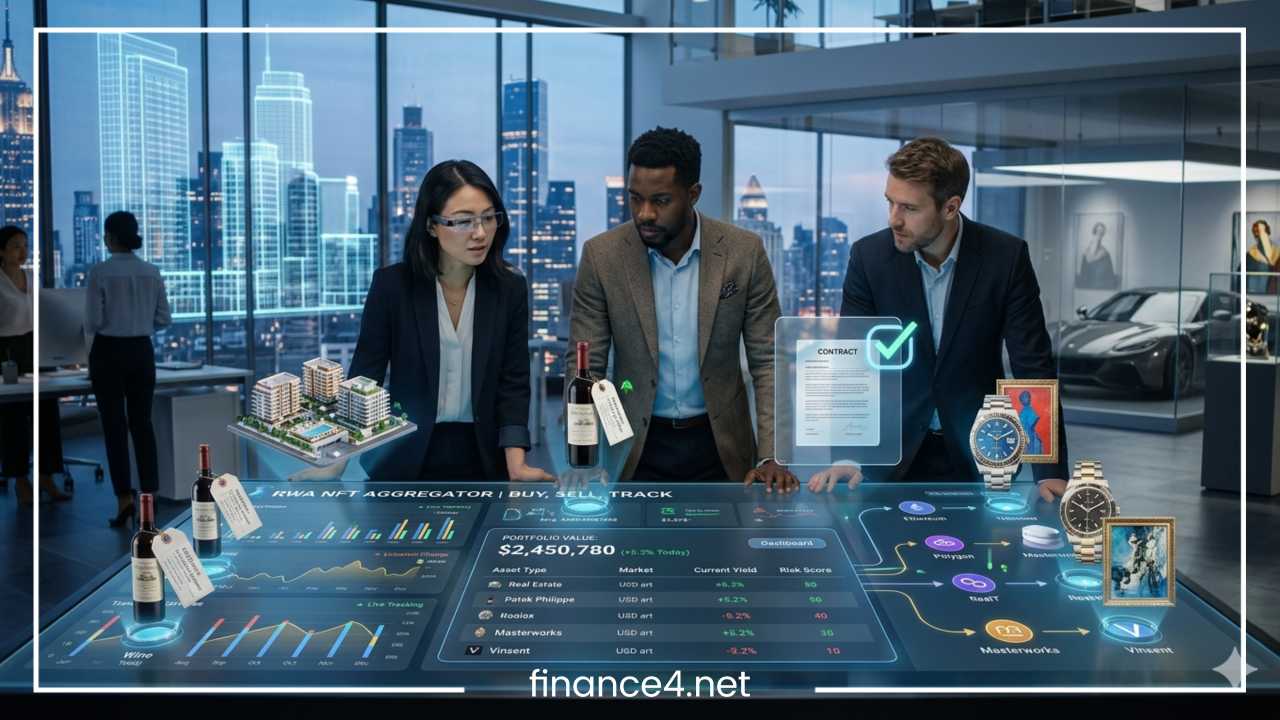
NFT Aggregator for Specialized Real-World Assets (RWA) | Buy, Sell & Track
The intersection of decentralized finance and tangible, real-world commerce represents one of the most profound paradigm shifts in the history of capital markets. For years, the Web3 ecosystem was characterized primarily by native digital assets, ranging from volatile utility tokens to algorithmic stablecoins and speculative digital art collections. However, a new frontier has emerged that bridges the gap between digital ledger technology and physical property: Real-World Assets. These tokenized real-world assets convert tangible physical objects, financial instruments, and yielding properties into digital tokens on a blockchain, providing them with unprecedented liquidity, global accessibility, and operational efficiency.
As blockchain technologies mature, tokenized real-world assets are rapidly positioning themselves as one of the fastest-growing and most fundamentally resilient sectors within the Web3 infrastructure. Institutional investors, sovereign wealth entities, and retail market participants are waking up to the reality that legacy finance infrastructures—with their reliance on opaque manual clearances, siloed domestic databases, and costly intermediaries—are no longer optimal. By bringing off-chain assets on-chain, properties ranging from multi-family residential complexes to ultra-rare fine art can be fractionalized, traded, and settled instantly around the clock.
Yet, this exponential growth has birthed a massive structural bottleneck. The market for tokenized real-world assets has become heavily fragmented. Because physical assets vary widely in nature, legal requirements, and jurisdictional frameworks, individual issuers have built specialized, isolated platforms to host their respective inventory. An investor looking to manage a diversified portfolio across various sectors faces a daunting operational challenge. They must maintain distinct user accounts, pass repetitive compliance procedures, navigate disparate user interfaces, and constantly cross-reference multiple platforms just to execute basic trades or monitor performance.
To prevent this systemic fragmentation from suffocating user adoption, the infrastructure must evolve. This is where an NFT aggregator specifically tailored for tokenized real-world assets comes into play. An NFT aggregator acts as a powerful middleware layer that unifies these bureaucratic, decentralized environments. By pulling real-time data, order books, and liquidity pools from every major RWA marketplace into a single, intuitive interface, a specialized aggregator eliminates the friction of multi-platform investing. It allows investors to buy and sell tokenized real-world assets efficiently, track valuations dynamically, and execute complex portfolio strategies without ever leaving a unified platform.
Understanding Real-World Asset NFTs
To fully grasp the disruptive potential of an NFT aggregator, one must first explore the foundational technology driving the underlying assets: Real-World Asset NFTs. In the early stages of Web3, Non-Fungible Tokens were largely synonymous with digital collectibles and artistic profile pictures. While those applications proved the market’s appetite for unique digital items, the true technical brilliance of the NFT standard lies in its ability to establish immutable uniqueness, transparent provenance, and indisputable ownership. When applied to physical assets, an NFT ceases to be a speculative graphic; it becomes a legally binding, cryptographically secured digital title.
Types of Real-World Assets Being Tokenized
The ecosystem for real-world asset NFTs is incredibly vast and expands into every traditional asset class. Virtually any physical object or financial contract that derives value from scarcity, utility, or yield can be converted into a digital representation on a blockchain.
-
Real Estate: Both commercial and residential real estate are undergoing a major evolution. Through tokenization, a luxury apartment complex or a commercial warehouse can be split into thousands of individual digital fractions represented by NFTs. Investors can buy shares of these cash-flowing properties, receiving proportional rental yields distributed automatically via smart contracts.
-
Fine Art: The traditional fine art market has long been criticized for its high barriers to entry, lack of transparency, and poor liquidity. Tokenized assets within this vertical allow blue-chip masterpieces from legendary painters to be fractionally owned by thousands of global art enthusiasts, opening a historically exclusive asset class to the masses.
-
Luxury Watches and Collectibles: High-end horology, vintage sports cars, rare wines, and historical artifacts are increasingly moving on-chain. These high-value items are typically stored in ultra-secure, climate-controlled institutional vaults while their digital counterpart NFTs trade freely on the blockchain, reflecting market price fluctuations in real time.
-
Precious Metals and Commodities: Gold, silver, platinum, and agricultural commodities can be tied directly to non-fungible tokens. Each token represents a specific, audited bar or quantity held within a designated depository, combining the safety of hard physical assets with the transactional speed of digital markets.
-
Intellectual Property and Royalties: Music catalogs, cinematic distribution rights, patents, and literary copyrights can be wrapped into NFTs. This enables creators to raise upfront capital by selling percentages of their future cash flows directly to their audience, with royalties streaming seamlessly to token holders.
-
Invoice Financing and Corporate Debt: Short-term trade receivables and debt obligations can be tokenized as yielding assets. Accredited and retail investors can purchase fractions of these invoices, providing working capital to businesses while earning predictable, short-duration returns upon invoice maturity.
-
Carbon Credits and Environmental Assets: Verified environmental offsets and carbon credits are transitioning to blockchain networks to combat double-counting and fraud. Tokenizing carbon offsets brings maximum traceability to corporate sustainability efforts and green investment strategies.
Why Non-Fungible Tokens Are Used for Real-World Assets
The choice of using non-fungible token standards rather than standard fungible tokens for real-world asset representation is deeply deliberate. Physical assets are inherently unique; no two properties, paintings, or luxury timepieces are exactly alike in condition, serial number, geographic location, or historical background. Non-fungible tokens naturally capture these nuanced characteristics.
-
Ownership Verification: Blockchains provide a definitive ledger that records the history of every single asset from the moment of tokenization. This absolute clarity eliminates long-standing vulnerabilities related to forged physical documentation, disputed titles, and counterparty deceit. Anyone can inspect the blockchain to confirm which public address holds the legal claim to a physical object.
-
Fractional Ownership: Many premium real-world assets require millions of dollars in upfront capital, locking out the vast majority of global market participants. By tokenizing these assets into fractional non-fungible components, issuers can lower the minimum investment threshold to nominal amounts. This broadens the capital pool for asset owners and democratizes access to wealth-generating vehicles for everyday savers.
-
Instant Transferability and 24/7 Liquidity: Traditional property and private equity sales take weeks or months to close, requiring an army of escrow agents, attorneys, and bureaucratic clearance bodies. Wrapping these assets into an RWA marketplace structure allows ownership to change hands globally in a matter of seconds. Transactions settle cleanly on-chain, radically reducing the time and capital lockups typical of legacy markets.
-
Programmable Transparency: Through smart contracts, real-world asset NFTs can have compliance protocols, royalty structures, and operational rules written directly into their base code. If an asset distributes quarterly dividends, the underlying code reads the ledger, identifies the current token holders, and disperses stablecoins automatically, eliminating manual overhead and administrative error.
What Is an NFT Aggregator?
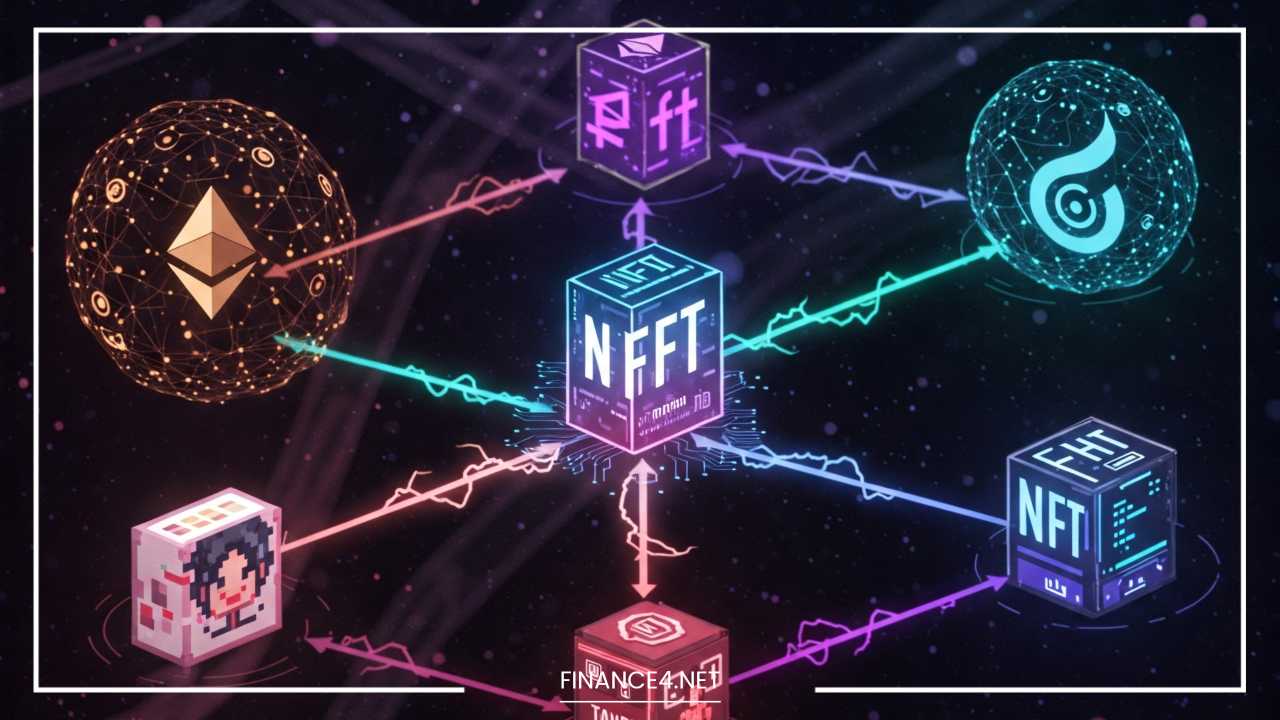
As the ecosystem of tokenized assets scales, the absolute volume of unique marketplaces, issuance platforms, and decentralized protocols grows at an exponential rate. In a standard ecosystem environment, a user is forced to visit individual platforms independently to scan for inventory. An NFT aggregator fundamentally alters this workflow by compiling the order books, metadata, pricing information, and smart contract functionalities of these distributed marketplaces into one centralized portal.
An NFT aggregator platform functions similarly to search engines used in the travel industry, which scour hundreds of airline and hotel databases to present consumers with the cheapest, fastest, and most relevant travel options. However, whereas travel search engines merely redirect users to external websites to finalize a purchase, a sophisticated NFT trading aggregator handles the entire transaction lifecycle end-to-end within its own native dashboard. It uses optimized routing smart contracts to pull the asset from its original source, execute the swap, and deliver it directly to the user’s wallet in a single transaction sequence.
Core Architecture and Functional Advantages
The difference between a traditional, siloed marketplace and an NFT marketplace aggregator lies in the scope of data access and transaction execution capabilities.
-
Multi-Market Search: Instead of jumping from an equity-share real estate platform to a specialized fine art marketplace, an investor uses the aggregator to input precise filters. The platform queries multiple connected smart contracts simultaneously, presenting a comprehensive list of all active tokenized real-world assets matching those specific investment parameters.
-
Best-Price Routing: In instances where an RWA NFT collection or fractional pool is listed across multiple venues simultaneously, the aggregator scans for price discrepancies, platform fees, and network gas optimization. It then routes the user’s buy order through the specific marketplace offering the absolute lowest net cost, preventing unnecessary capital slippage.
-
Unified Portfolio Dashboard: True financial management requires an aggregated view of net worth. A specialized RWA aggregator looks beyond the single purchase transaction, reading the entire historical composition of a user’s connected crypto wallets. It neatly categorizes their real-world exposures, highlighting real estate allocations, luxury goods valuations, and commodity balances in one visual environment.
-
Cross-Platform Tracking: Market dynamics shift rapidly. An aggregator monitors historical sales data, floors, ask spreads, and volume metrics across all integrated platforms. This enables investors to observe real-time macroeconomic trends within the tokenized asset industry without needing to synthesize conflicting data feeds from individual, non-standardized sites.
Why RWA Investors Need an NFT Aggregator
Investing in tokenized real-world assets offers immense financial promise, but the operational execution for early adopters remains fraught with structural difficulties. The current landscape is severely fragmented, forcing users to wrestle with systemic inefficiencies that diminish capital performance and introduce unnecessary operational risk.
Fragmented Liquidity
The primary obstacle hindering institutional and retail capital inflow into the tokenized asset space is fragmented liquidity. Unlike traditional stock exchanges that centralize trading volume for a specific security, RWA tokens are scattered across dozens of individual ecosystems. A real estate token might be listed exclusively on a boutique European property portal, while an identical or highly correlated fractional share is traded on an Asian compliance-focused marketplace. This fragmentation splits the overall pool of buyers and sellers into tiny, isolated pockets. As a result, order books lack depth, bid-ask spreads widen significantly, and investors find it immensely difficult to enter or exit substantial positions without heavily moving the local market price against themselves.
Poor Price Discovery
When liquidity is fractured across isolated venues, accurate price discovery becomes nearly impossible. An investor cannot easily determine the true market value of a tokenized luxury asset if transactions are happening concurrently in silos without cross-communication. This information asymmetry favors arbitrageurs and disadvantages long-term investors, who may unknowingly pay a heavy premium on one platform when the exact same tokenized asset asset is available at a major discount elsewhere. The labor required to manually track down every active listing across the internet creates an exhaustion factor that actively deters capital deployment.
Portfolio Complexity
Managing a diverse collection of tokenized real-world assets presents a logistical nightmare at the wallet level. Different RWA platforms often deploy their assets on completely different blockchain networks or localized layer-2 environments to save on transactional overhead. An investor focused on holistic asset allocation suddenly finds themselves managing assets across Ethereum, Polygon, Base, and Solana simultaneously. Tracking the performance of these investments requires maintaining spreadsheets, constantly switching network RPC configurations within their wallet interface, and manually adding individual token contracts to view their asset balances. This complexity increases the likelihood of human error, misplaced keys, and neglected positions.
Lack of Comprehensive Analytics
Traditional financial investors depend heavily on rigorous, institutional-grade analytics to drive their capital allocation strategies. They require clean data regarding annualized yields, compound historical growth rates, asset depreciation or appreciation profiles, and sector-by-sector risk metrics. Most individual RWA marketplaces offer basic interfaces that display little more than the current listing price and a minimal transaction history. Without an external, specialized tool to aggregate historical data across the entire economy, calculating true net returns, accounting for localized platform fees, and conducting deep portfolio rebalancing remains an unscientific, manual chore.
How Aggregators Eradicate These Barriers
An NFT aggregator solves these issues by acting as a universal liquidity bridge and analytical layer. By binding these disconnected platforms into a unified interface, the aggregator creates a synthesized order book, effectively pulling all disparate buyers and sellers into a single virtual trading floor. This structural consolidation compresses bid-ask spreads and guarantees that capital can move fluidly into the best-performing assets regardless of where the token was natively minted. Price discovery becomes instant and completely transparent, as all competing listings for a given asset class are displayed side-by-side. Portfolio management is transformed from a chaotic multi-chain struggle into a streamlined, single-screen experience, equipping the investor with the data-driven insights necessary to manage real-world wealth with Web3 precision.
Key Features of a Specialized RWA NFT Aggregator
A generic NFT aggregator designed for digital art is wholly inadequate for the complex world of tokenized real-world assets. Art aggregators look at basic metrics like floor price and visual traits; an RWA-focused platform must handle yield structures, legal verifications, and regulatory boundaries. To provide real utility, a specialized RWA aggregator must feature a comprehensive suite of highly tailored tools.
Unified Asset Discovery
The foundational component of the aggregator is its global search engine. It must feature robust filtering capabilities tailored specifically to tangible asset characteristics rather than digital metadata attributes. Users should be able to instantly filter assets across multiple distinct platforms based on geographic parameters (such as country or postal code for real estate), asset yield profiles (such as targeted annual percentage return), asset class risk ratings, or historical appreciation rates. This ensures that an investor looking for cash-flowing logistical infrastructure can discover properties matching their financial criteria within seconds, irrespective of the underlying issuance platform.
Buy & Sell From One Dashboard
The core operational goal of an aggregator is the elimination of platform hopping. The aggregator achieves this through custom-designed smart contracts that communicate natively with the liquidity pools of all underlying platforms. An investor can add a tokenized real estate NFT from one platform, a fractional fine art token from another, and a tokenized gold contract from a third platform into a single virtual shopping cart. The aggregator then executes a multi-route batch transaction, acquiring all selected assets simultaneously. This singular checkout flow minimizes platform onboarding times and vastly reduces transaction fees by batching operations into unified network executions.
Real-Time Asset Tracking
Real-world assets are dynamic; property values shift, luxury watches appreciate based on secondary market trends, and commodities fluctuate minute-by-minute. The aggregator must maintain continuous data connections with real-world oracles, physical appraisal databases, and decentralized pricing feeds. This allows the investor’s portfolio value to be updated in real time, reflecting accurate off-chain valuations directly on-chain. Investors are provided with a complete view of their net asset value, allowing them to spot shifts in portfolio composition immediately.
Multi-Chain Support
The RWA tokenization ecosystem is inherently multi-chain. To capture the full breadth of the market, a specialized aggregator must feature absolute chain agnosticism. It must integrate deeply with leading layer-1 and layer-2 networks to allow seamless tracking and cross-chain execution.
| Blockchain Network | Primary Use Case in RWA Ecosystem | Key Structural Advantage |
| Ethereum | Institutional debt, high-value real estate, sovereign bonds | Unparalleled economic security and deep settlement liquidity |
| Polygon | Fractionalized consumer real estate, luxury goods, collectibles | High transactional throughput paired with low minting fees |
| Base | Corporate invoice financing, credit protocols, retail assets | Seamless integration with centralized fiat-to-crypto on-ramps |
| Solana | Tokenized physical infrastructure networks, high-frequency trading assets | Sub-second finality and near-zero execution costs |
By bridging these distinct chains into one cohesive user interface, the aggregator ensures investors can transact smoothly across networks without having to perform manual asset bridging or manage separate native gas tokens across multiple external Web3 wallets.
Advanced Analytics
To satisfy the requirements of professional and institutional asset managers, an RWA aggregator must move far beyond standard trading volumes. The analytics suite must offer exhaustive breakdowns of historical pricing curves, macro sector trends, rolling return-on-investment profiles, and asset-specific yield histories. The interface should clearly separate the capital appreciation of the underlying physical asset from the cash-flow yield it produces, giving investors the granular insights needed to conduct professional portfolio optimizations and accurate tax reporting.
Asset Verification Tools
Because RWA NFTs represent legal claims to physical things, fraud or structural misrepresentation can have severe financial and legal consequences. A specialized aggregator must build robust verification modules directly into its listing architecture. These modules act as cryptographic auditors, pulling and displaying legal titles, insurance policy verifications, third-party vault audit reports, and immutable provenance records directly alongside the asset’s price data. Before a user executes a transaction, they can verify with absolute certainty that the physical asset behind the token is fully insured, securely stored, and legally sound.
Alerts & Notifications
Market movements within traditional finance often depend heavily on timing, and tokenized real-world assets are no different. The aggregator must feature an advanced, user-configurable alert framework. Investors should be able to establish real-time web, email, or cryptographic notifications for automated events, such as when a specific property collection drops below a targeted price per square foot, when a new issuance of fractionalized precious metals hits the secondary market, or when a sudden shift occurs in the yield distribution rate of an asset they currently hold. This immediate feedback loop allows investors to capitalize on market inefficiencies the precise moment they occur.
How Buying RWA NFTs Through an Aggregator Works
The operational workflow of utilizing an NFT aggregator for real-world assets is designed to replace the friction of traditional investing with a fast, modern digital experience. By abstracting away the complex underlying smart contract interactions, the aggregator provides a clean, logical pathway from initial discovery to absolute ownership.
-
Connect Wallet: The investor begins by navigating to the aggregator’s web interface and securely connecting their preferred decentralized Web3 wallet. Because the platform natively supports multi-chain architectures, the aggregator immediately scans the wallet’s public addresses across all supported blockchains, instantly populating the dashboard with any pre-existing tokenized asset holdings.
-
Browse and Search RWA Collections: Using the platform’s comprehensive global search engine, the investor applies granular filters based on their specific asset allocation strategies. They can query across all integrated marketplaces simultaneously, selecting parameters such as real estate yield percentages, fine art historical appreciation rates, or specific luxury brand parameters.
-
Compare Listings and Pricing: The aggregator presents all matching assets in a clean, unified view. If a specific fractional real-world asset is listed concurrently across three distinct marketplaces, the aggregator displays those listings side-by-side, explicitly highlighting variations in local pricing, underlying marketplace protocol fees, and available order book depth.
-
Verify Asset Ownership and Compliance Records: Before committing capital, the investor expands the asset’s detail panel to review its structural integrity. The aggregator pulls real-time data from integrated data oracles and legal repositories, displaying official property titles, vault storage receipts, insurance coverage maximums, and third-party appraisal certificates directly on the screen.
-
Purchase the Asset: Once satisfied, the investor clicks the purchase button. The aggregator’s underlying routing smart contract takes over, drawing the required funds from the user’s connected wallet, interacting automatically with the target marketplace’s smart contract, purchasing the RWA NFT, and executing any necessary localized protocol steps in a single atomic transaction.
-
Monitor Portfolio Performance: Immediately following the transaction confirmation, the newly acquired real-world asset NFT appears inside the investor’s centralized portfolio tracker. The dashboard automatically begins calculating real-time value changes, tracking accrued yield distributions, and updating the investor’s holistic asset allocation metrics.
Benefits of Using an NFT Aggregator for RWAs
Deploying capital through an NFT aggregator tailored for tokenized real-world assets offers structural, mathematical, and operational advantages that completely change the investment experience. It transforms a complex, risky market into an orderly, efficient environment built for serious capital.
Better Pricing and Eradication of Slippage
By scanning every active decentralized liquidity pool and order book simultaneously, an aggregator completely removes the risk of an investor unknowingly purchasing an asset at an inflated rate. If a fraction of a commercial warehouse is available on a minor platform for a lower price than what is displayed on a dominant marketplace, the aggregator automatically detects the variance and routes the transaction to the cheaper source. This constant, real-time optimization maximizes the purchasing power of every single dollar invested, providing a clean defense against market manipulation and local liquidity shocks.
Drastically Increased Liquidity Access
An aggregator solves the problem of fractured market liquidity by grouping separate order books into a single virtual venue. This consolidation gives investors access to the deep, combined liquidity of the entire tokenized asset economy. For sellers, it means their tokenized properties are visible to a massive, consolidated audience of global buyers, greatly increasing the speed at which a trade can be matched. For buyers, it ensures they can deploy significant amounts of capital into tokenized real-world assets without causing the wild price swings common in illiquid, siloed environments.
Unmatched Transactional Speed
Traditional property and high-value asset acquisitions require an exhaustive, multi-week dance between brokers, legal entities, banking clearing houses, and local government registries. An RWA aggregator replaces this entire bureaucratic process with automated smart contract logic. Transactions that previously took months are completed in seconds, settling permanently on an open blockchain ledger. This agility allows investors to rapidly adapt to macroeconomic shifts, moving capital between real estate, precious metals, and yielding debt instruments at a pace that traditional financial systems cannot match.
Absolute Portfolio Visibility
Maintaining a clear understanding of net asset worth is critical to long-term wealth management. An RWA aggregator eliminates the fragmented view caused by holding assets across different applications, chains, and protocols. By pulling every tokenized holding into a single master dashboard, investors get an instant, accurate look at their total financial exposure. They can quickly spot sector overallocations, track total monthly yield distributions across all asset types, and make informed rebalancing choices without needing to manually piece together messy spreadsheets.
Substantial Risk Reduction
Investing in physical property via decentralized networks carries real-world counterparty and legal risks. A specialized aggregator significantly lowers this risk profile by integrating rigid verification and automated compliance workflows directly into its discovery engine. By requiring clear proof of insurance, vetted vault storage data, and verifiable legal titles before an asset is highlighted on the platform, the aggregator creates a trusted environment. This proactive filtering helps shield investors from malicious actors, unbacked asset schemes, and fraudulent minting operations.
Security and Compliance Considerations
When dealing with tokenized real-world assets, security and compliance are not secondary features; they are foundational requirements. Because these digital tokens carry direct legal claims to valuable physical items, the platform architecture must be built to withstand both sophisticated cyber threats and intense regulatory scrutiny.
Smart Contract Security and Auditing
The primary technical risk within any decentralized application lies within the integrity of its code. An aggregator relies heavily on routing smart contracts that interact with numerous external marketplace protocols. If an underlying marketplace updates its code or contains a security vulnerability, the aggregator’s routing system could be exposed to unexpected behavior. Therefore, specialized RWA aggregators must implement a rigorous, continuous security protocol. This requires comprehensive multi-signature governance structures, real-time automated exploit monitoring, and mandatory code audits conducted by top-tier Web3 security firms before any contract optimization goes live.
Regulatory Compliance and Identity Verification
Unlike native digital art NFTs, which often enjoy highly flexible regulatory treatment, tokenized real-world assets almost always cross into the domain of regulated financial instruments, securities, or restricted commodities. Consequently, an RWA aggregator must navigate a complex web of global financial laws, including explicit Know Your Customer (KYC) and Anti-Money Laundering (AML) mandates.
To maintain total compliance without ruining the user experience, advanced aggregators integrate decentralized identity protocols. Users complete a standardized compliance check once, securely linking their verified credential status to their public wallet address. The aggregator’s underlying smart contracts can then automatically check this identity status before permitting a transaction to execute, ensuring that only verified, legally eligible investors can interact with restricted real-world asset collections.
Physical Custody and Legal Protection
The ultimate value of an RWA NFT depends entirely on the safety, accessibility, and legal standing of the physical item it represents. If a tokenized gold bar is stolen from its vault, or if a tokenized apartment complex suffers structural damage without insurance coverage, the digital NFT becomes worthless.
A specialized aggregator must protect investors by holding integrated marketplaces to strict physical custody standards. This means ensuring that physical items are managed by institutional-grade custodians, backed by comprehensive all-risk insurance policies, and tied to robust legal wrappers (such as Special Purpose Vehicles). These legal structures guarantee that if an issuance platform faces financial bankruptcy, the underlying physical asset belongs to the token holders, not the creditors.
Future of NFT Aggregators in the RWA Economy
The tokenization of real-world assets is moving past its early infrastructure phase and heading toward mass adoption. As global markets realize the incredible capital efficiencies of putting real property on-chain, the role of specialized NFT aggregators will shift from a convenient investment tool to an absolutely essential piece of global financial infrastructure.
Institutional Adoption and Capital Inflows
The next major growth phase for the tokenized asset industry will be driven by large traditional institutions, private equity funds, and corporate asset managers. These entities manage trillions of dollars in capital but have historically stayed on the sidelines due to the fragmented, complex nature of Web3 markets. A specialized, institutional-grade RWA aggregator provides the perfect entry point. By wrapping fractured liquidity, advanced data analytics, and strict compliance checking into a single dashboard that mirrors traditional software systems, aggregators give institutional capital the confidence and tools needed to enter the digital asset economy at scale.
AI-Powered Discovery and Smart Automation
As thousands of new tokenized assets join the blockchain daily, finding the right investment will require more than basic manual searching. Future RWA aggregators will integrate advanced artificial intelligence engines to provide highly personalized asset discovery. Investors will be able to define complex, high-level financial goals—such as creating a diversified, low-risk real estate and commodity portfolio that yields a steady five percent annually—and the AI engine will instantly scan global markets to build and execute an optimized strategy. Over time, these automated systems will constantly monitor portfolio health, automatically rebalancing assets the moment market dynamics shift or yields fluctuate.
Cross-Chain Interoperability and Global Asset Ecosystems
The future of tokenization will not be won by any single blockchain network. Instead, the market will span across a web of interconnected layer-1 platforms, specialized layer-2 networks, and private corporate subnets. NFT aggregators will evolve into hyper-advanced, cross-chain hubs, using secure messaging protocols to seamlessly bridge these isolated environments.
An investor will be able to use capital sitting on one blockchain to instantly purchase a fractional real estate asset listed on an entirely different network, completely bypassing the manual hassle of bridging funds. This absolute connectivity will merge the world’s fractured asset markets into a truly unified, boundary-free global economy, unlocking unprecedented financial freedom for investors everywhere.
Final Thoughts
The tokenization of real-world assets marks a massive evolution in how humanity defines, trades, and manages wealth. By turning physical property, fine art, luxury goods, and yielding commodities into non-fungible tokens, Web3 has laid the groundwork for an incredibly efficient, transparent, and democratic global financial system. However, this early growth has created a heavily fragmented landscape. Without a unifying layer, the market risks splitting into isolated, inefficient silos that slow down adoption and complicate the user experience.
A specialized RWA NFT aggregator offers the ultimate solution to this problem, serving as a powerful bridge that brings this disconnected market into a single, cohesive environment. By combining global liquidity, offering best-price order routing, providing deep data analytics, and embedding automated compliance tracking into a single dashboard, aggregators remove the friction holding back tokenized assets. They transform a chaotic multi-chain ecosystem into a clean, intuitive experience built for serious capital deployment.
As institutional money flows into tokenized assets and cross-chain tech matures, the aggregator will become the central hub for the modern investor. For individuals and institutions looking to buy, sell, and track tokenized real-world assets with maximum efficiency, utilizing a specialized aggregator is no longer just an advantage—it is an essential operational strategy for navigating the future of wealth management.
Platform Feature Comparison
| Feature | Traditional NFT Marketplace | RWA NFT Aggregator |
| Multi-market search | No | Yes |
| Portfolio tracking | Limited | Advanced |
| Best-price discovery | No | Yes |
| Multi-chain support | Limited | Yes |
| Analytics | Basic | Advanced |
Frequently Asked Questions
What is an NFT aggregator for RWA and how does it work?
An NFT aggregator for RWA is a unified platform that scans, compiles, and routes listings from multiple independent real-world asset marketplaces into a single searchable dashboard. Instead of manually creating accounts on separate platforms to buy tokenized real estate, fine art, or precious metals, investors use the aggregator to view complete market liquidity simultaneously. When a transaction is made, the aggregator uses smart contracts to execute the trade directly with the native source platform, optimizing network gas fees and finding the lowest available purchase price.
Why are real-world asset NFTs better than traditional property ownership?
Real-world asset NFTs offer massive improvements over legacy property management by introducing fractional ownership, instant cross-border transferability, and automated clearing. Traditional asset sales take weeks, carry heavy broker fees, and demand mountains of physical paperwork. Tokenizing these physical holdings on a blockchain allows them to settle in seconds with complete, public transparency regarding legal titles and historical provenance.
Is KYC required to buy and sell tokenized assets on an aggregator?
Because real-world asset NFTs usually represent legally regulated securities, financial debt instruments, or restricted physical commodities, identity verification is standard across the industry. Advanced aggregators handle this smoothly by integrating decentralized identity protocols. Users complete a Know Your Customer (KYC) check once to link a verified compliance credential to their public wallet address, allowing them to transact across multiple connected marketplaces without re-entering personal data.
How do oracles keep track of physical tokenized real estate NFT valuations?
An RWA investment platform maintains accurate, live pricing by pulling data from decentralized oracle networks. These oracles serve as secure bridges that feed verified off-chain information—such as independent third-party appraisals, regional real estate indexes, and physical inventory audits—directly to on-chain smart contracts. This continuous data flow ensures that the valuation displayed in a user’s portfolio dashboard accurately matches the real-world condition of the physical asset.
What are the main risks when using a cross-chain NFT aggregator?
The primary technical risks include smart contract vulnerabilities within the aggregator’s routing code, potential oracle communication delays, and cross-chain bridge security dependencies. Furthermore, investors face counterparty risk relating to the physical custody of the underlying asset. To reduce these exposures, top-tier aggregators strictly feature marketplaces that utilize audited code, fully insured institutional vault storage, and clear legal frameworks that protect token holders if an issuing platform faces bankruptcy.
Can tokenized asset trading yield recurring passive income?
Yes. Many tokenized asset classes, such as fractional real estate, corporate invoice financing, and intellectual property royalties, are fundamentally structured to distribute yield. Underlying smart contracts automate this entire process by reading the blockchain ledger, identifying current token holders, and streaming proportional rental income or debt interest payments directly into investors’ wallets as stablecoins, removing human error and administrative overhead.