How to Create Your Own Liquidity Token
 by
by 
How to Create Your Own Liquidity Token | Step-by-Step Guide
In the rapidly expanding landscape of decentralized finance, liquidity acts as the essential lifeblood of any successful protocol. For developers, entrepreneurs, and project founders, the ability to manage, attract, and incentivize liquidity is perhaps the most fundamental skill in the ecosystem. A liquidity token is a digital asset that represents a quantified stake in a decentralized liquidity pool, providing a mechanism for decentralized exchanges to facilitate trades without the need for a centralized intermediary. Projects create these tokens to bootstrap their initial ecosystem, ensure stable and efficient trading environments, and reward users for their commitment to the protocol.
Within modern DeFi ecosystems, liquidity tokens serve various critical roles, from facilitating seamless token swaps to enabling complex yield farming strategies. Understanding how to create your own liquidity token involves a deep, multifaceted dive into smart contract architecture, economic theory, and industry-standard security practices. This guide provides a comprehensive, expert-level roadmap for project owners and developers. We will explore everything from the foundational definitions and nuanced tokenomics design to the intricacies of deployment, auditing, and long-term sustainability. By meticulously following these steps, you will gain the knowledge necessary to build a robust, secure, and attractive liquidity mechanism that fosters organic growth, encourages meaningful community participation, and maintains a stable environment for all market participants.
What Is a Liquidity Token?
A liquidity token, frequently referred to in industry parlance as a Liquidity Provider (LP) token, is a specialized digital asset that serves as cryptographic proof that an individual has deposited assets into a liquidity pool on a decentralized exchange. When a user elects to deposit assets—typically a pair of tokens—into a pool, the underlying smart contract automatically mints and issues these LP tokens to the provider’s wallet. These tokens act as a secure, immutable receipt, representing the user’s exact pro-rata share of the total assets currently locked within that specific liquidity pool.
It is crucial to distinguish these assets from other types of crypto tokens. Unlike standard utility tokens, which provide access to specific services, or governance tokens, which grant holders voting power, liquidity tokens are primarily functional, programmatic instruments tied directly to the underlying capital held in a contract. Their economic value is derived entirely from the market value of the assets held within the pool and the accumulated trading fees generated by those assets.
Examples
-
LP tokens on Decentralized Exchanges: When users supply pairs such as Ethereum and a project-specific token to a decentralized exchange, they receive LP tokens. These tokens are the only mechanism through which they can later claim their original deposit plus their share of the accrued trading fees.
-
Yield farming rewards: Protocols frequently allow users to deposit these LP tokens into a secondary smart contract, often called a farm or a vault. This “staking” of LP tokens allows the protocol to track how long a user is willing to lock their liquidity, in exchange for which the user earns additional native project tokens.
-
Staking ecosystems: More advanced protocols utilize LP tokens as collateral. For instance, a user might supply their LP tokens to a lending protocol to borrow other stablecoins, effectively leveraging their liquidity position for further capital efficiency.
How Liquidity Tokens Work
The mechanics behind liquidity tokens are managed by immutable, self-executing smart contracts that govern how assets are pooled and how ownership interests are calculated. The process generally follows a standardized, highly transparent flow that ensures mathematical fairness for every participant involved.
-
User deposits assets: A liquidity provider selects a pair of tokens and deposits an equivalent value of both into the liquidity pool contract. This balance is critical to maintain the price parity defined by the Automated Market Maker (AMM).
-
Pool receives assets: The smart contract accepts these tokens, updating the pool’s reserves. This increase in reserves provides the necessary depth for traders to execute transactions with minimal price impact.
-
Smart contract mints LP tokens: Based on the amount deposited relative to the total existing liquidity in the pool, the smart contract calculates the provider’s share. It then generates (mints) a corresponding quantity of LP tokens and sends them to the provider.
-
LP tokens represent ownership: These tokens serve as the sole proof of the user’s stake. When a user wishes to withdraw their assets, they interact with the smart contract to burn their LP tokens. In return, the contract releases their original assets along with a pro-rata portion of the trading fees that have been earned during their participation period.
This cycle is the fundamental engine behind all Automated Market Makers, allowing the market to remain functional and liquid 24/7 without the need for traditional order books or centralized matching engines.
Benefits of Creating a Liquidity Token
For Project Owners
-
Increased liquidity: A well-incentivized liquidity token ensures that traders can buy and sell your native asset without suffering from significant price slippage. High liquidity is often viewed by investors as a signal of project legitimacy and stability.
-
Improved trading efficiency: By deepening liquidity pools, you enable a more accurate price discovery mechanism, which helps in preventing extreme price volatility that can harm a new project’s reputation.
-
Community participation: LP tokens allow users to become active stakeholders. By incentivizing them to provide liquidity, you turn passive holders into active contributors who have a vested interest in the long-term success of the project.
-
Incentive distribution: Developers can distribute tokens to LP providers as a form of “liquidity mining.” This is an effective way to decentralize the token supply while simultaneously securing the project’s market functionality.
For Users
-
Earn trading fees: Every swap executed by traders on the decentralized exchange incurs a fee. This fee is automatically redistributed to the liquidity providers, creating a passive income stream for the capital they have provided.
-
Staking rewards: Many projects offer additional incentives, such as boosted APR or governance tokens, for users who stake their LP tokens in dedicated farming contracts. This helps mitigate the risks associated with providing liquidity.
-
Governance rights: In many decentralized autonomous organizations, holding significant LP positions provides influence over the direction of the liquidity protocol, such as voting on fee structures or future reward emissions.
-
Passive income opportunities: Liquidity provision remains one of the most reliable ways to earn yield on idle crypto assets. It allows users to put their assets to work rather than simply holding them in a wallet.
Prerequisites Before Creating a Liquidity Token
Define Your Objectives
Before writing a single line of code, you must clearly define your project’s objectives. Are you building a bridge to a major decentralized exchange to facilitate trading, or are you creating an internal yield farming program to lock up supply? Each objective necessitates a different technical and economic approach. If your goal is broad market adoption, focus on integration with major liquidity pools. If your goal is ecosystem loyalty, focus on custom staking and reward mechanics.
Select a Blockchain
The choice of blockchain will dictate your costs, transaction speed, and the overall user experience of your project.
| Blockchain | Characteristics | Best For |
| Ethereum | High security, broad composability | High-value, established projects |
| BNB Chain | Moderate fees, extremely fast | Retail-friendly DeFi applications |
| Polygon | Low fees, high scalability | Accessible, high-frequency dApps |
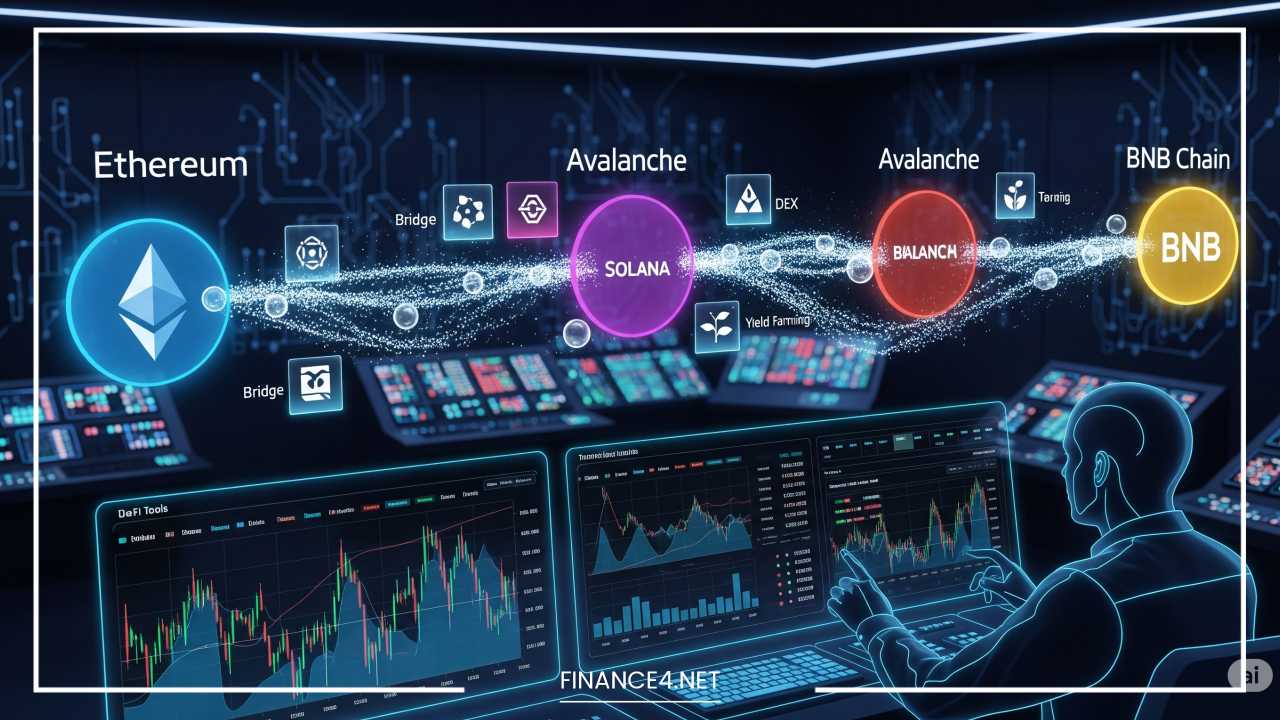
| Avalanche | High throughput, sub-second finality | High-frequency trading models |
| Arbitrum | Low fees, Layer 2 scaling | Efficient, user-focused DeFi |
When comparing these, consider the trade-offs between gas fees, speed, security, and the size of the existing ecosystem. A project on a chain with lower fees may attract more retail users, while a project on a chain with higher security may attract more institutional capital.
Step 1 – Design Your Tokenomics
A successful token ecosystem relies entirely on a sustainable economic model. Tokenomics is the study of how a token functions within an ecosystem and how it captures value.
Token Supply
Decide early on whether you want a fixed supply, which provides long-term scarcity and predictability, or an inflationary model. Inflationary models are often used to sustain ongoing rewards for liquidity providers but must be carefully managed to avoid long-term devaluation of the asset.
Distribution Model
A balanced distribution is essential for project health.
-
Team allocation: Should be subject to long-term vesting to signal commitment.
-
Community rewards: Drives adoption and usage through airdrops or task-based incentives.
-
Liquidity incentives: Keeps trading pools deep and functional.
-
Treasury allocation: Ensures operational runway for future development.
Reward Structure
Carefully calculate your Annual Percentage Yield (APY) to remain competitive with other projects without causing hyper-inflation. Implement vesting schedules for team and partner tokens to build long-term trust and prevent sudden market dumping.
Step 2 – Create the Smart Contract
Token Standards
The majority of liquidity tokens follow the ERC-20 standard on Ethereum or the BEP-20 standard on the BNB Chain. For more advanced protocols, you should explore the ERC-4626 standard. This is a tokenized vault standard that simplifies the integration of yield-bearing assets into other protocols, significantly enhancing the composability of your liquidity token.
Smart Contract Functions
Your contract must securely handle several critical functions:
-
Minting: Creating new tokens upon user deposits.
-
Burning: Removing tokens from circulation upon user withdrawal.
-
Transfer: Managing the movement of tokens between user wallets.
-
Stake and Reward distribution: Tracking individual balances to calculate and distribute farming rewards accurately.
Security Considerations
Always prioritize security. Use established, battle-tested libraries such as OpenZeppelin for standard functions. Implement robust access controls (such as the Ownable pattern) and ensure your code is explicitly protected against reentrancy attacks, which are common in DeFi.
Step 3 – Deploy the Liquidity Token
Development Tools
-
Remix: A web-based IDE that is perfect for rapid prototyping, testing, and initial deployment.
-
Hardhat: A professional-grade development environment that is essential for compiling, testing, and deploying complex, multi-contract systems.
-
Foundry: A fast, Rust-based toolkit favored for its incredible speed, native testing capabilities, and excellent developer experience.
Deployment Process
-
Compile contract: Ensure your code is clean and free of syntax errors.
-
Test contract: Use testnets such as Sepolia to simulate real-world interactions without risking real capital.
-
Connect wallet: Link your development wallet to the chosen network using a secure provider.
-
Deploy to mainnet: Execute the transaction. Be prepared for gas fees, which can fluctuate based on network congestion.
-
Verification: Verify your contract on the blockchain explorer (such as Etherscan or BscScan). This is a vital step that allows users to inspect your code and builds trust.
Step 4 – Create a Liquidity Pool
Once your native token exists on the blockchain, it needs a home on a decentralized exchange.
Choosing a DEX
Select a platform based on your project’s specific needs. Uniswap is the undisputed industry standard for Ethereum; PancakeSwap is the primary choice for the BNB Chain; SushiSwap offers excellent multi-chain flexibility for cross-protocol deployments.
Pool Creation
You will need to provide the initial liquidity. This involves depositing your project token alongside a base asset such as ETH or USDC. The ratio of these tokens will determine the initial price of your token on that exchange. Choose this starting price carefully, as it will impact the initial market perception of your project.
Step 5 – Mint and Distribute Liquidity Tokens
After the liquidity pool is successfully initialized, the exchange’s smart contract will mint the LP tokens directly to your wallet. You can then distribute these tokens through various methods, such as airdrops to early supporters, reward programs for community members, or by launching formal liquidity mining programs that incentivize users to lock their assets into your pool.
Step 6 – Add Staking and Yield Farming Features
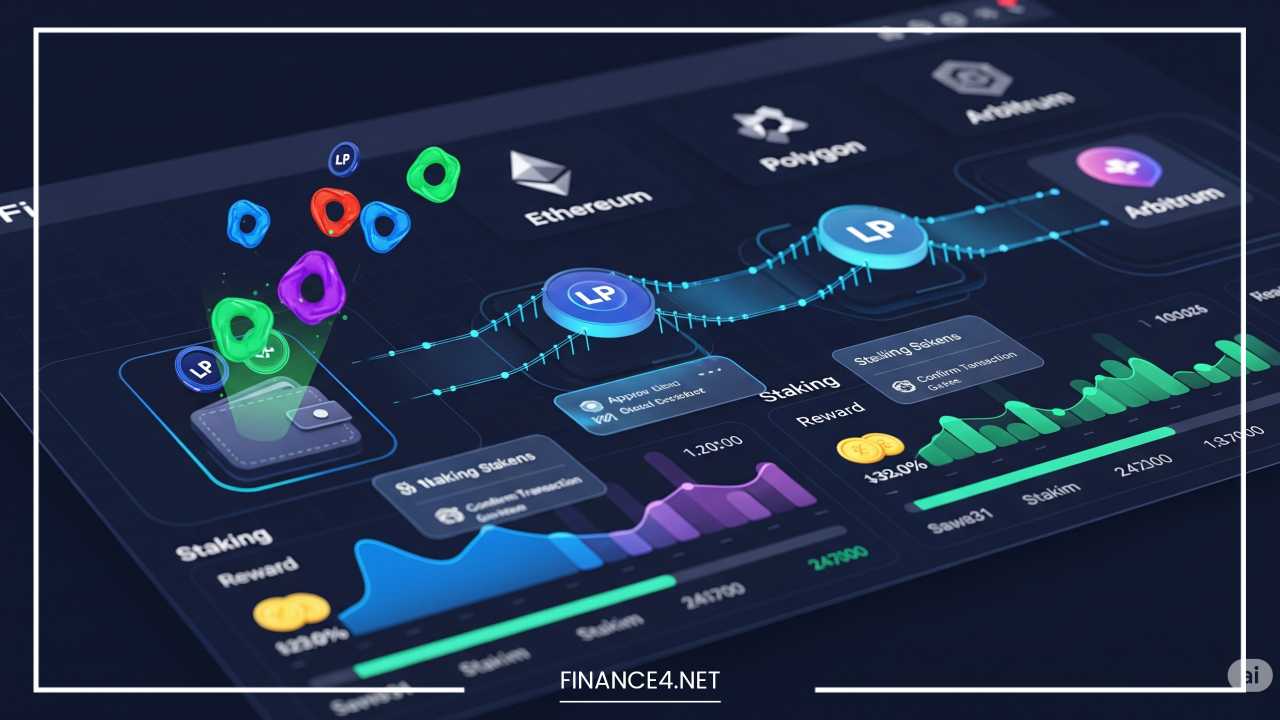
To ensure that your liquidity remains deep over the long term, most projects implement yield farming. You should create a custom “staking contract” where users can deposit their LP tokens to earn the project’s native governance token. This creates a powerful, self-reinforcing feedback loop: users provide liquidity, earn LP tokens as a receipt, stake those tokens, and receive additional rewards. This approach effectively locks the liquidity into the pool for extended periods, providing stability to the market price.
Step 7 – Secure and Audit Your Liquidity Token
Security is the single most important aspect of any DeFi project. A single mistake in your smart contract can lead to the total loss of user funds and the permanent destruction of your project’s reputation.
-
Smart contract audits: Always hire a reputable, third-party security firm to conduct a comprehensive audit of your code before any mainnet launch.
-
Bug bounties: Set up a program to incentivize ethical hackers to find and report vulnerabilities in your code.
-
Multi-signature wallets: Never store large project funds or administrative keys in a single-owner wallet. Use a multi-signature solution like Gnosis Safe to require multiple keys for any critical action.
-
Monitoring tools: Utilize automated monitoring tools like Forta to detect suspicious activity or abnormal transactions in real-time.
Be acutely aware of risks such as impermanent loss, which occurs when the relative price of the tokens in a pool changes compared to when they were deposited, and flash loan attacks, which can drain pool reserves if your contract architecture is flawed.
Common Challenges When Creating Liquidity Tokens
-
Low liquidity: If the pool is too small, large trades will suffer from high slippage, effectively discouraging serious traders from using your token.
-
Poor tokenomics: Unbalanced reward structures often lead to massive, unsustainable sell pressure that can crash the token price.
-
High gas costs: If your contract is inefficient, high transaction fees will prevent users from interacting with your platform.
-
Security vulnerabilities: As mentioned, a single exploit can bankrupt the project and alienate your community.
-
Regulatory uncertainty: Ensure that you are operating within the legal requirements of your jurisdiction. Compliance is increasingly important in the maturing DeFi space.
Best Practices for Successful Liquidity Tokens
-
Transparent tokenomics: Clearly communicate how rewards are calculated and what the maximum supply limits are.
-
Sustainable rewards: Avoid hyper-inflationary models that devalue your token over time. Aim for a long-term emission schedule.
-
Gradual emissions: Release rewards over a long period to encourage community longevity rather than short-term farming cycles.
-
Security-first development: Treat security as an ongoing process rather than a one-time task. Update your security measures as your project scales.
-
Community governance: Allow your community to vote on adjustments to liquidity parameters, which helps align incentives between the team and the users.
-
Continuous monitoring: Keep a close eye on pool health and market metrics to identify issues before they become critical.
Cost of Creating a Liquidity Token
Creating a high-quality liquidity token involves several layers of investment.
| Category | Estimated Cost Range |
| Smart contract development | $5,000 – $25,000+ |
| Deployment and testing gas fees | $500 – $5,000 |
| Professional security audits | $10,000 – $50,000+ |
| Marketing and community incentives | Varies significantly |
These figures are estimates; bootstrapping a successful project requires careful capital allocation to ensure you have sufficient resources for the initial liquidity provisioning and the necessary security audits.
Real-World Use Cases of Liquidity Tokens
-
DEX liquidity pools: The bedrock of decentralized automated trading.
-
Lending protocols: LP tokens are increasingly being used as collateral to borrow against, enhancing capital efficiency.
-
Yield aggregators: Platforms that automatically move liquidity to the highest-earning pools, optimizing returns for the user.
-
DAO ecosystems: Using LP tokens to grant governance weight to those who have skin in the game.
-
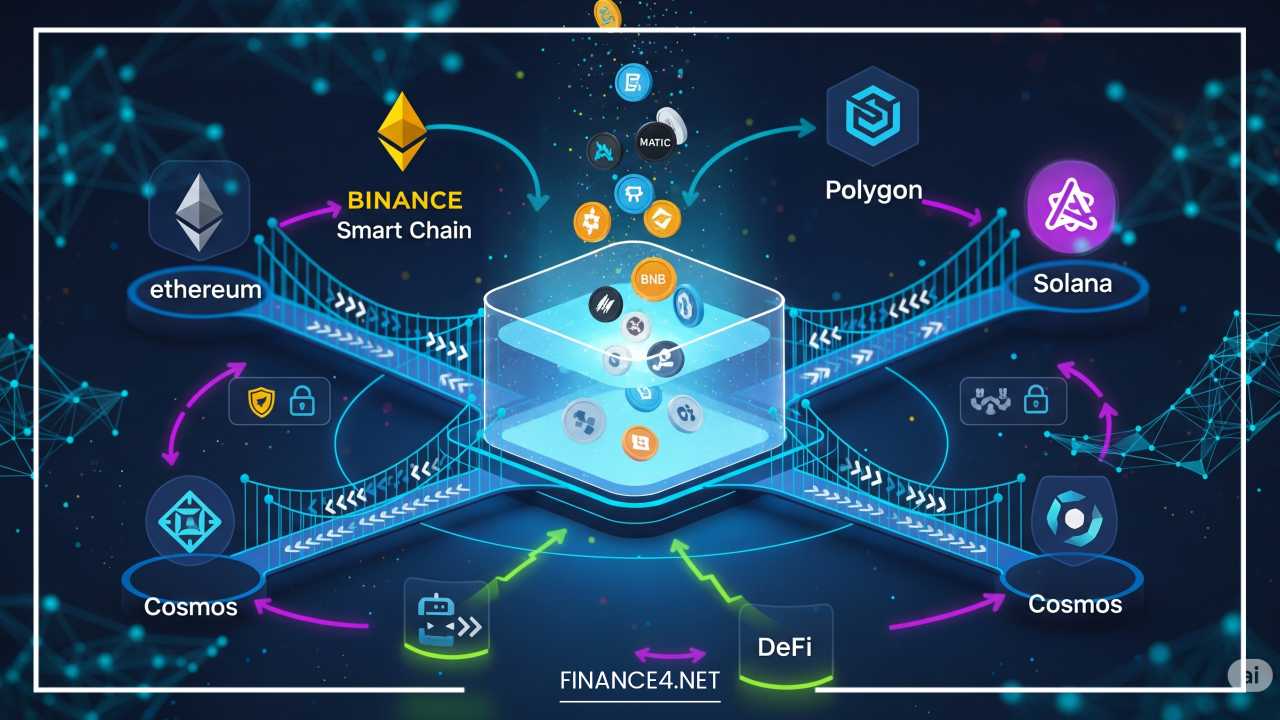
Cross-chain liquidity solutions: Facilitating the movement of assets between different blockchains without relying on centralized bridges.
Future Trends in Liquidity Tokens
The future of liquidity tokens is evolving rapidly toward higher capital efficiency. Liquid staking is already allowing users to stake assets and receive a token that can simultaneously be used as liquidity. Restaking, a major innovation, is enabling new ways to secure various protocols using the same staked capital. Additionally, the integration of real-world assets (RWAs) into liquidity pools is bridging the gap between traditional finance and DeFi, potentially bringing deeper, more stable, and less volatile liquidity to the space. As Automated Market Makers become more sophisticated, we can expect “concentrated liquidity” and dynamic, risk-adjusted fee structures to become the standard, offering better returns for providers and cheaper execution for traders.
Final Thoughts
Creating your own liquidity token is a sophisticated endeavor that requires a delicate balance of technical expertise, economic foresight, and an unwavering commitment to security. By carefully planning your tokenomics, choosing the right blockchain architecture, and prioritizing the safety of your users’ funds through rigorous auditing, you can build a resilient, efficient, and attractive liquidity engine. The success of a liquidity token is not found solely in its initial creation, but in the long-term management of incentives that encourage users to remain active participants in your ecosystem.
As decentralized finance continues to mature and integrate with larger global markets, those who prioritize transparency, sustainable growth, and security-first development will lead the next generation of decentralized markets. Remember that liquidity management is not a one-time setup; it is a dynamic process that requires continuous monitoring and deep engagement with your community. By fostering a secure and rewarding environment, you can ensure that your liquidity token serves as the foundation for a vibrant and thriving project that stands the test of time.
Frequently Asked Questions (FAQ)
What are the main risks associated with creating a liquidity token for a new project?
The most significant risks include impermanent loss, where the value of your deposited assets fluctuates against each other, potentially resulting in a lower value than if you had simply held the tokens. Other critical threats include smart contract vulnerabilities that can lead to exploits or hacks, and rug pulls, where developers drain the pool’s liquidity, destroying investor trust. Always conduct a formal smart contract audit and use reputable liquidity locking services to mitigate these risks.
How do I attract more liquidity to my new crypto token’s pool?
To incentivize users to provide liquidity, you can implement liquidity mining programs, where you reward providers with your native governance tokens for staking their LP tokens. Additionally, ensure your project has high transparency, active community engagement, and clear utility. Partnering with established decentralized exchanges or using professional market makers can also help maintain tighter bid-ask spreads and provide the market depth required to attract larger investors.
Is it mandatory to have a smart contract audit before launching a liquidity pool?
While not technically mandatory to deploy code, it is highly recommended and effectively required if you want to build institutional and community trust. Reputable decentralized exchanges and launchpads often require proof of a clean security audit from firms like CertiK or Trail of Bits before listing an asset. An audit identifies critical vulnerabilities that could lead to theft or loss of funds, protecting both your users and your reputation.
Can I create a liquidity token without writing complex code from scratch?
Yes, you can utilize standardized token templates such as those provided by OpenZeppelin. Many developers also use specialized platforms or “no-code” deployment tools that offer pre-audited smart contract templates for ERC-20 and BEP-20 tokens. However, even when using templates, you should still ensure that your specific implementation—especially the staking and reward logic—is thoroughly tested and audited.
What is the difference between a liquidity provider (LP) token and a standard utility token?
A standard utility token is designed to perform a specific function within an ecosystem, such as granting access to software or voting rights. A liquidity provider (LP) token is a secondary, functional asset that acts as a receipt. It represents your specific share of a liquidity pool and allows you to claim your underlying assets plus any trading fees earned during the period your capital was locked.
How can I prove to my community that my liquidity is secure?
Transparency is key. You can provide verifiable proof by using platforms like Team.Finance or Unicrypt to “lock” your liquidity. These platforms create a time-locked smart contract that prevents the project team from withdrawing the liquidity for a set period. Sharing these transaction hashes publicly allows your community to independently verify that the liquidity is protected and cannot be drained prematurely.
What causes price slippage in a new liquidity pool?
Slippage occurs when a trade is executed against a pool with insufficient liquidity. In a “thin” or low-liquidity pool, even a relatively small buy or sell order can significantly change the price of the token. To minimize slippage, project owners should aim to provide substantial initial liquidity and utilize automated market maker (AMM) models that encourage diverse, long-term participation from multiple liquidity providers.