What is NFT Staking?
 by
by 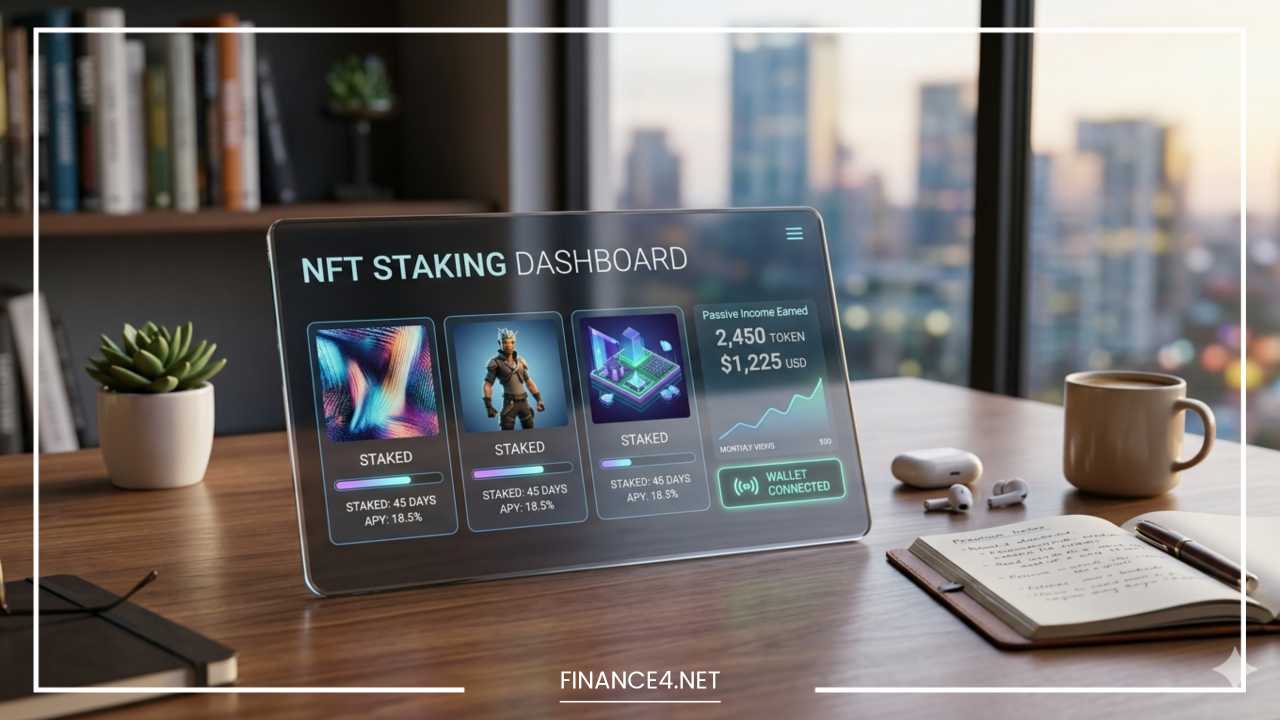
What is NFT Staking? Earn Passive Income with Your NFTs
The digital landscape has undergone a seismic shift with the rise of Non-Fungible Tokens (NFTs). What began as a niche interest for digital art collectors has blossomed into a multi-billion-dollar industry that spans gaming, real estate, music, and decentralized finance (DeFi). In the early stages of the NFT boom, the primary way to profit was through “flipping”—buying low and selling high. However, as the market matured, investors began looking for ways to extract value from their digital assets without having to part with them. This search for utility led to the birth of NFT staking.
NFT staking is a revolutionary concept that allows holders to put their digital assets to work. Instead of leaving an expensive collectible to sit idle in a digital wallet, owners can “lock” their tokens into a smart contract on a blockchain platform. In exchange, they receive rewards, typically in the form of the platform’s native cryptocurrency, utility tokens, or even additional NFTs. This mechanism mirrors the traditional concept of earning interest on a savings account or dividends from stocks, but with a uniquely cryptographic twist.
As the ecosystem expands, staking is becoming a cornerstone of the NFT value proposition. It bridges the gap between culture and finance, offering a way for enthusiasts to support their favorite projects while building a stream of passive income. For crypto enthusiasts, understanding the mechanics, benefits, and risks of NFT staking is no longer optional—it is a vital skill for navigating the modern decentralized economy.
Understanding NFTs
To grasp the mechanics of staking, one must first understand the underlying asset: the Non-Fungible Token. Unlike cryptocurrencies like Bitcoin or Ethereum, which are “fungible” (meaning every unit is identical and interchangeable), NFTs are unique. Each token has distinct metadata and identification codes that make it one-of-a-kind.
This uniqueness is what provides NFTs with their value. They act as digital certificates of authenticity and ownership, recorded on a public blockchain. While anyone can view or download a digital image, only the holder of the NFT has the legally and technologically recognized right of ownership. This has paved the way for numerous use cases:
-
Digital Art: Artists can tokenize their work, ensuring they receive credit and often a percentage of secondary sales.
-
Gaming: Players can truly own in-game items like swords, skins, or characters, which can be moved between different games or sold on open markets.
-
Collectibles: From digital trading cards to historical moments, NFTs have modernized the hobby of collecting.
-
Virtual Real Estate: Platforms allow users to buy, sell, and build on digital plots of land, where ownership is represented by an NFT.
The importance of ownership and digital scarcity cannot be overstated. In a digital world where everything can be infinitely copied, NFTs introduce a “hard” limit on supply. When you combine this scarcity with the ability to generate yield through staking, the NFT transforms from a static collectible into a productive financial instrument.
What is NFT Staking?
NFT staking is the process of locking up your non-fungible tokens on a platform or protocol for a specified period to receive rewards or other benefits. It is a way for NFT holders to monetize their assets without losing ownership. While the NFT is staked, it is typically held in a secure smart contract, meaning the owner cannot sell or transfer it until they decide to “unstake” it.
The concept is heavily inspired by Proof of Stake (PoS) mechanisms used by blockchains like Ethereum. In PoS, users stake their cryptocurrency to help secure the network and validate transactions, receiving new coins in return. NFT staking operates on a similar logic but usually focuses on providing liquidity or community engagement for a specific project rather than securing the entire underlying blockchain.
Difference Between Staking NFTs and Cryptocurrencies
While the goal—passive income—is the same, the execution differs. Staking fungible tokens is straightforward because every token is the same. Staking NFTs is more complex because the value of the rewards is often tied to the rarity or “rarity score” of the specific NFT being staked. A rare NFT might generate significantly higher rewards than a common one from the same collection.
The Primary Benefits
-
Passive Income: Earning rewards while you sleep.
-
Utility: Some staking protocols grant access to exclusive “alpha” (information), future mints, or private discord channels.
-
Governance: Staking often awards “governance tokens,” giving holders the right to vote on the future direction of the project or a Decentralized Autonomous Organization (DAO).
How NFT Staking Works
The technical backbone of NFT staking is the smart contract. A smart contract is a self-executing piece of code on the blockchain that automatically enforces the rules of an agreement. When you stake an NFT, you are essentially sending it to a contract that says: “I will hold this for you, and in return, I will calculate and distribute your rewards based on the time elapsed.”
The Step-by-Step Process:
-
Selection: The user identifies which NFTs in their wallet are eligible for staking. Not all NFTs can be staked; the functionality must be built into the project’s ecosystem or supported by a third-party DeFi platform.
-
Platform Connection: The user connects their digital wallet (like MetaMask) to the staking protocol.
-
The Lock-Up: The user approves the transaction to move the NFT into the staking contract. This involves a gas fee (the cost of processing the transaction on the blockchain).
-
Reward Accumulation: Once locked, the protocol begins calculating rewards. These are usually distributed per block or per day.
-
Claiming and Unstaking: Users can periodically claim their earned tokens. When they wish to sell the NFT, they must initiate an unstaking transaction to return the asset to their wallet.
Technical and Risk Factors
While the process is designed to be user-friendly, the underlying technology carries risks. If the smart contract has a vulnerability or “bug,” a hacker could potentially drain the staked assets. Additionally, platform failure—where the developers abandon the project—can lead to a situation where the rewards become worthless, even if you still have your NFT.
Types of NFT Staking
NFT staking has evolved into several distinct models, each serving different purposes within the crypto ecosystem.
Platform-Based Staking
This is the most common form, where marketplaces or dedicated DeFi platforms allow users to stake NFTs from various collections. These platforms often use staking to encourage users to provide liquidity or to keep assets off the secondary market, which can help stabilize the “floor price” of a collection.
Game-Based Staking
In the world of “Play-to-Earn” (P2E) gaming, staking is a core mechanic. Players might stake their in-game characters or land to earn the game’s native currency. This currency can then be used to upgrade items, buy new NFTs, or be swapped for other cryptocurrencies. It creates a circular economy where the game remains active and the players are incentivized to hold their assets.
Governance Staking
Many NFT projects transition into DAOs. By staking their NFTs, holders receive governance tokens. These tokens are like shares in a company; they allow the holder to vote on how the project’s treasury is spent, which new artists to collaborate with, or what features to add to the roadmap.
Liquidity NFT Staking
This is an advanced DeFi strategy. In some protocols, users can stake their NFTs to provide liquidity for a pool. In return, they receive “Liquidity Provider” (LP) tokens. These tokens themselves can sometimes be staked elsewhere to “yield farm,” effectively stacking multiple layers of rewards on a single digital asset.
Benefits of NFT Staking
The primary allure of NFT staking is the conversion of a speculative asset into a productive one. In the traditional art world, a painting on your wall costs money to maintain and insure, but it doesn’t pay you a monthly check. NFT staking changes this dynamic.
Generating Passive Income
For long-term believers in a project, staking is a “no-brainer.” If you have no intention of selling your NFT for several months or years, staking allows you to accumulate wealth in the form of tokens while you wait for the asset’s value to appreciate.
Increasing Utility
Staking often unlocks “gated” content. A project might release a sequel collection and only allow people who have staked their original NFTs to participate in the mint. This adds a layer of game theory to ownership, rewarding the most loyal members of the community.
Incentivizing the “HODL” Mentality
By encouraging staking, projects reduce the circulating supply of their NFTs on marketplaces. When supply is low and demand remains steady or increases, the price of the NFTs tends to rise. This creates a win-win scenario: the floor price of the collection stays healthy, and the stakers earn rewards simultaneously.
Risks and Challenges
No investment strategy in the crypto world is without risk, and NFT staking is particularly exposed to certain vulnerabilities.
Market Volatility
The most significant risk is that the value of the NFT itself could plummet while it is locked in a staking contract. If a collection’s floor price drops by 50% during your staking period, the small amount of passive income you earned in tokens likely won’t cover your capital loss. Because your NFT is locked, you cannot sell quickly to cut your losses.
Platform and Security Risks
The DeFi space is rife with “rug pulls” and smart contract exploits. If you stake your NFT on an unverified or poorly coded platform, you risk losing the asset entirely. Always research the team behind the protocol and check if their smart contracts have been audited by reputable firms.
Illiquidity
NFTs are inherently illiquid compared to Bitcoin. Finding a buyer can take time. When you stake, you add another layer of illiquidity. Some protocols have “unbonding periods,” meaning once you decide to unstake, you might have to wait several days or weeks before the NFT is actually returned to your wallet.
Regulatory Uncertainty
Governments around the world are still deciding how to categorize NFTs and staking rewards. There is a possibility that staking rewards could be classified as securities in certain jurisdictions, which might lead to legal challenges for the platforms or tax complications for the users.
How to Choose NFTs for Staking
Choosing the right NFT for staking requires more than just picking a cool-looking image. You must evaluate the underlying economics of the project.
Criteria for Selection:
-
Rarity: Most staking protocols offer a tiered reward system. Ensure you understand how the “rarity” of your NFT impacts your earning potential. Sometimes, buying a slightly more expensive “rare” NFT results in a much higher Annual Percentage Yield (APY).
-
Project Roadmap: Is the project’s token useful? If the staking rewards are in a token that has no use case, the token price will eventually go to zero as everyone sells their rewards.
-
Staking APY: Calculate the expected return. APYs in the NFT space can be incredibly high (sometimes over 100%), but these are often unsustainable. A steady, lower APY from a reputable project is often safer than an astronomical one from a new, unproven project.
Evaluating Platforms
Check the total value locked (TVL) in the staking protocol. A high TVL usually indicates that many other users trust the platform. Additionally, look at the “lock-up period.” If you are a swing trader, avoid platforms that require you to lock your assets for six months.
Popular NFT Staking Platforms
The landscape of staking platforms is diverse, ranging from centralized exchanges to decentralized protocols.
Marketplace Staking (e.g., Blur, OpenSea)
Marketplaces have begun integrating staking and “loyalty” programs. For instance, Blur revolutionized the space by rewarding users who list and “bid” on NFTs with a native token. While not traditional staking, it functions similarly by rewarding participants for keeping their assets and liquidity within the ecosystem.
Centralized Exchanges (e.g., Binance NFT)
For beginners, centralized exchanges offer a simplified staking experience. Binance often hosts staking “events” for specific collections. The benefit here is ease of use and higher security, but the downside is that you do not have full control over your private keys.
Protocol-Specific Staking
Many of the most successful NFT projects have their own dedicated staking portals. These are usually the most lucrative but require the user to be comfortable interacting directly with decentralized applications (dApps). These platforms are tailored specifically to the lore and economy of that particular NFT collection.
Real-World Examples of NFT Staking
To better understand the potential, let’s look at how staking has been implemented in major projects.
ApeCoin and Bored Ape Yacht Club (BAYC)
The creators of BAYC launched ApeCoin, a governance and utility token. Holders of Bored Apes or Mutant Apes could stake their NFTs to earn ApeCoin. Because of the massive value of the BAYC brand, the rewards were substantial, providing holders with thousands of dollars in value simply for “committing” their Apes to the staking pool.
Axie Infinity
In the gaming world, Axie Infinity allowed players to stake their AXS tokens and their digital land. This played a crucial role in maintaining the game’s economy during periods of high volatility. It rewarded the players who were most invested in the long-term health of the game’s universe, rather than those just looking for a quick profit.
The Sandbox
As a leader in virtual real estate, The Sandbox allows LAND owners to stake their NFTs to earn SAND tokens. This rewards property owners for keeping the digital world’s “supply” stable, which is essential for the long-term growth of the metaverse.
Steps to Start NFT Staking
If you are ready to begin your journey, follow these steps to ensure a smooth experience.
Step 1: Set Up a Web3 Wallet
You cannot stake NFTs from a standard coinbase or exchange account. You need a self-custody wallet like MetaMask, Phantom, or Trust Wallet. Ensure you have some native tokens (like ETH or SOL) to pay for transaction fees.
Step 2: Acquire Stakable NFTs
Research collections that offer staking. You can find this information on the project’s official website, Discord, or Twitter (X). Verify the “contract address” to ensure you aren’t buying a fake version of the NFT.
Step 3: Connect to a Staking dApp
Navigate to the project’s official staking website. Click “Connect Wallet.” Always double-check the URL to avoid “phishing” sites that look like the real thing but are designed to steal your assets.
Step 4: Stake and Monitor
Select the NFTs you wish to lock up and confirm the transaction in your wallet. Once the transaction is confirmed, you can usually see a dashboard showing your “Accumulated Rewards.”
Tips for Beginners:
-
Start with a small amount to understand the gas costs.
-
Never share your wallet’s “seed phrase” with anyone.
-
Monitor the price of the reward token; if it starts crashing, it might be time to unstake and sell.
Future of NFT Staking
The future of NFT staking looks bright as the technology moves beyond simple “lock and earn” mechanics. We are seeing the rise of Fractionalized Staking, where multiple people can own a piece of a high-value NFT (like a CryptoPunk) and share the staking rewards.
Another trend is Cross-Chain Staking, which allows users to stake an NFT on one blockchain (like Ethereum) and receive rewards on another (like Polygon), taking advantage of lower fees. We also expect to see more integration with traditional finance. Imagine a future where your NFT acts as collateral for a mortgage, and the staking rewards from that NFT go toward paying off your monthly interest.
Gamification will also play a larger role. Staking will feel less like a financial transaction and more like a game, where “leveling up” your staked NFT through time or activity increases your reward multiplier.
Final Thoughts
NFT staking represents a significant evolution in the digital asset space. It transforms NFTs from static digital images into dynamic financial tools capable of generating consistent passive income. By bridging the world of collectibles with the mechanisms of decentralized finance, staking provides a compelling reason for investors to hold their assets long-term.
However, as with any crypto-related endeavor, it is not without its pitfalls. Market volatility, smart contract risks, and liquidity issues require a cautious and researched approach. For those willing to do the work—evaluating projects, understanding the tokenomics, and practicing good security—NFT staking offers a unique frontier for wealth generation.
As the ecosystem continues to mature, the line between “owning” an asset and “using” an asset will continue to blur. NFT staking is the first major step toward a future where every digital object we own has the potential to work for us. Whether you are a gamer, an art collector, or a DeFi strategist, the world of NFT staking is an opportunity worth exploring.