Top Aggregator Platforms for Crypto Swaps
 by
by 
Top Aggregator Platforms for Crypto Swaps: Swap Smarter
The decentralized finance ecosystem has evolved from a niche experiment into a sprawling global network of protocols, liquidity pools, and blockchains. At the heart of this movement is the “swap”—the ability to exchange one digital asset for another without a centralized intermediary. However, as the number of decentralized exchanges (DEXs) has grown into the hundreds, the market has become increasingly fragmented.
For the individual trader, this fragmentation creates a significant challenge. If you want to swap Ethereum for a stablecoin, should you use Uniswap, SushiSwap, or Curve? Which one currently offers the best price? Which one has enough liquidity to handle your trade size without excessive slippage? Manually checking every platform is not only time-consuming but nearly impossible in a market that fluctuates every second.
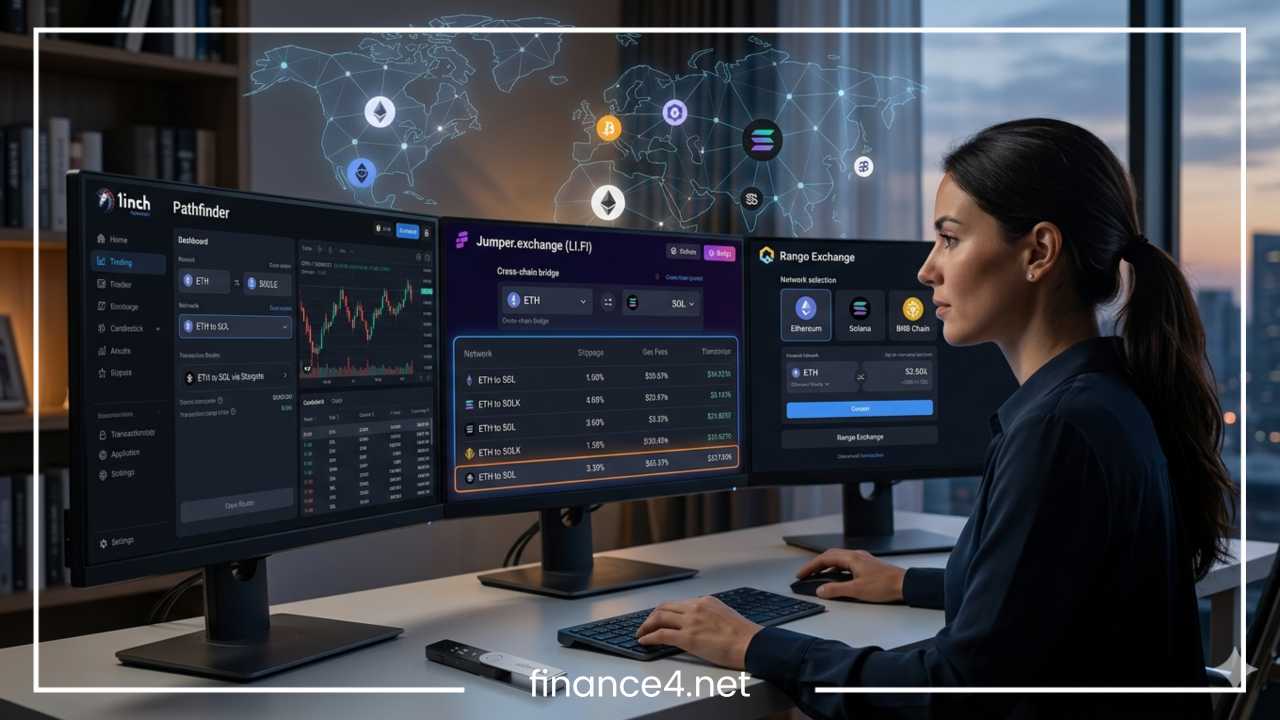
This is where swap aggregators enter the picture. Often described as the “Google Flights” or “Expedia” of the crypto world, these platforms scan the entire decentralized landscape to find the most efficient path for your trade. Instead of clicking through multiple tabs, users can access a single interface that sources liquidity from dozens of different venues simultaneously.
By utilizing smart algorithms to split trades and find optimized routes, aggregators ensure that traders “swap smarter.” This article provides a comprehensive deep dive into the mechanics of these platforms, the benefits they provide, and a detailed breakdown of the top aggregator platforms leading the industry today. Whether you are a casual user or a high-frequency DeFi participant, understanding how to leverage these tools is essential for optimizing your capital efficiency.
What Is a Crypto Swap Aggregator?
A crypto swap aggregator is a platform that interfaces with multiple decentralized exchanges and liquidity sources to provide users with the best possible exchange rates for their digital assets. To understand an aggregator, one must first understand the components it unifies.
Defining the DEX Aggregator
In a standard decentralized exchange like Uniswap, trades are executed against a specific liquidity pool. If that pool is shallow or the trade is large, the price moves against the trader—a phenomenon known as slippage. An aggregator, however, does not rely on its own liquidity. Instead, it acts as an overarching software layer that communicates with numerous DEXs at once.
Key Distinctions
It is important to distinguish aggregators from other common crypto infrastructure:
-
Single DEX vs. Aggregator: A single DEX is a destination where liquidity lives. An aggregator is a portal that routes you to the best destination.
-
Centralized Exchanges (CEXs) vs. Aggregators: CEXs like Coinbase or Binance use private order books and custody your funds. Aggregators are non-custodial; they allow you to trade directly from your wallet while maintaining control of your private keys.
-
Bridges vs. Aggregators: While bridges move assets from one blockchain to another (e.g., Ethereum to Solana), aggregators focus on the exchange of assets. Many modern aggregators now integrate bridging technology to offer “cross-chain swaps,” but their primary function remains price optimization.
Core Concepts: Smart Order Routing (SOR)
The “brain” of an aggregator is its Smart Order Routing (SOR) algorithm. When a user inputs a trade, the SOR instantly calculates thousands of potential paths. It might find that swapping 100% of the trade on one DEX is the best option, or it might determine that splitting the trade—40% through DEX A, 30% through DEX B, and 30% through DEX C—will result in a higher return of the target token.
Modern Evolution: Intent-Based Swaps
The latest generation of aggregators has moved toward “intent-based” trading. Instead of the user specifying a specific path, they simply state their “intent” (e.g., “I want to receive at least 1,000 USDC for my 1 ETH”). Professional market makers or “solvers” then compete to fulfill this intent at the best price, often shielding the user from complex gas calculations and predatory trading bots.
How Aggregators Work Behind the Scenes
The process of finding the best price in a fraction of a second involves complex computational logic. Here is how the magic happens behind the scenes when you click the “Swap” button.
Liquidity Scanning
The aggregator maintains a constant connection to the Application Programming Interfaces (APIs) and smart contracts of various DEXs across multiple blockchains. It monitors the “depth” of liquidity pools—meaning how much of a specific token is available at a specific price.
Order Splitting
Large trades are the primary victims of slippage. If a trader attempts to buy a large amount of a low-cap token on a single DEX, they will push the price up significantly. Aggregators solve this by splitting the order. By distributing the buy pressure across five different liquidity pools, the overall price impact is minimized, saving the user a substantial amount of money.
Multi-Hop Routing
Sometimes, there is no direct liquidity pool for the two tokens a user wants to swap (e.g., Token A to Token D). A single DEX might fail to process this or offer a terrible rate. An aggregator can perform a “multi-hop” trade: Token A -> Token B -> Token C -> Token D. It executes these steps in a single transaction, finding hidden paths that a human trader would never be able to calculate manually.
Cross-Chain Routing
With the rise of Layer 2 networks (like Arbitrum and Optimism) and alternative Layer 1s (like Solana and Avalanche), liquidity is now spread across different “islands.” Advanced aggregators use liquidity bridges to move assets between chains as part of the swap process. This allows a user to start with an asset on Ethereum and end with a different asset on Polygon in one seamless workflow.
Gas Optimization
Gas fees (transaction costs) are a major factor in DeFi. A route that offers a slightly better price but requires five different “hops” might actually be more expensive once gas fees are factored in. Sophisticated aggregators calculate the “net return,” which is the price of the token minus the gas cost, to ensure the user actually ends up with more money in their wallet.
Key Benefits of Using Swap Aggregators
Using an aggregator is no longer just an “option” for serious traders; it has become a fundamental requirement for efficient portfolio management. The advantages are clear and measurable.
Better Pricing
The most obvious benefit is the exchange rate. Because aggregators compare dozens of sources, they almost always find a price superior to what a user would find by visiting a single DEX. Even a 0.5% difference in price becomes significant over multiple trades or large volumes.
Reduced Slippage
Slippage occurs when the executed price of a trade differs from the requested price. By splitting orders across various pools, aggregators keep the price stable. This is particularly vital for institutional traders or individuals dealing with “whale-sized” positions.
Deep Liquidity Access
An aggregator provides the combined liquidity of the entire market. For rare or newer tokens that might only have small pools on various platforms, an aggregator stitches those pools together to create a “virtual” deep liquidity pool.
Efficiency and Speed
Time is money in crypto. Manually checking Uniswap, SushiSwap, and Curve takes minutes. An aggregator does it in milliseconds. Furthermore, it eliminates the need for users to research which DEX supports which token; if the liquidity exists anywhere, the aggregator will find it.
MEV Protection
Maximum Extractable Value (MEV) refers to bots that “front-run” user trades by seeing them in the public mempool and jumping in front to profit from the price move. Many top-tier aggregators now offer MEV protection, routing trades through private channels to ensure that bots cannot steal value from the user’s transaction.
Error Reduction
Trading on the wrong DEX or using a suspicious link can lead to lost funds. Aggregators provide a curated, audited environment. By using a reputable aggregator, users reduce the risk of interacting with a “vampire” DEX or a malicious liquidity pool.
Types of Crypto Aggregators
Not all aggregators are built the same. They generally fall into four primary categories based on their architecture and goals.
1. On-Chain DEX Aggregators
These are the most common type. they focus on a specific ecosystem (like Ethereum or Solana) and aggregate all the decentralized exchanges on that specific chain. They are highly efficient for users who stay within one network.
-
Example: Early versions of 1inch or Jupiter.
2. Cross-Chain Aggregators
These platforms solve the problem of interoperability. They combine DEX aggregation with bridge aggregation. If you want to move from USDT on BNB Chain to ETH on Arbitrum, these platforms find the cheapest bridge and the best swap rates on both the source and destination chains.
-
Example: Rango Exchange.
3. Hybrid Aggregators
Hybrid models attempt to bridge the gap between decentralized and centralized worlds. They may aggregate liquidity from DEXs but also pull price data from centralized exchanges (CEXs) to provide a benchmark. Some even allow users to access CEX liquidity without leaving their private wallet.
-
Example: OpenOcean.
4. Intent-Based Aggregators
The newest trend in DeFi involves “solvers.” Instead of sending a transaction to a smart contract, the user signs a message stating their desired outcome. Professional entities then find the best way to make that outcome happen, often taking on the gas risk themselves. This results in “gasless” experiences for the user and near-perfect execution.
-
Example: CoW Swap.
6. Top Aggregator Platforms for Crypto Swaps
Selecting the right platform depends on your specific needs, the blockchain you are using, and your technical expertise. Below are the industry leaders that have set the standard for “swapping smarter.”
1. 1inch Network
1inch is widely considered the pioneer of the DEX aggregator space. It uses its “Pathfinder” algorithm to find the best trading paths across a massive variety of liquidity sources.
-
What it does: It aggregates hundreds of DEXs across Ethereum, BNB Chain, Polygon, Arbitrum, and more.
-
Best Use Case: High-volume traders on Ethereum and Layer 2s looking for the most battle-tested routing.
-
Strengths: Massive liquidity depth, limit order functionality, and a highly secure, audited track record.
2. Jupiter
If you are trading on the Solana blockchain, Jupiter is the undisputed leader. It has become a central pillar of the Solana ecosystem due to its incredible speed and user-friendly interface.
-
What it does: It aggregates all Solana liquidity, including DEXs, stablecoin pools, and lending protocols.
-
Best Use Case: Anyone trading any asset on Solana.
-
Strengths: Extremely fast execution, low fees, and advanced features like Dollar Cost Averaging (DCA) and perpetual trading.
3. Matcha (by 0x)
Developed by the 0x team, Matcha focuses on providing the cleanest and most intuitive user experience in DeFi. It is often the preferred choice for those who find the technical interfaces of other aggregators overwhelming.
-
What it does: It routes trades through the 0x mesh and other private liquidity providers.
-
Best Use Case: Retail traders who want a “clean” interface similar to a centralized exchange.
-
Strengths: Transparent pricing (no hidden fees), excellent UI, and “Matcha Auto” for simplified execution.
4. CoW Swap
CoW Swap (Coincidence of Wants) takes a unique approach. It focuses on batch auctions and protection against MEV (Maximum Extractable Value).
-
What it does: It matches trades peer-to-peer first (Coincidence of Wants). If a trade cannot be matched internally, it goes to the underlying DEXs.
-
Best Use Case: Users concerned about “sandwich attacks” or those who want to avoid paying gas if a trade fails.
-
Strengths: Superior MEV protection, gasless orders (fees are paid in the sell token), and very competitive pricing for large trades.
5. ParaSwap
ParaSwap is an advanced aggregator designed specifically for the needs of DeFi power users and dApps. It offers a highly sophisticated routing engine that can handle complex multi-path trades.
-
What it does: It optimizes routes across Ethereum, Avalanche, Fantom, and several other chains.
-
Best Use Case: Professional traders and developers who want to integrate aggregation into their own products.
-
Strengths: Highly efficient gas usage and a very fast API for developers.
6. Rango Exchange
Rango is a “meta-aggregator” that focuses on the multi-chain future. It is the premier choice for users who need to swap between completely different ecosystems (like Bitcoin to Cosmos or Solana to Ethereum).
-
What it does: It aggregates other aggregators, bridges, and DEXs to create a single path between 50+ blockchains.
-
Best Use Case: Cross-chain enthusiasts who want to move assets between different chains in one click.
-
Strengths: Supports non-EVM chains (like BTC, SOL, and ATOM) alongside standard EVM chains.
7. OpenOcean
OpenOcean positions itself as a “full-protocol” aggregator. It is unique because it was one of the first to bridge the gap between DeFi and CeFi liquidity.
-
What it does: It aggregates liquidity across multiple chains and provides price comparisons from centralized exchanges.
-
Best Use Case: Traders who want a “one-stop-shop” for both multi-chain DeFi and price references for CEXs.
-
Strengths: Wide support for various blockchains and a very low-fee structure.
8. Swapzone
Swapzone functions more as a comparison engine for instant exchange providers. While slightly different from a pure DEX aggregator, it serves a similar purpose for users who want to avoid the complexities of liquidity pools.
-
What it does: It compares rates across custodial and non-custodial exchange providers like Changelly or ChangeNOW.
-
Best Use Case: Users who want to swap without connecting a Web3 wallet or those looking for simple, fixed-rate exchanges.
Comparison Table
| Platform | Primary Focus | Best For | Standout Feature |
| 1inch | Multi-chain depth | Advanced Traders | Pathfinder Algorithm |
| Jupiter | Solana Ecosystem | Solana Users | Speed & UI |
| CoW Swap | MEV Protection | Safety-conscious | Batch Auctions |
| Rango | Cross-chain | Interoperability | 50+ Chains |
| Matcha | User Experience | Beginners | Clean UI |
| ParaSwap | Efficiency | Power Users | Gas Optimization |
How to Choose the Right Aggregator
With so many high-quality options, choosing one can be a task in itself. Use the following criteria to make your decision:
The Blockchain You Are Using
Your choice is often dictated by the network. If you are on Solana, Jupiter is the logical choice. If you are on Ethereum or an L2 like Arbitrum, 1inch or CoW Swap are excellent. For moving between chains, Rango is superior.
Trade Size
Small trades (under $100) are highly sensitive to gas fees. In this case, choose an aggregator known for gas optimization like ParaSwap. Large trades (over $10,000) are more sensitive to slippage. For these, use 1inch or CoW Swap, which have the deepest liquidity and protection against front-running.
Need for MEV Protection
If you are trading tokens that are volatile or have low liquidity, you are a target for MEV bots. CoW Swap or 1inch (with RabbitHole enabled) provide the protection needed to ensure you don’t lose money to “sandwich attacks.”
User Interface vs. Technical Control
Do you want a simple “Buy/Sell” button, or do you want to see exactly how your trade is being split across five different DEXs? Matcha is perfect for the former, while ParaSwap or 1inch provide the latter.
Fee Sensitivity
Most aggregators do not charge an extra fee to the user, as they take a small cut from the DEX or the “positive slippage.” However, some may have hidden fees. Always check the “Expected Return” compared to a direct DEX swap to ensure you are truly getting a deal.
Risks & Limitations
While swap aggregators are powerful tools, they are not without risks. Users should remain aware of the following:
-
Smart Contract Risk: Aggregators use their own smart contracts to route trades. Even if the underlying DEX is safe, a bug in the aggregator’s contract could lead to lost funds.
-
Bridge Risk: When using cross-chain aggregators, you are often relying on third-party bridges. Bridges are historically one of the more vulnerable parts of the crypto infrastructure.
-
Routing Failures: Occasionally, a trade may fail mid-way through a “hop.” While your funds are usually returned, you may still lose the gas fees spent on the attempted transaction.
-
Liquidity Fragmentation: Aggregators can only find what exists. In times of extreme market volatility, liquidity can vanish instantly across all DEXs, rendering an aggregator less effective.
-
Front-Running: Unless the aggregator explicitly offers MEV protection, your trade is still visible in the public mempool and can be exploited by sophisticated bots.
Future of Swap Aggregators
The future of swap aggregators is moving toward making DeFi invisible. The goal is for a user to never have to care about what blockchain they are on or which DEX has the most liquidity.
AI-Driven Routing
Machine learning will soon play a role in predicting liquidity shifts. Future aggregators might execute trades a few seconds early or late based on predicted gas prices and market movements, further optimizing the “swap.”
Gasless and Account Abstraction
Through “Account Abstraction,” users will eventually be able to pay for transaction fees in any token (e.g., paying for an Ethereum swap using USDC). This removes one of the biggest hurdles to onboarding new users into the DeFi space.
Aggregators of Aggregators
We are already seeing “Meta-Aggregators” like Rango. As the number of aggregators grows, we may eventually use a single platform that aggregates 1inch, Jupiter, and ParaSwap themselves to find the absolute mathematical peak of efficiency.
Unified Liquidity Layers
Instead of having liquidity fragmented across different chains, new protocols are working on “unified liquidity.” This would allow an aggregator to tap into a single global pool of an asset, regardless of which chain the user is currently interacting with.
Final Thoughts
Swap aggregators have transitioned from a luxury to an essential utility in the decentralized finance toolkit. By solving the problems of fragmented liquidity, high slippage, and complex routing, these platforms empower users to trade with the efficiency of a professional firm.
Whether you choose the multi-chain depth of 1inch, the lightning-fast Solana routing of Jupiter, or the MEV protection of CoW Swap, the core principle remains the same: stop visiting single DEXs and start aggregating. The DeFi landscape will only continue to grow more complex; by mastering these tools today, you ensure that you are always positioned to swap smarter, minimize costs, and maximize your returns in the ever-evolving world of digital assets.