NFT-Based Loyalty Programs
 by
by 
NFT-Based Loyalty Programs: The Future of Customer Rewards
The Evolution of Value
For decades, the concept of customer loyalty has been synonymous with plastic cards, punch-hole tickets, and centralized databases filled with expiring “points.” These traditional systems served a purpose: they encouraged repeat business and provided brands with basic consumer data. However, as the digital landscape evolves, these legacy models are beginning to show their age. They often feel transactional rather than relational, offering rewards that lack real-world value, liquidity, or emotional resonance.
The fundamental flaw in traditional loyalty is the “illusion of value.” A customer may “earn” 50,000 points, but those points are essentially a liability on a corporate balance sheet. They are not assets; they are IOUs that the issuer can devalue, expire, or cancel at any time. This centralized control creates a power imbalance that modern, digitally native consumers—particularly Millennials and Gen Z—are increasingly rejecting.
Enter the Non-Fungible Token (NFT). While initially thrust into the public consciousness through digital art, the underlying technology represents a fundamental shift in how we define digital ownership. By leveraging blockchain technology, brands are now able to move beyond simple point-scoring systems and toward comprehensive, value-driven ecosystems. NFT-based loyalty programs represent the next frontier of customer engagement. Unlike traditional rewards, which are often siloed within a single brand’s ecosystem, NFT rewards offer true ownership, interoperability, and long-term utility. This article explores how NFTs are redefining the relationship between brands and consumers, moving from a model of passive consumption to one of active participation and community ownership.
What Are NFTs? (Foundational Context)
To understand the impact of NFT-based loyalty, one must first dismantle the misconception that NFTs are merely “JPEGs.” A Non-Fungible Token (NFT) is a cryptographic certificate of ownership recorded on a blockchain. Unlike “fungible” assets like physical cash or Bitcoin—where one unit is identical to another—each NFT has a unique identifier that makes it one-of-a-kind.
The Mechanics of Non-Fungibility
In a loyalty context, fungibility is the status quo. One “Airline Mile” is identical to another. In contrast, an NFT can carry specific metadata. This means one loyalty token could represent a “Founder’s Circle” membership with lifetime benefits, while another represents a “One-Time Event Pass.”
Key Properties of NFTs:
-
Verifiable Uniqueness: Every NFT contains distinct metadata. This allows brands to issue “rare” rewards or tiered memberships that cannot be duplicated or forged.
-
Self-Sovereign Ownership: NFTs are stored in a user’s digital wallet. This shifts the power dynamic; the customer actually owns the reward. If the brand’s website goes down, the customer still holds their token in their private wallet.
-
Programmability: Through smart contracts, NFTs can be programmed to behave in specific ways. They can automatically distribute royalties to the brand if resold, or they can “evolve” when certain conditions are met.
-
Immutability: Once an NFT is minted on a public blockchain, the record of its creation and ownership history cannot be altered or deleted by any single entity, providing a “gold standard” of trust.
Traditional Loyalty Programs: Strengths & Limitations
Before replacing the old, we must understand why it worked and where it failed. Traditional loyalty programs (Web2 loyalty) have been a staple of retail for years, but they are hitting a ceiling of effectiveness.
The Psychological Strengths:
-
The Goal Gradient Effect: Humans are motivated to complete tasks as they get closer to the reward. Points systems exploit this by showing progress bars.
-
Data Synthesis: They allow brands to track purchasing habits and tailor marketing efforts.
-
Lock-in Effect: They create a “switching cost.” A traveler stays with one hotel chain specifically to maintain their “Diamond” status.
The Structural Limitations:
-
Zero Liquidity: Points are dead capital. You cannot trade 500 coffee points for a movie ticket, even if you’d prefer the movie.
-
Walled Gardens: Traditional rewards are trapped. If you stop shopping at a specific retailer, your points eventually expire, resulting in a 100% loss of value for the consumer.
-
The “Spam” Factor: Because points are cheap to produce, brands often flood customers with notifications, leading to “loyalty fatigue” where users stop checking their balances entirely.
-
Opaque Systems: Customers often don’t understand how points are calculated or why their value suddenly decreased due to a “program update.”
What Are NFT-Based Loyalty Programs?
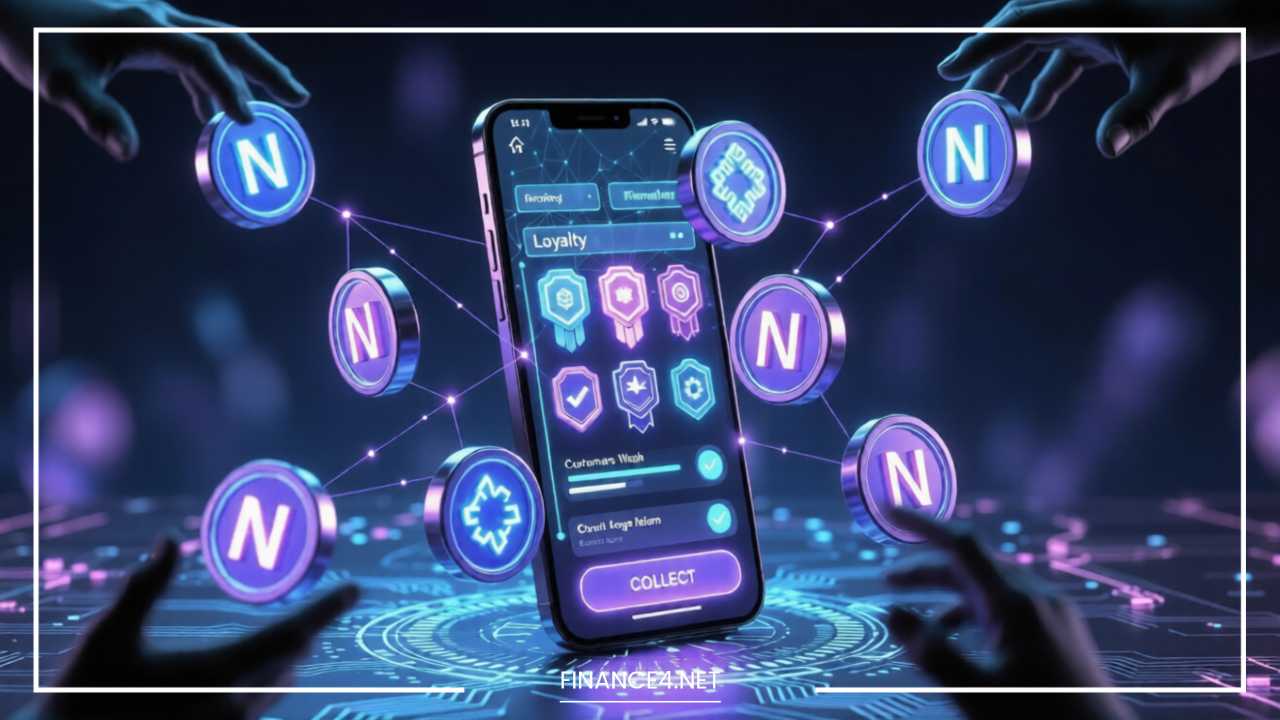
An NFT-based loyalty program replaces or augments traditional points with digital tokens recorded on a blockchain. In this model, the customer journey is transformed from a spreadsheet entry into a digital collection experience.
The Architecture of the Experience:
Instead of earning a generic “point,” a customer might receive a digital badge after their fifth purchase. This badge is an NFT. Once it is in the customer’s wallet, the brand’s system recognizes the token and automatically “unlocks” specific perks.
Common Structures:
-
The Tiered Membership Model: A customer holds a single NFT that represents their rank (Bronze, Silver, Gold). As they shop more, the metadata of that specific NFT is updated—or the token is swapped for a higher-tier version—unlocking better perks.
-
The Collect-to-Earn Model: Customers collect various unique NFTs (e.g., “The Summer Collection”). When they hold the full set, the smart contract automatically triggers a major reward, such as a physical product or a VIP invitation.
-
The Utility Pass: A limited-edition NFT that grants the holder specific rights for a set time, such as “free shipping for one year” or “early access to all product drops.”
Deep Dive into the Benefits of NFT Loyalty
1. True Ownership and the “Resale” Economy
This is the most radical shift. When a brand gives a customer an NFT, that asset belongs to the customer. This introduces the possibility of a secondary market. If a customer moves to a different city and can no longer use their “Local Gym Founder NFT,” they can sell it to someone else. The customer recovers value, and the brand gains a new, highly motivated member.
2. Interoperability and Ecosystem Partnerships
Because NFTs live on open standards (like ERC-721 or ERC-1155), different brands can recognize each other’s tokens without complex API integrations. A sustainable clothing brand could offer a 20% discount to anyone holding a “Green Energy Participant” NFT from a utility company. This creates a “web of loyalty” that spans across different industries.
3. Emotional Engagement through Digital Identity
In the digital age, what we own defines our online persona. Holding a rare NFT from a prestigious brand is a form of “social signaling.” It’s the digital equivalent of wearing a luxury watch or a limited-edition pair of sneakers. Traditional points cannot be “worn” or “shown off,” but NFTs can be displayed on social media profiles or in virtual galleries.
4. Transparency and Fraud Prevention
Loyalty fraud—where employees or hackers manipulate point balances—costs companies billions. Blockchain’s public ledger makes it nearly impossible to “fake” a high-tier status. The smart contract acts as an impartial judge, ensuring that rewards are only distributed to those who have truly earned them.
Real-World Case Studies: From Theory to Practice
The Global Beverage Leader’s “Odyssey”
One of the most successful implementations involves a global coffee chain that created a “journey-based” program. Users complete “Quests”—such as trying new menu items or playing educational games about coffee origins. Completing a Quest earns the user a “Journey Stamp” (an NFT). These stamps have varying rarity and can be traded on a dedicated marketplace. This transformed coffee buying from a chore into a hobby.
The Luxury Fashion Pioneer
A French luxury house recently launched a program where purchasing a physical trunk comes with a “Digital Soulbound” NFT. This NFT is non-transferable, ensuring it stays with the original owner, and provides a direct line of communication with the brand’s designers. It also acts as a “Digital Twin,” allowing the owner to prove the authenticity of their physical item anywhere in the world.
Professional Sports Leagues
Several basketball and soccer leagues have moved toward “Digital Highlights” as loyalty rewards. Fans who attend games in person can “claim” a specific moment from that game as an NFT. This creates a permanent, digital scrapbook of their fandom that has potential financial value in the future.
Gamification: Turning Customers into Players
The core of NFT loyalty is the move from “Transactional Loyalty” to “Emotional Loyalty.” This is achieved through sophisticated gamification mechanics.
Tiers and Rarity
By using rarity, brands can tap into the human instinct to collect. If a brand issues 1,000 NFTs but only 10 have a “Golden” trait, those 10 customers will feel an extraordinary level of connection and pride. They become “super-fans” who advocate for the brand voluntarily.
Token-Gating
“Token-gating” is the practice of restricting content or spaces to those who hold a specific NFT. This can include:
-
Digital Spaces: Private Discord servers, “holders-only” webinars, or secret sections of an e-commerce site.
-
Physical Spaces: VIP lounges at airports, back-stage access at concerts, or “skip-the-line” privileges at retail stores.
The “Burn” Mechanic
Brands can allow users to “burn” (permanently destroy) several lower-level NFTs to “forge” a higher-level one. This reduces the supply of tokens (increasing rarity) while giving the user a clear path to upgrade their rewards.
The Technical Backbone: Blockchain and Smart Contracts
To the average user, the technology should be invisible. However, for the brand, the architecture is vital.
Choosing the Right Chain
-
Ethereum: High security and the largest ecosystem, but transaction costs (gas fees) can be high.
-
Polygon/Layer 2s: Very low fees and fast transactions, making them ideal for high-volume loyalty programs (e.g., earning a token for every coffee).
-
Solana: Known for extreme speed and low costs, often used for gaming-related loyalty.
Smart Contracts: The Logic Layer
The smart contract is the “brain” of the loyalty program. It defines the rules:
-
How many tokens exist?
-
What are the conditions for earning one?
-
Is there a royalty fee for the brand on secondary sales?
-
Does the token expire or evolve?
CRM Integration
The ultimate goal is a “Hybrid” system. The brand’s existing CRM (like Salesforce or HubSpot) should be linked to the blockchain. When a customer uses their “Gold Tier NFT” at a physical register, the POS system must recognize the wallet and apply the discount instantly.
Challenges, Risks, and the “Hype Cycle”
Every technological leap has its pitfalls. NFT-based loyalty is currently navigating several major challenges.
1. The “Crypto” Stigma
Many consumers still associate NFTs with scams or environmental damage. Brands must be careful with their language. Many successful programs avoid the word “NFT” or “Crypto” entirely, instead using terms like “Digital Stamps,” “Collectibles,” or “Access Passes.”
2. The UX Gap
Setting up a digital wallet, managing private keys, and understanding “gas” is too much for the average consumer. The “Future of Loyalty” requires “Custodial Wallets”—where the brand manages the security on behalf of the user, allowing them to log in with just an email and password.
3. Regulatory Fluidity
Governments are still deciding how to tax and regulate NFTs. If a loyalty NFT gains significant value, does the customer owe capital gains tax? Brands must provide clear guidance and work within evolving legal frameworks.
4. Environmental Sustainability
While modern “Proof of Stake” blockchains have solved the energy problem, the perception remains. Brands must proactively communicate that their digital rewards use no more energy than a standard Google search or a credit card transaction.
Privacy, Data, and Decentralized Identity (DID)
In the current Web2 model, “you are the product.” Your data is harvested and sold. NFT loyalty offers a “Privacy-First” alternative.
Zero-Knowledge Proofs
Through blockchain, a customer can prove they are a member of a program without revealing their name, age, or email. The wallet address acts as a pseudonym. This allows brands to reward behavior without compromising the user’s personal identity.
Data Portability
In a decentralized world, the customer carries their data with them. If a user has a “High-Spender” NFT from one brand, other brands can see that “reputation” and offer them incentives to switch, creating a competitive market where the customer’s time and loyalty are truly valued.
The Role of Web3: From Customers to Stakeholders
The most profound change is the shift from a “top-down” brand to a “community-owned” brand.
DAOs (Decentralized Autonomous Organizations)
Some brands are experimenting with giving NFT holders voting rights. Imagine a clothing brand where the top 500 loyal customers get to vote on which color palette to use for the next season. This creates a “Stakeholder” mentality. When the brand wins, the community feels like they won too. This level of loyalty is impossible to achieve with a 10%-off coupon.
Future Trends: The Road Ahead
Dynamic and Evolving NFTs
In the future, your loyalty NFT will be a living asset. If you haven’t visited a store in three months, the “Digital Plant” NFT in your wallet might start to wither. Once you return, it “waters” the plant and it returns to health. This visual feedback loop is incredibly powerful for retention.
The Metaverse Integration
As we spend more time in virtual worlds, our loyalty rewards will follow us. A “Gold Member” at a physical hotel chain might unlock a special “Skin” for their avatar in a popular video game, or a VIP room in a virtual concert.
AI-Generated Rewards
AI can be used to mint a unique NFT for every customer. If you buy a lot of blue clothes, the AI can generate a one-of-one “Blue Enthusiast” digital artwork specifically for you, making the reward feel infinitely more personal than a generic “Member” card.
Strategic Implementation: A Roadmap for Brands
For a company looking to launch an NFT loyalty program, the path should be incremental:
-
Phase 1: Education and Internal Buy-in. Ensure the marketing, legal, and tech teams understand the “why” behind Web3.
-
Phase 2: The “Shadow” Launch. Launch a small NFT collection for the top 1% of your customers. Use this to test the “onboarding” process.
-
Phase 3: Utility Integration. Connect the NFTs to real-world benefits. Ensure the digital token can be used at the physical point of sale.
-
Phase 4: Ecosystem Expansion. Partner with non-competing brands to allow “Cross-Reward” functionality.
-
Phase 5: Full Decentralization. Move toward a model where the community has a say in the program’s direction.
Final Thoughts: The Paradigm Shift
The transition from traditional points to NFT-based loyalty programs is not merely a technical upgrade; it is a fundamental shift in the social contract between brand and consumer. We are moving away from an era of “Extractive Loyalty”—where brands try to get as much as possible for as little as possible—and toward an era of “Shared Value.”
NFTs solve the core problems of the legacy loyalty model. they provide Value through ownership, Excitement through gamification, and Flexibility through interoperability. While the technology is still in its early stages, the underlying logic is inescapable: in a digital world, ownership is the ultimate form of engagement.
As the barriers to entry fall and user experience improves, the “Loyalty Card” will go the way of the paper checkbook. In its place will be a digital wallet filled with unique, tradable, and evolving assets that reflect a customer’s true identity and history with the brands they love. The future of customer rewards is no longer a number on a screen; it is a piece of the brand itself.