Top Altcoin Wallets for Staking
 by
by 
Top Altcoin Wallets for Staking: Best Crypto Storage for Rewards
The evolution of digital finance has shifted significantly from simple asset holding to active participation in network security and governance. At the heart of this shift is staking, a process that allows cryptocurrency holders to earn passive income while contributing to the stability of a blockchain. As the market moves away from the energy-intensive Proof of Work (PoW) model, altcoins built on Proof of Stake (PoS) have surged in popularity. This transition has created a massive demand for infrastructure that not only stores digital assets but also facilitates the earning of rewards.
Choosing the right wallet for staking is a decision that balances two competing priorities: security and convenience. While many users are initially drawn to the high yields offered by various altcoins, the technical method of storage dictates the actual safety of those funds. A wallet is more than just a digital piggybank; it is your interface with the decentralized web. The wrong choice can lead to lost rewards through inefficient validators or, in the worst-case scenario, the total loss of principal due to security breaches.
This guide explores the landscape of altcoin staking wallets, breaking down the mechanics of how rewards are earned and highlighting the best tools available for different types of investors. Whether you are looking for the “set it and forget it” ease of a mobile app or the ironclad security of a hardware device, understanding the nuances of staking infrastructure is the first step toward building a sustainable digital portfolio. However, it is essential to remember that staking involves inherent risks, including asset lockups, potential slashing penalties, and the ever-present volatility of the altcoin market.
What Is Crypto Staking?
To understand why specific wallets are necessary, one must first grasp the underlying mechanism of Proof of Stake. In a PoW system like Bitcoin, miners solve complex mathematical puzzles to validate transactions. In contrast, PoS systems rely on participants who “stake” or lock up their native tokens to act as validators. These validators are responsible for checking transactions and adding new blocks to the blockchain.
How Rewards Are Generated
When you stake your altcoins, you are essentially providing collateral to ensure the validator behaves honestly. In exchange for this service and the opportunity cost of locking up your funds, the network distributes rewards in the form of newly minted tokens or transaction fees. These rewards are typically expressed as an Annual Percentage Rate (APR) or Annual Percentage Yield (APY), with the latter accounting for the effect of compounding.
Validators and Delegators
Most individual holders do not have the technical resources or the massive amount of capital required to run their own validator node. Instead, they act as “delegators.” By using a staking-compatible wallet, you can delegate your voting power to a professional validator. The validator handles the technical work and takes a small commission, passing the remainder of the rewards back to you.
Lock-up Periods and Liquidity
A critical component of staking is the “bonding” or “lock-up” period. To prevent sudden mass exits that could destabilize the network, many blockchains require tokens to be locked for a set duration—ranging from a few days to several weeks. During this time, you cannot sell or transfer your assets. Understanding these liquidity constraints is vital for anyone who might need quick access to their capital during market swings.
Why You Need a Dedicated Wallet for Staking
Many newcomers begin their journey by staking directly on centralized exchanges. While convenient, this approach has significant drawbacks compared to using a dedicated, non-custodial wallet.
Exchange Staking vs. Wallet Staking
When you stake on an exchange, the platform holds the private keys. This is known as custodial staking. You are essentially trusting the exchange to manage your assets, choose the validators, and pay out your rewards. A dedicated staking wallet, however, is non-custodial. You hold the private keys, meaning you have total control over your funds.
Key Benefits of Private Wallets
-
Security: By holding your own keys, you eliminate “exchange risk.” If an exchange is hacked or goes bankrupt, your staked assets in a private wallet remain safe.
-
Higher Yields: Exchanges often take a significant cut of staking rewards as a service fee. By staking directly from a wallet, you can often find validators with lower commissions, resulting in higher net APY.
-
Validator Choice: Dedicated wallets allow you to choose which validator to support. this is crucial for decentralization and allows you to pick validators with a proven track record of uptime and security.
Key Features to Look for in a Staking Wallet
When evaluating a staking wallet, several functional and security features should guide your decision:
-
Security Architecture: Look for wallets that offer two-factor authentication (2FA), biometric locks, and, most importantly, compatibility with hardware wallets.
-
Supported Altcoins: Not every wallet supports every coin. If your portfolio includes a mix of Ethereum, Solana, and Polkadot, you need a multi-chain wallet that handles different staking protocols simultaneously.
-
Native Staking Integration: Some wallets require you to connect to external websites to stake, while others offer “native staking” directly within the app interface. Native integration is generally safer and more user-friendly.
-
Reward Tracking: Effective wallets provide clear analytics, showing you exactly how much you have earned over time and when your next payout is expected.
-
Unstaking Flexibility: Check how the wallet handles the unstaking process. Does it clearly show the remaining time in a lock-up period? Does it support “liquid staking” tokens?
-
DeFi Connectivity: For advanced users, the ability to connect to decentralized finance (DeFi) platforms allows for “double-dipping”—staking an asset and then using a representative token as collateral elsewhere.
Types of Altcoin Wallets for Staking
Hot Wallets
Hot wallets are connected to the internet, usually as mobile apps or browser extensions.
-
Pros: They are incredibly convenient for frequent traders and offer the most seamless staking interfaces.
-
Cons: Because they are “online,” they are more susceptible to malware and phishing attacks.
Cold Wallets (Hardware)
Hardware wallets are physical devices that store your private keys offline.
-
Pros: They provide the highest level of security. Even if your computer is compromised, a hacker cannot move your funds without physical access to the device.
-
Cons: They involve an upfront cost and are slightly less convenient for users who want to move funds frequently.
Web Wallets
These are accessed through a browser and are often specific to a single blockchain ecosystem. They sit somewhere between hot and cold wallets depending on whether they are used in conjunction with a hardware device.
Top Altcoin Wallets for Staking
Ledger (Hardware)
Ledger is arguably the most famous name in hardware security. Through its “Ledger Live” software, users can stake a variety of altcoins natively.
-
Supported Coins: ETH, SOL, DOT, ADA, ATOM, and more.
-
Staking Features: Ledger Live allows users to nominate validators directly within the interface. It also supports liquid staking via partners like Lido.
-
Best For: Long-term investors who prioritize security above all else.
Trezor (Hardware)
Trezor is the original hardware wallet provider. While its native software (Trezor Suite) has historically been slower to adopt staking than Ledger, it offers excellent third-party integration.
-
Supported Coins: ETH, ADA, and many others via third-party apps.
-
Staking Features: Users often pair their Trezor with wallets like Adalite for Cardano staking or Exodus for a more visual experience.
-
Best For: Users who value open-source security and a clean track record.
Trust Wallet
Owned by Binance, Trust Wallet is the go-to mobile hot wallet for millions. It supports a vast array of tokens and offers a dedicated “Staking” tab.
-
Supported Coins: BNB, TRX, XTZ, SOL, DOT, ADA, and more.
-
Staking Features: It provides a list of validators with their respective APRs, making it easy to compare and switch.
-
Best For: Mobile-first users who want to manage a diverse altcoin portfolio on the go.
Exodus
Exodus is renowned for its beautiful design and ease of use. It is a software wallet available on both desktop and mobile.
-
Supported Coins: SOL, ADA, ATOM, ALGO, and others.
-
Staking Features: Exodus simplifies staking into a single button. It handles the validator selection behind the scenes, ensuring high uptime for users.
-
Best For: Beginners who find technical blockchain interfaces intimidating.
Atomic Wallet
Atomic Wallet is a non-custodial multi-asset wallet that has made staking a core part of its identity.
-
Supported Coins: ZIL, ICX, ADA, ATOM, and several others.
-
Staking Features: It often offers some of the highest native yields by allowing users to stake directly with their own validator nodes.
-
Best For: Users looking for high-yield altcoins that might not be supported on other major platforms.
MetaMask
MetaMask is the primary gateway to the Ethereum ecosystem and EVM-compatible chains.
-
Supported Coins: ETH, MATIC, and various liquid staking tokens.
-
Staking Features: MetaMask recently introduced a “Stake” feature in its Portfolio dApp, allowing users to stake ETH with Lido or Rocket Pool directly.
-
Best For: DeFi power users who interact with smart contracts daily.
Phantom
Originally a Solana-only wallet, Phantom has expanded to include Ethereum and Polygon. It is widely considered the best interface for the Solana ecosystem.
-
Supported Coins: SOL, ETH, MATIC.
-
Staking Features: It offers incredibly fast and intuitive native staking for SOL, complete with validator lists and performance metrics.
-
Best For: Anyone heavily involved in the Solana or Polygon ecosystems.
Keplr
Keplr is the leading wallet for the “Interchain” (Cosmos ecosystem). If you are interested in the “Internet of Blockchains,” this is a mandatory tool.
-
Supported Coins: ATOM, TIA, OSMO, and dozens of other Cosmos-based chains.
-
Staking Features: It provides an extensive dashboard for governance voting and staking across multiple chains simultaneously.
-
Best For: Advanced users interested in airdrops and ecosystem governance.
Comparison Table
| Wallet | Type | Top Staking Coins | Complexity | Primary Benefit |
| Ledger | Cold | ETH, SOL, DOT | Medium | Maximum Security |
| Trust Wallet | Hot | BNB, SOL, ADA | Low | Mobile Versatility |
| Exodus | Hot | SOL, ADA, ATOM | Very Low | User Interface |
| MetaMask | Hot | ETH, MATIC | Medium | DeFi Connectivity |
| Phantom | Hot | SOL, MATIC | Low | Speed & UX |
| Keplr | Hot | ATOM, TIA | Medium | Ecosystem Depth |
| Atomic | Hot | ZIL, ADA | Low | High Native Yields |
Best Wallets by Use Case
Best for Beginners: Exodus
If you are new to the world of crypto rewards, Exodus removes the friction. Its “Rewards” app inside the wallet makes the process feel as simple as a savings account, even though it is performing complex on-chain actions.
Best for Security: Ledger Nano X
For those with a significant amount of capital, the Ledger Nano X is the gold standard. It allows you to stake your assets while keeping the “keys to the vault” completely offline.
Best Mobile Wallet: Trust Wallet
Trust Wallet strikes the perfect balance between the number of supported coins and the simplicity of its interface. It is the ideal “daily driver” for the modern altcoin investor.
Best for Multi-Chain Staking: Keplr
As the industry moves toward a multi-chain future, Keplr’s ability to manage dozens of different staking protocols under one roof makes it an essential tool for sophisticated investors.
Risks of Staking with Wallets
While staking is often marketed as “free money,” it carries specific risks that every user must understand.
-
Slashing: On some networks, if the validator you choose behaves maliciously or experiences prolonged downtime, a portion of your staked funds can be “slashed” or confiscated by the network.
-
Validator Performance: If your validator goes offline, you stop earning rewards. Choosing a reputable validator with high uptime is critical.
-
Smart Contract Risk: When using wallets to interact with liquid staking protocols (like Lido via MetaMask), you are trusting that the protocol’s code is free of bugs.
-
Volatility: If an altcoin drops 50% in value during a 21-day lock-up period, you will be unable to sell to mitigate your losses.
-
Wallet Security: Since these are non-custodial wallets, if you lose your recovery phrase, your funds and your rewards are gone forever. There is no “forgot password” button.
Tips to Maximize Staking Rewards
To get the most out of your staking journey, consider these strategies:
-
Diversify Your Validators: Don’t put all your tokens with one validator. By spreading your stake, you reduce the impact of a single validator being slashed or going offline.
-
Reinvest Rewards: Many wallets do not automatically compound rewards. You must manually claim and re-stake your earnings to take advantage of exponential growth.
-
Monitor APR Levels: Staking rewards fluctuate based on the total amount of tokens staked across the network. Check your wallet’s analytics periodically to see if your current coin is still providing a competitive yield.
-
Use Cold Storage for Large Amounts: Never keep more than you can afford to lose in a hot wallet. If your staking balance grows significantly, move it to a hardware wallet.
-
Research “Unbonding” Times: Before you stake, know how long it takes to get your money back. This prevents frustration when you want to exit a position during a market peak.
Future Trends in Staking Wallets
The world of staking is evolving rapidly. We are moving away from simple delegation toward more complex financial products.
Liquid Staking
One of the biggest trends is liquid staking. Wallets are increasingly integrating protocols that give you a “receipt token” (like stETH) in exchange for your staked ETH. This allows you to earn rewards while still having a tradable asset you can use in DeFi.
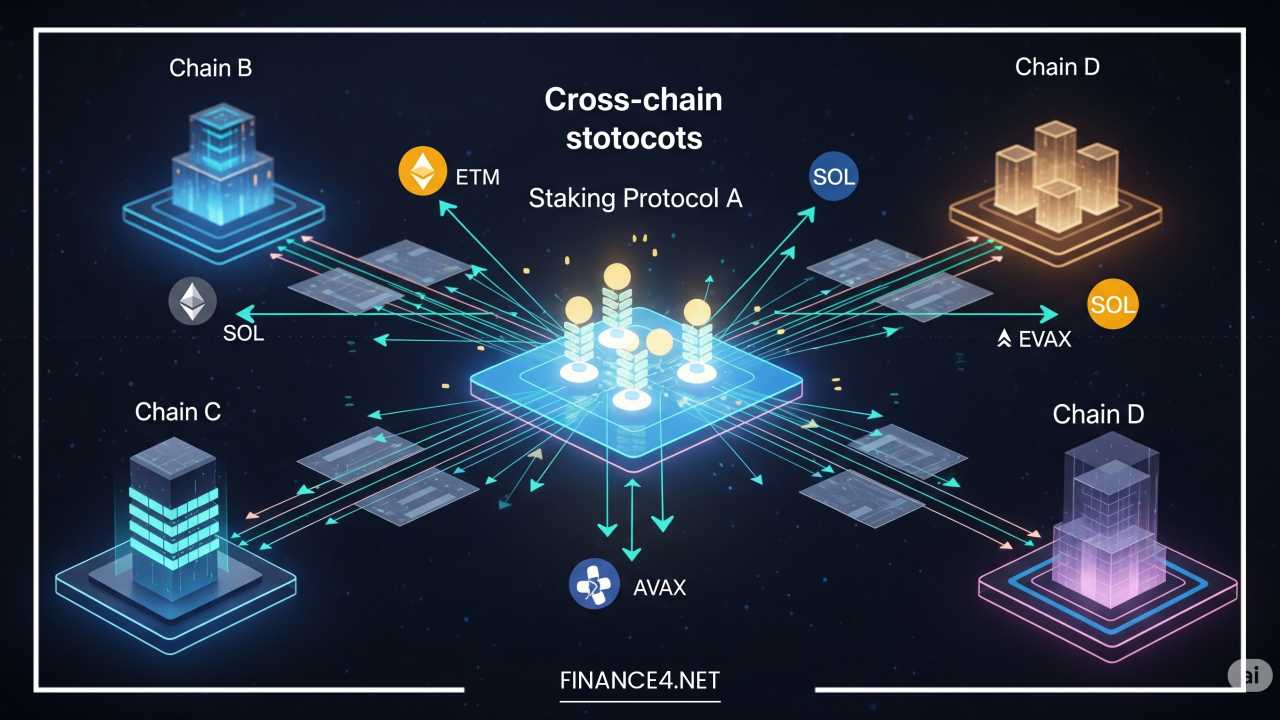
Cross-Chain Staking
Future wallets will likely allow for “cross-chain” staking, where your collateral on one chain can provide security for another, potentially doubling your reward streams.
AI and Automation
We are beginning to see wallets that use AI to automatically move your stake to the most efficient and highest-yielding validators, optimizing your portfolio without requiring manual intervention.
Final Thoughts
The rise of Proof of Stake has democratized the ability to earn rewards from blockchain participation. However, the tool you choose to facilitate this process—your wallet—is the single most important factor in your success. Whether you prioritize the absolute safety of a hardware device like Ledger or the streamlined experience of a mobile app like Trust Wallet, the goal remains the same: maximizing returns while minimizing risk.
As the altcoin ecosystem matures, the distinction between “saving” and “staking” will continue to blur. By choosing a wallet that offers robust security, clear analytics, and broad asset support, you position yourself to benefit from the long-term growth of the decentralized economy. Always do your own research, keep your recovery phrases safe, and remember that in the world of crypto, you are your own bank.
FAQs
What is the safest wallet for staking altcoins?
Hardware wallets like Ledger or Trezor are the safest options because they keep your private keys offline, protecting you from digital hacks.
Can I lose money while staking?
Yes. You can lose money through market volatility, where the coin’s price drops significantly, or through “slashing,” where a validator is penalized for bad behavior.
Which altcoin gives the highest staking rewards?
Rewards vary constantly. Smaller, newer altcoins often offer higher APRs (sometimes 20% or more) to attract liquidity, while established coins like Ethereum typically offer lower, more stable yields.
Is staking better than holding?
If you plan to hold an asset long-term, staking is generally better as it increases your total number of tokens. However, the lock-up periods make it less ideal for short-term traders.
Do I need a hardware wallet for staking?
You don’t need one, but it is highly recommended for any significant amount of money. For small amounts or frequent interaction, a reputable hot wallet is usually sufficient.