Best Dapp for Bridging ETH and BSC
 by
by 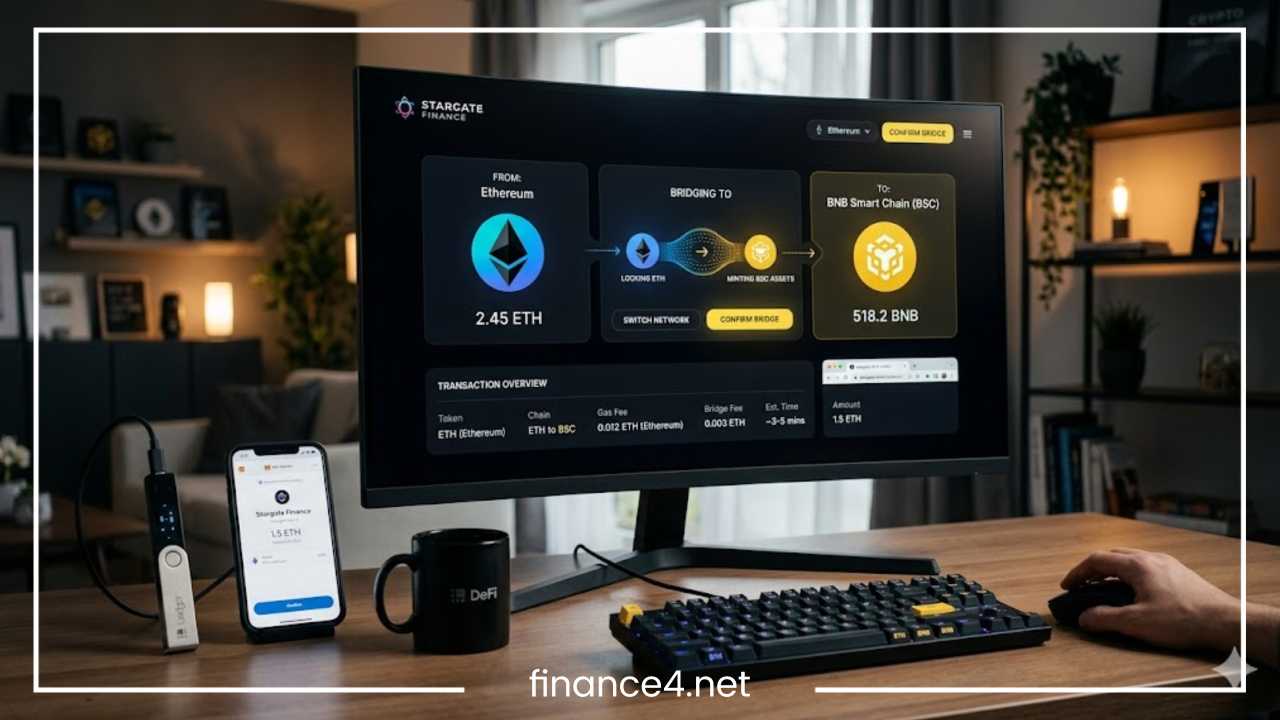
Best Dapp for Bridging ETH and BSC: Top Picks
The digital asset landscape has undergone a dramatic transformation over the last few years. What began as a singular, Ethereum-centric vision of decentralized finance has blossomed into a complex, multi-chain ecosystem where value flows across various networks. This evolution is driven by the desire for scalability, lower transaction costs, and access to specialized financial products that are not always available on a single network. As investors and power users seek to optimize their capital efficiency, the ability to move assets fluidly between the Ethereum mainnet and the BNB Smart Chain (BSC) has become a fundamental requirement for anyone operating in the decentralized economy.
Why is this shift occurring? Ethereum, while highly secure and home to the largest liquidity pools, often struggles with high gas fees during periods of extreme network activity. For a user looking to swap small amounts, provide liquidity to a niche pool, or purchase an NFT, these fees can quickly erode the profitability of the endeavor. On the other hand, the BNB Smart Chain has emerged as a high-performance alternative, offering extremely fast block confirmation times and negligible transaction costs. The synergy between these two ecosystems is where the modern DeFi user finds the most value.
Bridging assets from Ethereum to BSC is no longer a task reserved for developers or technical experts. It is a standard procedure for anyone looking to participate in yield farming, lending, or decentralized exchanges on multiple platforms. However, the convenience of these bridges comes with nuances. Each bridge uses a different security model, has varying liquidity depth, and offers a unique user interface. Choosing the right tool for this task is essential not only for the speed and cost of your transaction but for the security of your assets. In this guide, we provide a comprehensive analysis of the best bridges available for the ETH to BSC route, helping you navigate the complexities of blockchain interoperability with confidence and strategic foresight.
What Is a Cross-Chain Bridge?
At its most fundamental level, a cross-chain bridge is a communication and transport protocol that enables the movement of assets or data between two independent blockchain networks. Blockchains are inherently siloed, meaning the ledger of Ethereum has no native awareness of the ledger on the BNB Smart Chain. Without a bridge, assets are trapped within their origin network. A bridge acts as a bridge between these islands, translating the state and validity of transactions across the divide.
To understand how these bridges work, one must look at the two primary technical architectures utilized by the industry today: the lock-and-mint model and the liquidity-based model.
The lock-and-mint mechanism is the classical approach to bridging. When a user wishes to move an asset, they deposit it into a smart contract on the source chain. This contract locks the tokens, ensuring they cannot be moved or spent while they are “in transit.” Once the deposit is confirmed, a corresponding contract on the destination chain mints a wrapped version of that asset. This ensures that the supply of the bridged asset on the destination chain is always fully backed by the locked collateral on the source chain. While highly secure, this method can sometimes be slower, as it requires confirmations on the source chain before minting can occur.
The liquidity-based model is the more modern approach, popularized by protocols looking to improve capital efficiency. In this model, the bridge maintains separate liquidity pools on both the source and destination chains. When you initiate a transfer, you send your asset to the liquidity pool on the source chain, and the protocol simultaneously releases an equivalent amount from the liquidity pool on the destination chain to your wallet. This method is generally much faster and often results in lower slippage, as it does not rely on the creation and burning of wrapped tokens in the same way.
The necessity of bridging between Ethereum and BSC cannot be overstated. As the crypto ecosystem grows, interoperability serves as the bridge that connects liquidity, fosters innovation, and allows for a more cohesive market. It allows a user to keep their primary store of value on Ethereum while utilizing the high-speed utility of BSC, effectively getting the best of both worlds.
Why Bridge ETH to BSC?
The primary driver for bridging assets from Ethereum to the BNB Smart Chain is the optimization of capital through cost and speed efficiencies. This decision usually comes down to a trade-off between the high security of Ethereum and the high throughput of BSC.
Lower Transaction Costs
One of the most persistent hurdles for Ethereum users is the volatility and scale of gas fees. During peak usage, interacting with a DeFi protocol on Ethereum can cost significantly more than the value being transacted. BSC offers a distinct advantage in this domain. By migrating assets to BSC, users gain access to a network where transaction fees are mere pennies, allowing them to participate in yield farming or regular trades without the fear of gas costs wiping out their gains.
Faster Transactions
BSC utilizes a consensus mechanism that prioritizes speed and scalability. Where an Ethereum transaction might take several minutes depending on network congestion, a BSC transaction is typically finalized within seconds. For active traders and liquidity providers, this reduced latency is critical. It allows users to react to market changes in real-time, preventing the “slippage” that often occurs when an order is finalized too slowly.
Access to BSC DeFi Ecosystem
BSC hosts a vibrant and diverse array of decentralized applications that offer unique financial opportunities. Protocols like PancakeSwap have become legendary for their liquidity and diverse trading pairs, while platforms like Venus or Alpaca Finance provide sophisticated lending and leverage opportunities that may be more accessible on BSC than on Ethereum. Bridging allows a user to access these platforms without needing to exit their position on the Ethereum mainnet.
Portfolio Diversification
Modern asset management involves risk mitigation. By moving assets between chains, users can participate in different markets simultaneously. Bridging allows an investor to maintain a long-term position in Ethereum-based tokens while exploring speculative or yield-heavy opportunities on the BSC network, essentially spreading the portfolio across different ecosystems and risk profiles.
How to Choose the Best ETH-to-BSC Bridge
The choice of a bridge is as important as the choice of a cryptocurrency exchange. A bad bridge can lead to locked funds, high fees, or exposure to malicious smart contracts. Here is a checklist for evaluating potential bridge dApps.
Security and Audits
Security should always be your number one priority. Before trusting a protocol with your capital, investigate its history. Has the protocol been audited by reputable blockchain security firms? Does it maintain a transparent and open-source codebase? Look for information on the validator set—are they centralized, or is the validation process distributed? Protocols that utilize robust messaging standards, such as LayerZero or the Celer Network infrastructure, are generally considered safer choices due to their battle-tested nature.
Fee Structure
Bridge fees are not always as straightforward as they appear. You must account for the transaction cost (gas) on the source chain, the transaction cost on the destination chain, and the protocol fee imposed by the bridge for the service. Some bridges offer “gas-less” or “gas-subsidized” transfers, which can be very appealing, but always verify if the bridge fee compensates for these savings. Compare the “total output” amount displayed by different bridges before initiating the transaction.
Transfer Speed
The time it takes for an asset to reach your destination wallet can vary significantly. Some bridges rely on validators verifying a block, which can take time, while others use “fast-path” mechanisms where liquidity providers facilitate the transaction instantly. For frequent traders, a bridge that offers sub-minute finality is essential.
Asset Support
Not all bridges support all tokens. While ETH and the major stablecoins (USDT, USDC, DAI) are almost universally supported, smaller or more obscure tokens might only be supported by a few select bridges. Ensure that the bridge you choose supports the specific token ticker and that it provides the correct version of that token on the destination chain.
User Experience and Wallet Integration
A well-designed bridge dApp should offer a seamless, user-friendly interface. It should clearly show the current exchange rates, potential slippage, and the expected wait time. It should also integrate smoothly with the most common non-custodial wallets like MetaMask, Trust Wallet, and Rabby. An interface that is confusing or displays unclear fee information is a red flag.
Liquidity
Liquidity depth refers to how much of an asset is available in the bridge’s pools. If a bridge has low liquidity, your large transaction might cause a significant price impact (slippage) or even fail to go through entirely. Always check the bridge’s dashboard for pool depth before attempting a large transfer.
Best Dapps for Bridging ETH and BSC
Stargate Finance
Stargate Finance is a standout in the cross-chain space, primarily because it is built on top of the LayerZero communication protocol. Unlike older designs that rely on minting wrapped tokens, Stargate utilizes a “unified liquidity” model. This means that the bridge pools are shared across chains, drastically reducing the chances of liquidity fragmentation. It is highly efficient and designed for high-volume users.
Pros:
-
Industry-leading liquidity pools reduce the risk of failed transactions.
-
Highly secure architecture based on LayerZero.
-
Extremely fast for large, high-value transfers.
Cons:
-
Fees can sometimes be higher during periods of peak network demand, though this is often offset by the reliability.
Best For:
-
Institutional-grade DeFi interaction and large-scale asset movement.
Across Protocol
Across Protocol has carved out a massive niche by using an intent-based bridging model. Instead of waiting for slow block confirmations, Across incentivizes liquidity providers to “front” the assets on the destination chain. This means the user gets their funds almost instantly. It is widely considered one of the most capital-efficient bridges in the space.
Pros:
-
Near-instant settlement times due to the intent-based design.
-
Low and transparent fee structure compared to traditional models.
-
Very clean and easy-to-navigate user interface.
Cons:
-
While it supports all major assets, its list of supported, non-stablecoin tokens is slightly more limited than larger aggregators.
Best For:
-
Retail users who value speed and simplicity.
Synapse Protocol
Synapse is not just a bridge; it is a full multi-chain ecosystem. It supports a vast range of chains and tokens, making it a “one-stop shop” for many power users. One of its standout features is the ability to bridge and swap in a single transaction. For example, you can send ETH and receive a different token on the BSC side, all facilitated by the Synapse routing engine.
Pros:
-
Comprehensive support for a wide array of tokens and networks.
-
Built-in cross-chain swapping functionality is extremely convenient.
-
Professional, feature-rich interface.
Cons:
-
Because the protocol handles complex routing, the interface can be a bit more overwhelming for absolute beginners.
Best For:
-
Multi-chain traders and power users managing diverse portfolios.
Orbiter Finance
Orbiter Finance is a decentralized bridge focused on speed and cost-effectiveness. It uses a unique “Maker” system that allows for extremely efficient transfers. While it is often discussed in the context of Layer 2 scaling (like Arbitrum or Optimism), its bridge capabilities between mainnet Ethereum and BSC are highly performant and widely used.
Pros:
-
Extremely cost-effective, often ranking as one of the cheapest options for retail amounts.
-
Fast processing speeds for most common assets.
-
Minimalist and user-friendly design.
Cons:
-
Primarily optimized for rollups and Layer 2 transfers, so the focus is slightly different from mainstream mainnet-to-BSC bridges.
Best For:
-
Cost-conscious retail users who prioritize cheap transfers.
cBridge
Developed by the well-known Celer Network, cBridge is a veteran in the cross-chain space. It provides robust, reliable infrastructure that has been battle-tested over many years. Its security model is comprehensive, focusing on multi-layered verification to ensure the integrity of every transfer. With deep liquidity and high uptime, it is a favorite among professional users.
Pros:
-
Reputation for extreme reliability and security.
-
Deep liquidity pools ensure minimal slippage even for larger transfers.
-
Extensive support for various token types and specialized assets.
Cons:
-
Depending on the route and the specific token, it can occasionally be slightly slower than newer intent-based bridges.
Best For:
-
Frequent bridge users and those who prioritize maximum security and consistency.
Binance Bridge Alternatives
For those who are brand new to the world of decentralized finance, bridge dApps can feel intimidating. A common, though centralized, alternative is to use the Binance exchange itself. You can deposit ETH into your Binance account and then withdraw it directly to your BSC-compatible wallet address.
Pros:
-
Extremely beginner-friendly; if you know how to use an exchange, you know how to do this.
-
Bypasses the need to understand complex smart contract interactions.
Cons:
-
Centralized approach; requires an exchange account, KYC, and reliance on Binance’s platform uptime.
-
Not a truly permissionless experience, as it requires you to trust a centralized entity.
Best For:
-
New crypto users who are not yet comfortable with decentralized, non-custodial tools.
Comparison Table
| Bridge | Speed | Fees | Security | Supported Assets | Best For |
| Stargate | High | Medium | High | Excellent | Large transfers |
| Across | Very High | Low | High | Good | Beginners |
| Synapse | High | Medium | High | Excellent | Multi-chain users |
| Orbiter | Very High | Low | Good | Good | Cheap transfers |
| cBridge | High | Low | High | Good | Frequent bridging |
Step-by-Step: How to Bridge ETH to BSC
Bridging is a straightforward process when you use a reliable interface, but it is always wise to follow a methodical approach to ensure no mistakes are made.
-
Connect Wallet: Visit the official website of the chosen bridge and connect your non-custodial wallet (such as MetaMask, Trust Wallet, or Rabby Wallet). Always verify the URL before connecting.
-
Select Source Chain: Set the source chain to Ethereum.
-
Select Destination Chain: Set the destination chain to BNB Smart Chain (BSC).
-
Choose Token: Select the asset you want to bridge (e.g., ETH, USDC) and enter the amount.
-
Review Fees: Carefully examine the estimated protocol fees and the gas fees for the transaction. If the bridge supports “gas-less” transfers, notice if the fee is deducted from the principal amount.
-
Confirm Transaction: Trigger the transaction through your wallet. You will usually be prompted twice: once to approve the spending limit of the token, and once to initiate the actual bridge transaction.
-
Verify Arrival: Once the transaction is confirmed on the source chain, wait for the bridge to process the cross-chain message. You can usually track the status on the bridge dashboard. Once complete, the funds will arrive in your wallet on the BSC network.
Risks of Using Cross-Chain Bridges
The convenience of bridges comes with inherent risks. Understanding these threats is critical for anyone managing significant assets.
Smart Contract Risks
Bridges are complex software systems. Every line of code in the smart contract is a potential point of failure. If there is a bug or an exploit in the contract, funds locked within the bridge can be stolen. Always prioritize protocols that are open-source and have been audited by multiple top-tier security firms.
Validator Risks
Most bridges operate using a validator set—a group of computers that confirm transactions. If these validators are a small, centralized group, they could potentially censor transactions or conspire to steal assets. Look for protocols that use decentralized, permissionless validator sets.
Phishing Attacks
This is the most common form of attack in the crypto space. Scammers set up websites that look identical to popular bridge protocols. When you connect your wallet, they attempt to drain your funds. Always double-check that you are on the correct, official URL. Bookmarking official sites is a good security practice.
Liquidity Issues
Sometimes a bridge’s liquidity pool on the destination chain can be depleted. This happens during times of high market volatility. If a bridge has insufficient liquidity, your transaction may be stuck in a pending state until more liquidity is added. Always check the liquidity status of the bridge before initiating large transfers.
User Error
The most common cause of loss is simply sending assets to the wrong address or selecting the wrong network. Double-check your wallet address and ensure that your wallet is switched to the correct network view. Sending tokens to an address that does not support the network can lead to permanent loss.
To stay safe, follow these rules: always start with a small, “test” transaction to ensure everything works correctly before bridging your primary capital. Only use audited protocols, and never click links from unverified sources.
Final Thoughts
The ability to bridge ETH to BSC is a foundational skill for any modern crypto investor. It opens the door to a world of higher capital efficiency, faster trading, and diverse DeFi opportunities. Whether you are seeking the low costs of the BNB Smart Chain or the security of Ethereum, the bridges discussed in this guide provide the necessary infrastructure to move your assets with speed and reliability.
For the average retail user who prioritizes simplicity and speed, Across Protocol or Orbiter Finance are excellent starting points. For more experienced users who require wide token support and advanced routing, Stargate Finance and Synapse Protocol are the industry gold standards. As the ecosystem continues to mature, we expect these tools to become even faster and more secure. Always stay informed, prioritize the security of your assets over the speed of your gains, and never stop comparing fees to ensure you are getting the most value out of every transaction.
Frequently Asked Questions
What is the cheapest way to bridge ETH to BSC without high gas fees?
The cheapest way to bridge ETH to BSC typically involves using intent-based bridges like Across Protocol or Orbiter Finance. These protocols often utilize liquidity providers to settle transactions faster and at a lower cost than traditional lock-and-mint bridges. To minimize costs further, always compare the current gas prices on Ethereum and the protocol-specific fees on the bridge dashboard before initiating your transfer.
Is it safe to bridge Ethereum to BNB Smart Chain using decentralized bridges?
Bridging is generally safe when using established, audited protocols such as Stargate Finance, cBridge, or Synapse. However, all cross-chain bridges carry inherent risks, including smart contract vulnerabilities and potential liquidity issues. To maximize your safety, verify that the bridge website is the official URL to avoid phishing attacks, ensure the protocol has undergone multiple security audits, and always perform a small test transaction before bridging significant amounts of capital.
How long does it usually take to bridge tokens from Ethereum to BSC?
Transfer times vary based on the bridging technology used. Intent-based bridges, such as Across Protocol, are designed for speed and can often settle transactions in under a minute. Traditional bridges that rely on blockchain block confirmations may take anywhere from a few minutes to an hour, depending on network congestion on both the Ethereum and BNB Smart Chain networks.
Can I bridge ETH directly to BSC using a MetaMask wallet?
Yes, you can bridge assets from Ethereum to BSC using a non-custodial wallet like MetaMask. You simply need to connect your wallet to the chosen bridge’s website, configure the source network as Ethereum and the destination as BNB Smart Chain, and sign the transactions via your wallet interface. Ensure you have enough ETH in your wallet to cover the initial transaction gas fees on the Ethereum mainnet.
Which bridge dApp offers the best security for large volume transfers?
For large volume transfers, Stargate Finance is widely regarded as a top choice due to its integration with the LayerZero messaging protocol and its “unified liquidity” model. This architecture helps mitigate risks associated with wrapped token fragmentation and provides robust, battle-tested security. However, regardless of the bridge, high-value users should always conduct their own due diligence by reviewing recent audit reports and monitoring the protocol’s liquidity pool health.
What are the risks of using a centralized exchange to move funds to BSC?
While using a centralized exchange (CEX) like Binance to move funds is user-friendly, it requires you to trust a third party with your assets, which contradicts the ethos of decentralized finance. The primary risks include potential exchange withdrawal freezes, the requirement for KYC (Know Your Customer) documentation, and the loss of self-custody over your assets during the transfer process. For those who prioritize decentralization and permissionless access, decentralized bridge dApps remain the preferred alternative.